0%

Choosing an Aluminium Washroom Door is more practical than selecting a finish from a showroom sample. The door must handle moisture, frequent cleaning, impacts, and daily privacy requirements. A busy school washroom needs different performance from a quiet office restroom. That difference is easy to overlook.

Architectural hardware consultant Sarah Chen says, “A washroom door succeeds when its frame, fittings, and surface finish work as one system.” Her observation reflects real installation experience. A strong aluminium frame can resist swelling and corrosion when correctly specified. Powder coating may provide a smooth, durable surface. However, poor drainage, weak hinges, or unsuitable screws can still create early problems.

Look closely at the door’s core, edge construction, seals, and hardware. These details affect sound control, closing action, cleaning, and long-term reliability. Choose stainless-steel or corrosion-resistant fittings for damp environments. Check whether the opening supports clear access, practical ventilation, and local accessibility requirements. A slim profile looks attractive, but appearance should not reduce strength or privacy.

The best Aluminium Washroom Door is not always the cheapest option. Nor is the heaviest door automatically better. Consider traffic levels, cleaning chemicals, humidity, installation quality, and future repairs. Ask for finish samples and technical information before ordering. Test the handle height and closing movement where possible. Small mistakes become irritating every day. No system is perfect, and even a well-specified door may need adjustment after installation. This guide explores the key choices carefully, helping you compare performance, maintenance, appearance, and value with greater confidence.
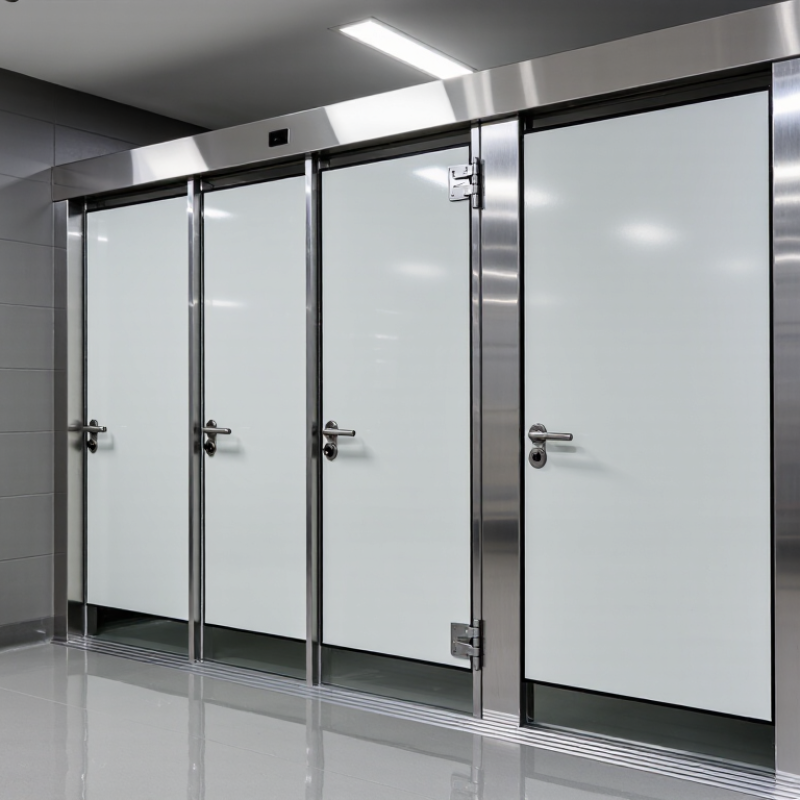
How to Choose an Aluminium Washroom Door?

Understanding Aluminium Washroom Door Types and Applications

How to Choose an Aluminium Washroom Door?

Understanding Aluminium Washroom Door Types and Applications

Aluminium washroom doors suit places where moisture, cleaning chemicals, and heavy traffic meet. The main options include framed doors, solid aluminium panels, and honeycomb-core constructions. Framed doors offer easier hardware replacement. Solid panels feel more rigid, but they can become heavy. Honeycomb cores reduce weight and improve stability. I would not choose the lightest door automatically.

Application changes the specification. Schools and transport facilities need impact-resistant surfaces, strong hinges, and easy cleaning. Healthcare washrooms require smooth edges and minimal dirt traps. Wet rooms benefit from corrosion-resistant finishes and raised clearances. For accessible cubicles, review opening width, turning space, handle height, and emergency access against local requirements. A beautiful door can still fail at the bottom edge.

The World Health Organization and UNICEF Joint Monitoring Programme reported that 3.5 billion people lacked safely managed sanitation in 2022. This pressure makes durable public washroom design more important. The International Aluminium Institute states that recycling aluminium uses about 5% of the energy required for primary production. That figure supports specifying recyclable components, but only when coatings and mixed materials can be separated. Check the frame thickness, core type, hinge cycle rating, and warranty conditions. Ask for test evidence, not just catalogue language. Sometimes, the simplest door performs better.

Assessing Door Materials, Finishes, and Corrosion Resistance

How to Choose an Aluminium Washroom Door?

Aluminium is practical for washrooms because it is light, rigid, and naturally forms a protective oxide layer. However, the alloy still matters. A door near showers needs stronger corrosion resistance than one in a dry staff washroom. Specify a suitable architectural-grade alloy and check the frame, hinges, screws, and handles together. Mixed metals can create galvanic corrosion, especially when water remains around fixings.

Finishes deserve close attention. Anodizing creates a durable surface that usually handles frequent cleaning well. Powder coating offers more color choices, but damaged edges may expose the aluminium beneath. In busy washrooms, inspect corners, hinge cutouts, and the lower door edge. These areas receive impacts, moisture, and cleaning chemicals. A glossy finish may look impressive, yet it can reveal scratches quickly. I once underestimated this detail on a high-traffic project.

Tips: Ask for coating thickness, preparation methods, and corrosion-test evidence. Confirm the finish suits chlorine-based cleaners. Choose stainless or suitably isolated hardware. Leave a small floor clearance for ventilation and easier cleaning. Do not judge durability by color alone.

For coastal or humid locations, examine salt exposure and ventilation before choosing a finish. Powder coating should have consistent coverage, including concealed frame surfaces. Anodized aluminium should show an even tone without cloudy patches. Request sample panels, then clean them with the intended products. This simple test can expose staining or color changes early. Specifications are useful, but real cleaning conditions often tell a different story.

Choosing Suitable Dimensions, Hardware, and Opening Configurations

How to Choose an Aluminium Washroom Door?

Choosing the right dimensions starts with the finished wall opening, not the door panel alone. Measure width, height, wall thickness, and floor level at several points. Floors are rarely perfectly flat. Allow enough clear passage for users, cleaning carts, and emergency access. A practical opening usually needs careful clearance around the frame, seals, and hardware. Check local accessibility requirements before fixing the final size.

Hardware must suit constant moisture and frequent use. Select corrosion-resistant hinges, a privacy latch, and a handle that remains easy to operate with wet hands. A concealed door closer can improve privacy, but excessive closing force creates frustration. Add a simple occupancy indicator where appropriate. Avoid complicated locks in busy public facilities. Small details matter here.

The opening configuration depends on traffic, wall space, and safety priorities. Outward-opening doors can release interior space and may assist emergency access, while inward-opening doors offer better corridor clearance. Sliding doors save swing space, but their tracks need regular cleaning. Bi-fold doors help in narrow areas, though they reduce the usable opening slightly. I would not choose a configuration from drawings alone. Walk through the space with a taped floor layout first. That small exercise often exposes clearance problems before installation.

Comparing Privacy, Accessibility, Safety, and Maintenance Requirements

How to Choose an Aluminium Washroom Door?

Privacy, accessibility, safety, and maintenance should guide the specification. Privacy is not only about an opaque panel. Site inspections often reveal visible floor gaps, weak latches, and poor acoustic control. Choose a solid, moisture-resistant door with reliable self-closing hardware. Consider sightlines from corridors and adjacent mirrors. Privacy needs nuance. A tighter seal may improve sound control, but it can increase closing force.

Accessibility requires measurable space. The 2010 ADA Standards specify a minimum 815 mm clear door opening for accessible routes. They also limit opening force for many interior hinged doors to 22.2 N. Local requirements may differ. Check wheelchair turning space, handle height, threshold level, and approach clearance together. A wider opening can reduce privacy if the layout is careless. This conflict is easy to miss during product selection.

Safety and maintenance affect long-term value. CDC’s STEADI resources report that more than one in four adults aged 65 and older falls each year. Select rounded edges, stable hinges, non-slip flooring, and hardware that does not snag clothing. Aluminium resists moisture, but hinges, locks, and seals still collect grime. The WHO/UNICEF JMP 2023 report found that 3.5 billion people lacked safely managed sanitation in 2022, reinforcing the need for hygienic, maintainable facilities.

Tips: Request a full-size sample. Test the latch, closing force, sightline, and cleaning routine. Avoid relying on finish claims alone. Check local accessibility and fire requirements before ordering.

Evaluating Installation Quality, Durability, and Total Cost

How to Choose an Aluminium Washroom Door?

Evaluating installation quality matters as much as selecting the door itself. A well-made aluminium door can still fail when the frame is not plumb. Check the gaps around the panel. They should look even from top to bottom. The hinges must open smoothly without scraping the floor. Anchors should hold firmly in masonry, not only in thin wall panels. Small installation errors often become expensive repairs.

Durability depends on moisture, cleaning routines, and daily traffic. Look for corrosion-resistant aluminium, sealed joints, and hardware suitable for humid rooms. A door near showers needs better protection than one in a dry office washroom. Inspect the lower edge carefully. Standing water and strong cleaners can damage weak finishes. Ask how the surface should be maintained. Vague answers are a warning sign.

Total cost includes delivery, fitting, adjustments, cleaning, and future hardware replacement. A cheaper door may need repairs sooner, especially when hinges or locks are poorly specified. Request a written quotation with measurements and installation details. Also confirm the warranty terms and exclusions. Not everything is obvious. A thoughtful choice compares service life, not just purchase price. Still, predictions can be imperfect; building movement, heavy use, and poor ventilation may change performance. Allowing a small maintenance budget is sensible. It is rarely wasted.

This comparison uses typical non-branded market estimates for commercial aluminium washroom doors. Heavy-duty doors generally provide longer service life and lower maintenance frequency, while installation quality strongly influences alignment, closing performance, and total ownership cost. The 10-year total cost includes purchase, installation, routine maintenance, and expected hardware replacement.

FAQS

What types of aluminium washroom doors are available?

Framed doors simplify hardware replacement and maintenance. Solid panels feel rigid but can become heavy. Honeycomb cores reduce weight and improve stability. The lightest option is not always the best.

Which door construction suits busy public washrooms?

Choose impact-resistant surfaces, strong hinges, and easy-clean finishes. Inspect the lower edge, corners, and hinge cutouts carefully. These areas receive frequent impacts and moisture.

How should I choose aluminium for wet or coastal locations?

Select an architectural-grade alloy with suitable corrosion resistance. Check the frame, hinges, screws, and handles together. Salt, humidity, and trapped water can accelerate corrosion.

Which finish is better, anodizing or powder coating?

Anodizing usually handles frequent cleaning well and provides a durable surface. Powder coating offers more colors but may expose aluminium after edge damage. Request coating thickness and corrosion-test evidence.

How can I test a finish before installation?

Request a sample panel and clean it with the intended products. Check for staining, scratches, cloudy patches, and color changes. Real cleaning conditions can reveal problems early.

What dimensions should be measured before ordering?

Measure the finished opening, wall thickness, floor level, and height at several points. Floors are rarely perfectly flat. Allow space for seals, hardware, cleaning carts, and emergency access.

Which hardware works well in a frequently used washroom?

Use corrosion-resistant hinges, a privacy latch, and a handle that works with wet hands. Avoid complicated locks in busy facilities. Excessive door-closing force creates frustration.

How should I choose between swing, sliding, and bi-fold doors?

Outward-opening doors may improve interior space and emergency access. Inward-opening doors can protect corridor clearance. Sliding doors save swing space but require clean tracks. Bi-fold doors suit narrow areas but slightly reduce the usable opening. Walk through a taped floor layout first.

Conclusion

Choosing the right Aluminium Washroom Door requires more than comparing appearance and price. Begin by identifying the door type and its intended application, such as cubicles, public restrooms, commercial facilities, or high-moisture environments. Evaluate the aluminium grade, surface finish, and protective coating to ensure strong corrosion resistance and long-term visual appeal. Door dimensions, frame design, hinges, locks, handles, and opening direction should match the available space and expected traffic. Consider privacy levels, accessibility needs, ventilation, and safe operation when selecting panels and hardware.

A reliable Aluminium Washroom Door should also be easy to clean, resistant to frequent use, and simple to maintain. Pay close attention to installation quality, as accurate alignment and secure fixing directly affect performance, durability, and user safety. Instead of focusing only on the initial purchase price, compare the complete cost, including transportation, installation, repairs, cleaning, and eventual replacement. A well-planned choice balances functionality, appearance, hygiene, durability, and total value for the specific washroom environment.

Lorian

Lorian

Lorian is a highly experienced marketing professional dedicated to helping customers better understand our company, products, and solutions. With a strong background in market research, content strategy, and customer communication, Lorian combines professional insight with a practical understanding......