0%

Choosing an Aluminium Door With Window involves more than comparing prices or browsing polished product photos. Buyers need to consider frame strength, glazing options, hardware quality, thermal performance, and the conditions the door will face. A coastal entrance, for example, may need finishes suited to damp, salty air. A busy patio opening may call for durable hinges and easy-to-clean glass. Small details matter.

This guide introduces leading manufacturers worldwide and the qualities that help distinguish them. It considers product range, customization, documented specifications, manufacturing experience, and the support available after purchase. These factors can help homeowners, architects, and contractors build a practical shortlist. Still, manufacturer claims should be checked against technical documents and project requirements. No shortlist is perfect. Availability, certifications, warranty terms, and installation support can vary by country and product line. A well-known brand may not be the best fit for every opening.

The sections ahead offer a starting point, not a substitute for professional advice. Check dimensions, glazing performance, drainage details, and compatible hardware before ordering. Ask how the frame handles water and how replacement parts are obtained. Then compare written specifications, not just showroom displays. Even a strong door can disappoint if it is poorly measured or installed. Good research helps narrow the options, but careful site assessment remains essential.
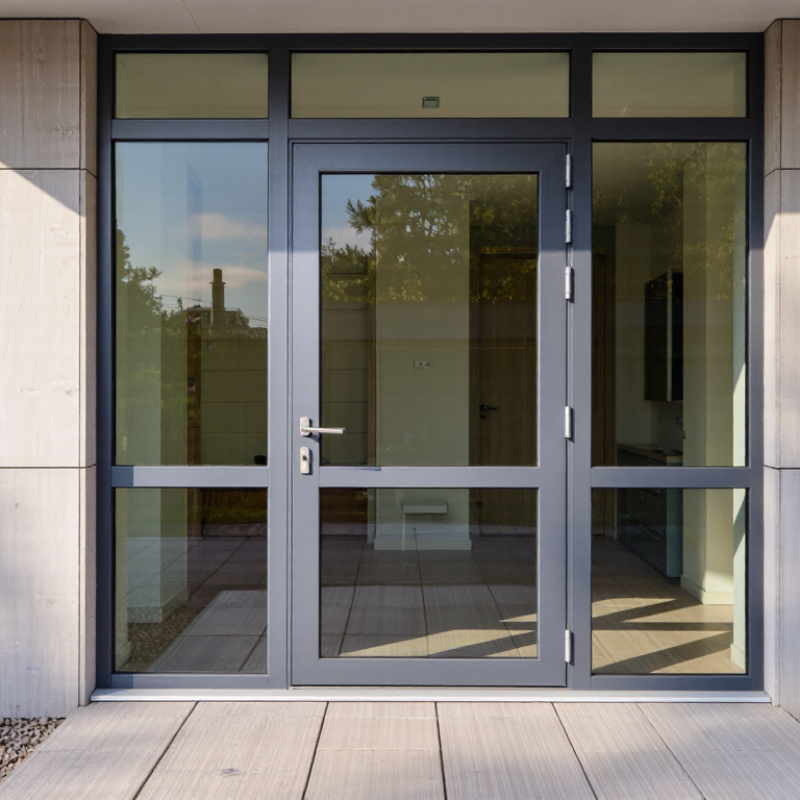
Top Aluminium Door With Window Manufacturers Worldwide

What Defines an Aluminium Door With Window

What Defines an Aluminium Door With Window

A quality aluminium door with window is more than a slim metal frame and glass panel. Its performance depends on thermal breaks, sealed gaskets, drainage paths, and accurately fitted hardware. Thermal breaks reduce heat transfer through the frame. Low-emissivity glazing can further improve indoor comfort. The U.S. Department of Energy reports that windows may cause 25–30% of residential heating and cooling energy use. This makes glass selection a practical decision, not merely a visual one.

The frame should resist air leakage, rain penetration, and repeated opening cycles. Look for tested values for U-factor, solar heat gain coefficient, air infiltration, and water resistance. The 2023 Global Status Report for Buildings and Construction states that buildings used about 30% of global final energy in 2022. Better doors and windows cannot solve this alone, but they can reduce avoidable losses. Aluminium is also durable and recyclable. Still, poor installation can weaken excellent factory performance. That part is often underestimated.

Tips: Check the complete door system, not the frame alone. Ask for test reports, glazing specifications, and installation tolerances. In hot climates, external shading may outperform darker glass. In cold climates, a warm-edge spacer and insulated threshold deserve attention. A small gap can become a real comfort problem.

Key Materials, Designs, and Manufacturing Standards

Top Aluminium Door With Window Manufacturers Worldwide: Key Materials, Designs, and Manufacturing Standards

Reliable aluminium door and window manufacturers begin with alloy selection, not appearance. 6063 aluminium is widely used for architectural frames because it extrudes cleanly and accepts durable surface finishes. Thermal-break systems add polyamide strips between inner and outer profiles. This reduces heat transfer through the frame. The result is a warmer interior edge and less condensation near the glass.

Material choices still require scrutiny. The International Aluminium Institute reports that recycling aluminium uses about 5% of the energy needed for primary production. However, recycled content alone does not guarantee a lower environmental impact. Transport distances, coatings, glass production, and factory energy sources also matter. This is where many product claims become too simple. Buyers should request recycled-content percentages and documented environmental data.

Design quality depends on tested performance. Manufacturers should evaluate air leakage, water penetration, wind resistance, thermal transmittance, and hardware durability. EN 14351-1 supports performance assessment for external windows and pedestrian doors in relevant markets. North American projects often reference AAMA or FGIA testing procedures. The IEA reports that buildings account for roughly 30% of global final energy use, making efficient glazing and frame design important. Slim profiles look attractive, but they can reduce structural strength or glass capacity. Careful engineering matters more than visual minimalism.

How to Evaluate Aluminium Door Manufacturers

Top Aluminium Door With Window Manufacturers Worldwide

How to Evaluate Aluminium Door Manufacturers

Evaluating an aluminium door manufacturer takes more than comparing catalogue photos or quoted prices. Ask for section drawings that show frame depth, thermal breaks, glazing details, and drainage paths. These details help reveal how a door may perform in daily use, especially in exposed or humid settings. Request test reports for relevant air, water, and structural performance, and check that the tested configuration matches the product being offered. A report for one size or glass unit may not apply to every model.

Look closely at manufacturing consistency. Ask how aluminium profiles are cut, joined, finished, and inspected before dispatch. A clean corner joint and even coating are easy to spot on a sample, but they do not prove every unit will match. Request written tolerances and a clear process for handling defects. Ask for references from projects with similar opening sizes and weather conditions. Small details matter.

After-sales support deserves equal attention. Confirm who measures the opening, coordinates installation, and responds if a sash binds or water appears at the sill. Check lead times, packaging methods, spare-part availability, and warranty exclusions in writing. A low quote can become costly if responsibilities are vague. I would still treat any single sample as incomplete evidence; sometimes the neatest display hides the hardest questions. Compare documents, workmanship, and communication together before making a decision.

Leading Aluminium Door With Window Manufacturers by Region

Leading aluminium door with window manufacturers vary by region because climate, building styles, and fabrication standards differ. In Europe, established producers often focus on thermal breaks, precise seals, and slim sightlines for renovation projects. Buyers should check tested performance data, not rely on appearance alone.

Across Asia, manufacturers commonly serve dense urban construction and varied price points. Look for consistent frame thickness, clean corner joints, and hardware suited to frequent use. In North America, suppliers often offer larger openings and configurations designed around local residential and commercial needs. Ask how units perform under wind, rain, and temperature changes. Details matter.

In the Middle East, strong sunlight and dust make durable finishes and effective weather seals especially relevant. African markets can require flexible sizing and dependable delivery, particularly where project access is difficult. Regional capability still needs verification: request production samples, installation guidance, and clear warranty terms. A polished showroom finish may not reveal how a door performs after years of exposure. Even experienced buyers can overlook this. Comparing local references and specifying glass, frame, and hardware together makes regional differences easier to judge.

Choosing a Manufacturer for Different Building Needs

Choosing an aluminium door with window manufacturer depends on the building, not only the product catalog. A coastal house needs corrosion-resistant finishes, tight seals, and hardware tested against wind-driven rain. An office tower may require thermal breaks, acoustic glazing, and stable performance across large elevations. For schools and apartments, safety features, easy maintenance, and consistent batch quality matter more.

Request test reports, material specifications, and installation details before comparing prices. Reliable manufacturers should explain alloy grades, coating systems, glass options, drainage design, and production tolerances. Ask for physical samples. A corner sample can reveal frame strength, gasket fit, and surface quality better than attractive photographs. I have found that delivery planning is often overlooked. Confirm packaging, replacement parts, technical support, and warranty conditions in writing. A polished catalog can still hide weak after-sales service.

Tips: Match the system to local climate and building use. Check factory quality controls and independent certifications. Review completed projects with similar sizes and exposure. Ask how defects are handled. Cheap units may become expensive after installation problems. I would also compare two or three manufacturers, because one quotation rarely shows the full picture. Even careful selection has uncertainty; site measurements, installer skill, and shipping conditions can change the result.

FAQS

What should buyers compare when choosing a regional manufacturer?

Compare tested performance, material specifications, installation guidance, and warranty terms. Regional experience helps, but it is not proof.

Which details matter for coastal homes?

Look for corrosion-resistant finishes, tight seals, and hardware tested against wind-driven rain. Salt air is unforgiving.

What should be checked for large office buildings?

Ask about thermal breaks, acoustic glazing, and performance across large elevations. The frame and glass should be assessed together.

How can buyers inspect product quality before ordering?

Request a physical corner sample. Check the frame strength, gasket fit, surface finish, and corner joints.

What questions should buyers ask about delivery and support?

Confirm packaging, replacement parts, technical support, and defect handling in writing. Delivery planning is easy to overlook.

How do climate and location affect door selection?

Strong sunlight and dust call for durable finishes and effective seals. Wind, rain, and temperature changes also matter.

Are lower-priced units always the better choice?

Not necessarily. Installation problems can add costs later. Still, a higher price alone does not guarantee better performance.

Why compare several manufacturers?

Two or three quotations can reveal differences in specifications and service. One quotation rarely shows the full picture. Site measurements can still change the result.

Conclusion

An Aluminium Door With Window combines the strength, light weight, and corrosion resistance of aluminium with the natural lighting and visibility provided by glass. This article explains how these doors are defined, including common frame structures, thermal break systems, glazing options, finishes, security features, and practical design styles. It also highlights the importance of manufacturing standards related to durability, weather resistance, energy efficiency, safety, and precise installation.

Readers will learn how to evaluate aluminium door manufacturers by examining material quality, production technology, testing procedures, customization capabilities, delivery reliability, and after-sales support. The guide also compares leading manufacturers by region according to their technical expertise and market focus, without emphasizing specific brands. Finally, it offers practical advice for selecting a suitable supplier for residential, commercial, industrial, and architectural projects, helping buyers balance budget, performance, appearance, maintenance requirements, and long-term value.

Seraphina

Seraphina

Seraphina is a dedicated marketing professional with deep expertise in strategic communication, content development, and customer-focused brand growth. As a key member of the company’s marketing team, she combines industry insight with a clear understanding of customer needs to present complex......