0%

China’s aluminium sliding doors sector is expanding alongside demand for wider views, slimmer frames, and energy-conscious homes. Grand View Research reports continued growth in the global aluminium doors market, supported by urbanisation and replacement projects. Fortune Business Insights also identifies Asia-Pacific as a major regional growth engine.

These reports describe market direction, not factory quality. That distinction matters. A polished catalogue cannot prove thermal performance, drainage, or long-term hardware reliability. As Kieran McKenna, a fenestration technical specialist, observes, “Good sliding-door performance begins with correct specification, not attractive photography.” Buyers should remember that.

Small details matter.

For China’s top Aluminium Sliding Doors manufacturers, evaluation should begin with measurable evidence. Look for tested U-values, air-tightness results, water-resistance classifications, and verified load ratings. Ask whether testing covers the complete door system, including rollers, locks, gaskets, and glass. A 6-metre opening may look impressive, yet poor drainage can create trouble after heavy rain.

Factory experience also deserves close attention. CNC accuracy, powder-coating thickness, stainless-steel components, and documented quality inspections influence daily operation. Request installation drawings and sample corner joints. Touch the track. Check the handle movement.

Not every manufacturer publishes complete data. That is a weakness, but also a useful warning. Certifications can vary by market, and imported systems may require local compliance checks. The strongest suppliers combine engineering records, transparent warranties, responsive after-sales support, and consistent export experience. This guide examines those practical signals before discussing China’s leading manufacturers.
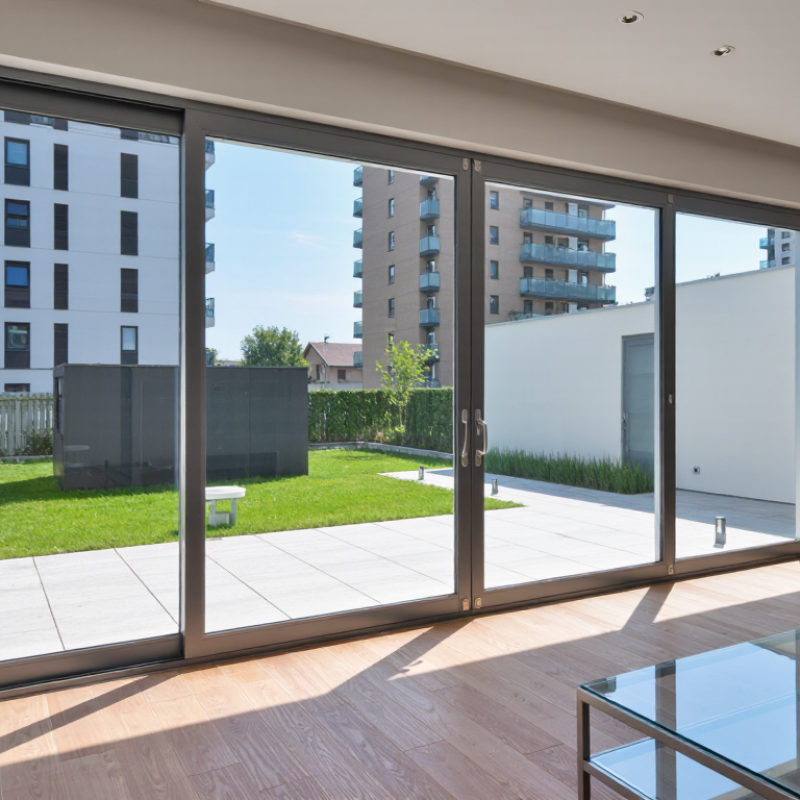
China Top Aluminium Sliding Doors Manufacturers?

What Defines a Top Aluminium Sliding Door Manufacturer in China?

What Defines a Top Aluminium Sliding Door Manufacturer in China?

A top aluminium sliding door manufacturer offers more than attractive catalog images. It understands profiles, glass performance, drainage, hardware, and installation conditions. Experienced teams can recommend suitable frame depths for coastal homes, high-rise apartments, or commercial entrances. They should explain thermal breaks, surface treatments, glazing options, and load limits in clear language.

A reliable manufacturer also controls production closely. Look for documented material specifications, stable welding or corner-joining methods, and repeatable quality inspections. Factory visits can reveal useful details: organized storage, calibrated cutting machines, protected glass racks, and sample doors that open smoothly. No factory is perfect. The important question is how openly it handles defects, delays, and design changes.

Tips: Request physical samples before placing a large order. Test the rollers, locks, seals, and drainage holes by hand. Ask for test reports, installation drawings, warranty terms, and replacement-part procedures. Confirm whether the quoted price includes packaging and export protection. Small omissions can become expensive problems.

Professional communication also matters. Strong manufacturers check opening sizes, wind exposure, glass requirements, and local installation habits before production. They should provide shop drawings for approval, not rely only on brief messages. A careful supplier welcomes technical questions and records every revision. Cheap pricing may look attractive, but inconsistent dimensions can create visible gaps, difficult installation, and unhappy customers.

Key Manufacturing Processes and Quality Standards

China Top Aluminium Sliding Doors Manufacturers?

Key Manufacturing Processes and Quality Standards

Top manufacturers are separated by process discipline, not catalogue size. Aluminium profiles begin with billet inspection, extrusion, aging, cutting, and thermal-break assembly. Operators should record die temperature, extrusion speed, coating thickness, and batch identity.

Small gaps matter. Poor corner crimping can cause air leakage, water entry, or sash movement months later. Global Market Insights reported that the global aluminium doors and windows market exceeded 70 billion US dollars in 2023. That growth increases pressure on factories to prove consistency, not merely offer attractive finishes.

Quality control should follow measurable standards.

ASTM E283 evaluates air leakage
ASTM E331 tests water penetration
ASTM E330 checks structural performance under pressure

European projects commonly reference EN 12207 and EN 12208 for air and watertightness classification. ISO 9001 adds process traceability, corrective actions, and documented inspections.

The International Energy Agency reported in 2023 that buildings consume about 30% of global final energy. A well-sealed sliding door can support efficiency, but its frame alone cannot fix poor installation.

Factory audits should examine drainage paths, roller adjustment, glass compatibility, and sample testing records. Certification helps. It is not proof of perfect production.

A factory may pass one laboratory sample and still show uneven results across later batches. That uncomfortable gap deserves attention.

Leading Regions for Aluminium Sliding Door Production in China

China Top Aluminium Sliding Doors Manufacturers?

Guangdong remains a major production base for aluminium sliding doors. Its Pearl River Delta combines extrusion mills, glass processors, hardware suppliers, and export ports. China Customs trade statistics for 2024 continue to show strong building-material shipments from Guangdong. The region suits projects needing custom colors, narrow frames, and fast container loading. Factory visits often reveal one practical detail: nearby suppliers reduce replacement time when glass or rollers fail.

Jiangsu and Zhejiang form another important manufacturing belt. Their workshops commonly serve eastern China, renovation contractors, and overseas distributors. The International Aluminium Institute reported that China produced about 41.5 million tonnes of primary aluminium in 2023, nearly 59% of global output.

That scale supports stable billet availability, but raw aluminium volume does not guarantee door quality. Fabrication accuracy still depends on alloy control, wall thickness, corner joining, and drainage design.

Fujian and Shandong also deserve attention. Fujian benefits from coastal logistics and established construction-material networks. Shandong offers strong aluminium processing capacity and competitive industrial pricing. Regional boundaries blur. Some companies source profiles in one province, assemble doors in another, and ship through a third port.

Buyers should check extrusion records, glass standards, air-leakage tests, and warranty procedures rather than judge by location alone. A polished sample can hide weak rollers. That is an uncomfortable possibility. Regional data identifies clusters, not dependable manufacturers.

How to Evaluate Chinese Sliding Door Manufacturers

Choosing among China’s top aluminium sliding door manufacturers requires more than comparing online prices. Examine the factory’s production depth, not just its showroom images. Ask for recent project photos, material specifications, and a live video inspection of cutting, welding, coating, and assembly areas. Reliable manufacturers should explain aluminium alloy grades, wall thickness, glass options, drainage design, and hardware performance clearly.

Request independent test reports for air tightness, water resistance, wind load, thermal insulation, and repeated opening cycles. Check whether the reports match the exact door system you plan to purchase. A generic certificate proves little. Review sample doors closely. Look for clean corner joints, smooth rollers, consistent powder coating, and secure locking points. Also confirm packaging details, replacement parts, production schedules, and quality inspection records. Written answers matter.

Tips: Compare at least three factories using the same technical checklist. Speak with an engineer, not only a salesperson. Ask how rejected products are handled. A small trial order can reveal more than a polished presentation. I once focused too heavily on a low quotation and overlooked weak packaging protection. That mistake created avoidable damage and delays. Leave room for correction. Even experienced buyers can miss details when drawings change late. A dependable manufacturer welcomes questions, records revisions, and accepts measurable inspection standards before shipment.

China Top Aluminium Sliding Doors Manufacturers? How to Evaluate Chinese Sliding Door Manufacturers

This procurement framework assigns practical evaluation weights to key areas when comparing aluminium sliding door manufacturers. Product performance should be verified through applicable standards such as GB/T 8478 for building external doors and windows, EN 14351-1 where European compliance is required, and documented quality-control procedures such as ISO 9001.

The percentages are evaluation weights, not company rankings or manufacturer performance results.

Customization, Certifications, Pricing, and Export Services

China’s top aluminium sliding-door manufacturers compete through customization, testing, and export support. Grand View Research valued the global aluminium doors market at approximately USD 8 billion in 2023. It also expects steady growth through 2030. This demand favors adaptable factories, not simply low quotations.

Customization should consider opening size, local climate, glass weight, drainage, and hardware cycles. For coastal buildings, request corrosion-resistant finishes and stainless-steel rollers. ISO 9001 indicates controlled production, but it does not prove door performance. Ask for air, water, wind-load, thermal, and cycle-test reports. CE marking may apply to certain European requirements, while North American projects often need reports aligned with regional standards. Certification claims need verification. That part is sometimes overlooked.

Pricing varies widely. An indicative factory range may be USD 120–450 per square metre, excluding premium glass, packaging, delivery, duties, and installation. Fortune Business Insights identifies renovation and energy efficiency as important market drivers. A cheaper frame can become expensive after freight and replacement parts. Export-ready suppliers should provide shop drawings, packing photos, commercial invoices, and clear Incoterms. Confirm lead times, spare rollers, installation guidance, and warranty limits in writing. In my experience, one missing drainage detail can delay an otherwise complete shipment. Some quotations still look professional but lack measurable specifications. That deserves a second review.

FAQS

What should define a top aluminium sliding door manufacturer?

It should understand profiles, glass, drainage, hardware, and installation conditions. It must explain technical limits clearly. Attractive catalog images are not enough.

Which Chinese regions produce many aluminium sliding doors?

Guangdong, Jiangsu, Zhejiang, Fujian, and Shandong are important production areas. Guangdong offers strong supplier networks and export access. Location helps, but it does not guarantee quality.

How can buyers inspect a manufacturer before ordering?

Request a live factory video or arrange a site visit. Check cutting machines, glass racks, storage areas, and assembly lines. Look for organized work, not perfect decoration.

What should a buyer test on a physical sample?

Slide the door several times by hand. Check rollers, locks, seals, corner joints, and drainage holes. Notice uneven movement or visible gaps.

Which technical documents should manufacturers provide?

Ask for material specifications, shop drawings, test reports, and inspection records. Confirm air, water, wind, and thermal performance. Generic certificates may not match your door system.

How should buyers compare different manufacturers?

Use the same checklist for at least three factories. Compare alloy grades, wall thickness, glass, hardware, packaging, and delivery times. Speak with an engineer when possible.

Why can a low quotation become expensive?

Low prices may exclude packaging, export protection, replacement parts, or better hardware. Weak dimensions can create installation gaps. Damaged glass creates more delays.

How should a reliable manufacturer handle design changes?

It should record every revision and provide updated drawings for approval. It should ask about opening sizes, wind exposure, and local installation habits. Late changes are easy to underestimate.

Is any factory completely perfect?

Probably not. A dependable factory explains defects, delays, and rejected products honestly. I would still check every sample, because confidence can become careless.

Conclusion

Choosing among China’s top Aluminium Sliding Doors manufacturers requires more than comparing prices. A reliable supplier should demonstrate strong design capability, consistent material control, modern production equipment, and strict quality management. Key processes may include precision cutting, frame assembly, surface treatment, glass installation, and thorough testing for strength, smooth operation, weather resistance, and long-term durability. Major production regions often benefit from mature supply chains, skilled labor, and efficient access to supporting hardware and architectural materials.

Buyers should evaluate manufacturers through factory audits, product samples, technical documentation, quality certificates, export experience, and communication responsiveness. It is also important to confirm customization options, including dimensions, colors, glass specifications, opening configurations, insulation performance, and hardware selections. Transparent quotations should explain tooling, packaging, shipping, and after-sales responsibilities. By reviewing certifications, production capacity, lead times, packaging standards, and service capabilities, international buyers can identify a dependable partner for Aluminium Sliding Doors and reduce quality, delivery, and project coordination risks.

Seraphina

Seraphina

Seraphina is a dedicated marketing professional with deep expertise in strategic communication, content development, and customer-focused brand growth. As a key member of the company’s marketing team, she combines industry insight with a clear understanding of customer needs to present complex......