Featured CE-Certified Aluminium Bedroom Window Systems
Factory-direct architectural fenestration manufactured under ISO 9001 quality matrices and tested in accordance with European Norms (EN 12207 Air Permeability, EN 12208 Water Tightness, EN 12210 Wind Resistance, and EN ISO 717-1 Acoustic Insulation).
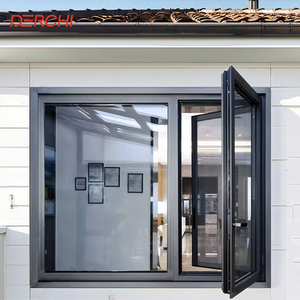 CE / NFRC Certified
NFRC Hurricane Proof Impact Window Energy Saving Low E Glass Thermal Break Casement Aluminium windows
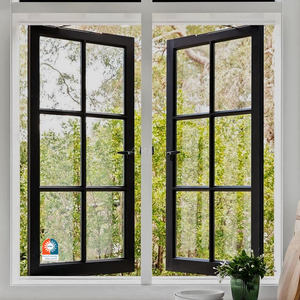 EN 14351-1 Class 4
AMJ Custom Modern Project Heat Insulated Soundproof Triple Double Glazed Glass Aluminium Casement Windows
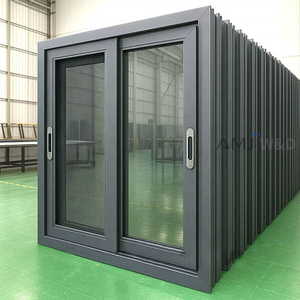 CE / AS2047
Energy Saving Aluminium Windows Thermal Break Double Glazed Aluminum Frame 3 Tracks Sliding Window
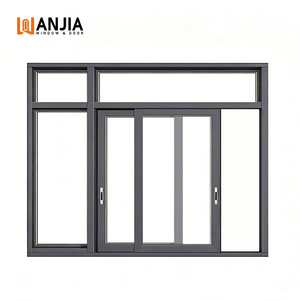 AS2047 N6 / CE
WANJIA Hurricane Impact Resistance Sliding Windows Aluminium Windows And Doors for House & Villa
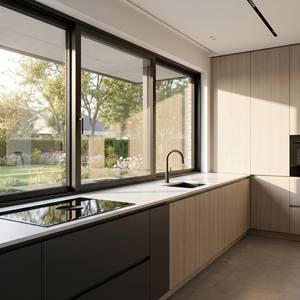 EN 12208 Class 9A
Noise Reduction and Water Resistance Thermal Insulation Energy Saving QS MD80 Aluminium Sliding Window for Bedroom
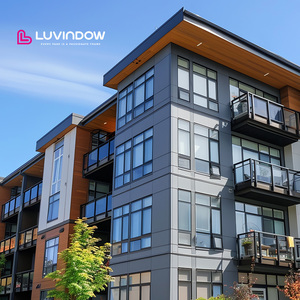 EN ISO 717-1 Acoustic
High Performance Thermal Break Aluminium Windows Double Glazed Soundproof Casement Windows for Hotel Apartment
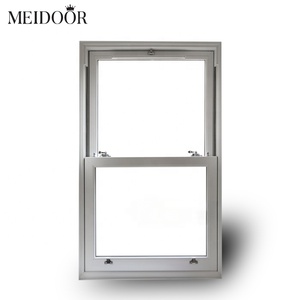 PAS 24 / CE EN 14351
Energy Efficient Anti-Theft Aluminium Bedroom Internal Vertical Lift Sliding Double Hung Glass Windows
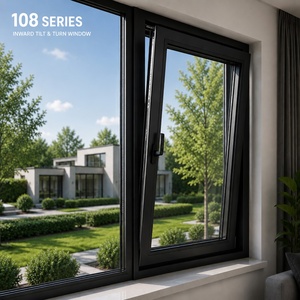 CE Passive Standard
NFRC Four Seal Thermal Break Aluminium Alloy Modern Casement Swing Windows with 54mm Insulation for High Rise
Engineering Bedroom Fenestration: The Acoustic & Microclimatic Imperative
In modern architectural specification, bedroom windows represent the single most sensitive building envelope component. Unlike commercial facades or living spaces where generalized lighting and thermal regulation dominate, bedroom fenestration directly influences human restorative physiology. Sleep disruption occurs at noise pressure thresholds exceeding 30 to 35 dBA (World Health Organization Night Noise Guidelines for Europe). Achieving this requires calculating not just a simple weighted Sound Reduction Index (Rw), but rigorously accounting for the low-to-mid frequency urban traffic spectrum represented by the spectrum adaptation term Rw + Ctr.
Under European Construction Products Regulation (CPR 305/2011) and the harmonized product standard EN 14351-1, CE marking of aluminium windows demands verified Declaration of Performance (DoP) data for essential characteristics. For high-density multi-family residences, suburban villas, and luxury hospitality developments, our CE-certified aluminium bedroom windows integrate multichambered 6063-T6 architectural extrusions joined by PA66 GF25 (25% glass fiber reinforced polyamide) thermal barriers. This decoupled frame design eliminates thermal bridging, prevents interior surface condensation, and guarantees an overall assembly thermal transmittance down to Uw ≤ 0.8 W/(m²·K) when paired with warm-edge triple glazed low-emissivity units.
Acoustic performance cannot rely solely on mass law. High-frequency airborne sound waves and low-frequency urban rumblings require asymmetric laminated glass assemblies—such as 6mm Toughened + 16mm 90% Argon Gas Cavity with Warm Edge Spacer + 44.2 Acoustic PVB Laminated Glass. Combined with multi-point perimeter compression locking hardware and continuous co-extruded vulcanized EPDM triple gaskets, our assemblies reach acoustic dampening ratings up to Rw 48 dB, establishing a pristine, undisturbed sleep sanctuary regardless of exterior ambient environmental stress.
| Profile System Configuration | Thermal Barrier (PA66) | Glazing Unit Architecture | Uw Value [W/m²K] | Acoustic Decibel Rating | EN 12207 / EN 12208 Rating | CE CPR Conformity |
|---|---|---|---|---|---|---|
| Casement 85 Passive Series | 54mm Multichamber PA66 | Triple Glazed (6 Low-E + 16Ar + 4 + 16Ar + 44.2 AcPvb) | 0.79 W/m²K | Rw (C; Ctr) = 48 (-1; -5) dB | Class 4 / Class E1200 | Verified Level 1 |
| Casement 70 Architectural | 34mm Technoform Strip | Double Glazed (6 Low-E + 18Ar + 8.76 Lami Pvb) | 1.18 W/m²K | Rw (C; Ctr) = 42 (-2; -6) dB | Class 4 / Class 9A | Verified Level 1 |
| MD80 Heavy-Duty Sliding | 28mm Reinforced Core | Double Insulated (6mm Toughened + 16Ar + 6mm) | 1.35 W/m²K | Rw (C; Ctr) = 38 (-1; -4) dB | Class 3 / Class 8A | Verified Level 3 |
| High-Rise Tilt & Turn Series | 42mm Multi-Cavity Isolator | Triple Glazed Acoustic (8 Low-E + 14Ar + 6 + 14Ar + 6.38) | 0.89 W/m²K | Rw (C; Ctr) = 45 (-2; -5) dB | Class 4 / Class 9A (C5 Wind) | Verified Level 1 |
Global Procurement & Specification Trends for Bedroom Windows
How real estate developers, facade engineers, and tier-1 general contractors are shifting procurement strategies toward certified sustainability, high-performance acoustics, and lifecycle durability.
Passive Envelope Decarbonization
BREEAM, LEED v4.1, and EU EPBD recast directives mandate fenestration envelopes with whole-unit U-values below 1.0 W/(m²·K). Procurement teams are standardizing on primary low-carbon recycled aluminium (containing ≥75% post-consumer scrap) paired with cellular bio-based polyamide thermal breaks to drastically reduce upfront embodied carbon (A1-A3 lifecycle phase).
Acoustic Night-Zone Specialization
Developers are discarding single-specification window packages. Procurement contracts now demand distinct acoustic zoning: living rooms specify standard 32-35 dB glass, while master bedrooms mandate asymmetric sound-dampening laminate systems rated at minimum Rw 42 to 46 dB, integrating micro-ventilation trickle baffles tested to EN 20140-10.
Direct Manufacturer Consolidation
Global supply chain volatility has accelerated direct-from-tier-1-manufacturer sourcing. Importers eliminate 25-35% distributor markups by engaging integrated mega-factories capable of managing extrusion anodizing, precision CNC miter milling, automated unit assembly, and factory-certified crating under one traceable ISO/CE roof.
Burglary Resistance & Fall Prevention
Bedroom safety standards across high-rise residential properties now require mandatory dual-function performance: CE Class RC2 / RC3 anti-burglary multi-point perimeter gear coupled with integrated stainless steel child-safety limiters or concealed European tilt-first (TBT) gear that enables safe night-time aeration.
Technological Frontiers: Next-Generation Aluminium Fenestration
The convergence of building physics and intelligent automation is redefining the performance envelope of aluminium bedroom windows. We are actively incorporating four breakthrough technologies into commercial mass production:
1. Vacuum Insulated Glazing (VIG) Integration: By replacing standard thick double-glazed units with slim 8.3mm tempered vacuum glass containing a 0.15mm high-vacuum gap, overall window profile depth can be reduced while achieving thermal performance of Ug = 0.45 W/(m²·K). This innovation provides ultra-slim frame profiles with unprecedented thermal efficiency and deep acoustic decoupling for urban sleep environments.
2. Concealed Sash Kinematics & Ultra-Slim Sightlines: Modern European architectural trends prioritize maximum visible daylight. Concealed-sash configurations hide the operable casement frame behind the outer structural frame rebate, delivering an unbroken minimalist sightline of only 58mm from the exterior while maintaining multi-point perimeter gasket compression against 1200 Pa driving-rain pressures.
3. Smart Aeration & Enthalpy Micro-Ventilation: To address indoor carbon dioxide buildup during sleep without compromising building security or acoustic barriers, next-generation frames incorporate decentralized concealed mechanical heat-recovery ventilation (HRV) channels directly within the top profile head. These units filter PM2.5 particulates, recover up to 82% of sensible indoor heat, and attenuate incoming street noise via labyrinth acoustic baffles.
4. Electrochromic & Photovoltaic BIPV Sashes: Dynamic switchable electrochromic glass allows occupants to modulate visible light transmittance from 60% down to under 1% via smart-home automation or voice commands, eliminating dust-collecting bedroom blackout curtains while maintaining total acoustic and thermal envelope integrity.
Frequently Asked Technical & Procurement Questions
Detailed engineering guidance for facade consultants, quantity surveyors, real estate developers, and international fenestration importers.
Plan Your Commercial Window Sourcing with Factory Direct Engineers
Submit your architectural drawings, window schedules, acoustic decibel targets, or tender specifications. Our Foshan engineering technical team provides certified CAD shop drawings, acoustic simulations, and competitive factory-direct commercial estimates within 24 business hours.