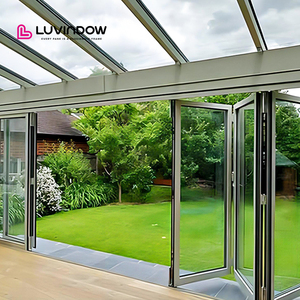
 CE / DIN Standard
German Standard Aluminium Bifold Accordion Windows And Doors Exterior Entry Door
Heavy Duty Rail
EPDM Triple Seal
Uw ≤ 1.3 W/m²K
Tested rigorously under international building codes, our systems deliver certified thermal transmission coefficients, severe cyclonic resistance, and acoustical decibel dampening for world-class envelopes.
CE / DIN Standard
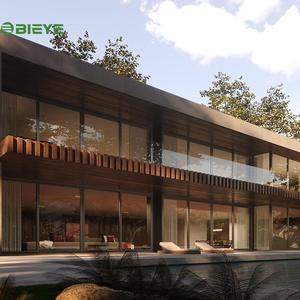 Acoustic Class 4
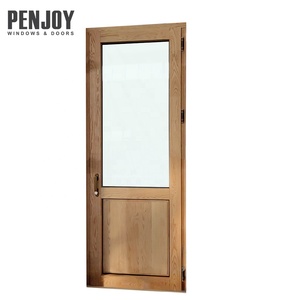 Passive House Spec
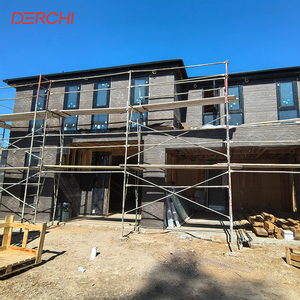 NFRC / CE Rated
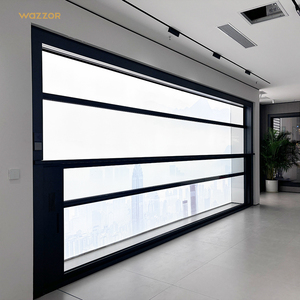 BMS / Smart IoT
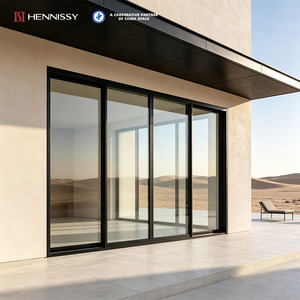 U-Value 1.7 Class
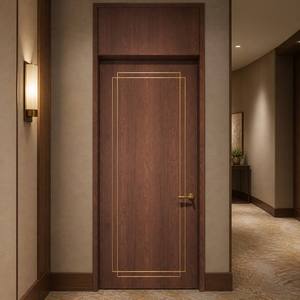 WH / UL Fire Rated
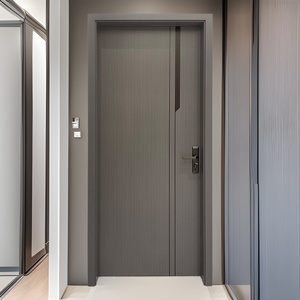 Acoustic Interior
A rigorous regulatory evaluation of harmonized European standards, initial type testing (ITT), and factory production control (FPC) for high-performance fenestration exports.
In modern architectural engineering, specifying exterior glazed curtain walling, ribbon casements, and oversized bifold/pivot portals demands verifiable structural compliance. Within the European Union and recognized reciprocal markets across the Americas, the Middle East, and Asia-Pacific, conformity is governed by the Construction Products Regulation (CPR 305/2011) and harmonized standard EN 14351-1. For institutional procurers, real estate trusts, and façade engineers, obtaining a genuine Certificate of Conformity is not merely a bureaucratic prerequisite; it is an empirical validation of life-safety mechanics, dynamic weather-tightness, and building energy lifecycle economics.
A certified CE aluminium door and window manufacturing facility must implement an audited Factory Production Control (FPC) system under ISO 9001:2015, paired with mandatory third-party notified body laboratory assessments. These evaluations govern parameters including hydrostatic water tightness under dynamic gale pressure, cyclic mechanical endurance up to 100,000 actuations without hinge or roller drift, and acoustic index validation across high and low frequency spectra.
| Performance Indicator | Harmonized Test Standard | DERCHI Factory Achieved Metrics | Regulatory Benchmark | Engineering Significance |
|---|---|---|---|---|
| Air Permeability | EN 12207 / EN 1026 | Class 4 (600 Pa ≤ 0.75 m³/h·m) | Class 2 or 3 baseline | Eliminates parasitic exfiltration, stabilizes HVAC mechanical loads. |
| Watertightness | EN 12208 / EN 1027 | Class E1200 (1200 Pa static/pulsing) | Class 7A (300 Pa) | Critical for tropical typhoon regions and high-altitude coastal condominiums. |
| Wind Load Resistance | EN 12210 / EN 12211 | Class C5 / AS 2047 N6 (Up to 4500 Pa) | Class B3 / C2 | Exceeds 150 mph cyclonic deflection limits (< L/300) without permanent distortion. |
| Thermal Transmittance (Uw) | EN ISO 10077-1 / 10077-2 | 0.79 to 1.30 W/(m²·K) | ≤ 1.80 W/(m²·K) | Integrates 34mm+ PA66GF25 polyamide multi-chamber thermal breaks. |
| Acoustic Insulation (Rw) | EN ISO 717-1 / EN ISO 10140 | Rw (C; Ctr) = 44 (-1; -4) dB | ≥ 32 dB | Dampens low-frequency commercial traffic and aviation turbulence. |
Our extrusions exclusively utilize prime virgin A00 electrolytic aluminum ingot, melted and aged to aerospace T5 and T6 tempers. Unlike inferior scrap-melted alloys containing high zinc and iron impurities that cause intergranular stress cracking, DERCHI extrusions achieve yield strengths exceeding 210 MPa with uniform grain structures optimized for high-yield corner crimping.
Thermal breaks utilize 25% glass-fiber reinforced Polyamide (PA66GF25) featuring precision-engineered expansion coefficients matching aluminum alloy (2.3 x 10^-5 K^-1). This zero-shear assembly prevents profile delamination during extreme seasonal thermal cycles spanning -35°C Scandinavian winters to +55°C Middle Eastern hyper-arid summers.
Insulated Glass Units (IGUs) are processed on robotic Lisec automated sealing lines utilizing warm-edge composite spacers (Swisspacer / Technoform) and automated 95%+ concentration argon gas filling. Secondary structural silicone barriers prevent helium/argon vapor permeation, backed by a 25-year desiccant performance guarantee.
Operating from Foshan, Guangdong—the world’s epicentre of advanced architectural aluminium manufacturing—Guangdong Dejiyoupin Doors and Windows Co., Ltd. (DERCHI) represents the gold standard of original equipment manufacturing (OEM) and architectural specification design.
Ranked among the Top 10 National Architectural Fenestration Brands in China, our integrated manufacturing footprint spans a massive 180,000 square-metre production complex staffed by over 600 skilled technicians, CAD engineers, and façade specialists. Backed by more than 100 invention, utility model, and industrial appearance patents, DERCHI supplies turnkey exterior and interior fenestration packages for landmark hotels, luxury residential compounds, and institutional towers across North America, Europe, Australia, and Southeast Asia.


Every DERCHI profile undergoes computer-controlled fabrication via automated 5-axis German CNC machining centers. Mortise joints, hardware cavity millings, weep-hole discharge paths, and corner miter cuts are executed within a +/- 0.1mm tolerance window, ensuring hermetic sealing and rapid, error-free jobsite installation.
Our on-site national-grade test chamber conducts real-time hydrostatic wind-driven rain testing, acoustic vibration scans, and extreme cyclonic structural load simulations up to the Australian AS 2047 N6 standard—the absolute peak classification for typhoon and severe storm resistance.
How institutional property developers, general contractors, and procurement executives are managing supply-chain risk, decarbonization mandates, and high-performance building envelope demands.
Global developers are aggressively bypassing domestic distributors to contract directly with tier-1 Chinese manufacturers. Factory-direct engineering saves 30% to 45% in margin stack while providing direct access to CAD detailing and customized extrusion dies.
Project schedules no longer tolerate manual paper schedules. Leading factories now supply native Revit and IFC files containing precise thermal transmittance, structural weights, and expansion tolerances ready for instant clash detection in cloud model coordinates.
With stringent European CBAM (Carbon Border Adjustment Mechanism) and LEED v4.1 certifications, procurement contracts favor factories powered by renewable hydro/solar sources with verified Environmental Product Declarations (EPD) and recycled scrap alloy ratios.
Rising sea surface temperatures are driving up-zoning for hurricane and typhoon wind loads. Sourcing mandates increasingly specify positive-locking multi-point ESP security mechanisms and minimum 600 Pa dynamic water resistance across coastal developments.
From nanotechnology aerogel cavity barriers to electrochromic dynamic solar shading, discover how next-generation aluminium fenestration is redefining building envelope functionality.
By filling empty profile voids with hydrophobic silica aerogels exhibiting thermal conductivities as low as 0.014 W/(m·K), frame heat dissipation is reduced by an extraordinary 52%. This allows slim 65mm sash profiles to meet strict Passive House criteria without cumbersome frame depths.
Heavy commercial lift-and-slide portals weighing up to 800 kg are now operated via brushless micro-motors completely hidden within the header profile. These systems interface seamlessly with KNX, Modbus, or BACnet building management systems for automated night-flush cooling cycles.
For beachfront and harsh petrochemical exposures, conventional coatings degrade within 5 years. DERCHI utilizes 3-coat/2-bake polyvinylidene fluoride (PVDF) and Qualicoat Class 3 super-durable fluoropolymer powders backed by 30-year non-chalking, salt-spray immersion warranties.
Essential due-diligence clarity regarding certifications, production lead-times, container optimization, and factory audit verification.
Every fenestration batch manufactured by DERCHI is accompanied by a formal Declaration of Performance (DoP) referencing harmonized standard EN 14351-1. We supply the unique CE identification mark, Notified Body initial type test (ITT) numbers for air/water/structural properties, and third-party ISO 9001 FPC audit certificates for unhindered customs clearance across the EU, UK (UKCA), and global jurisdictions.
Standard architectural configurations with stocked powder-coat finishes (Matte Black, Architectural White, Anthracite Grey) require 25 to 30 calendar days from CAD shop drawing sign-off. Bespoke custom dies, specialized PVDF colors, or high-performance curved insulated glass units require 35 to 45 days. Expedited production staging is available for phased multi-container commercial deliveries.
Yes. We welcome global inspection firms (SGS, TUV, Bureau Veritas, Intertek) or client representatives to our Foshan base. We facilitate full witness testing on our calibrated air-water-structural test rigs, allow physical dimensional verification using optical laser calipers, and host live high-definition 360° virtual video audits for international clients unable to travel.
We deploy export-grade steel-reinforced, fully enclosed fumigated plywood crates. Profile surfaces are wrapped in 0.2mm anti-scratch protective film, corners are shielded with high-density EVA shock bumpers, and desiccant packs are enclosed within moisture-sealed poly wraps. Crates feature integrated heavy-duty forklift fork slots and balance points to ensure zero damage throughout transshipment.
Yes. While we produce high-performance proprietary concealed multi-point hardware, we maintain direct tier-1 supply partnerships with world-renowned European hardware manufacturers including Siegenia, Roto Frank, Hoppe, Sobinco, and Savio. Hardware packages are pre-routed, calibrated, and cycle-tested prior to crating.
To receive an itemized bill of quantities (BOQ) and preliminary CAD details within 24 hours, provide: (1) Opening window/door schedules with rough opening dimensions (W x H); (2) Architectural drawings or elevation cross-sections; (3) Preferred glazing makeup (Double/Triple Low-E, acoustic laminated, or frosted); (4) Surface finish requirement; and (5) Project delivery port.
Whether you require CE-certified thermal-break fenestration for an upcoming multi-unit high-rise, bespoke pivot doors for a luxury resort, or custom OEM profile extrusions, our Foshan engineering team is ready to assist with CAD take-offs, DoP certificates, and transparent factory-direct pricing.