Featured CE-Compliant Door & Window Systems
Precision-fabricated architectural fenestration assemblies meeting stringent European structural, acoustic, and thermal transmission specifications. Designed for seamless project integration across global climactic zones.
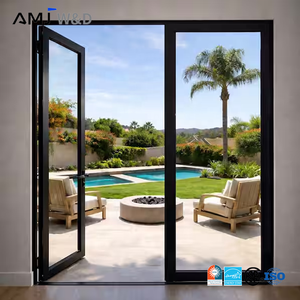
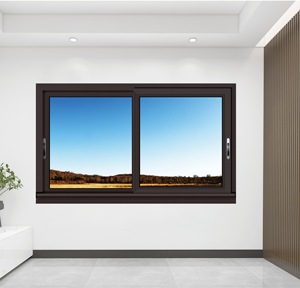
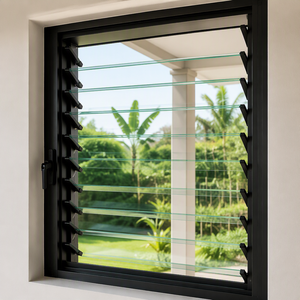
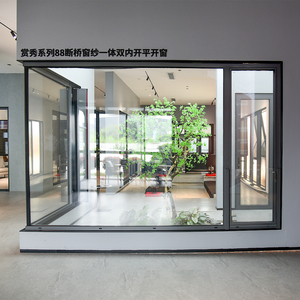
Engineering Principles of CE-Marked White Aluminium Entrance Systems
Navigating mechanical integrity, European harmonization mandates, thermodynamic isolation, and exterior photostability in commercial and high-end residential fenestration procurement.
The specification of exterior entrance assemblies within regulated building jurisdictions requires adherence to rigorous mechanical and thermodynamic benchmarks. In the European Union and affiliated trade corridors governed by the Construction Products Regulation (CPR 305/2011), an external pedestrian doorset cannot simply be designated as high quality through descriptive prose. It must undergo standardized third-party conformity assessments in accordance with EN 14351-1:2006+A2:2016 (Windows and doors - Product standard, performance characteristics). For architectural specifiers, general contractors, and volume importers procuring white aluminium entrance doors, CE certification constitutes an uncompromised legal and structural validation of fitness for purpose.
Aluminium as an architectural substrate delivers unparalleled strength-to-weight ratios, structural modulus, and dimensional stability when contrasted with unreinforced polyvinyl chloride (UPVC) or engineered softwoods. However, when specifying a pristine white surface finish (most commonly standardized against the European RAL color space, such as RAL 9016 Traffic White, RAL 9010 Pure White, or RAL 9003 Signal White), specialized metallurgical and coating engineering must be implemented to circumvent degradation factors including ultraviolet (UV) induced chalking, photo-oxidation yellowing, thermal bowing (bimetallic expansion differential), and micro-cracking at mitered joints.
Mandatory Declaration of Performance (DoP) Parameter Set
Under EN 14351-1, every CE-marked entrance door exported to European territories or sovereign territories adhering to EN standards must possess an audited Declaration of Performance. Crucial performance metrics evaluated in notified laboratories include Air Permeability (EN 12207 Class 1 to Class 4), Water Tightness (EN 12208 Class 1A up to Class 9A or Exxx special exposure), Wind Load Resistance (EN 12210 Class 1 to Class 5 with deflection criteria A, B, or C), and Overall Thermal Transmittance (Uw calculated via EN ISO 10077-1 and validated through EN ISO 10077-2 finite element thermal modeling).
Alloy Metallurgy: 6063-T5 vs. 6063-T6
DERCHI extrusions employ virgin primary aluminium billet homogenized to 6063-T5/T6 architectural tolerances. Minimum tensile strength reaches 160-205 MPa with a Brinell hardness of ≥ 8.5 HW, eliminating sagging across extra-tall 3000mm pivot door frames.
Qualicoat Class 2 Architectural Finishes
White finishes undergo automated chromate-free multi-stage pre-treatment, followed by thermosetting electrostatic powder application (60-80μm). Rated to Qualicoat Class 2 superdurable criteria, retaining >90% gloss after 3 years of accelerated Florida weathering exposure.
Thermodynamic & Acoustic Isolators
To eliminate interior condensation and mitigate the bimetal effect when white outer faces absorb variable solar loads, our profiles integrate 24mm to 34mm PA66-GF25 (polyamide reinforced with 25% glass fiber) thermal barriers, alongside multi-point acoustic EPDM seals.
Commercial Specification Performance Benchmarking
Direct comparative analysis evaluating white architectural aluminium assemblies against legacy entrance door substrates.
| Performance Characteristic | CE Thermal Break Aluminium (White) | Standard Non-Thermal Aluminium | Reinforced UPVC (White Vinyl) | Solid Core Engineered Timber |
|---|---|---|---|---|
| Structural Wind Load (EN 12210) | Class 4 to 5 (Up to 3000 Pa) | Class 3 to 4 (1600 - 2000 Pa) | Class 2 to 3 (Sagging at >2.4m) | Class 3 (Dependent on species) |
| Thermal Transmittance (Uf / Ud) | Ud 0.9 - 1.4 W/m²K | Ud 3.8 - 5.2 W/m²K (Condensation Risk) | Ud 1.2 - 1.6 W/m²K | Ud 1.3 - 1.8 W/m²K |
| UV Photostability & Anti-Yellowing | Qualicoat Class 2 (Zero yellowing) | Standard Powder (Moderate fading) | Titanium Dioxide stabilized (Prone to yellow) | Topical paint cracking / peeling |
| Acoustic Isolation (Rw index) | Rw 38 dB to 44 dB | Rw 25 dB to 28 dB | Rw 30 dB to 34 dB | Rw 32 dB to 36 dB |
| Bimetal Deflection Resistance | Anti-Bi-Metal Gliding Polyamide Struts | Rigid Monolithic (Prone to latch jamming) | High thermal expansion coefficient | Moisture expansion / warping |
| Maintenance & Design Lifecycle | 35+ Years (Neutral wash only) | 20 Years | 12 - 15 Years (Surface degradation) | 5 - 8 Years periodic restaining |
Strategic Procurement Trends in Architectural Fenestration
Key supply chain, decarbonization, and design shifts governing international aluminium door sourcing through 2030.
Circular Metallurgy & Low-Carbon Billets
Global developers increasingly mandate Environmental Product Declarations (EPDs). Procuring aluminium doors processed using hydro-electric smelting (producing <4.0 kg CO2e/kg Al) enables green building rating points under LEED v4.1, BREEAM, and DGNB certifications.
Prefabricated Cassette & Unitized Fenestration
On-site labor overhead is shifting commercial procurement toward factory-glazed, unitized white door cassettes with pre-milled anchor channels, sub-sills, and dry-glazed pre-set gaskets, truncating on-site installation intervals by up to 60%.
Electro-Mechanical IoT & Biometric Ingress
Modern luxury white pivot and entry systems now feature concealed multi-point motorized locks, low-profile perimeter magnetic reed switches, motorized automatic opening rams, and encrypted biometric / RFID controllers compatible with KNX and Crestron building automation protocols.
Slim Sightlines with Concealed Load Pivots
The convergence of structural minimalist design favors monolithic full-height leaves with flush architectural coplanarity, concealed floor-spring pivot hinges supporting loads up to 450 kg, and ultra-narrow outer frame perimeters for maximum clear glass daylight aperture.
Why Global Tier-1 Contractors Partner with DERCHI
Operating from the fenestration capital of Foshan, Guangdong Dejiyoupin Doors and Windows Co., Ltd. integrates 25+ years of extrusion processing, bespoke engineering, and global logistics execution.
180,000 m² Advanced Production Base
Equipped with state-of-the-art multi-axis CNC machining centers, automated electrostatic powder coating lines, precision crimping machines for thermal struts, and rigorous in-house metallurgical testing laboratories capable of handling large-scale commercial developments.
Rigorous Certifications: CE, AS 2047, ISO, UL
Our fenestration assemblies are certified under European CE (EN 14351-1), Australian AS 2047 N6 (cyclone grade water/wind tightness), ISO 9001:2015 quality management, and UL fire-rating standards, backed by third-party testing reports directly verifiable by local building authorities.
Global Project Track Record & WORLDBEX Acclaim
From prestigious private villa estates across the United States, Canada, Australia, and the Middle East to major developments across Southeast Asia highlighted during our celebrated showcase at WORLDBEX 2025 (Philippines), our doors demonstrate proven longevity.
Frequently Asked Questions for Sourcing & Specification
Comprehensive architectural and transactional answers covering structural tolerances, CE documentation, sea freight containment, and climatic customizations.
QWhat specific test evidence accompanies your CE-certified white aluminium doors?
Each commercial consignment is provided with a full Declaration of Performance (DoP) pursuant to EN 14351-1:2006+A2:2016. Testing protocols are conducted by accredited notified body laboratories, documenting precise ratings for air permeability (EN 12207 Class 3/Class 4), watertightness under static/pulsating pressure (EN 12208 Class 7A-9A), wind resistance (EN 12210 Class C3/C4), acoustic performance (EN ISO 717-1), and thermal insulation calculations (EN ISO 10077-1/2).
QHow is the white powder coating safeguarded against coastal saline corrosion and tropical UV?
Our architectural white coatings strictly comply with Qualicoat Class 2 specifications. The pre-treatment involves an automated de-greasing, acid etching, and non-chromate conversion coating to create an impenetrable passivation layer on the 6063 aluminium alloy. The applied thermoset fluoropolymer or superdurable polyester powder withstands over 1,000 hours of acetic acid salt spray (AASS according to ISO 9227) without blister formation or intergranular corrosion.
QHow does your engineering eliminate the "bimetal effect" on tall exterior white doors?
When dark interiors contrast with bright exterior solar radiation, substantial temperature gradients can cause standard composite aluminium leaves to bow outward, leading to latch misalignments. DERCHI solves this by incorporating patented split polyamide thermal break profiles (anti-bi-metal sliding bars). These allow differential thermal movement between the interior and exterior aluminium structural extrusions without inducing axial sash distortion.
QCan opening dimensions, glazing inserts, and hardware suites be custom specified?
Yes. As an OEM/ODM manufacturing facility with an in-house team of facade and structural engineers, we tailor 100% of door heights (up to 3.5m in single-leaf pivot doors), widths, transom panels, sidelights, and threshold configurations. We accommodate low-E double and triple glazed units (up to 44mm overall thickness) with argon gas fills, as well as European standard mortise hardware, multipoint panic devices, and smart access handles.
QWhat packaging and containerization protocols are utilized for long-distance maritime export?
To eliminate surface marring, gouging, or humidity corrosion during 30 to 45-day ocean transit, every aluminium profile is masked with protective PE tape, wrapped in shock-absorbing EPE closed-cell pearl foam, and enclosed in heavy-duty moisture-barrier films. Entire assemblies are packed into fully fumigated, steel-banded OSB composite crates, engineered for rapid forklift handling and zero container movement.
QHow are shop drawings and structural calculations managed for project tenders?
Upon receipt of your project schedules, floor plans, or architectural CAD files, our technical department generates comprehensive shop drawings within 24 to 48 hours. These include profile cross-sections, structural moment of inertia calculations (Ix, Iy), anchorage fastening details, thermal boundary points, and water drainage schematics for local code approval prior to extrusion cutting.
Ready to Specify or Procure CE-Certified Aluminium Doors?
Connect directly with our engineering team in Foshan. Submit your door schedules, project elevation drawings, or bill of quantities (BOQ) to receive a detailed technical proposal, thermal modeling data, and volume export quotations within 24 hours.
Send an Inquiry