180,000㎡
Intelligent Manufacturing Base
600+
Skilled Engineers & Technicians
100+
Global Patents & Testing Audits
25+
Years Global Fenestration Authority
High-Performance Fenestration Portfolio
Precision Systems Engineered for Demanding Architecture
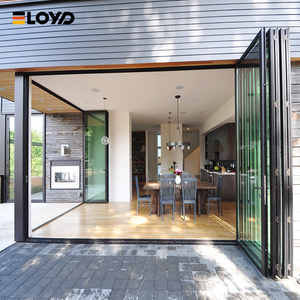
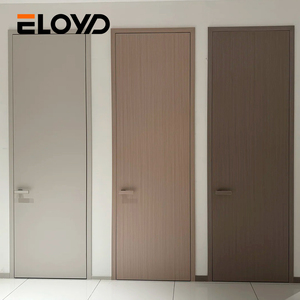
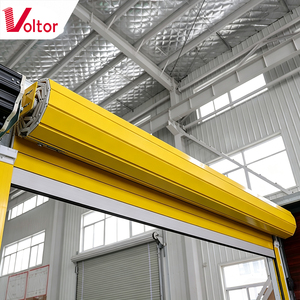
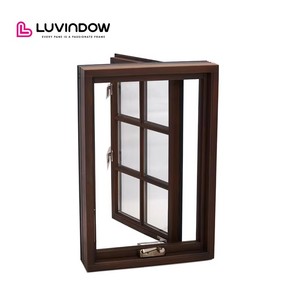
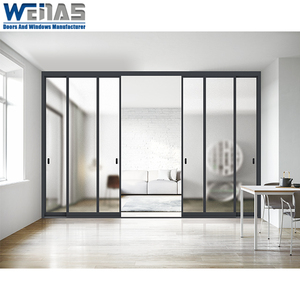
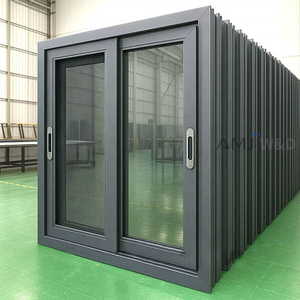
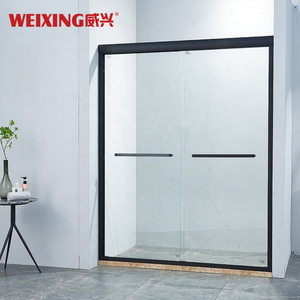
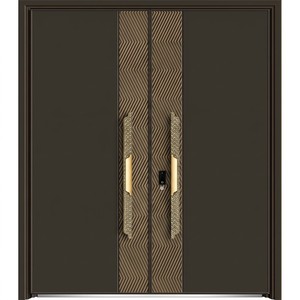
Explore our high-performance line of CE certified aluminum-wood composite doors, insulated casements, heavy-duty sliding systems, and hurricane-rated pivot solutions direct from our Foshan production facility.
Engineering Whitepaper & Specification Standard
The Engineering Anatomy of CE Certified Aluminum-Wood Composite Doors
In contemporary building science, the convergence of aesthetic warmth and structural envelope performance is realized through aluminum-wood composite doors. Modern architectural designs demand materials capable of withstanding extreme environmental loads while conforming to stringent carbon reduction policies such as the European Union's Energy Performance of Buildings Directive (EPBD) and international green building benchmarks (LEED v4.1, BREEAM). A certified CE mark (harmonized standard EN 14351-1:2006+A2:2016) serves not merely as a border passport, but as an empirical guarantee that fenestration units meet legal thresholds for mechanical strength, watertightness, air permeability, and thermal transmittance (U-factor).
The fundamental structural advantage of high-end composite door engineering lies in systemic dissociation. By mechanically bonding cold-formed or extruded 6063-T6/6060-T6 aluminum alloy profiles to sustainably harvested timber (FSC-certified European White Oak, Larch, or Black Walnut) via specialized polymer nylon connecting clips (PA66 GF25), the system negates internal shear stress. Because aluminum and natural timber exhibit distinctly divergent linear thermal expansion coefficients (Aluminum: ~23 × 10⁻⁶ /K; Wood along the grain: ~5 × 10⁻⁶ /K), rigid lamination inevitably results in delamination, warping, and perimeter seal degradation under tropical heat or sub-zero freeze-thaw cycles. Our engineered clip attachment system accommodates independent thermodynamic displacement while maintaining a hermetic seal against sound and draft.
| Performance Characteristic | Test Methodology / Standard | Engineering Value / Benchmark | Architectural Relevance |
|---|---|---|---|
| Thermal Transmittance (Ud) | EN ISO 10077-1 / EN ISO 10077-2 | 0.79 – 1.1 W/(m²·K) | Passive House Certified; minimizes HVAC cooling/heating loads. |
| Wind Load Resistance | EN 12210 / AS 2047 Test N6 | Class C5 / Class E3000 (>3000 Pa) | Engineered for coastal high-rises and super-typhoon wind forces. |
| Acoustic Attenuation (Rw) | EN ISO 10140-2 / ISO 717-1 | 38 dB – 46 dB (Triple Glazed Low-E) | Decouples metropolitan ambient noise; critical for luxury hotels. |
| Watertightness | EN 12208 | Class 9A / E1200 (1200 Pa) | Prevents water ingress during severe wind-driven monsoon rains. |
| Air Permeability | EN 12207 | Class 4 (Highest Industrial Rating) | Eliminates structural air drafts and unwanted building exfiltration. |
Beyond baseline thermal metrics, durability against environmental degradation requires multi-stage exterior surface engineering. Profiles processed on automated horizontal powder-coating and fluorocarbon (PVDF) lines achieve Qualicoat Class 2 compliance, guaranteeing resistance to UV fading, gloss reduction, and marine salt-fog corrosion (tested to ASTM B117 standards for >3,000 hours). Internally, timber cores undergo computer-controlled multi-axis kiln drying (equilibrium moisture content calibrated precisely to 8%–12%) followed by four coats of eco-friendly, waterborne micro-porous polyurethane varnishes. This dual-barrier paradigm guarantees structural non-deformation across tropical monsoon moisture and arid, conditioned interiors alike.
Global Market Analytics
Future Procurement Trends in Aluminium Wood Fenestration
How institutional specifiers, tier-1 EPC contractors, and commercial developers are adapting their door and window supply chain strategies through 2026–2030.
Supply Chain Consolidation & Direct Factory Auditing
Developers are bypassing intermediaries in favor of direct-from-source relationships with mega-scale factories. A single certified plant capable of orchestrating pivot entrance systems, clad-wood casements, automatic security shutters, and interior composite doors drastically mitigates interface engineering failures and multi-vendor lead time friction.
Procurement StrategyEmbodied Carbon Accounting & EPD Verification
With the escalation of European CBAM (Carbon Border Adjustment Mechanism) and ESG reporting globally, Tier-1 real estate investment trusts prioritize suppliers with third-party verified Environmental Product Declarations (EPD). Utilizing hydro-powered smelting for aluminum billet stock and certified timber chains of custody is shifting from optional to contractually mandatory.
Sustainability MandateBIM Integration & Shop-Drawing Interoperability
Modern building workflows operate entirely within Revit and IFC-based BIM ecosystems. Procurement pipelines favor suppliers capable of delivering parametric Revit families, precise dynamic thermal modeling (using THERM and WINDOW software), and millimeter-accurate shop drawing schedules before manufacturing lines are commissioned.
Digital Project Delivery
Technological Frontiers
Emerging Engineering Horizons in Composite Door Systems
Technological trajectories shaping the structural, aesthetic, and functional realities of high-end fenestration architecture.
Ultra-Narrow Sightlines & Concealed Load-Bearing Hinges
The architectural push toward uninterrupted glazed spans has driven frame widths to historic minimums. Next-generation systems feature micro-interlock profiles as slim as 18mm, powered by concealed 3D-adjustable pivot bearings capable of carrying over 800 kg leaf weights with zero sagittal deflection over a 100,000-cycle mechanical test lifespan.
Kinematic EngineeringSmart Access Integration & Automated Multi-Point Latches
Modern luxury entry portals integrate mechatronic locking systems seamlessly into composite leaves. Multi-point motorized hooks interface directly with biometric scanning, smart building management protocols (KNX, BACnet), and automatic drop-down acoustic drop seals without interrupting the architectural continuity of internal wood grains.
Mechatronic SecurityAerogel Infusion & Vacuum Insulated Glass (VIG)
Thermal insulation is transcending traditional polyamide thermal breaks. High-performance aluminum-wood profiles increasingly utilize silica aerogel infills within profile cavities alongside composite Vacuum Insulated Glazing (VIG), yielding whole-unit Ud values below 0.60 W/(m²·K) within frame thicknesses previously limited to standard double-glazing.
Nano-Thermal Breakthrough
Manufacturing Rigor
Why Institutional Buyers Partner with DERCHI Co., Ltd.
Combining world-class production infrastructure in Foshan, China with strict global testing compliance and personalized engineering service.
Top 10 National Industry Ranking
Backed by Guangdong Dejiyoupin Doors and Windows Co., Ltd., DERCHI stands as an elite manufacturer with 25+ years of fenestration specialization, serving high-profile villa estates, premium commercial developments, and international distributors.
Industry LeadershipComprehensive Global Certification
Our solutions hold CE, ISO 9001, AS 2047 (N6 cyclone rating), and UL fire-door certifications. With over 100 proprietary technology and design patents, every batch comes with third-party verifiable testing credentials for rapid regulatory compliance.
International ComplianceFull In-House Engineering & CAD/BIM
Our 600+ personnel incorporate an engineering division providing complimentary CAD shop drawing generation, thermal calculations, and wind load engineering custom-fitted to your project's architectural opening schedules and climate demands.
Technical Co-DesignGlobal Project Track Record
Proven execution across demanding projects in the United States, Canada, the Middle East, Australia, and Southeast Asia. Showcased at major trade exhibitions like WORLDBEX, our high-precision fabrication guarantees uncompromised delivery schedules.
Global Reliability
Purchasing Intelligence
Frequently Asked Questions for Project Procurement
Answers to critical technical, logistics, and quality assurance questions raised by international procurement managers and project architects.
What documentation verifies that your aluminum-wood doors comply with European CE requirements?
Our fenestration assemblies are certified under standard EN 14351-1:2006+A2:2016. Every export shipment includes a formal Declaration of Performance (DoP), initial type test (ITT) reports verified by accredited notified testing bodies, and CE labeling details verifying thermal transmittance (EN ISO 10077), watertightness, structural wind load capacity, and air tightness ratings.
How does the composite design resolve the differing expansion rates between wood and aluminum?
We employ heavy-duty, glass-fiber reinforced polyamide (PA66 GF25) dynamic clips to connect the aluminum alloy shell to the solid interior wood sections. This mechanical decoupling system provides a calibrated sliding tolerance that accommodates independent thermal movement between materials without compromising perimeter gasket compression, seal integrity, or frame geometry.
Are your composite systems suitable for coastal marine or high-humidity tropical conditions?
Yes. For coastal applications, exterior aluminum shells receive Qualicoat Seaside-grade architectural powder coatings or high-durability fluorocarbon (PVDF) finishes that resist corrosive salt spray (exceeding ASTM B117 standards). Timber cores are kiln-dried to an equilibrium moisture content of 8%–12% and treated with multi-coat anti-fungal, moisture-resistant waterborne finishes to prevent rot, mold, and swelling.
What is the standard manufacturing lead time for custom architectural project orders?
Standard production lead times range between 30 and 45 calendar days following client approval of CAD shop drawings and finish samples. For high-volume multi-story developments or specialized custom hardware, our 180,000㎡ industrial facility can configure phased production schedules matching client container staging plans.
Can your factory accommodate oversize pivot doors and integrate third-party access control hardware?
Yes. We engineer large-format pivot doors reaching heights of up to 4,500mm and widths of 2,200mm, supported by German heavy-duty pivot gear and automated hydraulic floor springs. Frame profiles can be CNC-machined to accommodate European smart electronic mortise locks, motorized multi-point systems, magnetic sensors, and wiring channels for building management systems.
How do you protect engineered wooden profiles and glazed units during maritime container freight?
All units are protected with electrostatically applied scratch-resistant protective films, reinforced corner protectors, high-density polyethylene edge wraps, and crated in fumigated solid timber or fully enclosed structural plywood crates. Desiccant packs are inserted to control container moisture shifts, preventing humidity damage during ocean transit.
Engineering Your Architectural Vision with Certified Precision
Consult with our engineering team today to review opening schedules, structural wind load requirements, thermal models, and factory-direct pricing for your upcoming commercial or residential projects.