Featured CE-Certified Commercial & Residential Door Series
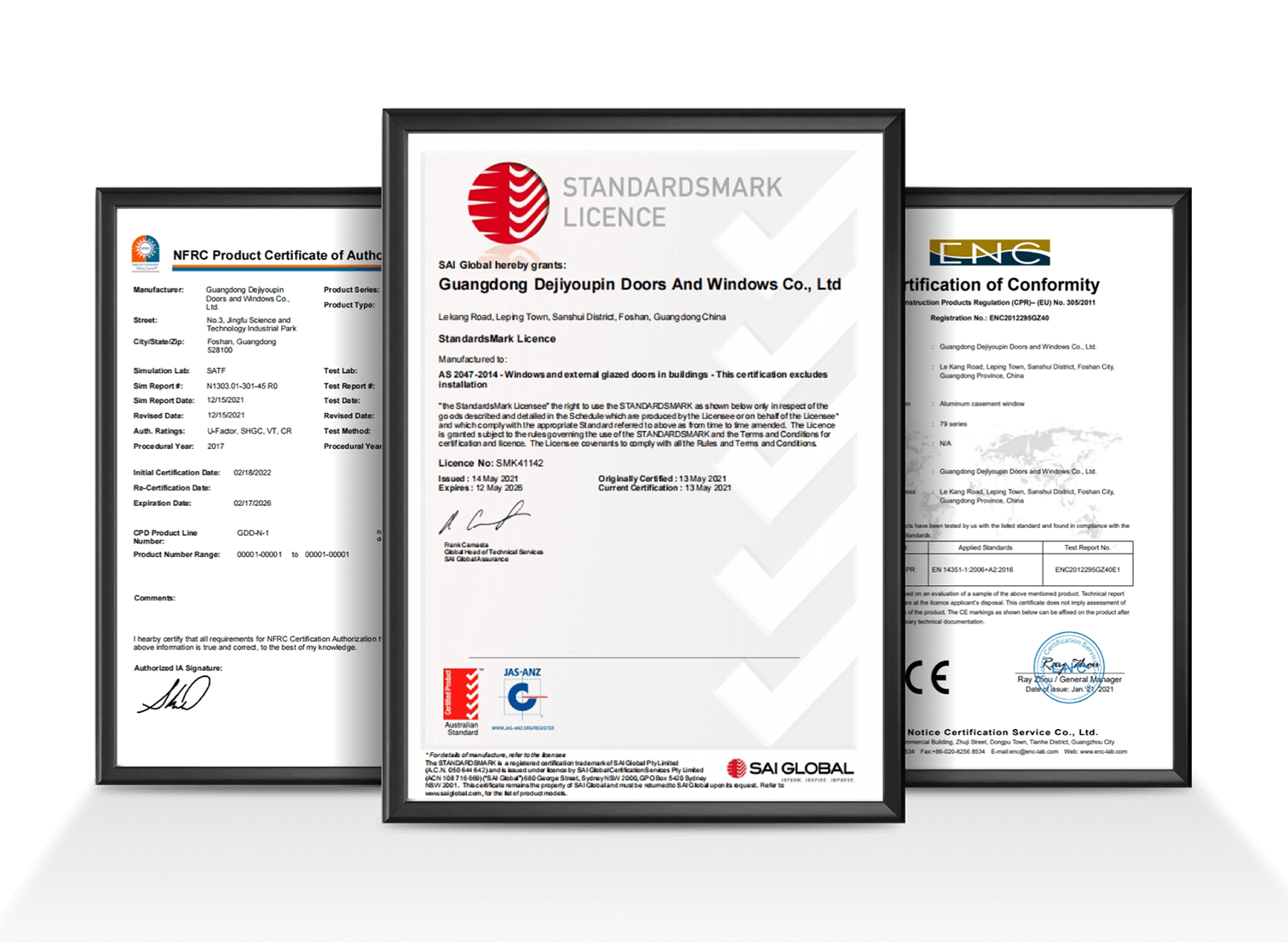
Precision-manufactured from 6063-T5/T6 aviation-grade aluminum profiles. Fully compliant with European harmonized standard EN 14351-1, tested for severe cycle operation, cyclonic windloads, and thermal separation.
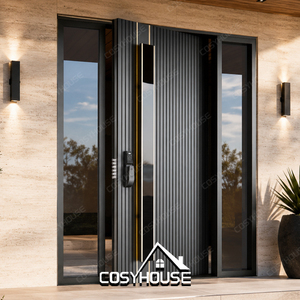
Modern Luxury Custom Front Door for Villa Residential Building
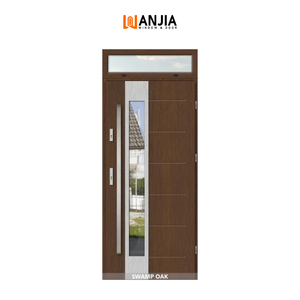
Oak Wood Grain Finish Aluminium Front Entry Door with Transom
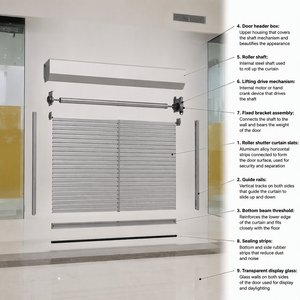
Commercial Motorized Clear PC & Aluminum Roller Shutter Entrance
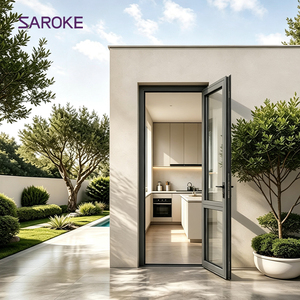
Heavy-Duty Black Impact Casement Windows & Patio Swing Doors
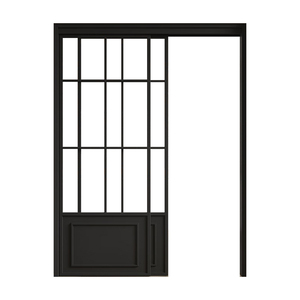
French Slim-Profile Glass Sliding Pocket Door With Recessed Track
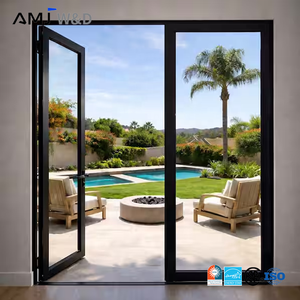
Garden Waterproof Laminated Double French Entrance Patio Doors
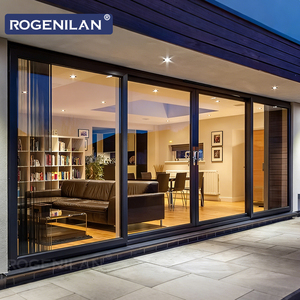
Thermal Break Heavy Lift-and-Slide Double Glazed Patio Portal
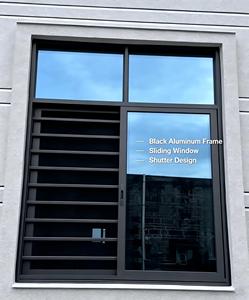
6063-T5 PVDF Coated Condensation Resistant Sliding Fenestration System
Guangdong Dejiyoupin Doors and Windows Co., Ltd. (DERCHI)
Operating from the global fenestration manufacturing hub in Foshan, China. We combine computerized German CNC extrusion fabrication, robotic surface processing, and audited European test protocols to supply project-ready architectural systems worldwide.
Direct Sourcing from China's Top 10 Fenestration Tier-1 Brand
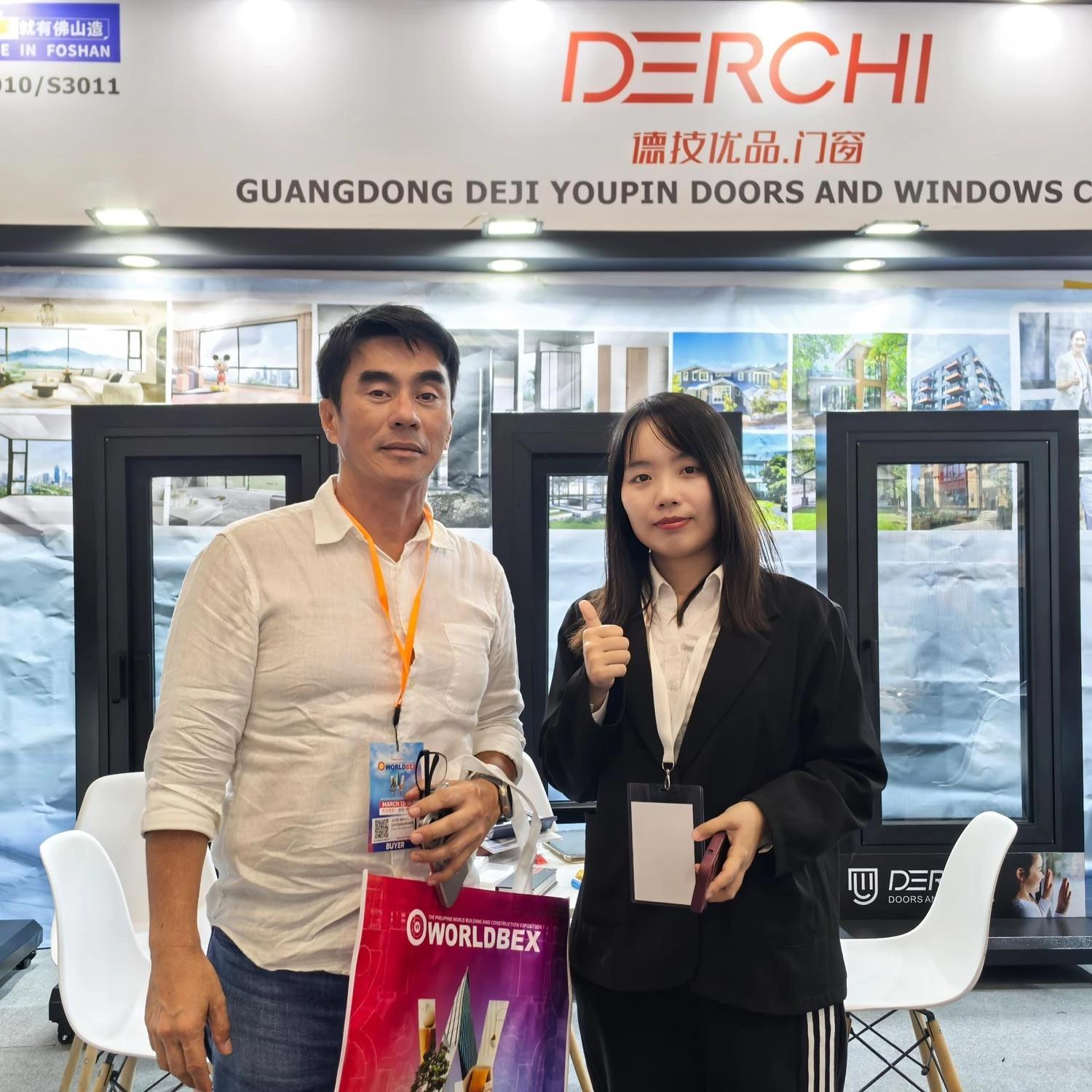
As demonstrated during our major international deployments and verified at WORLDBEX 2025 in the Philippines, DERCHI fenestration products fulfill strict project criteria spanning North America (AAMA/WDMA), Australia (AS 2047 N6), the Middle East, and the European Union.
Our automated production ecosystem houses continuous vertical powder coating lines, Italian sublimation wood grain transfer machines, and ultra-precision corner crimping stations with two-part polyurethane injected structural bonding adhesives.
Send an Inquiry
Technical Deconstruction of CE Certification: EN 14351-1
For general contractors, façade consultants, and commercial real estate developers, securing verifiable Declaration of Performance (DoP) documents is imperative. Here is how DERCHI aluminum alloy door assemblies undergo physical laboratory stress validation.
Mechanical Resistance & Operating Forces (EN 12046-2 / EN 1192)
Doors are evaluated under repeated mechanical stress to Class 4 operational standards. Vertical load deflection tests ensure zero permanent plastic deformation of stiles under 1,000N static point loads, safeguarding smooth multi-point lock actuation over 200,000 continuous cycles.
Watertightness & Wind Pressure Resistance (EN 12208 / EN 12210)
Dynamic pulsating wind load tests simulate severe maritime typhoons and continental squalls. Using cascade drainage chambers, stepped multi-chamber extrusions, and vulcanized co-extruded EPDM gaskets, our systems attain Class 9A watertightness under 600 Pa pulsating hydrostatic pressures.
Thermal Insulation & Acoustic Attenuation (EN ISO 10077-1 / EN ISO 717-1)
Meeting European passive and low-energy building regulations requires high-performance thermal breaks. We embed glass-fiber reinforced polyamide strips (PA66 GF25) up to 34mm deep, paired with warm-edge insulated double or triple glazing filled with 90% Argon gas.
| Performance Characteristic | European Standard (CE / EN) | Test Methodology | DERCHI Test Result | Procurement Benefit |
|---|---|---|---|---|
| Resistance to Wind Load | EN 12210 | Differential pressure chamber ±3000 Pa | Class C5 Verified | High-rise & coastal typhoon safety without frame flexion |
| Watertightness (Static & Pulsing) | EN 12208 | Continuous water spray at 600 Pa test pressure | Class 9A (Non-Shielded) | Zero water penetration during monsoonal downpours |
| Air Permeability / Leakage | EN 12207 | Positive & negative pressure up to 600 Pa | Class 4 (≤ 3 m³/h·m) | Minimizes HVAC conditioned air loss, lowering kWh costs |
| Thermal Transmittance (Door Uw) | EN ISO 10077-2 | Finite element calculation & Hot Box test | Uw ≤ 0.95 - 1.3 W/m²K | Complies with European nZEB (nearly Zero Energy Buildings) |
| Acoustic Rating (dB Loss) | EN ISO 717-1 | Third-octave sound transmission room test | Rw up to 44 dB | Protects urban residences and hotel rooms from street noise |
| Repeated Opening Durability | EN 1191 | Cyclic automated mechanical operation | 200,000 Cycles (Class 6) | Commercial entrance hardware reliability with low maintenance |
Procurement Trends & Technology Shifts (2025–2030)
The international architectural fenestration market is moving rapidly beyond standard catalog profiles. Commercial buyers, hospitality developers, and master builders must align with these four critical engineering evolutions.
1. Minimalist Sightlines & Concealed Hardware
Architects require expansive glass ratios with ultra-narrow sightlines (sub-25mm interlocking stiles). Heavy-duty concealed hinges and subterranean hydraulic floor closers capable of supporting single pivot leaves up to 500kg are replacing bulky face-mounted hinges.
2. Low-Carbon Aluminum & Circular Metallurgy
Driven by the EU Carbon Border Adjustment Mechanism (CBAM), top-tier projects mandate Environmental Product Declarations (EPDs). Demand is accelerating for secondary recycled aluminum billets extruded using certified renewable hydroelectric power in Foshan.
3. Multi-Protocol Smart Building Integration
Entry doors are no longer isolated mechanical assemblies. Leading exporters pre-wire door panels with concealed conduits, 3D facial recognition, biometric finger-vein sensors, and motorized multi-point solenoid deadbolts compatible with KNX and BACnet protocols.
4. Severe Storm & Climate Adaptation
With extreme global weather events, coastal building codes (e.g., Florida Building Code, Australian Cyclone Region D, Southeast Asian Typhoon Corridors) necessitate composite laminated glass with SentryGlas (SGP) interlayers bonded directly to the aluminum sash rebate.
Material Science Evolution: 6063-T6 Extrusions & PVDF vs. Superdurable Powder Coating
Modern export-grade architectural aluminum doors utilize strictly virgin ingots of Al-Mg-Si alloy 6063-T6, optimized for an ultimate tensile strength exceeding 205 MPa and yield strength of 170 MPa. To guarantee longevity in aggressive marine environments (ISO 12944 Corrosivity Class C4 and C5), surface treatments must adhere to strict international chemical passivation protocols:
Professional B2B Buyer's Sourcing & Quality Audit Checklist
When procuring custom fenestration directly from an OEM/ODM manufacturer in China, procurement teams must enforce strict factory quality control checkpoints prior to dispatch.
Alloy Purity & Wall Thickness Verification
Verify with ultrasonic thickness gauges that main structural stiles have minimum wall thicknesses of ≥ 2.0mm to 3.0mm depending on door height. Reject re-melted scrap billets; require mill test certificates (MTC) according to EN 10204 Type 3.1 demonstrating Si, Mg, and Fe chemical composition compliance.
Corner Joint Assembly & Glue Injection
Inspect corner joint fabrication. High-end aluminum doors must not rely solely on simple mechanical screws. Look for heavy cast aluminum corner cleats (corner keys) inserted with pneumatic crimpers and thoroughly back-injected with expanding two-part polyurethane structural adhesive (e.g., Weiss Cosmofen).
Glass Unit Processing & Secondary Seal
Insulated glass units (IGU) must carry CE EN 1279 certification. The primary seal should be polyisobutylene (PIB) extrusion, and the secondary structural seal must be two-component structural silicone, fully cured with zero gas bubble inclusions or desiccant bleed-out into the sight cavity.

Frequently Asked Questions (FAQ) for Importers & Contractors
Direct answers to the most common engineering, logistical, and compliance questions raised by international distributors, developers, and project managers.
Request a Tailored Engineering Proposal & Factory Quote
Send your architectural door schedules, CAD elevations, or project tender specifications. An English-speaking senior façade engineer will review your wind load criteria, U-value requirements, and provide a full engineering estimate within 24 hours.
Send an Inquiry