Engineered Architectural Door Systems & Equipment
Precision-manufactured aluminum barrier systems, folding architectural glass systems, structural swing entrances, and automated production machinery built for heavy commercial and luxury residential envelopes.
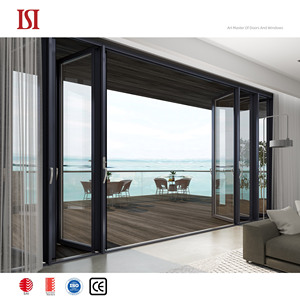
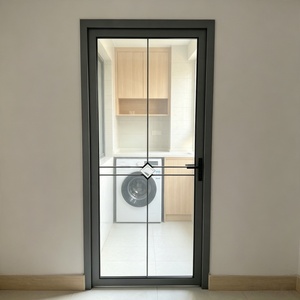
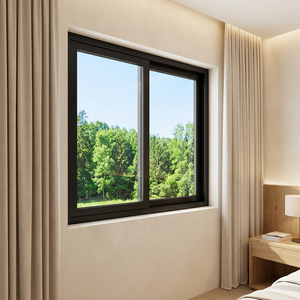
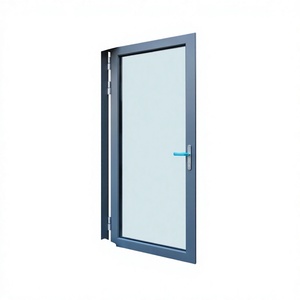
Technical Specification Framework: Decoding CE Certified Aluminum Security Doors
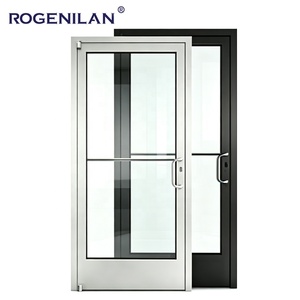
In modern architectural fenestration, the specification of entrance systems is no longer treated solely as an aesthetic consideration. For project directors, facade consultants, and general contractors operating under strict procurement covenants, selecting a verified CE certified aluminum security door manufacturer is crucial for life safety, physical intrusion deterrence, and environmental isolation. In European and international standardizations, CE marking under harmonized norm EN 14351-1:2006+A2:2016 establishes statutory compliance for structural stability, air permeability, water tightness, acoustic mitigation, and thermal transmittances (U-values).
When perimeter intrusion prevention is paramount, CE compliance converges with the rigorous forced-entry resistance classification dictated by EN 1627 through EN 1630. Aluminum security doors designed to achieve Resistance Class 2 (RC2), Resistance Class 3 (RC3), or Resistance Class 4 (RC4) are fundamentally different from ordinary commercial extruded assemblies. Ordinary storefront doors rely on single-wall extrusions and surface-mounted latches, making them vulnerable to basic levering tools. In contrast, heavy-duty certified security entrance systems feature heavy-gauge architectural primary aluminum (6063-T6 or 6060-T66) with wall thicknesses ranging from 2.0 mm to 3.5 mm, internal manganese anti-drill steel liners, and concealed multipoint mortise locking gears.
Architectural Performance Matrix: Security Classes vs. Performance Thresholds
| Resistance Class (EN 1627) | Attack Tool Battery & Static Load | Locking & Hinge Configuration | Glazing Specification (EN 356) | Target Architectural Applications |
|---|---|---|---|---|
| RC 2 / WK 2 | Pliers, screwdrivers, wedges; Static test: 3 kN load per pressure point. | 3-Point hook-bolt lock with anti-snap Euro cylinder (DIN 18252). | P4A Laminated Safety Glass (min 9.5 mm thick PVB interlayer). | Residential villas, urban luxury condominiums, suburban perimeter doors. |
| RC 3 / WK 3 | Crowbars (up to 710 mm), cold chisels, heavy claw hammers; Static: 6 kN. | 5-Point automatic locking gear with interlocking deadbolts and anti-lift pins. | P5A Laminated Security Glass with acoustic interlayer dampening. | Commercial headquarters, banks, high-risk villas, diplomatic residences. |
| RC 4 / WK 4 | Axes, heavy-duty cordless drills, bolt cutters, hacksaws; Static: 10 kN. | Multi-axis electronic + mechanical fail-secure mortise with solid hardened pins. | P6B to P8B Multi-layer glass-polycarbonate composite ballistic units. | Data centers, utility substations, luxury jewelry vaults, government facilities. |
| AS 2047 N6 Cyclone | Cyclic wind load testing (>4.5 kPa), 45 m/s wind-driven missile debris impact. | Heavy-duty concealed stainless steel continuous or 3D multi-leaf pivot hinges. | Double/Triple insulated laminated glass with SentryGlas® (SG) interlayer. | Coastal tropical zones (Philippines, Vietnam, Caribbean, Florida, Pacific Rim). |
The mechanical security of an aluminum security entrance door is directly linked to its thermal and acoustic isolation. DERCHI's proprietary systems integrate multi-chambered thermal barriers composed of polyamide (PA66 GF25) reinforced with 25% fiberglass. This design breaks the thermal bridge across the aluminum profile, achieving thermal transmittance values as low as Ud = 0.95 W/(m²·K). It also eliminates interior condensation in air-conditioned tropical environments and prevents excessive heat transfer during seasonal temperature swings.
Global Procurement Trends: The Next Generation of Architectural Security
Contractors, developers, and facade engineers are moving away from traditional, bulky wrought iron security grilles toward refined, contemporary architectural systems. As commercial architecture embraces open spaces and clean sightlines, the requirements for perimeter security doors have evolved. Analysis of international commercial inquiries and procurement schedules reveals four dominant industry trends:
1. Smart IoT & Biometric Integration
Global procurement specifications increasingly mandate smart perimeter integration. Modern security doors feature concealed motorized latch bolts compatible with 3D facial recognition, encrypted smartphone RFID transponders, and biometric fingerprint sensors, all designed with manual mechanical key overrides for emergency egress.
2. Oversized Pivot & Monumental Openings
Luxury residential and upscale hospitality projects increasingly request extra-wide pivot doors exceeding 3,000 mm in height and 2,000 mm in width. These systems require specialized, floor-recessed German hydronic pivots, precision self-closing dampening, and reinforced internal sub-frames that prevent sagging under door leaf weights of up to 450 kg.
3. Dual-Shielding: Climate & Forced-Entry Resistance
Developments in storm-prone and coastal areas demand both CE-rated anti-burglary performance and rigorous typhoon protection. B2B buyers frequently specify AS 2047 N6 cyclone impact testing alongside marine-grade powder coating (AAMA 2605 / Qualicoat Class 2) to protect profiles from salt air corrosion and moisture intrusion.
4. Sustainable Materials & Low Embodied Carbon
With tightening ESG (Environmental, Social, and Governance) targets in global construction, B2B procurement teams prioritize aluminum doors made with low-carbon primary billets and post-industrial recycled billets. This helps reduce embodied greenhouse emissions while qualifying projects for LEED and BREEAM certifications.
5. Complete Building Envelope Harmonization
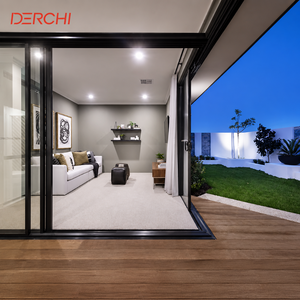
General contractors increasingly streamline their vendor base by sourcing main entrance doors, folding patio partitions, slimline balcony sliders, and garage overhead gates from a single manufacturer. This one-stop approach ensures consistent anodizing color tones, unified key management, and combined shipping logistics.
Manufacturing Excellence: Guangdong Dejiyoupin Doors & Windows (DERCHI)
With over 25 years of engineering experience, Guangdong Dejiyoupin Doors and Windows Co., Ltd. (the manufacturing force behind the DERCHI brand) is recognized as one of the top premium door and window fabricators in Foshan, Guangdong. Operating from a modern 180,000-square-meter production campus with over 600 skilled technicians, the company provides dependable, high-capacity manufacturing for luxury private residences, residential developments, resort compounds, and commercial towers across North America, Australia, Southeast Asia, and the Middle East.

180,000 ㎡ Intelligent Industrial Complex
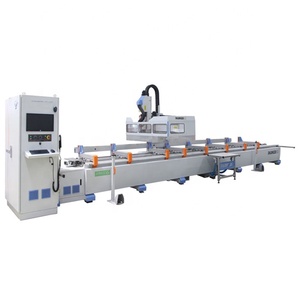
Our Foshan facility features dedicated CNC machining centers, automated aluminum profile precision cutting lines, and cleanroom glass lamination lines.
Certified Quality Control & Testing Facility
Every design profile undergoes structural deflection testing, mechanical forced-entry cycle simulations, and air-water tightness verification.
Why Project Specifiers Trust DERCHI for Turnkey Supply
DERCHI holds more than 100 international certifications and technology patents, validating its position as a reliable Tier-1 supplier. For overseas tenders, we provide comprehensive technical documentation, including CE Declaration of Performance (DoP), ISO 9001 quality certificates, AS 2047 N6 wind/water pressure test approvals, and UL-certified fire-rated door options.
Dedicated Engineering & CAD Support
Our technical team prepares shop drawings, structural wind load calculations, and BIM models tailored to your door opening schedules, helping avoid installation delays on site.
Comprehensive System Portfolio
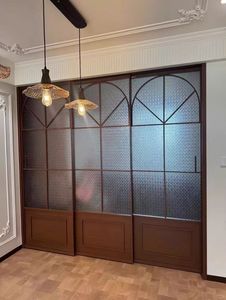
Beyond our primary security doors, we manufacture cast aluminum villa gates, minimal Crittall interior French doors, heavy-duty lift-sliding systems, and bullet-resistant entrance assemblies.
Export-Grade Protective Packaging
All finished units are packed with protective film, foam edge guards, moisture-barrier wrapping, and reinforced plywood crates to ensure damage-free international ocean freight.
Frequently Asked Questions: B2B Sourcing of Certified Aluminum Security Doors
Here are direct answers to common technical, commercial, and logistical questions from importers, facade architects, and general contractors sourcing certified security doors from China:
What documentation confirms an aluminum security door is genuinely CE marked?
Authentic CE compliance requires three primary documents: the Declaration of Performance (DoP) issued by the manufacturer citing norm EN 14351-1, an Initial Type Testing (ITT) report from an accredited notified laboratory verifying security classes (EN 1627-1630) and weather tightness, and an ISO 9001 Factory Production Control (FPC) audit certificate. At DERCHI, all three documents are available for technical submittals and local building authority approvals.
How does an aluminum security door perform against rust and marine corrosion?
Unlike steel doors, high-purity aluminum alloys (such as 6063-T6) are naturally rust-proof because they form a self-protecting oxide layer. For coastal and marine environments, DERCHI finishes its doors with Qualicoat Class 2 architectural fluorocarbon (PVDF) powder coatings or minimum 25-micron hard-anodizing treatments. These finishes surpass 3,000-hour neutral salt spray tests, preventing blistering, flaking, or chalking even in harsh salt air.
Can custom architectural dimensions and bespoke pivot hinges be accommodated?
Yes. Every door leaf, sub-frame, sidelight, and transom can be custom-engineered to your architectural opening schedules. For monumental main entrances, we design and produce oversized pivot doors up to 4,000 mm in height. Each unit is equipped with heavy-duty adjustable pivots, concealed automatic drop seals, and internal stabilization rods that prevent bowing from direct solar exposure.
What are the standard lead times, container packing, and shipment protocols?
Standard production runs typically require 25 to 35 business days following shop drawing sign-off and finish sample approval. Units are tagged with clear floor and location markers matching your construction plans, wrapped in protective foam, and secured inside ocean-worthy, fumigated plywood cases ready for crane offloading or forklift handling at the destination port.
Are smart locking systems compatible with building automation systems (BMS)?
Yes. DERCHI's multi-point motorized locking gears can integrate with major access control protocols, including dry contact relays, RS485, and encrypted Wiegand interfaces. This enables smooth coordination with video intercoms, smart home controllers, and commercial emergency fire-release systems while maintaining a high mechanical security rating.