High-Performance Architectural Fenestration Portfolios
Tested against rigorous structural deflections, dynamic cyclic pressure tests, and extreme coastal driving rains. Certified to European EN 14351-1, Australian AS 2047 N6, and North American ASTM standards.
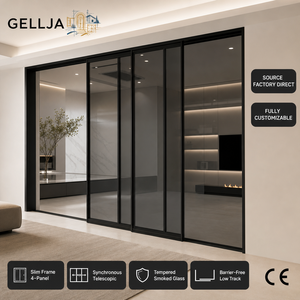 Patio & Storm System
Modern Design Sliding Patio Door Exterior Flush Alloy Double Glazing
- Air Tightness: Class 4 (EN 12207)
- Profile: 2.0mm Heavy 6063-T6
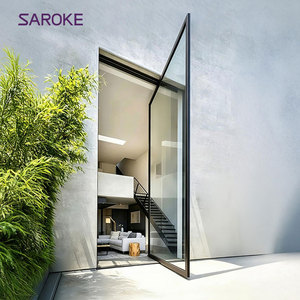 Smart Heavy Pivot
Modern Luxury Residential Fingerprint Single Big Vertical Outdoor Pivot Door
- Integrated Biometric Multi-Point
- Load Capacity: 450KG Axis Spring
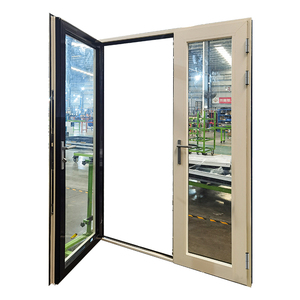 French Casement
Black Exterior & White Interior Aluminium 10mm Tempered French Door
- Glazing: 10mm Toughened Safety
- Dual-Color Thermal Barrier Break
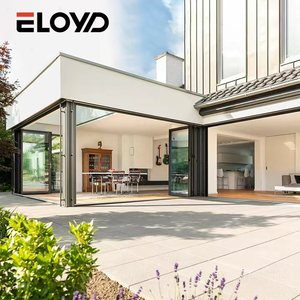 Acoustic Accordion
High Standard Aluminum Folding Exterior Waterproof Soundproof Doors
- Sound Isolation: STC 42 dB
- Water Tightness: 600 Pa Dynamic
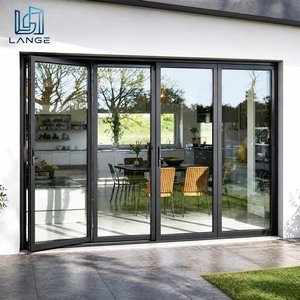 UV Wood-Grain
LANGE Weather Resistant Aluminium Wood Grain Exterior UV Coated Doors
- Fluorocarbon Heat Transfer Coating
- Delta E < 0.5 (10-Yr UV Stable)
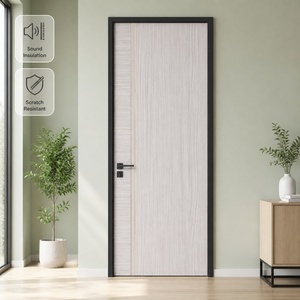 Fire Retardant
Luxury Aluminum Clad Wood Doors Environmental Fire Retardant Entry
- Fire Rating: UL 10C / EN 1634 (60m)
- Core: Inorganic Fire-Resist Core
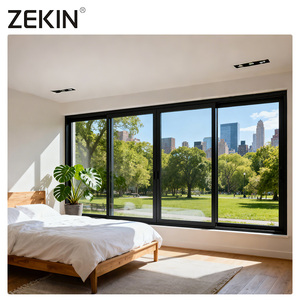 Extreme Hurricane
ZEKIN Hurricane Impact Double Glazed Window & Storm Door Profile
- Impact Rating: ASTM E1996 Missile D
- AS 2047 Cyclic Load: 4500 Pa
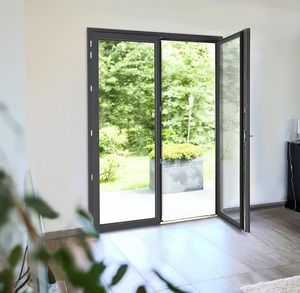 Heavy Casement Entry
CBMmart Aluminum Swing Casement Front Entry Door Double Glass Gate
- CE Standard: EN 14351-1 Compliant
- Triple-Seal EPDM Continuous Gasket
Enterprise Infrastructure: Guangdong Dejiyoupin Doors and Windows Co., Ltd.
Operating under the global DERCHI brand from Foshan, Guangdong—China's aluminum engineering epicenter—our production complex provides complete turnkey OEM/ODM architectural systems for tier-1 development projects across North America, Europe, Australia, and ASEAN markets.
Stringent Multi-Standard Certification
Every profile design, reinforcement chamber, and glazing rebate is validated against multi-jurisdictional criteria: CE (EN 14351-1), AS 2047 N6 Cyclonic testing, UL 10C Fire Resistance, and ISO 9001 certified quality control systems.
Alloy Extrusion & Thermal Barrier
Utilizing high-purity virgin 6063-T6 and 6061-T6 metallurgical grades. Structurally insulated with glass-fiber reinforced Polyamide (PA66 GF25) thermal breaks, eliminating cold-bridging and minimizing condensation risks in sub-zero or humid regions.
Global Field Reference & WORLDBEX
Demonstrated architectural resilience in the Caribbean, North America, Oceania, and Southeast Asia. Recognized at premier expositions including WORLDBEX (Philippines), providing developers with fully articulated CAD/BIM shop drawings.
Engineering Anatomy of CE-Certified Aluminum Storm Doors
Storm doors installed in coastal, cyclonic, or severe weather interfaces are frequently subjected to coupled loads: violent positive dynamic winds, rapid suction deflections, projectile impact, and wind-driven water penetrations. While standard residential exterior doors rely on cosmetic aesthetics, an industrial CE Certified Aluminum Storm Door functions as an active structural shield.
1. Substrate Metallurgy & Structural Wall Sizing
At DERCHI, engineering commences at the billet stage. Unlike entry-grade commercial doors using secondary recycled scrap (which precipitates micro-porosity and brittle failures under cyclic loading), all storm assemblies utilize virgin 6063-T6 aluminum alloy. For high-span pivot configurations and commercial storefronts, select internal structural ribs are reinforced with 6061-T6 structural inserts.
Nominal structural wall thickness spans from 2.0mm to 3.0mm across critical load-bearing profiles. This allows for deep internal fastener bite when mounting stainless steel (316 Grade) multi-point latches, floor spring linkages, and anti-lift safety pivots.
| Evaluation Parameter | European Standard (EN / CE) | Australian Standard (AS) | North American Spec (ASTM/AAMA) | DERCHI Storm Door Capability |
|---|---|---|---|---|
| Wind Pressure Resistance | EN 12210: Class C5 (2000 Pa) | AS 2047: Cyclonic N6 (>4000 Pa) | ASTM E330: DP 70 - DP 100 | Verified up to 4500 Pa cyclic test pressure |
| Air Permeability | EN 12207: Class 4 (600 Pa) | AS 2047: < 0.5 L/s·m² | ASTM E283: < 0.1 cfm/ft² | Class 4 continuous seal with vulcanized EPDM corners |
| Water Tightness Under Pressure | EN 12208: Class 9A / E750 Pa | AS 2047: 450 Pa - 600 Pa | ASTM E331 / E547: 15 psf | Pressure-equalized weep drainage rated to 750 Pa |
| Impact Resistance (Debris) | EN 12600: Class 1B1 Impact | AS 1170.2 Trajectory Debris | ASTM E1996 Large Missile D | SGP Laminated Toughened Interlayer compliance |
| Acoustic Attenuation (Rw) | EN ISO 717-1: Rw + Ctr | AS/NZS 1276 Acoustic Test | ASTM E90: Sound Class STC | Rw 38 dB to 43 dB (configuration dependent) |
2. Impact Glazing Systems: SGP Lamination vs. Monolithic Tempered
A frequent vulnerability in storm barrier design is the glazing specification. Standard single-pane tempered glass, while possessing four times the bending strength of annealed glass, instantly evacuates the opening upon catastrophic projectile impact. This dynamic creates massive internal atmospheric pressurization within a building envelope, frequently leading to roof blow-off during hurricane events.
DERCHI CE-certified impact configurations employ composite insulated glass units (IGU) incorporating an inner structural laminate made with SentryGlas® (SGP) or high-grade acoustic PVB interlayers (1.52mm - 2.28mm). Even if the outer sacrificial tempered pane is shattered by wind-borne ballast, the rigid SGP membrane retains its structural matrix under alternating wind pressure cycling (+/- 3000 Pa for 9,000 cycles).
3. Surface Conversion Coatings & Salt Fog Performance
In high-salinity marine interfaces (such as Florida, the Caribbean islands, the Mediterranean coastline, and Southeast Asian archipelagos), airborne chloride deposits rapidly initiate filiform corrosion on improperly prepared aluminum surfaces.
DERCHI implements a thorough chemical passivation regime: chromate-free zirconium pre-treatment followed by AAMA 2605-compliant Fluorocarbon PVDF coatings (70% Kynar 500 resin base) or Marine-Grade Anodization (Class I, 25 microns minimum film thickness). The resulting finish undergoes independent neutral salt spray testing (ASTM B117) exceeding 4,000 hours with zero blister propagation or adhesive loss at scribed edges.
Future Trends in Global Storm Door Sourcing (2025–2030)
How real estate developers, commercial contractors, and fenestration importers are adapting their supply chain criteria to evolving regulatory and climate imperatives.
1. Whole-Fenestration Consolidations
B2B importers are pivoting away from multi-vendor fragmentation. Sourcing storm entry doors, heavy oversized pivot systems, curtain walls, and fire-rated doors from a single integrated 180,000㎡ plant substantially diminishes container dead-space, mitigates custom clearance disputes, and harmonizes finish color-matching.
2. Thermal Transmittance Mandates (EPBD)
With the European Union tightening the Energy Performance of Buildings Directive (EPBD) toward net-zero operational footprints, storm doors can no longer ignore thermal transmittance. Sourcing shifts focus exclusively to systems featuring deep polythermal breaks (34mm+) achieving overall assembly U-values < 1.2 W/(m²·K).
3. Embodied Carbon & EPD Verifications
Institutional developers across the US and Europe now mandate Environmental Product Declarations (EPD). Future-ready factories must utilize low-carbon smelting operations fueled by hydroelectric energy, providing transparent Life Cycle Assessments (LCA) for LEED and BREEAM certifications.
4. Embedded Access Control Systems
The traditional mechanical deadlock is rapidly yielding to dry-contact, motor-driven multi-point mechanisms. Storm systems must now accommodate pre-channeled conduit pathways for biometric modules, concealed electronic mortises, and integration into Zigbee/KNX building automation protocols.
5. Hyper-Scale Architectural Pivots
Residential luxury sectors are demanding massive spans: storm-rated single pivot leaves exceeding 2.0 meters in width and 3.5 meters in height. These designs require concealed internal structural steel reinforcement cages to resist dynamic wind shear without leaf racking or frame torque.
6. Strict Chain-of-Custody Testing Logs
Municipal building inspectors increasingly reject generic factory declarations. Purchasing contracts now require documented third-party laboratory test reports cross-referenced by batch numbers, proving adherence to ballistic impact, cycling fatigue (200,000 opening cycles), and acoustic isolation.
Technological Horizons: The Next Phase of Protective Fenestration
The manufacturing paradigms governing aluminum protective doors have transformed dramatically. From the manual corner-crimping workshops of past decades, Guangdong Dejiyoupin Doors and Windows Co., Ltd. (DERCHI) has modernized production lines utilizing fully automated German 5-axis CNC machining centers and digital quality control routines.
Continuous Structural Corner Cleating & Epoxy Infiltration
A storm door is only as robust as its corner joints. Conventional residential systems depend on basic mechanical screw splices that shake loose under cyclical storm buffeting. DERCHI profiles feature thick-wall cast aluminum corner cleats coupled with dual-component expanding polyurethane structural adhesive injected under controlled pneumatic pressure. This forms a monocoque frame joint completely impervious to water migration and torsion fatigue.
Equalized Decompression Chamber Aerodynamics
When hurricane-force winds buffet a door leaf, capillary pressure pushes water through perimeter gaskets. Our engineering teams deploy the Rain-Screen Principle: incorporating an integrated frontal decompression cavity. The air pressure within the internal threshold profile instantaneously equalizes with external gust pressure, stripping wind-velocity of the energy required to drive water upward through the internal drainage flutes.
Frequently Asked Questions for B2B Importers & Contractors
Authoritative answers addressing engineering parameters, logistical packaging, custom shop drawings, and CE declaration protocols.
Every commercial export consignment is provided with a full technical documentation dossier. This encompasses the formal Declaration of Performance (DoP) according to the European Construction Products Regulation (CPR 305/2011/EU), verified laboratory test reports under EN 14351-1, glass safety certification (EN 12150 / EN 12600), factory production control (FPC) audit documentation, and comprehensive shop drawing engineering calculations confirming design wind load tolerances.
Export logistics across trans-oceanic routes require specialized packaging engineering. We utilize a multi-layered protection regime: all extruded aluminum surfaces are wrapped in low-tack 80-micron protective film, sealed within foam-padded edge caps, encapsulated in high-density polyethylene moisture-barrier envelopes, and finally crated inside fully enclosed, fumigated solid plywood cases reinforced with steel strapping. For oversized pivot leaves, interior rigid steel transportation jigs are engineered to prevent diagonal racking during intermodal crane transfers.
Yes. Our in-house R&D department of over 60 structural and fenestration engineers provides complimentary CAD/BIM shop drawing services for major developments. When working with projects in high-velocity storm zones—such as Florida's Miami-Dade High Velocity Hurricane Zone (HVHZ), Australia's Cyclone Region C & D (AS 1170.2), or the Philippines typhoon belt—we calculate exact required moments of inertia (Ix, Iy) and engineer internal profile stiffeners to satisfy the site's project-specific wind engineering calculations.
Our standard production lead time is 25 to 35 working days following formal sign-off on shop drawings and thermal break extrusion scheduling. For standardized commercial systems, our baseline MOQ is flexible (starting from 1 complete container load for custom multi-story developments, or individual bespoke sets for custom luxury villas when combined with full project fenestration schedules). Complete container consolidation allows significant savings on freight costs while securing factory-direct pricing.
All functional hardware components utilized in DERCHI exterior storm door programs—including hinges, handle roses, flush bolts, and lock mechanisms—are manufactured from premium Austenitic AISI 316 Stainless Steel or structural cast brass with multi-layer PVD (Physical Vapor Deposition) titanium coatings. Unlike zinc-alloy diecast components that pit and corrode within 12 months of marine exposure, our assemblies surpass the ASTM B117 salt fog threshold with zero degradation.
Yes. As demonstrated in our product series, we manufacture hybrid aluminum-clad assemblies engineered to UL 10C, BS 476-22, and EN 1634 fire test standards. These assemblies incorporate intumescent silicate perimeter barriers and ceramic core thermal isolators that activate at elevated temperatures, providing certified integrity and insulation barriers from 30 to 90 minutes without compromising hurricane-load structural resistance.
Ready to Secure Factory-Direct Engineering for Your Next Project?
Initiate direct technical engagement with our Foshan engineering headquarters. We deliver full CAD schedules, acoustic/thermal performance simulations, and competitive CIF/FOB pricing for tier-1 development tenders.