Pivot Luxury
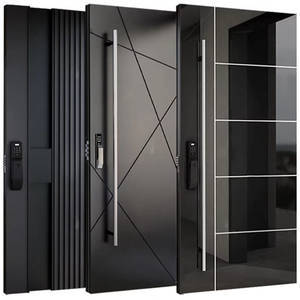
Alucasa Modern Design New Style Entrance Pivot Front Aluminum Door Luxury Villa Modern Glass Door for Houses
DORMA Floor Spring
Double Low-E
Max 4000mm H
Precision-manufactured entrance configurations built with 6063-T6 virgin aluminium extrusions, multi-chamber thermal breaks, German multi-point locking gear, and typhoon-resistant architectural tempering.
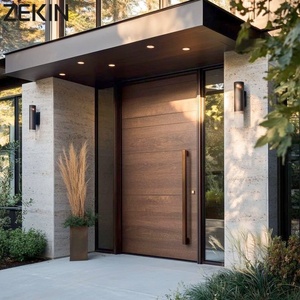
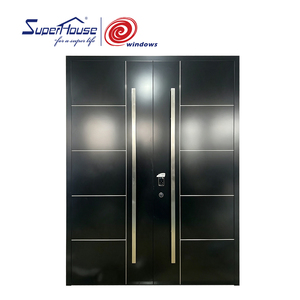
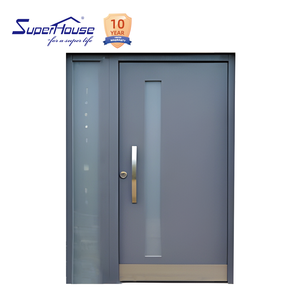
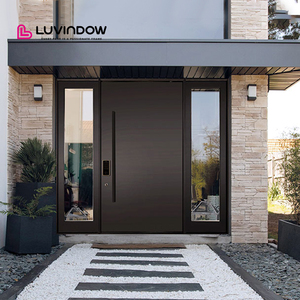
Evaluating supplier tiers, structural metallurgy, thermal performance coefficients, and compliance benchmarks across the Guangdong manufacturing cluster.
Top-tier Chinese manufacturers utilize 6063-T5 and structural 6063-T6 primary billet aluminium rather than low-cost remelted scrap. Architectural grade entrance doors demand a minimum wall thickness of 2.0mm to 3.0mm to resist windload shear and prevent frame torsion over decades of cyclic use.
In extreme climates—from Canadian sub-zero winters to the intense humidity and solar radiance of Southeast Asia and the Gulf—non-thermal doors conduct exterior temperatures instantly, causing severe interior condensation and HVAC energy drain. Modern China factories utilize 24mm to 34mm reinforced Polyamide thermal struts.
Coastal developments and high-UV environments quickly chalk and degrade substandard paints. Leading Foshan manufacturers operate automated vertical fluorocarbon (PVDF) lines and architectural anodizing tanks ensuring resistance against salt spray, chemical erosion, and photochemical fading.
When issuing tenders for residential developments, resort compounds, or private villas, specify "Primary billet 6063-T6, PA66 GF25 thermal bridge, mechanically crimped corner joints with two-component polyurethane injection, and AAMA 2605 compliant PVDF finish". This single specification clause eliminates tier-3 workshops that use non-thermal scrap aluminium and cold screws.
Quantifiable testing thresholds separating commercial-grade Chinese manufacturing from generic market fabricators.
| Performance Criteria | DERCHI Tier-1 Manufacturing | Generic Commodity Factories | Standard Test Method |
|---|---|---|---|
| Aluminium Profile Alloy | 6063-T6 Primary Billet (2.0–3.5mm wall) | Recycled 6063 scrap (1.2–1.4mm wall) | GB/T 5237 / ASTM B221 |
| Thermal Transmittance (U-Value) | 1.2 – 1.6 W/m²·K (Multi-cavity PA66GF25) | ≥ 3.8 W/m²·K (Non-thermal / Cold bridge) | NFRC 100 / EN ISO 10077-1 |
| Air Permeability / Leakage | Class 4 (≤ 0.1 m³/h·m at 100 Pa) | Class 1 / Class 2 (Noticeable draft) | AS 2047 / ASTM E283 |
| Water Penetration Resistance | ≥ 600 Pa (Severe Monsoon / Hurricane Grade) | ≤ 150 Pa (Prone to sill leakage) | AS 2047 / ASTM E331 |
| Structural Wind Load (Strength) | AS 2047 N6 / ±4500 Pa (Tropical Cyclones) | ≤ 1500 Pa (Deflects under moderate gusts) | AS 2047 / ASTM E330 |
| Pivot Hardware Weight Capacity | Heavy-Duty German concealed floor springs: 500–800 kg | Standard domestic pivots: 120–180 kg | EN 1154 / 500,000 Cycle Testing |
| Smart Security Integration | Biometric 3D Face ID, Tuya/Zigbee, Grade 3 Hook-Bolts | Basic mechanical cylinder with single deadbolt | EN 12209 / CE Security Grade |
How evolving building envelope codes, ultra-minimalist architectural aesthetics, and building automation are transforming commercial door sourcing.
Architects globally are moving away from traditional double-hung hinged doors toward majestic single-leaf pivot entry portals reaching heights of 3.5 to 5.0 meters and widths over 2.0 meters. Sourcing these oversized structures requires factories with advanced multi-axis CNC milling centers, carbon-fiber sash reinforcement, and balanced concealed bottom floor springs capable of smooth fingertip operation under 600kg+ panel mass.
B2B property developers now demand factory-integrated digital locking hardware rather than retrofitted third-party cylinders. Chinese factories lead the integration of motorized multi-point locksets equipped with 3D structured-light facial recognition, hidden fingerprint scanners inside custom 1.8m vertical pull handles, and seamless integration with Control4, Crestron, and Apple HomeKit home automation hubs.
While the internal structure remains heavy-duty thermal-break aluminium, the exterior facing is experiencing material diversification. Chinese suppliers have mastered vacuum-laminating 6mm ultra-slim sintered porcelain stoneware, rock slabs, carbonized architectural bamboo, and anodized cast aluminum reliefs onto the exterior aluminium skin, combining stone luxury with zero structural rotting or warping.

Headquarters & Mega Factory: Shishan Town, Nanhai District, Foshan City, Guangdong, China
As one of China's Top 10 premium door and window manufacturing groups, DERCHI (Guangdong Dejiyoupin Doors and Windows Co., Ltd.) operates a massive 180,000 square meter intelligent production base in Foshan—the global epicenter of aluminium architectural manufacturing.
With over 25 years of engineering heritage and a dedicated workforce of 600+ skilled craftsmen and facade technicians, we deliver fully customized architectural entrance systems directly to general contractors, villa owners, and resort developers worldwide.
Clear, engineering-backed answers addressing structural warranties, logistics, tropical climate performance, and technical customization.
Solid timber doors expand, warp, split, and suffer termite damage in humid, coastal, or tropical regions, requiring relentless re-staining. Plain steel doors rust and have poor thermal insulation. Thermally-broken aluminium doors offer total dimensional stability (zero swelling), immune resistance to saltwater corrosion, superior structural rigidity for oversized pivot panels up to 4 meters tall, and virtually zero maintenance over a 30+ year lifespan.
Our entrance systems have undergone certified laboratory testing to Australian AS 2047 N6 standards, which represents the highest category of cyclonic wind-resistance and water-tightness. We engineer our exterior frames with stepped drainage pathways, multi-chambered internal baffles, and German-designed EPDM triple-compression weatherstrips that withstand positive/negative wind pressures in excess of ±4500 Pa without structural deflection or water intrusion.
Yes. Every single order produced at DERCHI is 100% tailor-made to your door schedule. Our internal engineering department generates 2D/3D CAD shop drawings for your approval before profile extrusion or CNC routing. You can configure exact opening dimensions, custom architectural RAL or anodized colors, double/triple Low-E laminated acoustic glass, and biometric smart locks integrated into full-height stainless steel pull bars.
DERCHI doors hold full CE compliance (EN 14351-1), ISO 9001 quality management verification, AS 2047 (Australian Standard for Windows and External Glazed Doors), and UL fire-rated certifications. In addition, our enterprise holds more than 100 patents across structural profile designs, multi-point lock mechanics, and heavy-load pivot hinges. Full test reports and third-party laboratory verification are provided for building permit approvals.
Export packing standards follow a multi-tier protective protocol: first, profile surfaces are coated with protective low-tack film; next, corner points are wrapped with dense foam guards; the complete door sash and frame are enclosed in multi-layer bubble wrap, moisture-proof plastic film, and then crated inside fully-enclosed, fumigated solid plywood cases with internal shock absorbers. Units are clearly labelled by building floor and opening schedule for rapid jobsite sorting.
Because we maintain automated CNC processing centers on our 180,000 ㎡ base, standard custom sample orders and villa packages (1 to 5 doors) require approximately 20–25 days from drawing sign-off. Bulk commercial container projects require 30–35 days. We support flexible MOQs for project contracts, allowing distributors and developers to order tailored entrance portals alongside garage doors and windows in consolidated container shipments.