Featured Commercial & Residential Aluminium Door Systems
Engineered to stringent global performance parameters including AS 2047, CE, and ISO 9001 standards. Each unit provides custom structural alloy profiles, high-efficiency glazing configurations, and resilient hardware suites engineered for high-traffic and extreme climatic zones.
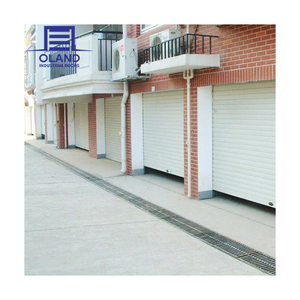
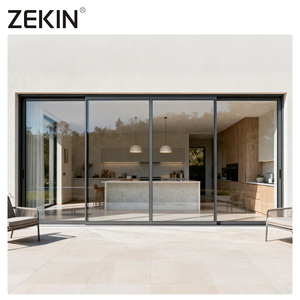
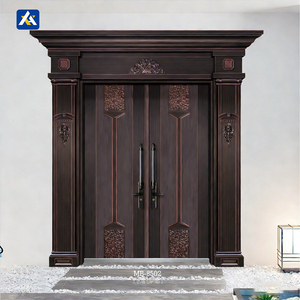
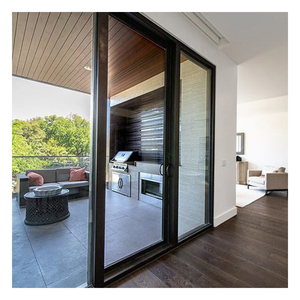
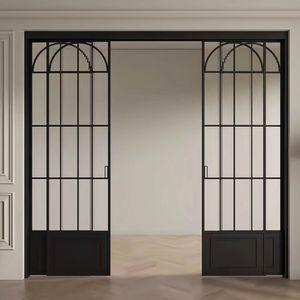
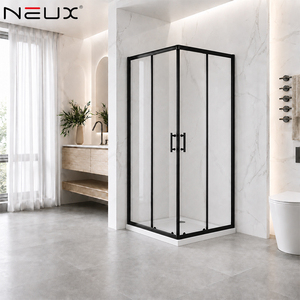
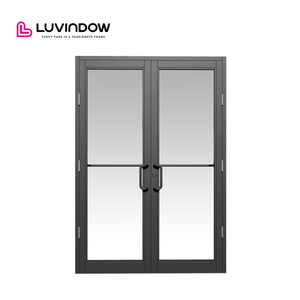
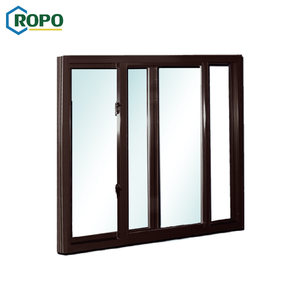
Architectural Engineering & Material Composition of Aluminium Half Glass Doors
Aluminium half glass doors represent an essential hybrid in modern commercial and residential envelope engineering. Unlike full-lite glass partitions that sacrifice structural rigidity or solid perimeter metal panels that block biophilic day-lighting, the aluminium half glass configuration bridges high-security containment with calibrated transparency. As China's leading exporter of architectural door systems, our production ecosystem adheres to metallurgical standards utilizing virgin 6063-T5 and structural 6061-T6 architectural aluminium alloys. This composition guarantees tensile strength surpassing 205 MPa and yield strength exceeding 170 MPa, resisting warping, cyclic deflection, and torsion under intense atmospheric wind pressures.
The structural bottom half of the door panel typically integrates an insulated sandwich core—combining dual extruded aluminium skins with high-density polyurethane (PU) or fire-resistant rockwool infill. This composite arrangement provides superior structural impact resistance against physical ingress and vehicular/pedestrian impacts, while significantly lowering total panel thermal conductance. Concurrently, the upper glazed aperture features precision-machined glazing pockets configured for multi-layer tempered glass units (IGUs), laminated safety glass (PVB/SGP interlayers), or ceramic-fritted Low-E panels. This dual-zone mechanical architecture provides architects and mechanical engineers with customized acoustic damping (STC 35 to 45 dB) and optimal thermal performance (U-values down to 1.4 W/m²·K).
Polyamide PA66GF25 Thermal Breaks
Multi-cavity extruded profiles separated by 25% glass fiber reinforced polyamide barriers eliminate thermal bridging between internal and external building environments.
Acoustic Laminated & Low-E Glazing
Dual or triple glazed configurations filled with 90%+ pure argon gas, incorporating warm-edge spacers to eliminate condensation and reduce sound transmission up to 45 dB.
EPDM Continuous Weathersealing
Triple vulcanized automotive-grade EPDM compression gaskets maintain elastic memory, preventing air filtration and resisting dynamic water penetration up to 600 Pa.
Technical Specification & International Compliance Matrix
Selecting an aluminium half glass door exporter requires quantifiable physical verification against international fenestration standards. Below is a side-by-side engineering breakdown illustrating standard commercial grades versus our specialized export-grade systems.
| Performance Parameter | Standard Commercial Grade | DERCHI Export High-Performance System | Test Standard / Certification |
|---|---|---|---|
| Aluminium Alloy / Temper | Recycled 6063-T5 (Wall thickness 1.2–1.4mm) | Primary Virgin 6063-T6 (Wall thickness 2.0–3.0mm) | ASTM B221 / GB 5237 |
| Thermal Transmittance (U-Value) | 3.8 – 4.5 W/(m²·K) (Non-thermal break) | 1.4 – 1.8 W/(m²·K) (Iso-bar Cavity System) | EN ISO 10077-1 / NFRC 100 |
| Structural Wind Load Resistance | Up to 2,000 Pa (Class C2) | Up to 4,500 Pa (AS 2047 N6 / Florida HVHZ) | AS 2047 / ASTM E330 |
| Acoustic Isolation (Rw / STC) | 28 – 32 dB (Single float glass) | 38 – 45 dB (Dual-pane PVB Acoustic Laminate) | ISO 717-1 / ASTM E413 |
| Water Penetration Resistance | 150 – 250 Pa (Static pressure) | 600 Pa (Cyclic dynamic water pressure) | AAMA 501.1 / AS/NZS 4420.5 |
| Surface Treatment & Durability | Standard Powder Coating (40–50 µm) | Fluorocarbon PVDF (3-Coat ≥80 µm) or 25µm Anodized | AAMA 2605 / Qualicoat Seaside |
Future Procurement Trends: Where the Global Door Market is Headed
Global B2B procurement of architectural fenestration has shifted dramatically from basic material cost per square meter toward life-cycle decarbonization, prefabrication efficiency, and localized climate compliance. General contractors across North America, Australasia, the Middle East, and Southeast Asia are reshaping supplier qualification criteria according to several key industry shifts:
Prefabricated Modular Pre-Hanging
Developers are eliminating expensive on-site glazing labor by specifying fully pre-hung door packages with pre-installed sub-frames, calibrated hardware, and factory-sealed glazing units direct from Chinese ports.
Embodied Carbon & EPD Audits
Public tenders and LEED/BREEAM certified developments mandate verified Environmental Product Declarations (EPD). Tier-1 Chinese exporters utilize hydroelectric recycled aluminium billets to curtail carbon intensity.
Smart IoT Hardware Integrations
Modern half glass systems now demand factory-integrated concealment routes for biometric fingerprint scanners, motor-driven automated drop seals, and remote building automation access wiring.
Technological & Design Evolution of Aluminium Half Glass Doors
The evolutionary trajectory of aluminium half glass doors has transformed from bulky, utilitarian commercial exits into ultra-minimalist, architecturally refined entrance monuments. Historically, conventional stiles demanded widths between 120mm to 150mm to retain structural stability under latching momentum. Today, through finite element analysis (FEA) and corner-crimped internal hydraulic tie-rod systems, contemporary profiles achieve sightlines as slim as 35mm while doubling overall wind-load ratings.
Furthermore, surface treatment technology has advanced significantly. Standard electro-static powders frequently experienced chalking and micro-cracking within 36 months when installed in marine or high-UV tropical environments (such as Southeast Asia, the Caribbean, or coastal Australia). Modern export processing features Qualicoat Class 2 Super-Durable powders and 70% Kynar 500 PVDF resins, backed by 20-year guarantees against blistering, fading, and salt-fog corrosion (tested beyond 4,000 hours in neutral salt spray ASTM B117).
Simultaneously, glass integration has evolved from uniform transparent panels to dynamic architectural components. Today's commercial storefronts and villa access systems combine switchable smart PDLC privacy glass, fluted/reeded textured safety laminates, and low-iron ceramic frits that harmoniously blend personal privacy on the lower panel with natural light infusion above.
Manufacturing Authority: Guangdong Dejiyoupin Doors and Windows Co., Ltd.
Operating globally under the industry-acclaimed DERCHI brand, Guangdong Dejiyoupin Doors and Windows Co., Ltd. represents one of China's Top 10 fenestration manufacturers. Headquartered in Foshan, Guangdong—the world's capital for aluminium extrusion and precision metal fabrication—our industrial presence provides international clients with guaranteed supply chain sovereignty, uncompromised engineering quality, and direct factory pricing.
25+ Years of Dedicated Export Mastery
Our state-of-the-art 180,000 square-meter production complex houses automated CNC cutting centers, four-axis profile machining units, continuous dust-free powder coating lines, and integrated IGU glass assembly facilities. Supported by over 600 highly trained technical specialists, DERCHI manages the full production lifecycle internally—from raw billet extrusion through custom extrusion anodizing, hardware milling, pre-hanging assembly, and pre-shipment quality verification.
Recognized globally after commanding major showcase exhibitions including WORLDBEX 2025 in the Philippines, DERCHI has supplied prestigious commercial hospitality landmarks, mixed-use corporate headquarters, and luxury residential estates spanning the United States, Canada, Australia, the Middle East, and Southeast Asia.

Frequently Asked Procurement & Engineering Questions
Critical technical considerations answered by our senior fenestration export engineers to assist project managers, quantity surveyors, and international procurement teams.
Global B2B Sourcing Playbook: How to Audit a Chinese Door Exporter
Navigating the Chinese manufacturing landscape demands a systematic auditing protocol. When evaluating an aluminium half glass door exporter, procurement directors and commercial developers should mandate verification across five non-negotiable operational checkpoints:
1. Billet Origin & Extrusion Traceability: Ensure the manufacturer utilizes certified 6063 or 6061 prime aluminium billets rather than remelted scrap extrusions. Remelted profiles contain high iron, silicon, and copper impurities, precipitating intergranular corrosion and structural brittle fractures under moderate seismic or wind cycles.
2. Glazing Certification Traceability: Glass components must bear indelible safety stamps corresponding to your jurisdiction: SGCC (ANSI Z97.1) for North America, CE (EN 12150) for the European Union, and SAI Global (AS/NZS 2208) for Australia and New Zealand. Request glass unit inspection reports verifying argon seal integrity and Low-E coating emissivity.
3. Hardware Cycle Testing: The mechanical longevity of an aluminium half glass door hinges upon its operating hardware. Demand verification reports demonstrating that pivot hinges, heavy-duty overhead closers, and multi-point perimeter shoot-bolts have successfully undergone a minimum of 200,000 continuous cycle operating tests without failure or latch sagging.
4. Mockup Water Ingress & Structural Deflection Testing: For multi-story or commercial storefront projects, specify a pre-production factory mockup test. A credible exporter will assemble your door schedule inside an on-site testing chamber, verifying air leakage under negative pressure and water resistance under calibrated spray bars.
Ready to Engineer Your Project with China's Premier Door Exporter?
Whether you are engineering a multi-unit luxury villa development, an international resort complex, or a high-traffic commercial retail development, our engineering team in Foshan will prepare custom CAD shop drawings, structural calculations, and factory-direct project estimates within 24 hours.
Contact Us