180,000㎡
Intelligent Production Hub
25+
Years Fenestration Engineering
100+
Patents & Global Certifications
AS 2047 N6
Cyclonic Structural Testing
Engineered Portfolio
Precision Architectural Door & Window Systems
Precision-extruded aluminum frames, multi-cavity thermal break barriers, and structural safety glazing engineered to perform in coastal, tropical, and severe weather environments.
Strategic Sourcing Intelligence
Future Procurement Trends in Architectural Fenestration
A strategic analysis of how shifting regulatory frameworks, energy mandates, and architectural paradigms are reshaping how developers procure commercial-grade aluminum and glass systems.
Total Lifecycle Carbon & EPD Mandates
Global procurement teams in North America, Europe, and Australia are requiring verified Environmental Product Declarations (EPD). Modern architectural aluminum suppliers must now utilize low-carbon hydroelectric or recycled billets (primary scrap ratio exceeding 40%) to satisfy LEED v4.1 and BREEAM building compliance.
Suppliers that cannot document low embodied carbon footprint within raw 6063-T5/T6 alloy extraction are increasingly disqualified from municipal and tier-1 institutional tenders.
Consolidated Turnkey Envelope Sourcing
Developers are moving rapidly away from fragmented buying where profiles, glass units, and locking hardware are purchased from separate sub-vendors. The standard has pivoted to One-Stop Consolidated Fenestration.
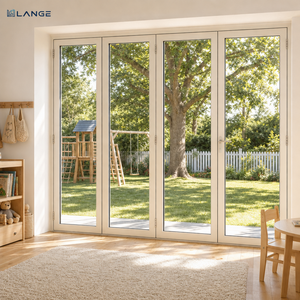
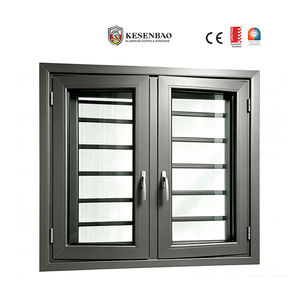
Sourcing fully assembled and pre-glazed units—encompassing main pivot entry systems, ultra-slim bifold doors, and acoustic casement windows—drastically cuts on-site installation labor errors and unifies warranty liability under one accountable entity.
Climate-Resilience & Extreme Windloads
Heightened climate turbulence requires doors and windows to resist severe cyclical pressure loads. Sourcing metrics have shifted toward AS 2047 N6 and ASTM E330 testing thresholds.
Procurement directors must ensure systems maintain water impermeability under sustained dynamic water pressure (>450 Pa) alongside extreme deflection resistance (>3000 Pa) to withstand typhoons and coastal atmospheric exposure.
Engineering Specifications
System Performance & Technological Evolution
Comparative technical metrics reflecting structural integrity, thermal barrier advancements, and acoustic isolation across leading aluminum door configurations.
| Door System Architecture | Profile Wall Thickness | Thermal Barrier (Polyamide) | Acoustic Rating (Rw/STC) | Max Design Windload | Primary Application |
|---|---|---|---|---|---|
| Thermal Break Bifold System | 2.0 mm – 3.0 mm (6063-T6) | PA66 GF25 Low-Conductive Bar | Rw 38 dB – 42 dB | Up to 3,500 Pa (AS 2047 N6) | Luxury Patios, Resorts, Commercial Fronts |
| Ultra-Narrow French System | 1.8 mm – 2.2 mm (High-Tensile) | 24 mm Multi-Cavity Insulation | Rw 35 dB – 39 dB | 2,800 Pa Deflection Limit | Modern Minimalist Villas, Penthouse Balconies |
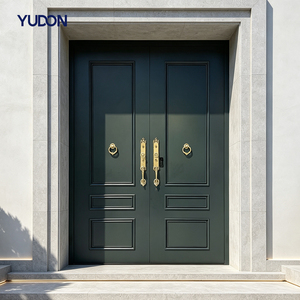
| Armored Pivot Entry System | 3.0 mm – 4.5 mm Reinforced | Composite Polyurethane + Steel Core | Rw 44 dB – 48 dB (Acoustic Core) | Exceeds 4,500 Pa (Blast/Impact) | Main Villa Entrances, High-Security Estates |
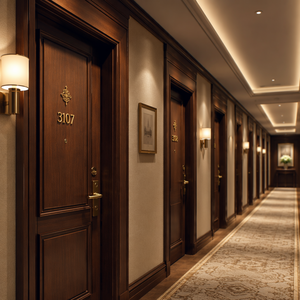
| Commercial High-Traffic Glass Pivot | 2.5 mm Heavy Duty Box Extrusion | Optional Interrupted Bridge | Rw 32 dB – 36 dB | 3,000 Pa Surface Load | Hotels, Corporate HQs, Auto Showrooms |
Polyamide PA66 GF25 Thermal Barriers
Standard PVC strips have become obsolete in high-end export fenestration due to high thermal degradation and creep rupture under UV exposure. Advanced systems integrate 25% glass fiber reinforced Polyamide (PA66 GF25), maintaining identical thermal expansion coefficients with aluminum to guarantee lifelong structural air-tightness.
Multi-Point Stainless Steel Drive-Gear Locks
Structural door integrity relies entirely on perimeter locking points. Precision CNC-milled 304/316 marine-grade stainless hardware distributes windload along the entire vertical jamb, preventing frame deflection, sash warping, and gasket disengagement under severe cyclonic wind pressure.
Low-E Gas Filled Double/Triple Insulated Glazing
Warm-edge spacers combined with 90%+ Argon gas fills eliminate perimeter thermal bridging. Soft-coat double silver Low-E configurations selectively transmit visible light while reflecting infrared solar heat, bringing whole-assembly U-values down to U < 1.4 W/(m²·K) for extreme thermal zones.
Enterprise Authority
Why Tier-1 Contractors Partner with Guangdong Dejiyoupin (DERCHI)
Operating out of Foshan—the global center of architectural aluminum manufacturing—DERCHI stands as a recognized Top 10 Chinese fenestration enterprise backed by extensive engineering and manufacturing capabilities.
180,000 ㎡ Manufacturing Campus
Our centralized industrial base in Nanhai District, Foshan houses advanced automated CNC extrusion lines, precision corner-crimping cells, and dust-free automated insulating glass production lines. With over 600 full-time technical specialists, our monthly production throughput ensures rapid fulfillment of complex commercial schedules.
Global Certification & N6 Testing
DERCHI systems are verified under international testing frameworks including CE, ISO 9001, AS 2047 (N6 Cyclone Rating), and UL Fire Door certification. Every export crate contains certified quality assurance documentation for swift local council and building code approvals in the USA, Canada, Australia, and Southeast Asia.
Proven International Delivery
Having showcased our technologies at major global expos including WORLDBEX in the Philippines, our completed project footprint spans luxury multi-residential developments in North America, coastal resorts in Southeast Asia (Thailand, Indonesia, Vietnam, Malaysia), and private estates in the Middle East.
Procurement FAQ
Frequently Asked Questions by Global Buyers
Direct technical answers addressing structural tolerance, corrosion mitigation, shipping protocols, and custom shop drawing procedures.
How do aluminum and glass doors prevent degradation in saline coastal climates?
For seaside villas and tropical resorts in regions like Florida, the Caribbean, and Southeast Asia, we apply architectural grade Qualicoat Class 2 powder coating or fluorocarbon (PVDF) finishes exceeding 40 microns thickness. All hardware is upgraded to 316-grade austenitic stainless steel, and EPDM weatherseals are treated for high UV-index and ozone resistance, avoiding frame pitting and seal hardening.
What structural documentation is provided before production commences?
Following project tender review, our structural engineering office prepares comprehensive 2D CAD and optional 3D BIM shop drawings detailing frame depths, glass makeups, anchor spacing, drainage channels, and sill threshold transitions. Factory production only starts once drawings receive signed approval from the client's architect or project consultant.
Can oversized architectural pivot doors withstand high hurricane windloads?
Yes. Our oversized aluminum pivot doors integrate hidden multi-point locking rods, German-engineered heavy-duty hydraulic floor springs (rated for sash weights up to 500kg), and internal steel reinforcing sub-frames. The assemblies are engineered to withstand cyclonic pressures certified to AS 2047 N6 conditions without water breach or structural failure.
How are fragile glass and large frame assemblies packed for ocean transport?
All door panels and frames undergo multi-layer surface masking, edge corner protectors, and moisture-sealed vacuum wrap before being loaded into custom heat-treated (ISPM 15 compliant) fumigation-free plywood crates. Heavy assemblies are positioned with internal load-distribution foam and secured to withstand container shifting during rough sea crossings.
What is the typical production and delivery lead time for commercial orders?
Standard architectural configurations carry a production manufacturing window of 25 to 35 business days following shop drawing sign-off and color chip verification. Shipping transit to major hubs (e.g., Manila, Singapore, Los Angeles, Sydney) ranges from 12 to 28 days depending on direct ocean carrier routing from Foshan / Guangzhou / Shenzhen ports.
Do your products support low-carbon and strict energy performance criteria?
Yes. By pairing multi-chamber polyamide thermal break profiles with custom warm-edge, Low-E argon-filled double or triple insulated glass units, our door and window packages attain overall thermal transmittance ratings of U < 1.4 W/(m²·K), qualifying for NFRC, Title 24, and Australian NCC energy efficiency requirements.
Launch Your Fenestration Project With Direct Factory Engineering
Send your door schedules, architectural CAD plans, or tender specifications. Our technical engineering division reviews your requirements and provides an engineered quote within 24 hours.
Contact Us