Commercial / Retail
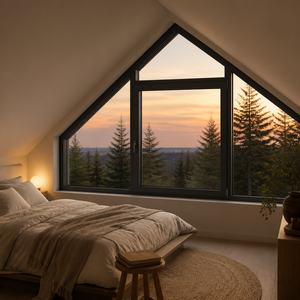
Explore our export-certified commercial and residential systems engineered for maximum structural rigidity, acoustic attenuation, and thermal boundary performance.
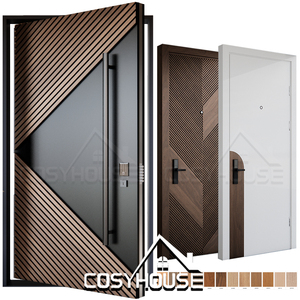
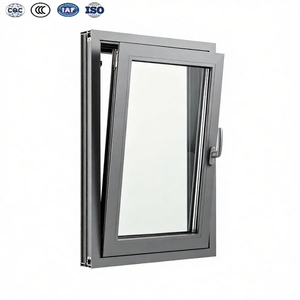
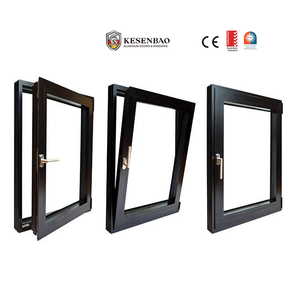
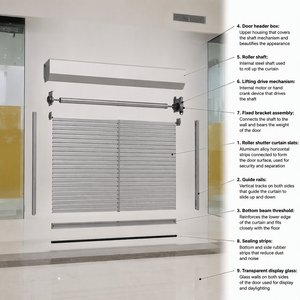
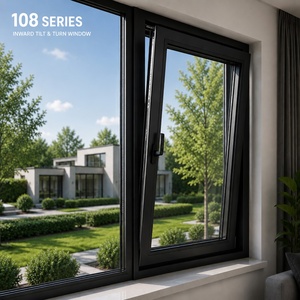
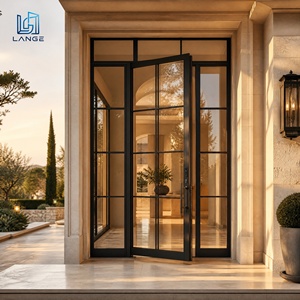
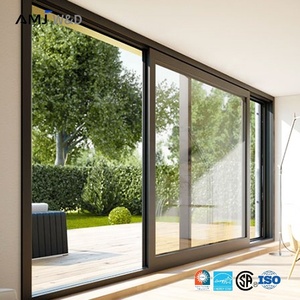
A comprehensive technical analysis for commercial developers, structural engineers, and facade consultants sourcing performance glazing from Chinese manufacturing hubs.
In modern architectural design, the building envelope represents over 40% of a structure's operational energy exchange and serves as the primary barrier against atmospheric stress, acoustic intrusion, and forced entry. Choosing an enterprise-grade China aluminum double glazed windows manufacturer and factory involves an exhaustive evaluation that surpasses base profile aesthetics. It necessitates precise structural alloy compositions, validated thermodynamic isolation strips, and high-integrity sealed insulating glass units (IGU).
Operating from Foshan, Guangdong—the world’s epicenter of precision aluminum extrusion—Guangdong Dejiyoupin Doors and Windows Co., Ltd. (DERCHI) deploys an advanced 180,000-square-meter digitized manufacturing base. Integrating computerized CNC machining centers, automated insulating glass gas-filling lines, and standardized testing rigs, our systems resolve the complex performance demands of both tropical high-humidity coastal zones and continental sub-zero climates.
To assist facade specifiers, architects, and quantity surveyors during tender drafting, the following matrix outlines the structural and thermal performance variations across contemporary fenestration systems manufactured under strict ISO 9001, AS 2047, and NFRC compliance schemes:
| Profile Configuration | Alloy Spec & Temper | Insulating Thermal Core | Glass Build (IGU Spec) | U-Value (W/m²·K) | Acoustic Cut (STC) | Water Resistance (Pa) |
|---|---|---|---|---|---|---|
| Standard Commercial Casement | 6063-T5 (1.4mm - 1.8mm) | Non-Thermal / Monolithic | 5mm + 9A + 5mm Clear | 3.8 - 4.2 | 28 - 30 dB | 300 Pa |
| High-Performance Dual Seal | 6063-T6 (2.0mm structural) | 24mm PA66 GF25 Polyamide | 6mm Low-E + 12Ar + 6mm Clr | 1.8 - 2.1 | 35 - 38 dB | 600 Pa |
| NFRC Multi-Chamber Extreme | 6060-T66 Ultra-Rigid (2.2mm) | 54mm Multi-Cavity Isolator | 6mm Low-E + 16Ar + 6mm Low-E | 1.1 - 1.4 | 40 - 43 dB | 900 Pa (AS2047 N6) |
| Acoustic & Impact Laminated | 6063-T6 Marine Grade | 34mm Thermal Barrier | 6mm + 1.52PVB + 6mm / 12Ar / 6mm | 1.5 - 1.7 | 44 - 48 dB | 1050 Pa (Typhoon) |
Navigating global building mandates: how international procurement strategies are adapting to net-zero carbon goals, computerized pre-fabrication, and extreme climate weather events.
Institutional developers across North America, Europe, and Australasia are aggressively auditing the embodied carbon footprints within aluminum extrusions. Sourcing workflows prioritize Chinese mills that consume certified hydroelectric-melted primary ingots rather than coal-fired smelting, lowering the carbon footprint from 16kg CO₂e/kg Al to below 4kg CO₂e/kg Al.
The traditional tier-separated sourcing model is fading. Tier-1 architectural studios now collaborate directly with our Foshan engineering division using Revit/IFC BIM models. Generating CNC parameters directly from shop drawings avoids human transcribing errors, expediting project-specific submittals from months to days.
Rising meteorological instability—from Atlantic hurricanes to Western Pacific super typhoons—drives procurement toward AS 2047 N6 and ASTM E1886/E1996 cyclic pressure-rated units. Specifiers favor multi-point locking perimeter cam gears and structurally glazed structural silicone back-stops to avoid envelope blow-outs during cyclical load reversal.
State-of-the-art breakthroughs across metallurgy, gas confinement chemistry, and mechanical thermal isolation.
Early thermal breaks relied on simplistic polyurethane poured-and-debridged systems or narrow polyamide strips. Modern systems employ complex, multi-finned PA66 GF25 (25% glass fiber reinforced nylon) cores up to 54mm thick. These incorporate low-emissivity aluminum radiation foils inside the internal chamber to eliminate radiative convection loops entirely.
Replacing traditional hollow aluminum spacer bars filled with molecular sieve desiccant beads, cutting-edge automated lines extrude continuous Thermoplastic Spacers (TPS). TPS yields uninterrupted elastic edge seals that lower thermal transmittance at the glass edge by up to 12%, while reducing annual Argon gas escape rates to less than 0.5% over a 25-year lifespan.
Modern commercial and residential envelopes demand uninterrupted indoor air quality without sacrificing thermal envelopes. Smart fenestration pairs tilt-and-turn gearing with micro-gap ventilation settings (down to 3mm), motorizing casement closures through central KNX or Zigbee Building Management Systems (BMS) with wind, rain, and air particulate monitors.
Based in Foshan, Guangdong Dejiyoupin Doors and Windows Co., Ltd. ranks among China's Top 10 leading fenestration manufacturers, providing unparalleled capacity and global compliance certainty.
Fully equipped smart facility managing vertical casting, thermal assembly, CNC processing, and automated glass sealing under one roof.
Tested and certified to Australian AS 2047 N6, North American NFRC, European CE, ISO 9001, and UL Fire-Resistance protocols.
In-house facade engineers generate custom shop drawings, tailor structural profiles, wind-load calculations, and deliver bespoke hardware layouts.
Seaworthy fumigated steel-cage crating, opening-by-opening floor labeling, and dedicated shipping logistics to ports worldwide.
Clear, direct technical answers covering testing standards, engineering customization, thermal calculations, and factory workflows.
AS 2047 is the Australian standard testing structural deflection, air infiltration, water penetration resistance (typically up to N6 / 4500Pa ultimate strength for cyclone areas), and operating force. NFRC (National Fenestration Rating Council) is a North American protocol focusing primarily on thermodynamic performance, including whole-window U-factor, Solar Heat Gain Coefficient (SHGC), and Visible Transmittance (VT).
We utilize double-barrier secondary silicone or polysulfide perimeter seals over primary polyisobutylene (PIB) butyl matrixes. For goods shipped across significant atmospheric elevation changes (e.g., container trucking over mountain ranges or high-altitude ports), we install specialized capillary equalization tubes that are sealed on site after pressure stabilization.
Yes. Our tooling facility can fabricate custom extrusion dies within 10 to 14 days based on your project requirements. For finishes, we offer Qualicoat Class 2 certified architectural powder coating, fluorocarbon PVDF (Kynar 500) suited for severe marine environments, and high-micron architectural anodizing with warranties up to 25 years.
Standard architectural configurations with verified shop drawings require 25 to 35 production days. Bespoke systems involving custom extrusion tooling, exotic curvature bending, or high-performance laminated soft-coat low-E combinations are completed within 35 to 45 business days, followed by direct container loading from our Foshan facility.
Yes. Our structural engineering department delivers finite element analysis (FEA) modeling wind pressure, glass deflection limits (L/175 or L/250 based on jurisdiction), dead-load anchoring stresses, and thermal boundary condensation indices to accelerate municipal permit approvals.
Profiles are covered with laser-peel protective film, wrapped in moisture-resistant vapor barriers, cushioned with shock-absorbing corners, and fastened inside reinforced fumigated steel crates or enclosed plywood cassettes with desiccant packs, engineered for crane and forklift handling.
Send your structural elevations, window schedule, or architectural drawings. Our English-speaking fenestration engineers will provide an itemized Bill of Quantities (BOQ), certified CAD sections, and competitive factory-direct pricing within 24 hours.
Get a Quote