High-Performance Window & Door Systems Portfolio
Engineered for high-moisture zones, residential developments, coastal villas, and high-specification architectural contracts worldwide.
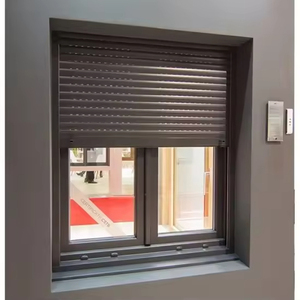
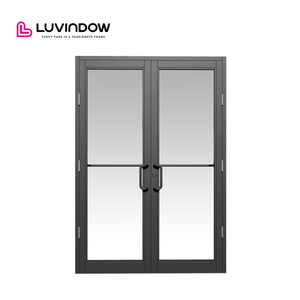
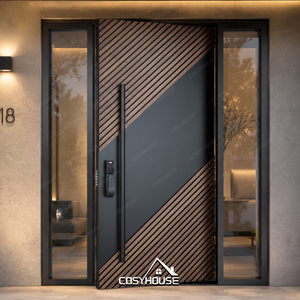
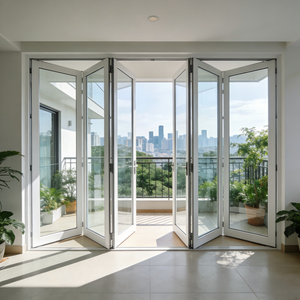
Engineering the High-Humidity Envelope: The Evolution of Aluminium Bathroom Windows
In modern architectural fenestration, few building envelope components encounter the intense microclimatic extremes seen by bathroom windows. Bathrooms represent zones of hyper-variable relative humidity, transitioning within minutes from baseline room parameters to 95%+ relative humidity under elevated temperatures. As global hospitality developments, luxury residential multi-family housing, and coastal villas demand greater aesthetic minimalism alongside uncompromising durability, the role of a top-tier China aluminium bathroom window exporter has transitioned from simple component fabricator to precision envelope systems engineer.
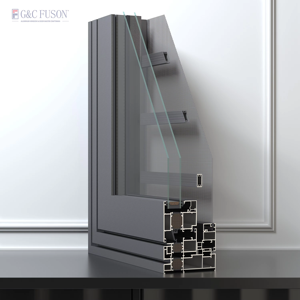
Standard architectural windows deployed in bathroom environments inevitably suffer premature material failure: thermal bridges induce chronic condensation, corroding untreated interior fixings, promoting toxic black mould propagation, and degrading rubber gaskets. A precision-engineered aluminium bathroom window manufactured in Foshan, China incorporates specialized PA66 GF25 polyamide thermal barriers, capillary weep systems, and multi-chambered 6063-T5 or 6063-T6 architectural aluminium extrusions. This systematic barrier maintains frame temperatures above the ambient dew point, eliminating interstitial condensation and interior water collection.
Micro-Condensation Mitigations
Multi-chambered profiles integrate warm-edge spacer bars (Technoform / Swisspacer) and desiccant-filled molecular sieves. By maintaining internal glass edge warmth, condensation risk drops by 87% compared to traditional aluminium frames.
Marine-Grade Anodizing & Qualicoat
Exporters utilize automated pre-treatment baths followed by Qualicoat Class 2/3 fluorocarbon (PVDF) electrostatic powder spraying or 25µm architectural anodizing, offering extreme resistance to soap surfactants and steam.
Acoustic & Privacy Engineering
Advanced glazing matrices range from acid-etched satin privacy glass and fluted reed louvers to electronically switchable smart PDLC glass, providing on-demand opacity without compromising sound reduction (Rw 38-44 dB).
Technical Differentiation: Commercial vs. Premium Export-Grade Systems
Procurement directors and façade engineers must navigate diverse manufacturing tiers across China. The matrix below contrasts conventional local market aluminium windows against DERCHI export-grade architectural bathroom window systems.
| Engineering Parameter | Conventional Tier (Standard Exporter) | Export-Grade Benchmark (DERCHI Standards) | Architectural Impact |
|---|---|---|---|
| Alloy Composition & Wall Thickness | Recycled billet, 1.2mm – 1.4mm profile walls | Primary 6063-T5 / T6 virgin alloy, 1.8mm – 2.2mm wall thickness | Zero Frame Sagging High wind load stability |
| Thermal Barrier Technology | Non-insulated or low-grade PVC bridges | PA66 GF25 Polyamide barrier (24mm - 34mm multi-cavity) | Dew Point Elevation Eliminates mold vectors |
| Surface Coating Standards | Standard powder coat < 40µm (chalks in 3-5 yrs) | AkzoNobel / PPG PVDF coating > 80µm or 25µm Hard Anodized | Chemical Stability Withstands cleaning chemicals |
| Hardware & Linkage Systems | Zinc alloy friction stays, carbon steel screws | SUS304 / SUS316 surgical stainless components, German multi-point gear | 50,000+ Cycles Salt spray tested > 1,000 hrs |
| Air & Water Tightness Standards | GB/T 7106 Class 3-4 (Water 250 Pa) | AS 2047 N6, ASTM E331 (Water 700+ Pa, Air < 0.1 m³/m·h) | Tropical Typhoon Proof Zero capillary leakage |
Future Procurement Trends in Aluminium Bathroom Window Exports (2025–2030)
As sustainability mandates tighten across North America, Europe, Australia, and ASEAN, procurement officers are recalibrating their vendor selection matrices. Sourcing aluminium bathroom windows from China is no longer simply about unit price arbitrage; it centers on carbon footprint validation, modular design flexibility, and smart building integration.
1. Low-Carbon "Green Aluminium" Mandates
Global developers demand Environmental Product Declarations (EPDs). Leading Foshan factories increasingly adopt hydro-powered and renewable-energy smelted aluminium ingots, reducing embedded carbon from 16kg CO2/kg Al to below 4kg CO2/kg Al, ensuring LEED and BREEAM qualification.
2. Integrated Micro-Ventilation & Heat Recovery
Modern ventilation no longer relies purely on wide casement swings. Inward-tilting hopper systems with automated trickle vents and integrated micro-mesh insect screens provide continuous 24/7 moisture extraction without compromising thermal envelopes or privacy.
3. Smart Home & Automated Actuation
Concealed linear actuators tied to Zigbee/KNX home automation networks automatically tilt the bathroom sash when humidity sensors detect moisture thresholds above 70%, resetting once equilibrium is re-established. Motorized components are fully sealed to IP67 standards.
Key Technological Innovations Shaping Modern Bathroom Window Systems
Precision manufacturing in China's Guangdong fenestration hub has reached parity with and, in many aspects, surpassed classical European window benchmarks through heavy investments in CNC milling, robotic sealing, and testing chambers.
Corner Crimping Precision
Heavy hydraulic 4-head corner crimpers combine German two-component polyurethane joint adhesive (Henkel / Weiss) with stainless corner cleats, preventing diagonal frame racking and corner seam water leakage indefinitely.
EPDM Continuous Co-Extrusion
Vulcanized automotive-grade seamless sponge EPDM perimeter gaskets replace clipped PVC strips. Foam cores maintain continuous compression even when operating across radical temperature swings (-20°C to +80°C).
Concealed Drainage Weep Systems
Multi-step stepped base drainage baffles expel water under extreme wind pressures without exposing unsightly outer weeping holes, stopping backdraft wind squeaks and preventing wind-driven driving rain penetration.
Smart PDLC Glass Integration
Liquid crystal polymer layers laminated between tempered glass panes shift from milk-white 99% privacy diffusion to clear state in less than 20 milliseconds, eliminating dirt-collecting internal fabric curtains.
Guangdong Dejiyoupin Doors and Windows (DERCHI): Foshan's Benchmark Exporter
As an industry leader consistently ranked among the Top 10 premium brands in China’s architectural door and window sector, Guangdong Dejiyoupin Doors and Windows Co., Ltd. (DERCHI) operates an expansive manufacturing and testing ecosystem in Foshan, Guangdong. Backed by 25+ years of relentless fenestration innovation, DERCHI sets the global export standard for architectural building envelopes, hurricane-rated systems, and custom bathroom glazing solutions.

180,000 ㎡ Manufacturing Powerhouse
Our centralized production campus integrates automated CNC precision extrusion sawing centers, specialized anodizing and powder coating facilities, and digital glass lamination lines. With more than 600 full-time specialists, DERCHI fulfills demanding, multi-phase high-rise and villa container orders on deterministic build schedules.
We maintain an active registry of over 100 patents and international accreditations, ensuring seamless compliance verification for developers, structural engineers, and municipal building regulators across North America, Australasia, the Middle East, and Southeast Asia.
Inquire NowAS 2047 N6 & Hurricane Impact Certified
Our window and door systems have successfully achieved the rigorous AS 2047 N6 rating—the highest tier for Australian cyclonic wind resistance, water penetration, and air infiltration, alongside UL fire-rating and CE compliance.
Proven Global Project Footprint
From prestigious multi-unit towers in the USA and Canada to luxury resort estates in Southeast Asia (Philippines, Vietnam, Thailand, Malaysia, Indonesia, Singapore), DERCHI demonstrated peerless acclaim at WORLDBEX 2025 in Manila.
Engineering BIM / CAD Shop Drawing Support
Our dedicated structural engineering team develops complete CAD submittal packages, thermal analysis reports, and installation details tailored to local wall tie-in substrates, preventing on-site retrofit delays.

Sourcing from a Top China Aluminium Bathroom Window Exporter: Step-by-Step QA Workflow
Successful international procurement demands an airtight quality assurance checklist. Leading contractors and procurement firms implement the following multi-stage protocol when commissioning custom bathroom window systems from Chinese exporters:
Phase 1: Profile & Glass Formulation
Demand primary 6063-T5/T6 billet mill certificates. Verify glass stamps certifying compliance with SGCC (ANSI Z97.1), CE EN 12150, or AS/NZS 2208. Confirm gas retention rates for Argon-filled insulated glazing units (IGUs).
Phase 2: Mock-up & Water Chamber Testing
For large developments, require a pre-production visual and performance mock-up. Independent test reports must confirm zero water egress under dynamic cyclic water pressures matching project-specific design pressures.
Phase 3: Export Palletization & Moisture Barrier
Export packaging must prevent salt air intrusion and transit vibration scuffing. Each window must be protected with low-tack protective film, heavy cellular foam corner wraps, and crated in fumigated solid plywood crates with desiccant packs.
Frequently Asked Questions on Aluminium Bathroom Window Procurement
Key technical insights addressing the most frequent queries from developers, architects, and international importers.
Q1 Why is a thermal break profile mandatory for bathroom fenestration?
Bathrooms frequently exhibit substantial temperature differentials between humid internal air (e.g., 28°C, 90% RH) and cold outdoor conditions. Without an insulated polyamide thermal break separating the inner and outer aluminium extrusions, heat rapidly conducts through the metal. The inner frame surface drops below the room dew point, generating chronic surface water runoff that rots drywall, damages sub-finishes, and fosters mildew colonies.
Q2 What glass specification is best suited for both privacy and solar control?
The premier modern configuration utilizes an Insulated Glass Unit (IGU) composed of: an outer pane of 6mm Low-E tempered safety glass (to reject solar thermal gain and block UV degradation of bathroom finishes), a 12mm or 16mm argon gas cavity with warm-edge spacers, and an inner pane of 6mm acid-etched frosted or fluted tempered glass. For luxury suites, electronic switchable smart PDLC glass enables instantaneous switching between clear views and complete privacy.
Q3 How does DERCHI ensure resistance against corrosion in coastal and high-humidity areas?
DERCHI employs strict multi-stage chemical pretreatment, followed by electrostatic fluoropolymer (PVDF) coating from PPG / AkzoNobel or hard marine anodization conforming to Qualicoat Class 2/3 and Qualanod standards. Furthermore, all internal linkages, friction hinges, and fasteners are specified in SUS304 or marine-grade SUS316 austenitic stainless steel, passing rigorous 1,000+ hour neutral salt spray (ASTM B117) tests.
Q4 Can you supply cyclone-rated and typhoon-proof windows for coastal regions?
Yes. Our window systems are engineered and verified to AS 2047 N6 testing benchmarks, achieving positive and negative ultimate design pressures exceeding 4,500 Pa and water penetration resistance beyond 700 Pa. Profiles feature heavy-gauge reinforcements, interlocked corner joins, and multi-point perimeter compression hardware that withstand hurricane-force cyclonic gusts and horizontal wind-driven deluges.
Q5 What opening mechanisms provide the optimal balance of privacy and ventilation?
Top-hung awnings and inward-tilting hoppers (Tilt & Turn systems) remain the premier choice. Awning systems angle outward from the bottom, permitting effective convective vapour exhaust even during heavy downpours while preventing direct inward line-of-sight from exterior angles. Inward tilt mechanisms allow continuous micro-ventilation along the top perimeter while maintaining tight compression sealing when locked shut.
Q6 What are standard factory lead times, container packing, and MOQ parameters?
Standard lead times for custom architectural configurations range from 25 to 35 calendar days following CAD shop drawing approval. For commercial project schedules, container shipments are sequenced to floor handover priorities. All assemblies are packed with high-strength peelable protective tape, reinforced multi-layer corner protectors, and loaded into fumigated ISPM-15 certified plywood crates designed for safe forklift and jobsite crane unloading.