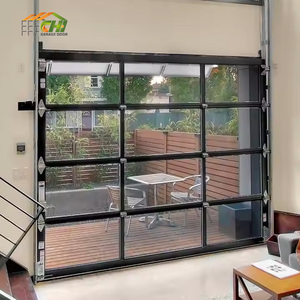
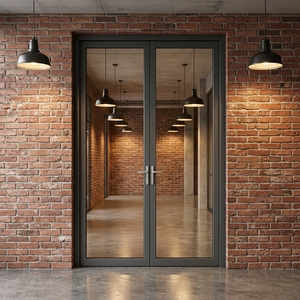
China Top Aluminium Black Doors Factories & Exporters

Technical White Paper & Global Procurement Guide: Precision Thermal Break Engineering, Architectural Finishes, Hurricane Impact Compliance, and Direct-from-Source Supply Chains

Engineered Fenestration Systems

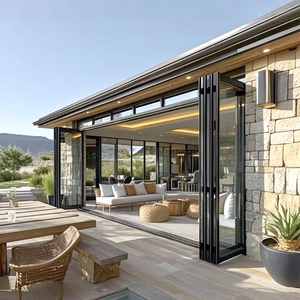
Featured Architectural Black Aluminium Portals

Tested rigorously under international building standards including NFRC, AS2047, and CE certifications for climate resilience, acoustic barrier, and high wind-load endurance.

Engineering White Paper

Industrial Sourcing of Black Aluminium Doors in China

A deep technical appraisal of structural extrusion profiles, surface finishing resilience against solar degradation, and thermal break engineering for international commercial developers.

In modern industrial architecture and luxury residential master plans, the specification of architectural matte black aluminum doors has evolved from a transient aesthetic preference into a permanent engineering standard. The sleek, understated expression of ultra-narrow sightline black profiles contrasts boldly with concrete, masonry, timber, and expansive glazing panels. However, specifying exterior black fenestration requires advanced material selection: black surfaces absorb upwards of 90% of solar radiation, generating surface temperatures reaching 75°C to 85°C under direct ultraviolet exposure. This severe thermal gradient causes significant thermal expansion stresses, frame bow, and degradation of substandard coating matrices.

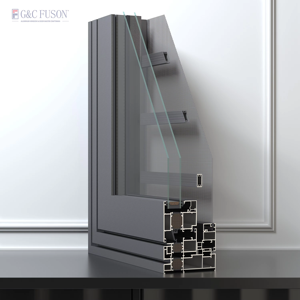
Leading Chinese fenestration hubs—concentrated in industrial clusters across Foshan, Guangdong—have re-engineered structural extrusions through continuous research. Modern facilities utilize prime-grade 6063-T5 or 6063-T6 architectural aluminum billets, extruded to strict wall thickness tolerances (typically 2.0mm to 3.0mm for heavy-duty entry pivots and sliding panels, surpassing the 1.4mm minimums common in residential stock). To counter heat deflection and thermal transfer, top-tier exporters integrate polyamide (PA66 GF25) thermal break insulation strips reinforced with 25% glass fiber. This isolates exterior thermal gains from interior air-conditioned zones, preventing framing warping and maintaining seal contact.

Surface treatment represents the next critical differentiator for procurement directors. Low-tier powder coatings often fade, chalk, and lose adhesion within 24 to 36 months under marine or tropical sunlight. Premier Chinese export manufacturers employ AAMA 2604 and AAMA 2605 certified fluorocarbon (PVDF) spray systems or super-durable architectural powder coatings (such as AkzoNobel Interpon D2525 and Tiger Drylac). These coatings provide exceptional resistance against ultraviolet radiation, salt-spray corrosion, acidic condensation, and abrasion, backed by multi-decade warranties.
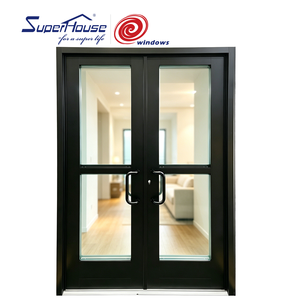
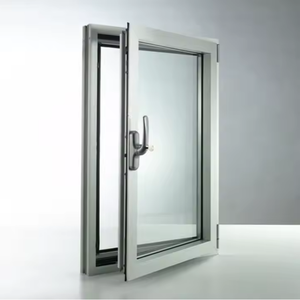
Evaluation Parameter Standard Market Extrusions China Top-Tier Export Standard (DERCHI Grade) Architectural Procurement Benefit
Alloy Metallurgy & Temper Recycled aluminum scrap (6063-T4) Primary Billet 6063-T5 / T6 High Tensile Alloy Superior Tensile Strength & Wind Rigidity
Profile Wall Thickness 1.2mm – 1.4mm (Residential grade) 2.0mm – 3.2mm (Engineered Structural grade) Zero Frame Sagging for Jumbo Over-sized Openings
Black Surface Finishing Standard Epoxy Powder (Fades in 3 yrs) AAMA 2605 PVDF Fluorocarbon / AkzoNobel Qualicoat Class 2 30+ Year Color Fastness & Anti-Chalking
Thermal Insulation Core Non-thermal / Low-grade PVC bridge PA66 GF25 Polyamide Strips (German Technoform) High U-Value Compliance & Anti-Condensation
Acoustic & Weather Sealing Conventional PVC Gaskets (Shrinks in sun) Co-extruded EPDM Vulcanized Continuous Foam Gaskets AS2047 Air Tightness & Cyclone Water Impermeability
Strategic Sourcing Intelligence

Future Procurement Trends in Aluminium Doors (2025–2030)

How international building energy codes, automated fabrication, and architectural trends are reshaping global supply chain requirements.

1. Ultra-Low U-Value Energy Mandates

Global building energy regulations (such as ASHRAE 90.1, Title 24, and Europe's EPBD) mandate overall thermal transmittance (U-factor) below 1.4 W/(m²·K). Procurement is rapidly shifting toward multi-chamber thermal breaks paired with triple-glazed argon units and warm-edge spacers to eliminate condensation and heat bridging.

2. Jumbo Scale Architectural Pivots

Architects increasingly demand monumental entrances featuring floor-to-ceiling panels reaching up to 6 meters in height and 3 meters in width. To accommodate door leaf weights exceeding 500 kg, factories integrate heavy-duty concealed German pivot gear, FritsJurgens systems, and specialized reinforced internal steel spines.

3. Hurricane Impact & Cyclone Resistance

With coastal urbanization across Florida, the Caribbean, Southeast Asia, and Australia, specifications require doors to pass cyclical wind pressure and missile impact tests (Miami-Dade NOA, AS 2047 N6, ASTM E1886/E1996). China's leading factories now pre-engineer reinforced structural mullions and SentryGlas (SGP) interlayers.

4. Automated Smart Access Integration

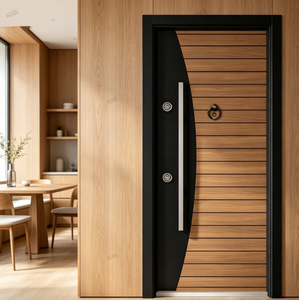
Black entry portals are transforming into active security hubs. Architectural buyers specify hidden biometric scanners, face-recognition hardware, smart-home motorization drives (Somfy, GU, Siegenia), and concealed wiring conduits fabricated directly within the thermal-break chamber during CNC processing.

5. Circularity & EPD Environmental Standards

Global developers increasingly evaluate Environmental Product Declarations (EPD). Tier-1 Chinese manufacturers invest in low-carbon aluminum smelted with renewable hydro energy, sustainable non-toxic powder formulations, and fully recyclable hardware to help projects achieve LEED and BREEAM certifications.

Direct Manufacturing Scale

Enterprise Infrastructure & Technical Capabilities

Backed by Guangdong Dejiyoupin Doors and Windows Co., Ltd. (DERCHI) — Foshan's benchmark in high-end export fenestration.

180,000㎡
Integrated Production Base
600+
Skilled Craftsmen & Engineers
100+
Patents & Global Certifications
25+
Years Fenestration Experience

Ranked among the Top 10 premium brands in China's fenestration industry, DERCHI serves international contractors, architects, and luxury property developers worldwide. Our manufacturing infrastructure integrates automated German Elumatec five-axis CNC cutting centers, computerized dual-head corner-crimping machinery, and fully enclosed dust-free glass assembly lines. Every batch of extruded aluminum profiles undergoes strict metallurgical assays, coating adhesion peel testing, and structural corner weld torque validation before release.

With active project completions across North America (USA, Canada), Australia, the Middle East, and Southeast Asia—demonstrated through major exhibitions including WORLDBEX in the Philippines—DERCHI provides comprehensive export engineering. This includes bilingual engineering review, structural wind-load calculation reports, full shop drawings, sea-freight reinforced crating, and direct remote technical guidance through final project installation.

Comprehensive Buyer Guide

Frequently Asked Questions for B2B Importers

Direct answers addressing technical specifications, packaging integrity, international compliance standards, and lead-time guarantees.

Q: How do you prevent black aluminum profiles from fading or chalking under intense sun?

We treat exterior framing with architectural PVDF (fluorocarbon) three-coat fluoropolymer coatings or Qualicoat Class 2 certified super-durable thermosetting powders (AkzoNobel/Tiger). These meet AAMA 2605 testing parameters, maintaining gloss retention and color stability under direct UV radiation and salt spray environments.

Q: Which international building certifications do your doors hold for customs and inspection?

DERCHI door systems are certified under CE (EN 14351-1) for Europe, AS 2047 and AS/NZS 2208 for Australia and New Zealand, NFRC/AAMA for North America, and ISO 9001 for quality management. Certified test reports are available to support code approvals with local building authorities.

Q: Can you produce oversized custom pivot and sliding doors from our architectural schedules?

Yes. Custom manufacturing accounts for over 85% of our export volume. Our engineering department reviews your door schedules and structural parameters to provide shop drawings within 48 hours, covering custom frame sizes, transoms, sidelites, glass buildups, and integrated smart hardware.

Q: How do you protect matte black profiles and glass during containerized sea transit?

Every aluminum extrusion is wrapped with low-tack protective film, corner-guarded with high-density EVA foam, encased in vapor-barrier poly sheeting, and packed inside fully enclosed fumigated plywood crates (ISPM 15 certified). Crates feature internal steel banding and shock absorbers to prevent transit shifting and scratching.

Q: What is the standard production lead time for commercial project quantities?

Standard lead times for custom-engineered systems range from 25 to 35 business days following final CAD sign-off and deposit receipt. Expedited manufacturing channels are available for phased developments requiring sequential container releases matching job-site schedules.

Q: What after-sales and installation support do you provide to overseas contractors?

Every export order includes detailed component-numbered installation manuals, 3D exploded assembly diagrams, and video walkthroughs. Our Foshan engineering team operates within international business hours to deliver direct video-conferencing technical guidance, along with included spare hardware gaskets and anchor fasteners.

Ready to Engineer Your Project's Black Door Solutions?

Consult with our structural fenestration engineers. Submit your door schedules, CAD elevations, or custom opening dimensions for a comprehensive technical appraisal and factory-direct proposal within 24 hours.