Certified Fenestration Systems
Featured Engineering Portfolios & Architectural Systems
Engineered to integrate micro-fine insect screening, high-tensile security flyscreen mesh, and thermal insulation profiles across residential, commercial, and high-wind tropical applications.
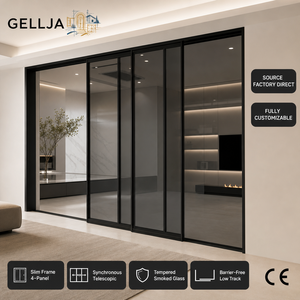
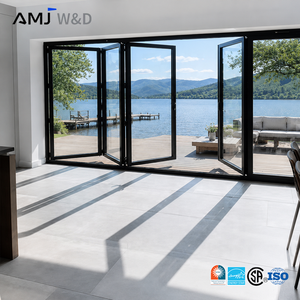
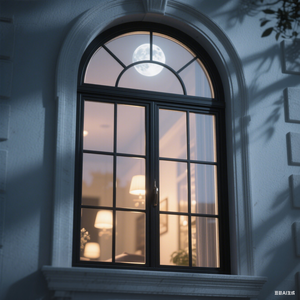
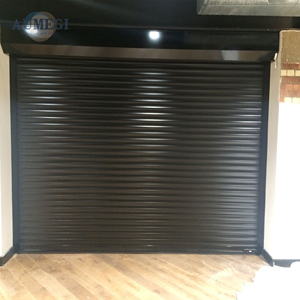
180,000㎡
Foshan Production Base
600+
Specialized Workforce
100+
Patents & Global Certs
25+
Years Engineering Proven
State of Global Sourcing: Engineering Aluminum Mosquito Net Doors in 2026
In contemporary architectural envelope design, aluminum mosquito net doors have transitioned from basic residential wire screens into advanced, structural fenestration systems. Modern commercial builders, resort developers, and institutional specifiers across Southeast Asia, the Pacific, and North America require systems that simultaneously mitigate vector-borne pests, satisfy severe cyclic wind load certifications, offer multi-point physical intrusion resistance, and preserve building thermal envelopes.
As China's leading fenestration manufacturing cluster in Foshan continues to evolve, high-precision extrusion processing using 6063-T5 and structural 6061-T6 alloy substrates has redefined baseline durability. The combination of powder-coated architectural aluminum extrusions and 0.8mm to 1.0mm 316-grade marine stainless steel mesh screen provides uncompromised security ("crimsafe" style) while achieving high open-area airflow ratios essential for high-humidity, typhoon-prone zones.
Tensile Security Integration
Utilizing high-tensile 304 and 316 marine-grade stainless steel wire woven at precise 10 to 14 mesh counts, our screen doors absorb dynamic shear impacts up to 500 Joules without frame distortion or spline separation.
Corrosion & UV Neutralization
Our surface finishing workshops utilize AkzoNobel fluorocarbon (PVDF) and electrostatic powder treatments rated past 3,000 hours of continuous neutral salt spray (ASTM B117), engineered for coastal salt air exposure.
Precision Multi-Track Sliding
Integrated barrier designs incorporate heavy-duty stainless dual rollers, magnetic acoustic seals, and concealed interlocking mullions, offering effortless glide operation on large spans up to 6000mm.
Engineering Specification Matrix: Mosquito & Security Screen Systems
Architects and project engineers require standardized metrics when matching procurement specifications to building codes. Below is an engineering comparison evaluating standard mesh vs. high-tensile architectural security mesh doors manufactured within our Foshan facility.
| Technical Dimension | Standard Insect Screen Door | Architectural Pleated Barrier | High-Tensile Security Screen Door |
|---|---|---|---|
| Profile Material | 6063-T5 Extruded Aluminum (1.2mm) | 6063-T5 Ultra-Slim Frame (1.4mm) | 6063-T6 Structural Profile (2.0mm - 2.5mm) |
| Screen Material | Fiberglass / Standard Aluminum Mesh | Water-repellent Polypropylene (PP) | SUS 316 Marine Stainless Steel (0.8mm wire) |
| Wind Pressure Rating | Serviceability: 800 Pa | Serviceability: 1200 Pa | AS 2047 N6 Ultimate Limit (>4500 Pa) |
| Mesh Fixation Method | Rubber Spline Compression | Tension Wire Tracking Cord | Mechanical Screw-Clamping Wedge (No Spline) |
| Locking System | Single Point Latch | Magnetic Soft-Catch | Multi-Point Hook Bolt Deadlock (Anti-Jemmy) |
| Airflow Transparency | Approx. 65% Open Area | Approx. 58% Open Area | Optimized 42% - 52% Security Airflow |
Future Sourcing & Procurement Trends (2026–2030)
Understanding shifting buyer preferences is pivotal for wholesale distributors, architectural supply firms, and building contractors navigating global supply chains. We track three primary transformations driving capital allocation:
1. Monolithic Envelope Integration (Barrier-Screen Unification)
Rather than retrofitting add-on flyscreens post-construction, project developers are mandating integrated triple-track window and door systems where the glass casement, thermal break slider, and stainless security screen share a single extruded outer frame. This eliminates aesthetic visual clutter, ensures unified water drainage paths, and guarantees uniform anodized or powder-coated color matches across the complete fenestration schedule.
2. Barrier-Free Universal Accessibility (Flush Track Designs)
Traditional sliding screen doors feature elevated bottom guide rails that present trip hazards and trap dust and debris. The international architectural trend favors sunken, zero-threshold, or chain-driven tracked systems that recess seamlessly into interior marble, tile, or composite decking. These systems withstand heavy foot traffic without jamming roller bearings.
3. Bushfire Attack Level (BAL) & Extreme Weather Compliance
With volatile climate conditions dominating Oceania, North America, and Mediterranean trade routes, mosquito screen doors are subjected to strict regulatory fire tests. Sourcing trends show exponential demand for systems compliant with Australian Standard AS 3959 (BAL-40 and BAL-FZ ratings) where non-combustible stainless steel meshes prevent airborne ember ingress during bushfires while functioning as everyday biological screening.
Why Direct Importers Partner with Our Foshan Facility
Operating as Guangdong Dejiyoupin Doors and Windows Co., Ltd. (DERCHI), our production strength is rooted in 25 years of specialized export fabrication. Supplying major markets across Southeast Asia (Philippines, Vietnam, Thailand, Malaysia, Indonesia, Singapore), Australia, and North America, our manufacturing ecosystem provides distinct commercial advantages:
180,000 ㎡ Mega Production Hub
Our automated extrusion cutting, CNC corner crimping, and automated mesh tensioning lines operate across a centralized 180,000 square meter plant, ensuring high-volume capacity and batch-to-batch structural tolerance within ±0.5mm.
Fully Certified Global Compliance
Every fenestration line is backed by independent laboratory testing. We hold full certifications across CE, ISO 9001, AS 2047 N6 (cyclone-grade air and water tightness), and UL fire ratings, simplifying municipal sign-offs.
Architectural CAD & Shop Drawings
Our in-house design engineers convert rough project openings or architectural schedules into full shop drawings, BIM families, and structural wind-load calculation packages within 24 to 48 hours.
Frequently Asked Questions (Sourcing & Procurement FAQ)
Q1: How does 316 marine stainless mesh prevent corrosion?
Grade 316 stainless contains 2-3% molybdenum, which drastically inhibits pitting corrosion from coastal atmospheric chlorides. Coated with specialized architectural black powder, our screens resist long-term oxidation in high-salinity island and coastal regions.
Q2: Can your screen doors withstand typhoon winds?
Yes. Our door assemblies have passed rigorous AS 2047 N6 certification tests. Under structural testing simulating severe cyclone force, our multi-point interlocks and reinforced mullions prevent frame blowout and water penetration under severe pressure.
Q3: What is the production lead time for full container orders?
Standard profile colors (Matte Black, Architectural White, Anodized Silver) typically require 25 to 30 days. Custom fluorocarbon colors or custom-tooled extrusion dies ship within 35 to 45 days, packed in fumigated plywood crates with protective foam wrap.
Q4: How are doors packaged for ocean freight protection?
Every panel is wrapped in protective shrink film, protected with high-density corner guards, separated by corrugated padding, and crated in fumigated export crates to prevent frame racking and mesh scratches during rough transit.
Q5: Can you fabricate custom oversized pivot or bifold mesh doors?
Yes. Our engineering division specializes in heights up to 4000mm and widths up to 2000mm per single sash using reinforced heavy-duty pivot bearings and internal structural steel liners to prevent sash sag.
Q6: Do you provide installation guidance and hardware spares?
We supply comprehensive CAD assembly blueprints, step-by-step video installation guides, and a standard 2% spare hardware allocation (rollers, handles, locks, fasteners) with each export container consignment.
Initiate Your Engineering & Sourcing Consultation
Receive comprehensive structural CAD drawings, certified lab test reports, and factory-direct volume pricing within 24 business hours.