High-Performance Aluminum Crank-Out & Casement Collections
Engineered for extreme cyclonic wind zones, coastal saltwater endurance, and low-E acoustic attenuation across North American, Australian, European, and Southeast Asian architectural standards.
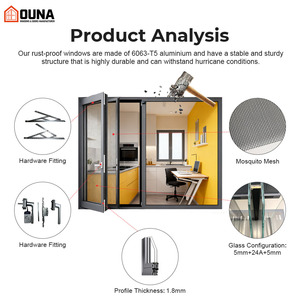
OUNA Hurricane Proof High Impact Black Aluminum Alloy Thin Profile Windows
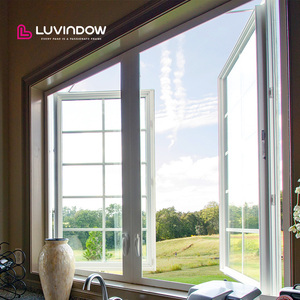
Modern Aluminum Crank Out Window for Bedroom & Bathroom Use Custom Colors
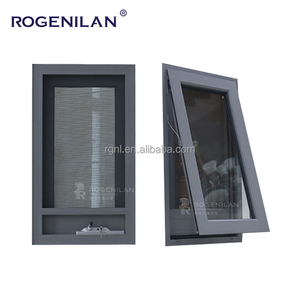
Australian Crank Push Window Outward Casement Aluminum Low-E Awning
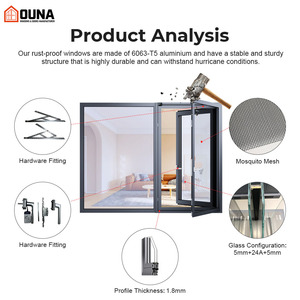
OUNA American Impact Resistant Double Glazed Aluminum Crank Push Out Windows
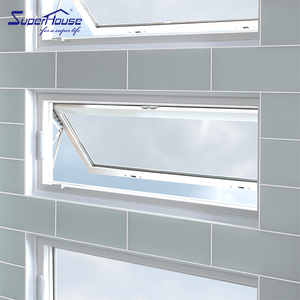
Modern European Crank Awning Windows with Integrated Timber Reveal System
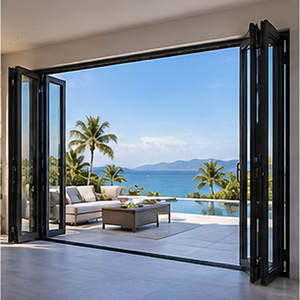
Folding Windows for Terrace Contractors Aluminum Bi-Fold Balcony System
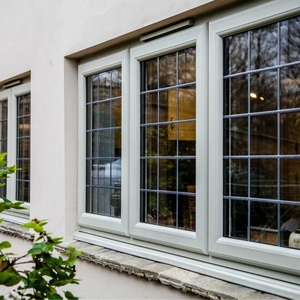
AMJ NFRC American Style Aluminum Casement Windows with Folding Crank Handle
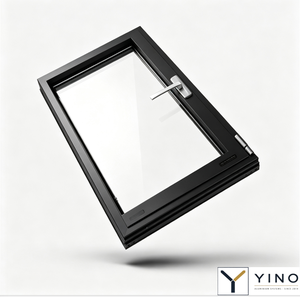
Energy-Efficient Aluminum Double Tempered Glass Impact American Crank Casement
180,000 ㎡ Intelligent Fenestration Facility in Foshan, China
Operating as Guangdong Dejiyoupin Doors and Windows Co., Ltd. (DERCHI brand), our production campus integrates automated extrusion cutting, precision robotic corner crimping, and computerized QA chambers.
Alloy Metallurgy & CNC Precision
Constructed from virgin architectural-grade 6063-T5/T6 primary aluminum billets. Every sash and frame profile undergoes 0.01mm tolerance 5-axis CNC machining, ensuring corner crimps with structural two-component epoxy adhesive injection for absolute watertightness.
Severe Weather & Cyclone Validation
DERCHI systems are tested to AS 2047 N6 cyclonic wind loads (over 4500Pa ultimate design pressure) and certified for American impact standards (ASTM E1886/E1996, Miami-Dade protocols). Engineered specifically for high-velocity hurricane zones and coastal typhoons.
Turnkey OEM/ODM Global Compliance
Complete project documentation packages for architects and general contractors, including structural thermal modeling, NFRC thermal performance matrices, shop drawings in DWG/BIM formats, and customs tariff HS-code compliance across North America, Australasia, and Europe.
Anatomy of an Architectural-Grade Aluminum Crank-Out Window
Why rotary gear crank-out casements outperform conventional sliding and push-out windows in structural compression, negative pressure resistance, and airtight building envelopes.
| Performance Dimension | Standard Commercial Window | DERCHI High-Performance Crank Window | Architectural Benefit |
|---|---|---|---|
| Operating Mechanism | Single-arm friction hinge / Push bar | Dual-arm rotary stainless operator (Truth / Roto equivalent) | Smooth operation for sashes up to 90kg; zero sag over 25,000 cycles |
| Thermal Separation | Non-thermal or 14.8mm PVC strip | 24mm – 34mm Technoform PA66 GF25 Polyamide strut | Achieves U-Factor ≤ 0.22 BTU/(h·ft²·°F); prevents condensation |
| Perimeter Sealing | Dual TPV brush seals | Triple continuous automotive-grade EPDM compression gaskets | Air infiltration ≤ 0.05 cfm/ft² at 75 Pa; severe acoustic reduction |
| Locking Security | Single-point cam latch | Multi-point sequential progressive tie-bar locking transmission | Even pressure distribution along the full frame perimeter against gale winds |
| Surface Protection | Standard 40μ powder coat | AkzoNobel / PPG fluorocarbon PVDF (2605) & Class I Anodized | Resists 3,000hr neutral salt spray; C5-M extreme coastal corrosive durability |
Compression Gasket vs. Sliding Seal Mechanics
Traditional sliding fenestration utilizes mohair pile weatherstripping that generates friction during sash transit, inevitably degrading over 24-36 months and resulting in draft bypass and moisture capillary migration. In contrast, our aluminum crank-out windows deploy a perpendicular compression trajectory: the rotary gearbox pulls the operating sash flat against three concentric vulcanized EPDM gaskets. This mechanical vector translates 100% of the locking torque into gasket displacement, satisfying Passive House airtightness requirements and ASTM E283 zero-leakage standards.
Thermal Barrier Structural Physics (PA66 GF25)
Standard aluminum extrusions exhibit high thermal conductivity (~160 W/m·K), which induces rapid thermal bridging and indoor condensation in cold-climate or hyper-humid coastal air-conditioned structures. DERCHI crank windows isolate interior and exterior aluminum skins using glass-fiber-reinforced polyamide 66 insulating struts (Technoform Bautec). Featuring an expansion coefficient identical to architectural aluminum (2.4 × 10^-5 1/K), these thermal breaks preserve structural shear resistance under extreme solar thermal shock while dropping system condensation risk to zero.
Future Procurement Trends for Aluminum Crank Out Windows (2025–2030)
Strategic purchasing directors and facade consultants are adjusting their sourcing criteria to navigate shifting energy codes, carbon tariffs, and supply chain consolidations.
1. Stringent Energy Codes Driving Ultra-Low U-Value Assemblies
With North American IECC codes, Title 24 updates, and European EPBD mandates lowering permissible window U-factors below 0.20, developers can no longer specify legacy non-thermal or narrow thermal-break profiles. Procurement is gravitating toward 34mm multi-chambered polyamide struts, warm-edge structural foam spacers (Swisspacer / Technoform), and triple-glazed krypton/argon cavity builds that integrate dual soft-coat Low-E sputter depositions.
2. Direct Factory Sourcing to Neutralize Supply Chain Inflation
Contractors and real estate development consortiums are increasingly eliminating regional middle-tier distributors. By partnering directly with scaled Chinese manufacturers that own 180,000 ㎡ facilities, global buyers secure 30% to 45% capital expenditure savings while gaining direct access to shop-drawing customization, bespoke hardware integrations, and scheduled containerized drop-shipments matched to site crane schedules.
3. Demand for Integrated Timber Reveals & Pre-Glazed Cassettes
On-site labor shortages across North America, Australia, and New Zealand have made factory-installed sub-frames, structural fins, and pre-primed timber reveals (Tasmanian Oak / Radiata Pine) a crucial procurement mandate. Crank windows manufactured ready-to-flash with integrated nailing flanges reduce rough-opening installation times by up to 60%, drastically cutting dry-in schedules for mid-rise residential builds.
4. Lifecycle Sustainability & Low-Carbon Aluminum Audits
Institutional property portfolios now require Environmental Product Declarations (EPDs) and embodied carbon documentation. Chinese tier-1 manufacturers utilizing hydro-powered green aluminum smelting and scrap billet recycling (yielding profiles with less than 4.0 kg CO2e/kg aluminum) hold a significant advantage in LEED v4.1 and BREEAM institutional procurement bidding.
Emerging Technology Trends in Crank Window Engineering
From smart concealed mechatronics to structural vacuum insulated glass (VIG) integration, the next generation of crank windows balances architectural minimalism with computational performance.
Motorized & BMS-Connected Actuation
Concealed micro-linear actuators embedded inside the frame profile allow crank-out casements to interface directly with smart building management systems (BMS). Automated night-purge natural ventilation cycles, rainfall sensor retraction, and voice-command actuation merge mechanical rotary durability with touchless automation.
Ultra-Thin Vacuum Insulated Glass (VIG)
Integrating 8.3mm tempered vacuum glass into slim-profile aluminum crank frames achieves center-of-glass U-values of 0.08 BTU/(h·ft²·°F) (0.45 W/m²K)—matching the thermal insulation of an insulated masonry wall while shedding sash weight by 40% compared to heavy triple-glazed units, reducing torque fatigue on rotary arms.
Concealed Sash & Zero-Sightline Profiles
Modern architectural language favors unbroken exterior glass elevations. Next-generation crank-out systems employ a "concealed sash" geometry where the exterior frame completely cloaks the sash extrusion, resulting in a frameless exterior aesthetic with higher light transmission and superior structural defense against prying.
Frequently Asked Questions: Global Sourcing & Procurement
In-depth technical answers addressing certification, logistics, structural tolerances, custom finishes, and factory warranties for commercial contractors and project architects.
FAQ 01 How do DERCHI aluminum crank windows comply with North American hurricane impact codes?
Our impact-rated crank casement systems are engineered to withstand ASTM E1886 and ASTM E1996 cyclic pressure and large missile impact testing (9-lb 2x4 timber cannon shot at 50 ft/s). We utilize heavy-gauge 6063-T6 extrusions with reinforced wall thicknesses (up to 3.0mm at structural anchoring points) coupled with Kuraray SentryGlas (SGP) or Solutia PVB laminated architectural glass, backed by Florida Building Code and Miami-Dade compliant engineering calculation packages.
FAQ 02 What testing certifications do you hold for the Australian and New Zealand fenestration markets?
Guangdong Dejiyoupin Doors and Windows Co., Ltd. products are rigorously tested to AS 2047 and AS 1288 standards through accredited testing laboratories (NATA equivalent). Our casement and awning crank windows have achieved the highest classification—AS 2047 N6 rating—validating positive and negative wind pressures exceeding 4,500 Pa and water penetration resistance beyond 450 Pa, making them fully compliant for coastal cyclonic regions (Region C and D).
FAQ 03 What rotary operator hardware brands are integrated into your crank assemblies?
We deploy heavy-duty commercial dual-arm operators sourced from world-class fenestration hardware leaders, including genuine Truth Hardware (AmesburyTruth Encore series), European Roto hardware, and our proprietary high-yield zinc-aluminum alloy die-cast mechanisms. All gears feature stainless steel drive worms tested to exceed 25,000 continuous open-close cycles under full sash wind load without thread slippage.
FAQ 04 How do you prevent electrolytic and salt-spray corrosion in coastal resort projects?
For beachfront and marine developments (such as luxury villas and resorts in the Caribbean, Florida, Hawaii, and Southeast Asia), we specify AAMA 2605 fluorocarbon (PVDF) 3-coat architectural coatings or Qualicoat Seaside Class II powders with a minimum film thickness of 65μm. Additionally, all visible fasteners, dual-arm brackets, operator tracks, and multi-point lock keepers are fabricated from marine-grade 316 stainless steel to eliminate galvanic corrosion.
FAQ 05 What is your factory's production capacity, lead time, and export crating protocol?
With an integrated 180,000 square-meter production facility and 600+ personnel, our standard manufacturing lead time ranges from 25 to 35 calendar days following client approval of shop drawings. Products are wrapped in 0.1mm micro-foam protective sheets, edge-shielded with corner guards, and enclosed in fully sealed ISPM-15 certified non-coniferous fumigation-free plywood crates, optimized for sea container loading (20GP, 40HQ, 45HQ open-top) to prevent transport vibration damage.
FAQ 06 Can DERCHI supply crank-out windows with customized timber reveals and integral nailing fins?
Yes. We routinely fabricate bespoke installation attachments suited to regional framing practices. For Australian and NZ builds, we factory-fit pre-primed finger-jointed pine or Tasmanian oak reveals (depths from 100mm to 160mm) utilizing clip-on sub-head/sub-sill extrusions. For US timber-frame residential construction, we integrate 1-3/8" setback exterior perimeter nailing fins and stucco brickmould accessories for rapid framing integration.