Engineered Exterior Aluminum Door Systems
Explore high-performance fenestration solutions tested to AS 2047, NFRC, CE, and Florida Building Code standards. Manufactured with structural 6063-T6 aluminum alloys and precision thermal barrier technology.
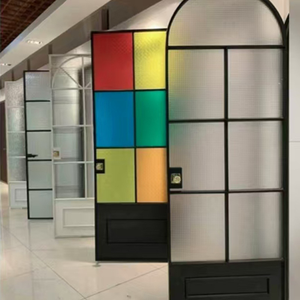
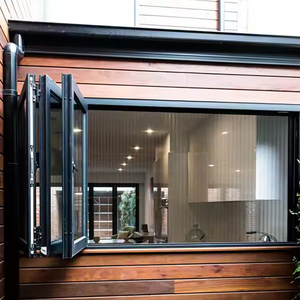
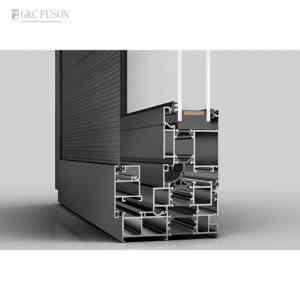
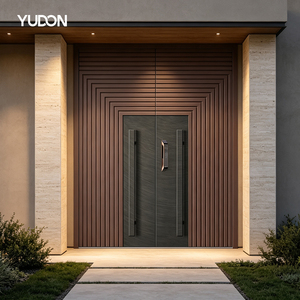
Enterprise Capacity & International Standards
Operating from Foshan, Guangdong—the world's epicentre for aluminum extrusion and fenestration engineering—our 180,000 square-metre intelligent manufacturing campus delivers high-specification architectural door systems worldwide.
AS 2047 N6 Wind Pressure Rating
Our exterior aluminum systems are independently validated up to AS 2047 N6 cyclonic test criteria, ensuring complete water impermeability and deflection resilience against hurricane wind speeds exceeding 300 km/h across coastal development sites.
Integrated BIM & CAD Engineering
We provide full Revit BIM Level 300 families, parametric DWG shop drawings, and wind-load structural calculations, allowing architects, façade consultants, and principal contractors to verify load paths prior to extrusion machining.
Foshan Supply Chain Synergies
By leveraging deep industrial integration in Nanhai District, Foshan, we control billets, multi-stage PVDF coatings, CNC 5-axis thermal-break insertion, and automated robotic glass assembly with tight lead times and stringent traceability.
Material Engineering & Architectural Door Evolution
Evaluating modern exterior door manufacturing reveals major structural and technological paradigm shifts. Global climate stress and ultra-contemporary minimalist architecture have driven heavy-duty aluminum outdoor doors to evolve beyond passive barriers into complex building envelope assemblies.
Polyamide Thermal Barriers (PA66 GF25)
Traditional non-thermal frames cause rapid thermal bridging, internal condensation, and structural heat loss. Contemporary systems utilize 24mm to 34mm fiberglass-reinforced polyamide thermal insulation strips (PA66 GF25), decoupling inner and outer aluminum skins to reach low U-values below 1.4 W/m²·K.
Ultra-Narrow Sightlines & Structural Glazing
Modern residential design demands unobstructed sightlines. Manufacturers use high-tensile 6063-T6 aluminum alloys and concealed structural bonding tapes (VHB) to engineer interlocking stiles as narrow as 18mm to 25mm, supporting oversized laminated glass lites up to 600 kg.
Fluorocarbon PVDF & Marine-Grade Anodizing
Severe coastal conditions (ISO 12944 Category C4/C5-M) require superior surface protection. Advanced powder coating and triple-coat fluorocarbon PVDF systems (70% Kynar 500) provide salt-spray resistance exceeding 3,000 to 5,000 hours without chalking, flaking, or UV yellowing.
| Door System Typology | Profile Wall Thickness | Structural Wind Load (ASTM / AS) | Acoustic Attenuation | Thermal U-Factor | Applicable Fenestration Code |
|---|---|---|---|---|---|
| Heavy-Duty Pivot Entry Door | 2.5mm - 3.0mm Structural | AS 2047 N6 (6.0 kPa) | Rw 42 dB (Acoustic Interlayer) | 1.6 W/m²·K (Thermal Core) | CE EN 14351-1 / AS 2047 |
| Hurricane Impact Casement / French | 2.0mm Multi-Chamber | ASTM E1886 / E1996 Missile D | Rw 38 dB (Laminated IGU) | 1.3 W/m²·K (PA66 Strip) | NFRC / Florida Building Code |
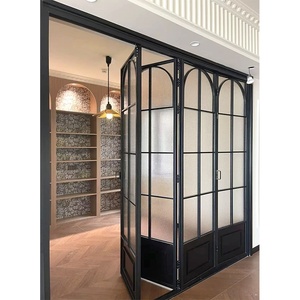
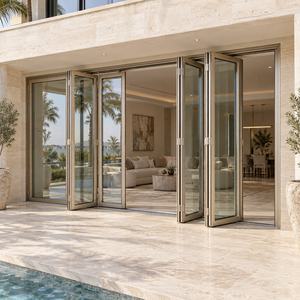
| Thermally Broken Bi-Fold System | 2.0mm Structural Alloy | Class 4A (Water 1200 Pa) | Rw 36 dB (Double Tempered) | 1.5 W/m²·K (Warm Edge) | CE EN 12207 / AS 4420 |
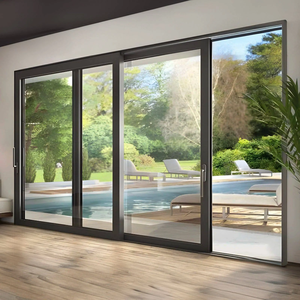
| Minimalist Multi-Track Slider | 2.2mm Extruded 6063-T6 | Class C3 (Wind Deflection) | Rw 40 dB (Triple Glazed) | 1.2 W/m²·K (Argon Fill) | ISO 9001 / CE / NFRC |
Future B2B Procurement Dynamics: 2025–2030
B2B aluminum door procurement is shifting from spot purchasing to integrated, risk-managed supply chain frameworks. Real estate developers, general contractors, and façade importers now prioritize technical compliance, lifecycle durability, and rapid customization.
Embodied Carbon & Low-Carbon Billets
Global green building rating tools—including LEED v4.1, BREEAM, and the EU Carbon Border Adjustment Mechanism (CBAM)—require rigorous transparency on primary aluminum carbon footprints. Tier-1 Chinese manufacturers now run ISO 14025 Environmental Product Declarations (EPDs) and utilize hydro-powered smelter billets.
Standardized Unitized Pre-Assembly
Escalating on-site labor costs across North America, Europe, and Australasia are driving demand for factory-assembled, pre-hung exterior door sets. Comprehensive pre-drilling for German-engineered multi-point hardware (Siegenia, Roto, Hoppe) minimizes jobsite adjustment and prevents air-leakage failures.
Digital Factory Auditing & 3D QA Tracking
Large-scale architectural procurement now relies on continuous digital QA rather than periodic on-site inspections. High-definition factory VR tours, live coordinate measuring machine (CMM) testing, and serialized QR-code tracking across every sash ensure dimensional accuracy down to ±0.5mm tolerances.
Frequently Asked Questions on Importing Aluminum Doors
Direct technical and commercial answers addressing common engineering challenges faced by structural engineers, commercial developers, and procurement directors when sourcing from China.
How do you verify aluminum alloy composition and profile structural integrity?
We use virgin 6063-T5/T6 billet extrusions certified to GB 5237-2017 and ASTM B221 specifications. Mill test certificates (MTCs), optical emission spectrometer testing for metallurgical purity, and tensile yield strength reports (exceeding 160 MPa) are provided with every batch schedule.
What testing certifications do your exterior doors carry for extreme weather?
Our exterior series hold AS 2047 N6 accreditation, Australian AS 1288 glass compliance, US NFRC energy ratings, Florida Building Code large-missile impact certification (ASTM E1886/E1996), and European CE EN 14351-1 testing for wind load, water tightness, and air infiltration.
How do you prevent galvanic corrosion between aluminum profiles and stainless steel hardware?
All hardware fasteners are marine-grade AISI 316 or 304 stainless steel. To prevent galvanic coupling, every fastener connection is mechanically isolated using engineered EPDM, nylon thermal washers, or non-conductive dielectric gaskets, eliminating direct metallic contact.
What are the maximum custom sizing limits for oversized aluminum pivot entrance doors?
Our heavy-duty pivot systems support single-sash dimensions up to 3,000mm in width and 6,000mm in height, with door panel weights up to 800 kg. These assemblies utilize concealed hydraulic floor closers (e.g., FritsJurgens or DormaKaba) calibrated to resist high localized wind shear.
What glass specifications are used to balance solar heat gain and sound insulation?
Standard configurations feature fully tempered double- or triple-glazed IGUs with warm-edge spacers and argon fill. For enhanced sound insulation and thermal performance, we engineer Low-E acoustic laminated makeups (e.g., 6mm Low-E + 16Ar + 6mm + 1.52PVB + 6mm) delivering Rw ratings up to 45 dB.
How are large, fully glazed aluminum door assemblies secured for ocean freight?
All units are packed in non-coniferous, fumigated, ISPM-15-compliant reinforced steel-frame plywood crates. Glass panels are covered in scratch-resistant protective films, padded with closed-cell EVA foam, and packed with silica-gel desiccants to prevent sea-freight humidity damage.
Accelerate Your Fenestration Project With Factory-Direct Engineering
Connect with our Foshan fenestration engineering department. Send your door schedule, project wind-load requirements, or CAD/BIM drawings for a complete technical appraisal, system specifications, and commercial factory-direct quotation within 24 hours.