As commercial architecture accelerates toward hyper-minimalist profiles, expansive visible daylight openings, and stringent structural performance envelopes, the global procurement landscape for commercial entrance systems has consolidated around precision manufacturing hubs. Selecting an enterprise among the top aluminum shopfront doors manufacturers & factories in China requires technical due diligence extending far beyond initial price per square meter. Commercial developers, general contractors, and facade consultants increasingly scrutinize thermodynamic boundary behaviors, cycling fatigue endurance, cyclonic wind-load resistance, and extrusion alloy metallurgy. This engineering-led white paper analyzes verified product configurations, macroeconomic procurement paradigms, future design vectors, and comprehensive vendor qualification parameters across the Guangdong manufacturing corridor.
Engineering Portfolio: Commercial Shopfront & Architectural Entrance Systems
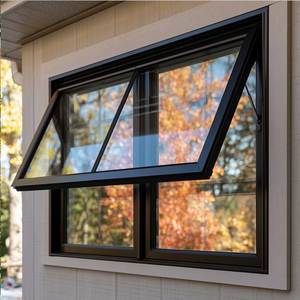
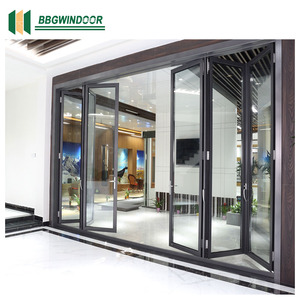
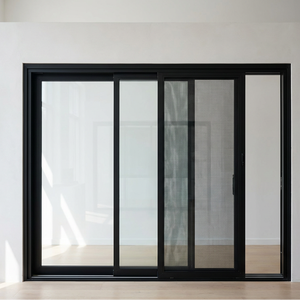
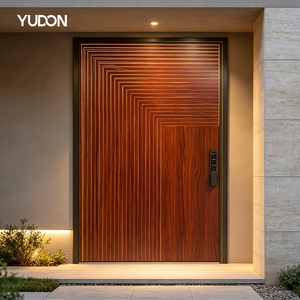
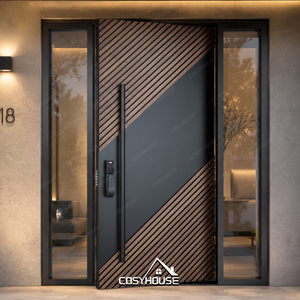
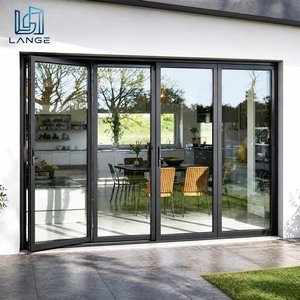
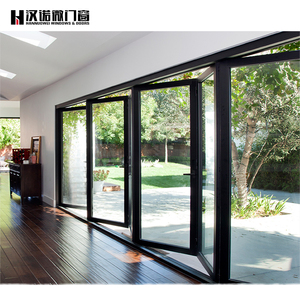
Tested commercial configurations engineered for high-traffic retail, luxury mansions, logistics terminals, and coastal facade envelopes.
Global Procurement Vectors: Aluminum Shopfront Doors Sourcing
Analysis of cross-border procurement trends reshaping commercial architectural specifications across North America, Southeast Asia, and Australasia.
Thermally Broken Profile Domination
Standard non-thermal extrusions are rapidly being disqualified under upgraded international energy building codes (such as ASHRAE 90.1, Title 24, and BCA Section J). Sourcing trends demonstrate massive transition toward polyamide PA66 GF25 thermal isolators providing U-values below 1.6 W/m²K without compromising mechanical stiffness.
Prefabricated Unitized Assemblies
Escalating on-site labor overheads in prime gateway destinations have driven demand toward pre-hung, factory-glazed, and CNC-machined framing systems. Commercial developers favor Tier-1 China factories that supply pre-assembled master frames with integral threshold pans, reducing installation schedules by up to 45%.
Severe Weather & Cyclonic Engineering
Coastal developments across the Philippines, Vietnam, Florida, and Northern Australia mandate verified hurricane and typhoon certifications. Specification requirements now focus heavily on AS2047 N6 and ASTM E1886/E1996 cycle pressure certifications capable of sustaining ultimate wind pressures exceeding 4500 Pa.
Technical Evolution of Architectural Aluminum Shopfront Openings
The contemporary commercial shopfront door has evolved from a simple pedestrian threshold into a complex structural and environmental barrier. Historically, commercial entrances suffered from thermal bridging, perimeter air infiltration, and frame deflection caused by heavy foot-traffic shear stresses. In response, premier Foshan manufacturing centers have leveraged vertical extrusion integration, automated multi-axis CNC milling, and high-performance sealing chemistry to rewrite engineering tolerances.
A critical technical distinction in top-tier manufacturing is the baseline alloy chemistry. While marginal producers utilize remelted scrap aluminum profiles with unpredictable tensile yields, authoritative manufacturers specify primary virgin 6063-T5 or 6060-T6 architectural grade aluminum alloys. These profiles undergo rigorous homogenization, yielding minimal wall thicknesses between 2.0 mm and 3.5 mm on principal structural ribs. This profile geometry prevents torsional twisting in oversized doors exceeding 3.5 meters in height.
Metallurgical & Performance Threshold Matrix
| Performance Criterion | Commercial Shopfront Baseline | DERCHI Heavy-Duty Industrial Standard | Verification Test Protocol |
|---|---|---|---|
| Profile Alloy & Temper | Recycled 6063-T5 (1.4-1.6mm) | Virgin Primary 6063-T6 / 6061-T6 (2.0-3.5mm) | Spectrometric Assay / ASTM B221 |
| Thermal Isolation | Non-thermal or 14.8mm PVC strip | 24mm - 34mm Polyamide PA66 GF25 Structurally Crimped | ISO 10077-2 / ASTM C1363 |
| Structural Wind Load | Serviceability: 1200 Pa | Ultimate Limit State: > 4500 Pa (AS 2047 N6 Rating) | AS 4420.2 / ASTM E330 |
| Surface Coating Durability | Standard Anodized 10μm / PE Powder | Qualicoat Class 2 / PVDF 3-Coat 70% Kynar 500 (>40μm) | AAMA 2605 / 3000-Hr Salt Spray |
| Operating Cycle Fatigue | 100,000 cycles | 1,000,000 continuous operating cycles | EN 12400 Class 8 / ANSI/BHMA A156 |
Acoustic Attenuation and Fenestration Thermodynamics
High-density urban street fronts require critical noise damping. Modern insulated glass units (IGU) integrated into shopfront assemblies increasingly adopt asymmetric laminate build-ups (e.g., 6mm Low-E Tempered + 12A Argon + 5mm + 0.76 Acoustic PVB + 5mm Clear). Combined with continuous EPDM multi-lip compression gasketing and vulcanized corner vulcanization, these systems achieve weighted sound reduction indexes reaching Rw 38 dB to 44 dB. This engineering allows hotel lobbies, flagship automotive showrooms, and luxury retail promenades to maintain interior acoustic tranquility despite exterior arterial road congestion.
Procurement FAQ: Commercial Aluminum Shopfront Doors
Direct technical and logistical resolutions for commercial procurement directors, architects, and quantity surveyors.
How does DERCHI verify structural compliance for coastal cyclonic regions?
Our heavy-duty commercial shopfront and pivot door profiles have passed formal physical AS 2047 N6 testing, representing the most stringent classification for extreme wind pressure resistance, water penetration, and air infiltration. For projects exposed to extreme cyclonic activity in the Philippines, Vietnam, or Florida, our facade engineers calculate custom moment of inertia (Ixx/Iyy) profiles to meet exact deflection limits (L/175 or L/240).
Can commercial shopfront assemblies accommodate smart access and automation?
Yes. All DERCHI commercial shopfront doors can be pre-machined at our factory to integrate concealed overhead operators, motor-driven pivot floor springs, electro-magnetic shear locks, card-key access readers, and optical fire-alarm break-out sensors. Wiring paths are routed via concealed internal raceways before profile crimping to preserve architectural aesthetics.
What surface treatment options protect aluminum against high-salinity marine corrosion?
For beachfront and port installations, standard electrostatic powder coating is insufficient. We recommend either fluoropolymer PVDF coatings containing 70% Kynar 500 resins (conforming to AAMA 2605 specifications) or Class 1 architectural hard-anodizing (25 microns). These finishes withstand over 3,000 hours of continuous acetic acid salt-spray testing without blistering, color shift, or micro-cracking.
What is the typical production timeline and containerized shipping protocol?
Standard custom architectural orders require 25 to 35 days for profile extrusion, precision CNC milling, powder coating, and pre-hung testing. Glass and assemblies are packed using fumigated solid-timber crates with shock-absorbent corner guards, waterproof wrapping, and moisture desiccant bags. Shipments out of Shenzhen or Guangzhou ports reach Southeast Asian destinations within 5-10 days, Australasia in 14-20 days, and North American ports in 20-28 days.
Ready to Engineer Your Project's Commercial Entrance?
Connect with our structural door engineers to review architectural schedules, confirm thermal calculations, or request project-specific CAD shop drawings.
Get a Quote