AS2047 & NFRC
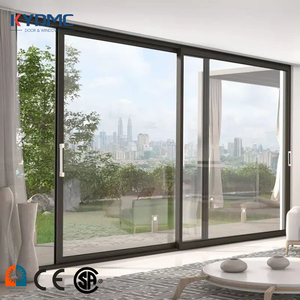
Explore our export-certified architectural sliding door lines engineered for high wind-load resistance, acoustic isolation, and ultra-low thermal transmittance.
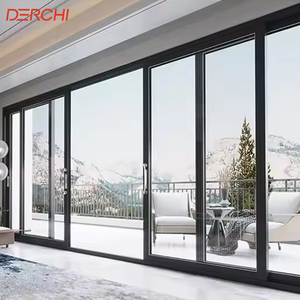
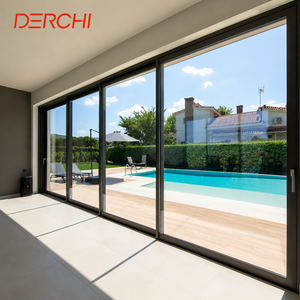
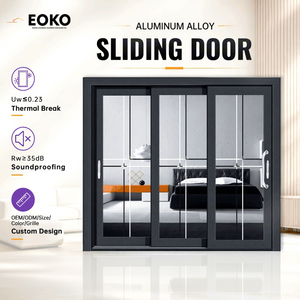
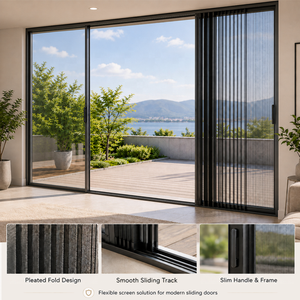
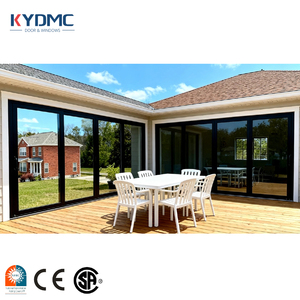
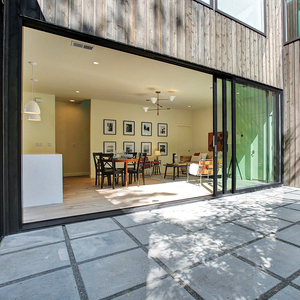
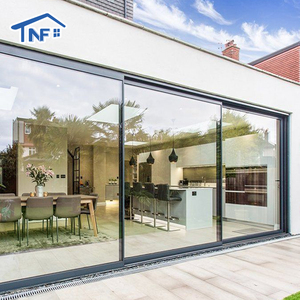
The global dominance of China's wholesale aluminium sliding door manufacturing base, particularly concentrated in Foshan, Guangdong, is rooted in deep supply chain convergence and metallurgical advancement. Modern commercial and high-end residential architectural designs demand multi-panel, oversized sliding doors that expose fenestration elements to extreme physical pressures. High-integrity fabrication begins with the chemical formulation of billet extrusions: primary 6063-T5 and structural 6061-T6 architectural aluminium alloys.
Unlike secondary recycled scrap aluminium, which presents erratic silicon-to-magnesium ratios resulting in micro-fissures during high-tonnage stamping, primary extrusion billets guarantee a tensile strength exceeding 160 MPa and a yield strength surpassing 110 MPa. For structural sliding door leaves exceeding 3.5 metres in height, wall thickness parameters must maintain a continuous minimum threshold of 2.0 mm to 3.0 mm across all primary load-bearing web surfaces.
| Performance Parameter | Standard Economy Doors | Export Heavy-Duty System | AS2047 / NFRC Engineered Standard |
|---|---|---|---|
| Alloy Composition & Purity | Secondary Recycled 6063 | Primary Ingot 6063-T5 | High-Purity 6063-T6 / 6061-T6 Primary |
| Structural Profile Thickness | 1.2 mm - 1.4 mm | 1.8 mm - 2.0 mm | 2.5 mm - 3.2 mm Reinforced |
| Thermal Barrier System | PVC / Low-Density Polyamide | PA66 GF25 Strip (14.8mm) | Multi-Cavity PA66 GF25 Technoform (24mm-34mm) |
| Wind Load Deflection Rating | Below 1500 Pa (C2) | 3000 Pa (C4) | Exceeding 4500 Pa to 6000 Pa (Cyclonic / N6) |
| Water Penetration Resistance | 150 Pa - 200 Pa | 300 Pa - 450 Pa | 600 Pa - 1000 Pa Sub-Sill Weep Drainage |
| Acoustic Isolation Rating | Rw 25 dB | Rw 32 dB - 36 dB | Rw 40 dB - 45 dB (Laminated Acoustic IGU) |
Beyond profile strength, true thermal envelope integrity is determined by the implementation of polyamide thermal breaks. High-performance factories employ PA66 GF25 (polyamide reinforced with 25% glass fibre) barriers crimped into isolated inner and outer aluminium chambers using precision rolling machines. This mechanical bond matches the linear thermal expansion coefficient of aluminium (2.3 × 10⁻⁵ /K), preventing delamination, profile curvature, or gas leakage across massive diurnal temperature swings from -30°C in North American winters to +50°C in Middle Eastern and Southeast Asian coastal summers.
Global developers, commercial general contractors, and tier-1 fenestration distributors are adjusting their procurement criteria to navigate shifting energy mandates, coastal weather resilience, and digital traceability.
Global building codes (such as Title 24, IECC, and Eurocode EN 10077) have phased out low-spec frames. Wholesalers now procure complete assemblies targeting whole-window U-factors below 1.2 to 0.8 W/m²K, demanding warm-edge spacers, argon-filled Low-E triple glazing, and multi-cavity thermal break extrusions directly tested under NFRC protocols.
Climate volatility in coastal Southeast Asia, the Caribbean, and Florida has triggered a transition toward Miami-Dade NOA and AS2047 N6 certified assemblies. Procurement orders demand integrated recessed sub-sills with concealed check valves, high-yield stainless steel guide tracks, and engineered structural interlocks capable of withstanding 5000+ Pa wind loads.
The rise of ultra-narrow sightline doors (with interlock profiles as slender as 18 mm to 26 mm) has expanded the demand for concealed brushless DC motors, electromagnetic locks, and smart building BMS integration. Importers prefer factory-prewired jamb systems compatible with Crestron, KNX, and remote mobile access.
The modernization of China's door fabrication sector is driven by CNC robotic precision, multi-axis milling, and automated powder-coating processes.
Gone are manual notchings and handheld drills. Advanced factories employ 5-axis CNC machines executing complex lock body routings, thermal drain slots, and corner joint mortises within 0.05 mm tolerances, eliminating human error on project runs.
To support massive 400 kg to 600 kg sliding sashes, modern fabricators use precision tandem bogie rollers fitted with sealed stainless steel needle bearings and titanium-plated carriage bodies, tested over 100,000 continuous operating cycles.
Surface treatments have advanced to 3-coat/2-bake PVDF (polyvinylidene fluoride) and marine-grade Qualicoat Class 3 anodizing (25+ microns), protecting against salt-spray corrosion along severe coastal areas for over 25 years without chalking or fading.
Tier-1 OEM/ODM plants maintain dedicated ASTM E283, E330, and E331 test chambers on the factory floor, validating air infiltration, structural wind load, and static/dynamic water ingress resistance prior to container loading.
Originating in Foshan—the global epicentre of aluminium extrusion and architectural hardware—DERCHI is ranked among the Top 10 premium door and window manufacturing enterprises in China. With over 25 years of engineering leadership, our production base covers more than 180,000 square metres, staffed by over 600 skilled technicians, CAD drafting engineers, and QA specialists.
We provide full structural shop drawings, acoustic simulation reports, and complete project consolidation. From custom residential estates to multi-unit commercial developments across North America, Australia, and Southeast Asia (demonstrated at WORLDBEX 2025 in the Philippines), DERCHI engineers durable, tested fenestration systems built to the highest project specifications.

Direct technical answers addressing lead times, international compliance, packaging safeguards, and custom engineering parameters.
Every extrusion run is cut and assembled using automated CNC machinery maintaining dimensional tolerances within ±0.5 mm. Our structural frames incorporate structural corner keys injected with German two-part polyurethane adhesive to ensure lifetime squareness and watertight joints under hurricane wind loads.
For high-humidity and cyclonic environments, we supply factory-glazed IGUs featuring 6mm+12A+6mm or laminated 6mm+1.52PVB/SGP+6mm Low-E glass panels. Spacers utilize stainless steel or warm-edge Technoform strips filled with 4A molecular sieve desiccant to prevent internal fogging and condensation.
We use export-grade A-frame steel shipping racks and non-fumigation plywood crates. Glass panes receive peelable protective film, corner guards, and silicone buffer separation. Crates are fixed inside 40ft HQ shipping containers with heavy-duty ratchet straps and timber bracing to prevent shifting at sea.
Yes. Our in-house engineering team provides complete CAD/BIM architectural shop drawings for monorail, 2-track, 3-track, 4-track, corner 90-degree postless assemblies, and recessed pocket sliding designs. Profiles can be custom-matched to RAL color codes or specialized fluorocarbon woodgrain patterns.
Standard lead times for custom-profile sliding systems run 25 to 35 working days from final CAD shop drawing sign-off and color sample approval. Pre-production mockups and third-party laboratory inspection testing can be scheduled directly at our Foshan facility.
Yes. Our motorized sliding door series are equipped with concealed internal drive belts, high-torque brushless DC motors, obstacle detection sensors, and back-up lithium battery units. Control systems interface seamlessly with dry-contact, RS485, Zigbee, or standard BACnet protocols.
Connect directly with our engineering sales team in Foshan. Send your door schedules, project elevation drawings, or CAD specifications to receive an itemized technical quotation within 24 hours.