Alu-Clad Wood
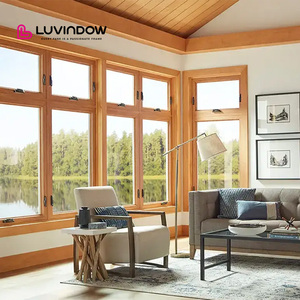
Discover our export-grade aluminum folding, sliding, pivot, and specialty casement assemblies manufactured under strict AS2047, CE, and ISO 9001 quality management protocols.
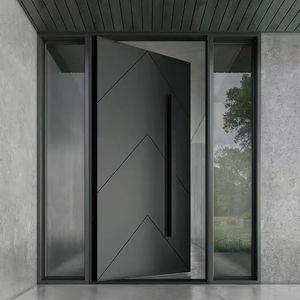
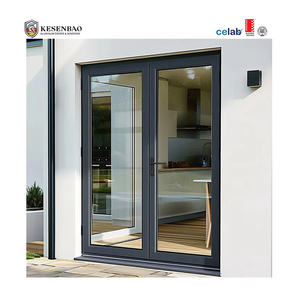
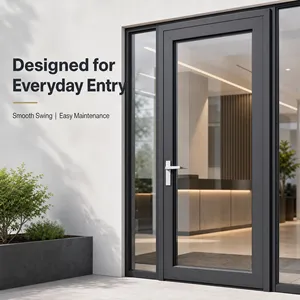
Navigating the technical and architectural evolution of commercial and luxury residential bi-fold fenestration systems from Chinese OEM/ODM production clusters.
Global building efficiency mandates (such as IECC in North America and Part L in the UK) require commercial and residential folding door profiles to achieve superior U-values below 1.4 W/m²K. Importers prioritize multi-chambered polyamide 66 (PA66 GF25) thermal break barriers alongside triple-pane Low-E argon insulated glass units.
Contemporary architectural design demands panoramic glazed expanses with minimal structural bulk. Sourcing trends show exponential demand for slimline interlocks under 35mm. Achieving structural rigidity without visual thickness necessitates the use of primary 6063-T6 architectural aluminum billet alloys capable of resisting high negative wind pressures.
Modern luxury villas and high-traffic hospitality facilities require seamless integration between folding fenestration and Building Management Systems (BMS). Procurement specifications increasingly mandate concealed electric multi-point track actuators, automated sash unfolding mechanics, biometric handles, and dry-contact alarm sensors.
| Performance Parameter | Standard Export Grade | DERCHI Heavy-Duty Architectural Grade | Target Compliance Standard |
|---|---|---|---|
| Aluminium Alloy & Temper | Recycled / Secondary 6063-T5 | 100% Virgin Billet 6063-T6 (Wall: 2.0mm–3.0mm) | GB/T 5237, ASTM B221 |
| Thermal Insulation (U-Factor) | 2.4 – 3.0 W/m²K (Non-break/Standard) | 0.9 – 1.4 W/m²K (Multi-chamber PA66 Technoform) | NFRC / CE EN ISO 10077 |
| Wind Load Resistance | Class 3 (1500 Pa) | Class 5 / Serviceability Up to 4500 Pa (N6 Level) | AS 2047, ASTM E330 |
| Water Penetration Resistance | 250 – 300 Pa Static | 600 Pa – 900 Pa (Recessed Drainage Sills) | AAMA/WDMA/CSA 101/I.S.2 |
| Hardware & Roller Capacity | 100 kg per panel (Nylon bearings) | Up to 300 kg per panel (Stainless Steel Quad Carriage) | EN 13126-15 Cycle Tested (100k Cycles) |
How advanced metallurgy, surface chemistry, and thermodynamic design are reshaping the next generation of Chinese folding door manufacturing.
To eliminate edge-of-glass condensation and comply with European Passive House criteria, next-generation folding profiles replace traditional polyurethane cavities with aerogel structural insulation strips. This innovation elevates thermal performance across extensive bi-folding spans without compromising mechanical torsional rigidity.
Coastal and tropical microclimates accelerate pitting and chalking on exterior metalwork. Forward-thinking manufacturers are transitioning from conventional electrostatic powder paints toward Qualicoat Class 3 certified PVDF fluorocarbon coatings and 25-micron marine anodizing, delivering exceptional salt-spray durability beyond 3,000 hours.
Architects increasingly demand clean transitional flow between indoor living spaces and exterior decks. Next-generation systems feature flush, sunken bottom tracks paired with pneumatic drop-down compression seals. These achieve Class A water exclusion without creating a physical tripping hazard for residential occupants.
Ranked among the Top 10 premium architectural fenestration brands in China, DERCHI brings comprehensive industrial capability, precision machining, and verified global engineering credentials.
For more than a quarter of a century, Guangdong Dejiyoupin Doors and Windows Co., Ltd. has developed specialized competence across residential pivot doors, commercial curtain walls, minimal sliding assemblies, and heavy-duty folding systems. Our facility integrates automated CNC extrusion machining, automated German corner crimping, and computerized double-glazing lines.

Detailed answers covering engineering thresholds, packaging integrity, structural deflection, and logistics procedures when ordering from Chinese factories.
Sash sagging in bi-folding systems occurs when roller carriages or head tracks experience structural deflection. DERCHI specifies top-hung quad carriages with stainless steel sealed needle bearings paired with structural steel reinforced head jambs. Furthermore, we mandate the "toe-and-heel" glass installation method, transferring glazing weight directly toward the hinge edge via high-density setting blocks.
Yes. Our structural profiles and fenestration systems have successfully achieved the AS 2047 N6 rating—the highest category for structural wind load resistance, air infiltration, and water tightness. For coastal zones subject to extreme typhoons (such as Florida, the Caribbean, the Philippines, or coastal Australia), we engineer reinforced interlocks, heavy-gauge 3.0mm wall extrusions, and laminated impact glass.
For projects located within 1,000 meters of marine coastlines, standard architectural powder coating is vulnerable to filiform corrosion. We recommend Qualicoat Class 2/3 certified PVDF (polyvinylidene fluoride) fluoropolymer coatings, or 25μm architectural anodizing. These surface treatments withstand continuous salt-spray testing beyond 3,000 hours without bubbling or loss of adhesion.
We utilize a 5-layer export protective packing matrix. Aluminum extrusions are wrapped in protective PE tape and high-density foam sheeting. Assembled or knocked-down (KD) frames are packaged with reinforced composite corner protectors and packed into heat-treated, non-coniferous fumigated plywood crates reinforced with exterior steel banding. Moisture-absorbing desiccant pouches are sealed within every maritime container crate.
For residential single-villa orders where local labor is costly, pre-glazed sash panels shipped in modular units minimize jobsite error. For large-scale multi-unit commercial developments or full container loads (FCL), shipping knocked-down (KD) frames and crated IGUs maximizes container volume, reducing maritime shipping costs per opening by up to 40%.
Standard fabrication lead time is 25 to 35 business days following final CAD shop drawing sign-off and color chip approval. Custom architectural extrusion molds require an additional 10 to 15 days. Standard payment terms are 30% to 50% T/T deposit to commence precision manufacturing, with the balance payable upon presentation of the Bill of Lading (B/L) and full factory QC inspection documentation.
Send your door schedules, architectural elevations, structural wind criteria, or opening dimensions. Our bilingual engineers will analyze your project and provide detailed CAD shop drawings alongside an optimized quotation within 24 hours.
Contact Us