Wholesale Export Fenestration Portfolio
Direct-from-factory architectural systems tested to AS 2047, NFRC, CE, and ISO 9001 standards. Tailored for commercial entrances, residential towers, and custom coastal villas.
 NFRC Certified
 Acoustic Guard
 Seamless Living
 AS 2047 N6
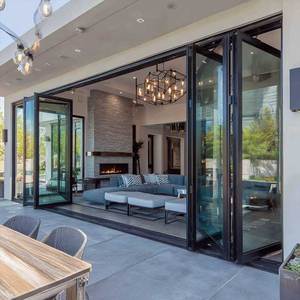 Heavy-Duty Roller
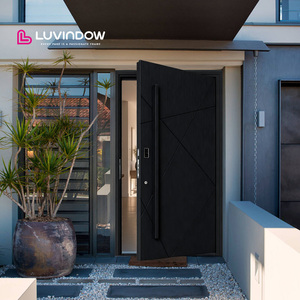 Multi-Lock Security
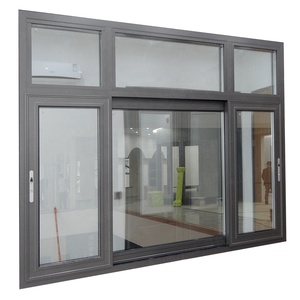 Soundproof IGU
The Engineering Science Behind Structural Aluminium Glass Pivot Doors
In contemporary architectural elevation design, the aluminium glass pivot front door represents the convergence of high-capacity structural physics, fluid mechanics, and minimalist industrial design. Unlike conventional side-hung butt-hinged leaf doors that concentrate dead loads and gravitational lever torque exclusively onto the perimeter vertical jamb, a heavy-duty architectural pivot door transfers up to 90% of its static and dynamic leaf mass directly to the bottom substrate via an integrated heavy-duty floor spring mechanism or a dual-axis concealed hydraulic pivot box. This fundamental mechanical redistribution allows architects, developers, and facade engineers to specify dramatic entrance apertures exceeding 2.4 to 3.2 meters in width and up to 6.0 meters in uninterrupted height, accommodating total leaf weights in excess of 800 kilograms without structural sagging or frame displacement over decades of duty cycles.
As a premier Chinese manufacturer and global exporter based in Foshan, Guangdong—the world’s epicentre of precision aluminium profile extrusion—our manufacturing methodology addresses the primary challenges inherent in monumental fenestration: wind load deflection (ASTM E330 / AS 2047 N6 criteria), thermal bridging across disparate climate envelopes, and long-term air and water permeation resistance. By deploying aerospace-grade 6063-T6 and 6061-T6 multi-chamber extruded aluminium alloy profiles, engineered with wall thicknesses ranging from 2.5mm to 3.8mm, we achieve the precise flexural rigidity required to resist typhoon-grade wind pressure along high-exposure coastal regions, while accommodating multi-layer argon-filled insulating glass units (IGU) and laminated hurricane-impact interlayers.
| Engineering Metric | Standard Commercial Grade | DERCHI Heavy-Duty Architectural Pivot Series | Validation / Test Compliance |
|---|---|---|---|
| Alloy Composition & Temper | 6063-T5 (1.6mm - 2.0mm wall) | Aerospace-Grade 6063-T6 / 6061-T6 (2.5mm - 3.8mm wall) | GB/T 5237, ASTM B221 |
| Hinge Capacity & Kinematics | Surface-mounted pivot (up to 200kg) | Concealed German-engineered hydraulic pivot box (500kg - 1000kg) | EN 1154 Cycle Tested (1,000,000 cycles) |
| Thermal Isolation System | Non-thermal break or 14.8mm strip | Multi-cavity Polyamide PA66 GF25 thermal barrier (24mm - 34mm) | ISO 10077-2, NFRC U-factor ≤ 1.25 W/m²K |
| Structural Wind Load Performance | Serviceability: 1.5 kPa - 2.0 kPa | Extreme Cyclone Rating AS 2047 N6 (Up to 4.5 kPa ultimate) | AS 2047, ASTM E330, TAS 202 |
| Air & Water Ingress Protection | Brush sweep seals (Water: 150 Pa) | Automated drop-down mechanical bottom seal + 3-tier continuous EPDM | AAMA 501.1, EN 12208 (Class 9A / 600 Pa) |
| Glazing Integration Capability | Single or dual tempered 24mm IGU | Triple laminated IGU (Up to 52mm thickness with SentryGlas interlayers) | EN 12150, ANSI Z97.1, AS/NZS 2208 |
A paramount architectural criterion in oversized glass pivot door design is thermal decoupling. Glass surfaces and monolithic metallic frames naturally act as convective conduits for ambient heat exchange. In tropical regions, solar radiation heats the exterior door leaf, forcing HVAC compressors into unsustainable duty cycles; conversely, in sub-zero continental climates, non-insulated frames create severe internal condensation and frost lines that jeopardize internal wood flooring and drywall plaster. We neutralize this thermodynamic vulnerability by incorporating polyamide PA66 GF25 (25% glass fibre reinforced) continuous insulating struts that physically cleave the interior and exterior aluminium profiles. Combined with double- or triple-glazed Low-E architectural panels infused with 90% purity argon gas and warm-edge composite spacers, our pivot door assemblies attain exceptional overall U-values that fulfill the strictest LEED, Green Star, and European Passive House building certifications.
Future Procurement Trends in Architectural Pivot Doors (2025–2030)
Strategic forecasting for property developers, international procurement agents, and general contractors navigating supply chain evolution, smart building integration, and sustainability mandates.
Smart Motorized Access & Biometric Concealment
The global luxury residential and boutique hospitality sectors are rapidly abandoning traditional mechanical cylinder locks in favor of completely concealed smart electromechanical multipoint locks. Modern systems feature 3D facial recognition, encrypted smartphone BLE/NFC handshake protocols, and subterranean magnetic motor drives that automatically draw the massive door panel into a calibrated, hermetic seal upon closure, all wired discreetly through customized pivot spindle wiring channels.
Hyper-Minimalism with High-Inertia Framing
Architectural demand has shifted decisively away from chunky 100mm+ perimeter framing towards razor-thin structural sightlines (under 25mm visible profile) that maximize total glazing area. To achieve this without compromising torsional rigidity, top-tier Chinese fabricators utilize high-tensile internal steel reinforcement tie-rods and structural silicone structural glazing (SSG) techniques, where the glass panel itself functions as a primary shear diaphragm for the entire operating leaf.
PDLC Switchable & Vacuum Insulated Glazing (VIG)
Procurement briefs for luxury oceanfront residences increasingly mandate polymer dispersed liquid crystal (PDLC) switchable smart glass or emerging Vacuum Insulated Glass (VIG). VIG delivers the thermal insulating performance of a 40mm triple-glazed cavity within a slim 8.3mm envelope, radically reducing the dead weight of oversized pivot doors while eliminating UV degradation on interior finishes.
Circularity & Hydro-Powered Smelting Mandates
International project tenders across North America, Europe, and Australasia now frequently integrate strict embodied carbon thresholds. Procurement contracts demand certified low-carbon aluminium billets smelted using renewable hydroelectric power, accompanied by verified Environmental Product Declarations (EPD). Modern exporters must demonstrate cradle-to-gate traceability across all anodized and powder-coated architectural components.
Pre-Engineered Off-Site Facade Delivery
Escalating on-site construction labor costs in destination markets like the United States, Australia, and Singapore have triggered a shift toward pre-hung, factory-glazed modular pivot systems. Doors are delivered with pivot floor boxes pre-calibrated into stainless steel sub-sills, allowing the installation team to drop the leaf into place with zero on-site structural glazing or complex hydraulic dampening adjustments.
Sub-Tropical Monsoon & Coastal Salt-Air Protection
With rising frequencies of severe meteorological anomalies, commercial buyers demand Qualicoat Seaside Class 2 architectural fluorocarbon (PVDF) powder coating and 25-micron hard-anodized surface finishes capable of surviving 3,000+ hours of neutral salt spray testing (ASTM B117) alongside dynamic cyclic pressure testing up to AS 2047 N6 limits.
Product Development Trajectory: Engineering Next-Gen Pivot Doors
How progressive Chinese manufacturers are combining robotics, material science, and precision mechanical engineering to redefine architectural entrances.
Dual-Axis Soft-Close Kinematics
Next-generation pivot developments integrate self-regulating fluid-dynamic dampers that control heavy panel swing speeds between 0° and 150°, preventing finger pinch injuries, sudden wind-slam events, and perimeter gasket shearing.
Pneumatic Flush Ingress Sealing
Traditional pivot doors require perimeter clearance tolerances that can allow air leakage. Modern R&D features dynamic electromagnetic or pneumatic drop-down compression seals that deploy instantaneously when the door latches, delivering complete laboratory-tested waterproof barriers.
Cast-Aluminium Carbon Fiber Hybrids
Fusing high-modulus carbon-fiber internal structural stiffeners with artistic 3D cast-aluminium exterior panels allows zero thermal bowing along massive 5-meter door leaves subjected to intense solar differential heating between interior and exterior skins.
Automated CNC 5-Axis Milling Precision
Production evolution replaces manual mortising with automated German 5-axis CNC machining centers. Hardware cutouts, multi-point lock receivers, and concealed wiring paths are milled to 0.02mm tolerance, guaranteeing frictionless field assembly.
Why Global Importers Source Direct from Guangdong Dejiyoupin (DERCHI)
Operating as one of the Top 10 premium door and window manufacturing enterprises in China, Guangdong Dejiyoupin Doors and Windows Co., Ltd. (operating the international brand DERCHI) commands a state-of-the-art 180,000 square-meter production facility headquartered in Shishan Town, Nanhai District, Foshan City. Backed by over 25 years of continuous industrial operation, our technical team of more than 600 specialized production engineers, fenestration designers, and QC specialists oversees an annual export volume reaching hundreds of thousands of square meters of high-performance architectural systems.
Our international export division is systematically structured around the demanding regulatory and climatic mandates of target markets across North America, the European Union, Australia, the Middle East, and Southeast Asia (including the Philippines, Vietnam, Thailand, Malaysia, Indonesia, and Singapore). Having demonstrated our engineering capabilities at leading international construction expos—such as WORLDBEX 2025 in Manila—our assemblies hold over 100 proprietary utility and appearance patents and full international compliance testing, including Australian AS 2047 N6 certification, European CE Mark, ISO 9001:2015 quality assurance, and UL fire-rated specifications.

Frequently Asked Questions for B2B Importers & Contractors
In-depth commercial and technical answers addressing minimum order volumes, custom structural parameters, sea freight packing protocols, and code compliance.