Heavy-Duty Architectural Aluminium Door & Window Systems
Fabricated at our state-of-the-art Foshan production facility using virgin 6063-T6 / 6060-T66 aviation-grade aluminum extrusions, precision CNC milling, and multi-point locking mechanisms to meet global commercial standards.
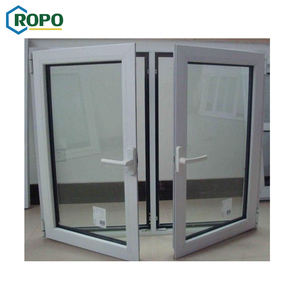
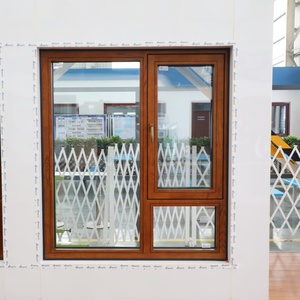
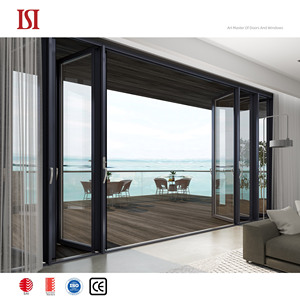
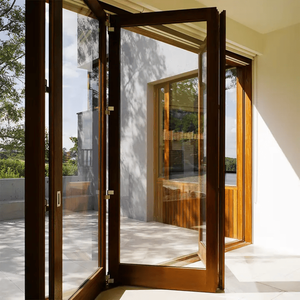
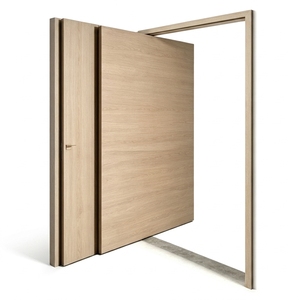
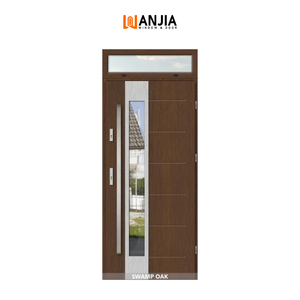
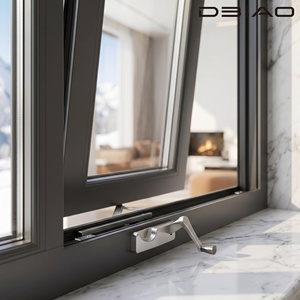
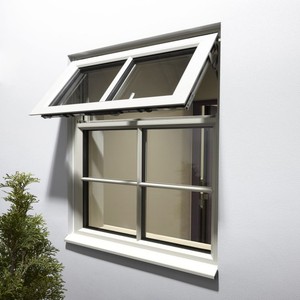
Engineering Taxonomy of Heavy Aluminium Architectural Doors
A deep architectural and metallurgical analysis of why heavy-duty extruded aluminum profiles have superseded traditional structural steel and wood in high-wind, coastal, and prestige commercial developments.
In contemporary high-end architecture, fenestration is no longer treated as a passive barrier; it represents a complex building envelope node governing structural stability, thermodynamics, acoustic attenuation, and architectural stature. As a premier China wholesale aluminium heavy door factory and exporter, Guangdong Dejiyoupin Doors and Windows Co., Ltd. (DERCHI) engineers entrance solutions that reconcile extreme physical dimensions with effortless kinetic performance.
Heavy aluminium doors diverge fundamentally from standard residential sliding or swing profiles in their alloy temper, extrusion wall thickness, moment of inertia (Ix/Iy), and hardware integration. While light residential systems typically employ 1.2mm to 1.4mm profile thicknesses, structural heavy doors require 2.0mm to 3.5mm primary wall sections fabricated from primary billet 6063-T6 or 6060-T66 aluminum alloy. This provides the torsional rigidity demanded by oversizes exceeding 3,000mm in height and single sash weights extending up to 800 kilograms.
The operational longevity of a heavy door system resides in the equilibrium between gravitational shear stresses and continuous environmental dynamic loads. Under cyclical wind forces—such as typhoons in the South China Sea, coastal storms across the Florida coast, or monsoons across Southeast Asia—undersized profiles suffer from sash deflection, glass seal failure, and structural latch fatigue. By integrating multi-cavity thermal break designs coupled with continuous EPDM vulcanized sealing gaskets and custom heavy-load concealed stainless steel pivot pins or tandem roller carriages, DERCHI heavy systems maintain hermetic integrity under extreme physical stress.
Engineering Comparison Matrix: Standard vs. Heavy Architectural Aluminium Doors
| Performance Parameter | Standard Commercial Door | DERCHI Heavy Industrial Door | Testing & Compliance Protocol |
|---|---|---|---|
| Extrusion Profile Wall Thickness | 1.4 mm – 1.6 mm | 2.0 mm – 3.5 mm Structural Billet | GB 5237 / EN 12020-2 / ASTM B221 |
| Alloy Grade & Thermal Temper | 6063-T5 Secondary Scrap Blend | Virgin Primary 6063-T6 / 6060-T66 | Spectrometric Chemical Composition Analysis |
| Design Wind Pressure (Cyclonic) | 1500 Pa – 2200 Pa | Up to 4500 Pa (AS 2047 N6 / ASTM E330) | NATA Certified Air Chamber Dynamic Deflection |
| Water Ingress Penetration Limit | 250 Pa – 300 Pa | 700 Pa Static / Dynamic Pressure | AS/NZS 4420.5 / EN 1027 Water Tightness |
| Max Sash Capacity (Pivot / Sliding) | 120 kg – 180 kg | 450 kg to 800 kg per Sash Leaf | Heavy-Duty Floor Spring & Roller Cycle Test |
| Thermal Insulation Value (U-factor) | Uf > 3.5 W/m²K (Non-break/basic) | Uw 1.1 – 1.6 W/m²K (PA66 GF25 Isobar) | ISO 10077-2 / NFRC 100 / EN 673 |
| Operational Fatigue Cycle Endurance | 50,000 Open/Close Cycles | 200,000+ Cycles Heavy-Use Certified | EN 1191 / ANSI BHMA A156 Operational Durability |
Guangdong Dejiyoupin: Modern Foshan Manufacturing Excellence
With over a quarter-century of focused engineering, DERCHI stands as one of China's Top 10 fenestration enterprises, providing uncompromised supply continuity, robotic automated fabrication, and accredited compliance across six continents.
Turnkey Factory Direct
From raw extrusion casting, CNC 5-axis profile machining, robotic fluorocarbon spraying to complete dry-fitting in Foshan. Eliminating middlemen ensures cost parity and total quality control.
AS 2047 N6 & CE Certified
Full portfolio certified against cyclonic conditions (AS 2047 N6 classification), CE building directives, ISO 9001 quality management, and UL fire-rated egress performance standards.
Free Parametric CAD/BIM
Our dedicated engineering department prepares detailed CAD shop drawings, structural wind-load load calculations, and BIM models tailored directly to your door schedule within 24 to 48 hours.
Global Project Footprint
Demonstrated delivery across North America, Australia, the Middle East, and Southeast Asia. Highly commended at trade events including WORLDBEX in the Philippines.
Audited Quality Assurance: From Ingot to Ocean Container
Every single door leaves our workshop with a complete traceability dossier. Pre-assembly testing is conducted on 100% of custom pivot and folding assemblies to verify diagonal squareness, hydraulic hinge tension, perimeter compression seal uniformity, and deadbolt alignment.

Future Procurement Trends for Architectural Heavy Doors (2025–2030)
Macro shifts in carbon governance, international building energy directives, and digitalized construction schedules are reshaping how commercial builders specify aluminium heavy doors.
Low-Carbon Billet Sourcing & EPD Verification
Global construction developers in Australia, Europe, and North America increasingly demand Environmental Product Declarations (EPD). Procuring heavy aluminium doors smelted using hydropower-driven electrolysis reduces embodied carbon emissions from ~16kg CO₂/kg aluminium down to under 4.0kg CO₂/kg. DERCHI provides verified chain-of-custody data for green building points (LEED, BREEAM, and Green Star).
Integrated BIM & Direct CNC Data Exchange
Traditional static PDF schedules are obsolete. Future-ready procurement integrates Revit/IFC parametric models directly with Foshan factory cutting lines. By transferring millimetre-precise wall reveals, hinge embedment coordinates, and electrical chase pathways straight to our 5-axis CNC machining centers, dimensional discrepancies on-site are virtually eradicated.
Smart Biometric & Hidden Motorized Actuation
Heavy luxury pivot and sliding doors weighing in excess of 500kg are rapidly transitioning toward concealed automated drives. Sourcing trends favor low-voltage brushless servomotors built directly within the top transom or sub-floor, paired with optical curtain sensors, electronic multipoint deadbolts, and seamless home automation integration (KNX, Crestron, Zigbee).
Consolidation Sourcing: Reducing International Ocean Freight Multipliers
In the post-pandemic supply chain landscape, high ocean freight rates and demurrage liabilities have penalized fragmented multi-vendor procurement. A major trend observed among international procurement heads is consolidating the entire exterior architectural package with a singular, certified manufacturing partner.
By pairing monumental aluminium entry pivot doors with high-performance folding patio systems, soundproof casement fenestration, and even matching architectural security doors within identical container shipments, developers save between 18% to 28% in logistical overheads. Furthermore, uniform fluorocarbon coating batches (such as PPG Duranar PVDF) ensure absolute colour, gloss, and finish harmony across all perimeter elevations.
Technological Advancements in Heavy Aluminium Fenestration
Discover how cutting-edge metallurgy, thermodynamic breaks, and precision kinetic hardware are pushing the architectural boundaries of structural glass and metal entrances.
Advanced Polyamide PA66 GF25 Isobaric Cavities
Traditional aluminium doors suffered from continuous thermal bridging. Next-generation systems feature multi-chamber 34mm to 54mm continuous glass-fiber reinforced polyamide (PA66 GF25) thermal struts, augmented by expanded polyurethane or aerogel insulation cores. This drops thermal transmittance to passivhaus thresholds (Uw ≤ 1.0 W/m²K) even when operating in extreme climatic gradients.
Sub-Sill Flush Magnetic Levitation Drainage
Architects insist on seamless zero-threshold transitions from indoor marble to outdoor patio stone. Advanced R&D introduces concealed sub-floor drainage channels featuring magnetic mechanical valves that snap shut against positive external cyclonic water pressure (resisting up to 700 Pa) while opening instantly to drain gravity water away via concealed sump manifolds.
Heavy Pivot Self-Balancing Bearings & Dampers
Moving an 800kg cast aluminium or triple-glazed entry sash requires extraordinary mechanical leverage. DERCHI systems utilize aerospace-grade German and Swiss concealed floor pivot hardware with dual hydraulic 2-speed closing adjustments, adjustable back-check damping, and 360-degree self-centering vertical load-compensating needle bearings.
Surface Chemistry & Marine-Grade Coastal Durability (Qualicoat Class 2 & 3)
A primary failure mode of imported architectural doors in seaside locations (such as beachfront luxury villas in Phuket, Da Nang, Sydney, or the Caribbean) is coastal salt-spray filiform corrosion. When aluminium profiles are exposed to chloride-saturated air, micro-porosities in inferior powder finishes allow moisture to undermine the structural metal.
To eliminate this vulnerability, DERCHI employs rigorous multi-stage pre-treatments incorporating non-toxic zirconium passivation followed by continuous electro-deposition of Qualicoat Seaside Class 2 architectural powders or 25-micron anodic oxidation. For elite projects exposed to direct ocean waves, our PVDF (polyvinylidene fluoride) triple-bake fluorocarbon coatings provide an impenetrable fluoropolymer barrier that guarantees colour retention, gloss stability, and chalk resistance exceeding 20 years.
B2B Procurement FAQs: Wholesale Aluminium Heavy Doors
Real, commercially grounded answers to technical, logistical, and compliance questions asked by overseas project managers, procurement directors, and fenestration importers.
Accelerate Your Project With a Factory-Direct Technical Proposal
Send your door schedules, CAD plans, or architectural specifications directly to our engineering desk in Foshan. Our senior technical estimators will provide a comprehensive project proposal, static wind-load calculations, and factory-direct pricing within 24 hours.