Verified Performance Portfolio: Aluminium Door & Screen Assemblies
Factory-direct fenestration profiles manufactured from 6063-T6 virgin architectural alloys, high-tensile 316 marine-grade stainless steel wire woven mesh, and multipoint barrier systems for residential estates, hotel lobbies, and seaside commercial developments.
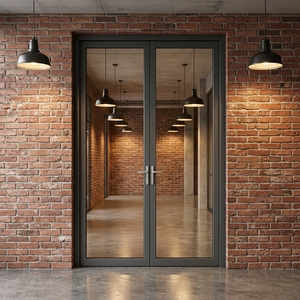
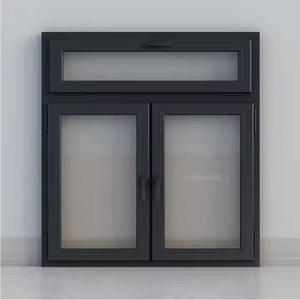
Whitepaper: Industrial Metrology & Engineering of Wholesale Architectural Aluminium Mesh Doors
Modern fenestration design has shifted from basic decorative barriers to high-performance, envelope-integrated security barriers. For international procurement managers, real estate developers, and civil engineering specifiers, procuring wholesale aluminium mesh doors from China requires an analytical evaluation of metallurgy, screen tensile integrity, interlock extrusion systems, and corrosion-prevention surface chemistry. As a leading manufacturer operating from Foshan, Guangdong—Guangdong Dejiyoupin Doors and Windows Co., Ltd. (DERCHI) engineers products to solve regional climatic challenges ranging from Category 5 cyclonic pressures across Pacific archipelagos to salt spray oxidation along coastal residential belts.
Extrusion Physics & Structural Substrates
The core structural baseline of a DERCHI aluminium security mesh door depends on the extrusion temper of its primary alloy. We use 6063-T6 and 6005A-T6 architectural aluminium extrusions with wall thicknesses ranging between 2.0mm and 3.5mm, depending on wind loading and span specifications. Secondary scrap aluminium can compromise structural integrity due to internal voids and brittle crystal matrices; our virgin bill-of-materials ensures maximum tensile yield strength (≥ 215 MPa) and hardness (≥ 11.5 Webster).
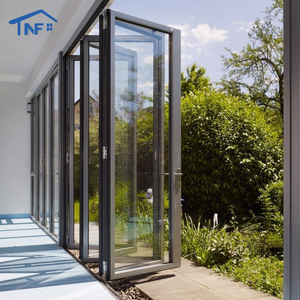
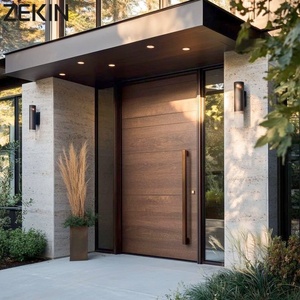
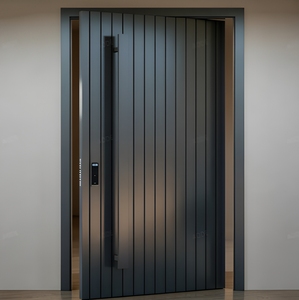
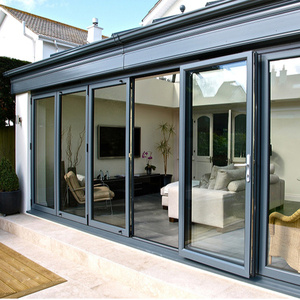
For large-span architectural entrance frameworks, including modern pivot systems and commercial bi-folding door assemblies, profile deflection ratios under static wind pressure must not exceed L/175 or L/250 according to AS2047 and ASTM standards. Our in-house extrusion presses apply thermal break polyamide 6.6 insulating strips (reinforced with 25% glass fiber, PA66 GF25). This eliminates thermal transference bridging, reduces structural condensation within hot and humid zones, and maintains the thermal boundary across building interiors.
Metallurgical Mesh Matrix: 304 vs. 316 Marine-Grade Comparative Analysis
Security screen resilience is directly determined by the chemistry of its integrated screen insert. Wholesale importers frequently face product failures when low-nickel 304 wire is installed within coastal zones, where atmospheric chloride concentrations accelerate pitting and crevice corrosion. DERCHI specifies 0.80mm, 0.90mm, and 1.0mm high-tensile AISI 316 marine-grade stainless steel mesh, achieving tensile strengths exceeding 900–1050 MPa per individual filament.
The insertion of 2% to 3% Molybdenum within the 316 alloy forms a stable chromium-molybdenum-oxide passivation boundary that resists salt spray, coastal acid degradation, and industrial air pollution. Additionally, galvanic isolation between the stainless wire mesh and the aluminium extrusion perimeter is established using proprietary, UV-stabilized Santoprene PVC co-extruded pressure clips or nylon clamping wedges. By eliminating direct metal-to-metal contact, DERCHI assemblies mitigate catastrophic bi-metallic corrosion.
| Evaluation Parameter | Commercial Insect Mesh | Standard Security Screen | DERCHI Heavy-Duty Hurricane Screen |
|---|---|---|---|
| Alloy Metallurgy | 1000 Series / Standard Al-Wire | AISI 304 Stainless Steel | AISI 316 Marine Grade / 6063-T6 Extrusion |
| Wire Caliber (Diameter) | 0.18mm - 0.25mm | 0.70mm - 0.80mm | 0.90mm - 1.05mm High-Tensile Strand |
| Tensile Yield Pressure | < 200 MPa | 650 - 750 MPa | ≥ 950 - 1100 MPa Shear-Resistant |
| Surface Pre-treatment | Basic Air-Dry Acrylic | Standard Polyester Powder | AkzoNobel/Jotun D1010 Interpon Fluro |
| Neutral Salt Spray (ASTM B117) | < 120 Hours failure | 1,000 Hours rating | ≥ 3,500 Hours ASTM Pitting Pass |
| Impact Resistance (AS5039/5041) | None (Puncture Prone) | Dynamic Drop Pass (Low Energy) | Knife-Shear & 5x Repeated Impact Qualified |
Dynamic Manufacturing Standards & Mechanical Locking Engineering
A resilient security mesh profile is only as secure as its edge retention system. Historically, manufacturers held mesh screens using manual blind rivets or silicone adhesives, both of which can fail under concentrated dynamic kick loads or pry-bar leverage. DERCHI implements a mechanical compression retention system: a high-pressure aluminium wedge snaps into a dedicated channel cavity, uniformly locking the crimped mesh border along the complete perimeter of the sash framework.
This design distributes impact kinetic energy equally into the primary aluminium structural jamb rather than focusing shear stresses on individual screw holes. When paired with mechanical multipoint tongue-and-hook locks—forged from solid 304 stainless steel with deadbolts extending into reinforced zinc-alloy strike boxes—our doors form a continuous barrier against intruder attacks, forced entry tools, and airborne cyclonic projectiles.
Why Global Contractors Choose DERCHI
Combining automated manufacturing capacity in Foshan with rigorous adherence to international certification standards.
AS2047 & NFRC Testing
Door assemblies are engineered and tested to satisfy AS2047 Australian window and door requirements, passing water penetration, air filtration, and structural deflection tests up to extreme N6 cyclonic parameters.
Full Material Traceability
Every extrusion batch undergoes spectrometric composition analysis. We provide mill test certificates verifying chemical composition (Si, Fe, Cu, Mn, Mg, Cr, Zn, Ti) alongside non-destructive ultrasonic defect evaluations.
Climatic-Specific Formulations
For installations in Southeast Asia, the Pacific, and coastal Americas, we formulate protective coatings to resist UV photodegradation, tropical mildew, industrial sulfur dioxide, and fine ocean salt crystals.
Parametric BIM & CAD Integration
Our dedicated engineering department provides custom shop drawings, section details, anchoring schematics, and accurate thermal transfer values to integrate directly with architectural REVIT/CAD models.
Integrated Export Logistics
Consolidated ocean container stuffing incorporates reinforced wooden crates, moisture-absorbing desiccant sacks, edge protectors, and component-labeled sequencing to optimize on-site installation schedules.
Synchronized Project Management
Operating from GMT+8, our sales engineers align real-time communication with project schedules across North America, the Australian eastern seaboard, and Southeast Asian trading hubs.
Procurement Horizons: Global Market Shifts in Architectural Mesh Systems
Procuring wholesale fenestration products requires anticipating regulatory changes, climate resilience benchmarks, and smart infrastructure demands. Over the next five years, the global building envelope sector will move beyond passive insect control toward integrated, multifunctional systems.
1. Extreme Climate Adaptation & Structural Cyclone Shielding
With changing regional storm intensities, building authorities in hurricane and cyclone corridors (such as Florida, the Caribbean, Northern Australia, and coastal East Asia) are expanding structural impact compliance mandates. Standard window glass requires expensive external roll-down shutters to meet impact codes. Heavy-duty woven aluminium and stainless steel mesh assemblies offer an alternative: engineered barrier screens that absorb the kinetic shock of airborne debris (tested up to AS5041 dynamic impact standards) while preserving natural cross-ventilation during non-storm phases.
2. Thermal Boundary Optimization and Glare Reduction
Building energy codes (including ASHRAE 90.1, California Title 24, and BCA green ratings) are driving tighter limits on Solar Heat Gain Coefficients (SHGC). In commercial multi-family and villa projects, 316-grade architectural mesh screens function as micro-louver shading systems. When installed on sun-facing facades, they absorb and disperse up to 52% of direct solar heat energy and reduce glare, decreasing the cooling load on HVAC systems without obscuring outward sightlines.
3. Automation & Smart Building Integration
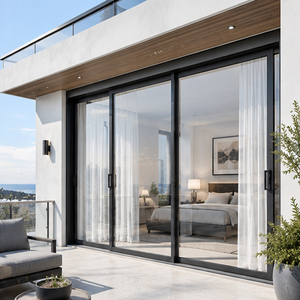
The convergence of architectural screening and automated smart home technology is reshaping the luxury entrance door sector. DERCHI's product development incorporates biometric access options, hidden motor drives, and magnetic interlocks directly into thermal break pivot doors and sliding security screens. These systems allow architects to specify unified security screens and entry assemblies that integrate smoothly with centralized home automation protocols (BACnet, KNX, Zigbee).
4. Carbon-Neutral Finishing & Closed-Loop Remanufacturing
Green building rating systems, such as LEED v4.4 and BREEAM, prioritize products with documented environmental profiles. High-performance powder coatings now utilize low-VOC, triglycidyl isocyanurate (TGIC)-free formulations. Extrusions are increasingly manufactured using traceable billets cast from green, hydro-powered smelting facilities. These components support circular economy goals, as both the 6063-T6 frame and the stainless mesh insert are fully recyclable at the end of their service lives.
Frequently Asked Questions: B2B Sourcing & Engineering Standards
Clear, direct answers for engineering leads, quality assurance directors, and international procurement managers.
Q1: How does DERCHI ensure galvanically neutral conditions between steel mesh and aluminum frames?
We install continuous, co-extruded Santoprene and virgin PVC isolation gaskets alongside polymer-coated fasteners. This prevents direct electrical contact between the 316 stainless steel wire mesh and the 6063-T6 architectural aluminium frame, fully eliminating galvanic corrosion risks in salty, coastal, and high-humidity environments.
Q2: What certifications and testing reports are available for municipal compliance?
DERCHI products carry CE, ISO 9001, AS2047, AS5039 (Security Screen Doors), AS5041 (Impact and Knife Shear Tests), and NFRC certified testing reports. Detailed metallurgical breakdowns and performance reports are provided to support your local engineering reviews, building inspector verifications, and tender submissions.
Q3: Can custom mill finish extrusions be color-matched to existing architectural elements?
Yes. We support custom surface finishing via electrostatic powder coating and fluorocarbon PVDF systems from AkzoNobel, PPG, and Jotun. Finishes can be matched directly to standard RAL color palettes, Dulux codes, or custom customer swatch samples with certified gloss levels and dry-film thickness guarantees.
Q4: How does DERCHI handle custom dimensioning and oversized door configurations?
Our in-house design team specializes in parametric sizing. We engineer large-format pivot doors (up to 4,000mm high by 2,000mm wide) and multi-panel bi-fold systems. Before production begins, we supply full CAD shop drawings and BIM-compatible models that map out site-specific threshold connections, jamb details, and anchoring schedules.
Q5: What are standard factory turnaround cycles, MOQ limits, and container loading schedules?
Our minimum order quantity is project-flexible, accommodating specialized private villa scopes through to multi-container commercial builds. Standard shop drawing approval cycles conclude within 3–5 working days, followed by a typical 25–35 day factory manufacturing window. Export-ready units are loaded in sequence at our Foshan facility for efficient on-site staging.
Request a Complete Architectural Door Schedule & Factory Price Matrix
Share your architectural plan sheets, bill-of-quantities, or tender specifications. DERCHI's engineering team will return a comprehensive proposal—complete with thermal ratings, structural calculations, and factory-direct pricing—within 24 business hours.
Send an Inquiry