High-Performance Wholesale Aluminium Exterior Doors & Windows
Manufactured from structural 6063-T5/T6 architectural aluminum alloy with advanced polyamide thermal break barriers, multi-cavity chambers, and commercial hardware integration.
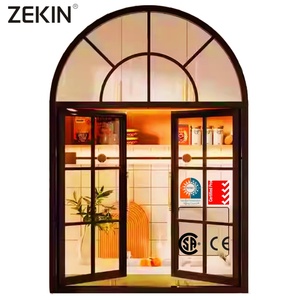 Acoustic Series
- Narrow Sightline Minimalist Profile
- Multi-Point Acoustic EPDM Gasket
- Commercial Alloy Louver Integration
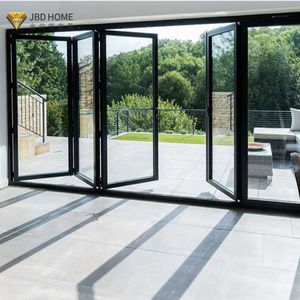 AS 2047 Standard
- Heavy Duty Quad Rollers (300kg/sash)
- AS 2047 Certified Water Deflection
- Low-Profile Flush Drainage Track
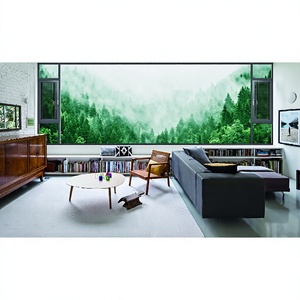 Security Screen
- 304 High-Tensile Stainless Mesh
- Seamless Flush Sash Integration
- Thermal Insulation Polyamide Barrier
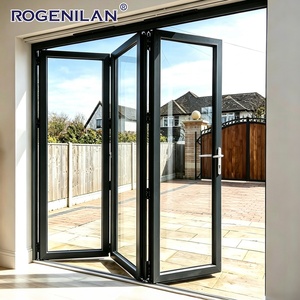 Triple Glazed
- Triple Insulated Argon Gas Filled
- Extreme Uw ≤ 1.3 W/m²K Rating
- High-Capacity Stainless Steel Hinges
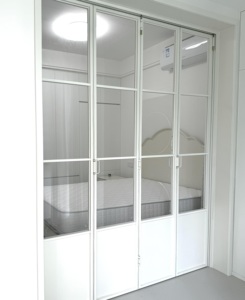 Villa & Hotel
- Dual Tempered Low-E Structural Panes
- Architectural French Grille Profile
- Heavy Duty Multi-Point Lock Rods
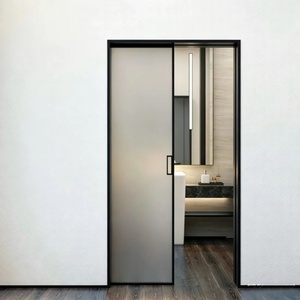 Concealed Track
- Pocket Concealed Wall Cavity System
- Satin Acid-Etched Privacy Glazing
- Silent Dampened Hydraulic Soft Close
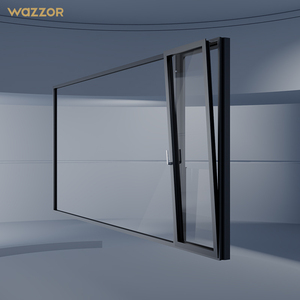 Typhoon N6 Proof
- 4500Pa Extreme Wind Load Capacity
- Triple-Seal Vulcanized Corner Joint
- Marine Coastal Anti-Corrosion PVDF
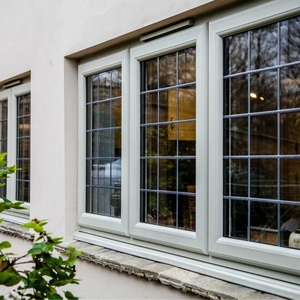 NFRC Certified
- Precision Dual-Arm Roton Operator
- NFRC Thermal & Solar Heat Compliance
- 90-Degree Washability Hinge Design
The Global Architecture Sourcing Guide: Wholesale Aluminium Outside Doors from China
In contemporary commercial and high-end residential architecture, the external envelope is no longer merely a passive weather barrier; it is a complex, active thermodynamic shield and a primary aesthetic statement. When international real estate developers, structural consultants, and commercial builders look to source wholesale aluminium outside doors from China, they are tapping into the world's most consolidated and technologically sophisticated fenestration ecosystem. Foshan, Guangdong province, serves as the global ground zero for aluminum alloy processing, billet extrusion, precision hardware engineering, and robotic surface coating.
However, successful procurement requires moving beyond simple per-square-meter cost calculations. Sourcing managers must evaluate metallurgical alloy purity, polyamide thermal break configurations, structural corner crimping methodologies, and international testing compliance. Guangdong Dejiyoupin Doors and Windows Co., Ltd. (DERCHI) operates at the vanguard of this industrial landscape, bridging high-volume manufacturing with bespoke architectural customization across Southeast Asia, North America, Australia, and the Middle East.
1. Advanced Metallurgy and Structural Extrusion Physics
The integrity of any outside door begins in the remelting furnace and billet casting shop. DERCHI utilizes primary-grade 6063-T5 and structural 6060-T63 aluminium extrusions with precise magnesium-silicide precipitates. Unlike non-standard recycled scrap profiles that suffer from micro-porosity and brittle fracture planes, our profiles guarantee a tensile strength exceeding 205 MPa and a yield strength surpassing 160 MPa.
6063-T6 Extrusions
Structural wall thickness ranging from 2.0mm to 3.5mm ensures absolute dimensional stability under severe mechanical and wind-load stresses.
PA66 GF25 Barriers
25% glass-fiber reinforced polyamide strips eliminate thermal bridging, preventing indoor condensation in sub-zero and tropical conditions alike.
AS 2047 N6 Compliance
Certified against cyclonic wind pressure, driving rain infiltration, and cyclic fatigue testing for ultimate oceanic envelope durability.
EPDM Ternary Gaskets
Peroxide-cured co-extruded automotive-grade sealing continuous loop gaskets maintain elastic recovery under decades of continuous UV exposure.
For large outside installations—such as monumental pivot doors, heavy-duty commercial bi-folds, and high-span sliding patio doors—the sectional moment of inertia (Ix and Iy values) is rigorously verified through Finite Element Analysis (FEA). This prevents mullion bowing under intense negative wind pressure along coastal frontages in typhoon-prone zones such as the Philippines, Vietnam, Florida, and Northern Australia.
Future Procurement Trends in Aluminium Exterior Doors (2025–2030)
Global architectural procurement has fundamentally shifted. Specifiers no longer evaluate outside doors as isolated hardware; they require fully integrated fenestration assemblies meeting rigorous sustainability charters, smart home ecosystems, and high-performance building envelope directives. The following four macro trajectories dominate current institutional factory schedules:
1. Net-Zero Energy Performance & Aerogel-Infused Thermal Breaks
As stringent building codes like California's Title 24, the European Union's EPBD recast, and Singapore's Green Mark 2021 take precedence, standard non-thermally broken profiles are banned for exterior applications. The leading edge of Chinese manufacturing has transitioned to wide-cavity (34mm to 54mm) low-lambda polyamide insulation zones, frequently injected with expanded aerogel or polyurethane foams. When matched with triple-glazed units containing soft-coat Low-E layers and warm-edge structural spacers, whole-door U-factors achieve levels as low as 0.85 W/m²K (0.15 BTU/hr·ft²·°F), meeting Passivhaus standards without sacrificing the sleek profile of aluminum.
2. Typhoon Resilience and Cyclonic Impact Testing
Extreme climate phenomena have elevated weather-tightness requirements across coastal Southeast Asia and the American Atlantic Basin. Modern wholesale requirements stipulate passing ASTM E1886/E1996 missile impact tests, Florida Building Code (FBC) TAS 201/202/203, or Australian AS 2047 N6 standards. Achieving water tightness under pressures exceeding 700 Pa necessitates multi-chamber self-draining sill configurations with stainless-steel non-return flap valves, preventing internal flooding during monsoonal storm surges.
3. Architectural Minimalism with Concealed Structural Hardware
The contemporary aesthetic demands maximum transparent glass surfaces with minimal visible frame widths. Premium outside door designs now incorporate flush sill-to-ceiling integration, concealed overhead hydraulic door closers, and heavy-duty 3D adjustable concealed hinges capable of supporting leaf weights exceeding 450 kilograms. DERCHI's proprietary engineering aligns profile perimeters flush with structural wall linings, delivering seamless transitions for luxury hospitality suites, beachfront villas, and penthouse terraces.
4. Smart Mechatronic Locking and Building Automation Systems (BAS)
Manual lever latches are rapidly giving way to motorized multi-point locking solutions. Modern aluminium outside entry systems integrate motorized mechanisms from industry leaders such as Siegenia, CMECH, GU, and Hoppe. These systems are connected via encrypted RS485 or BACnet protocols to central building automation networks. Access modes incorporate 3D facial recognition, biometric capacitive fingerprint scanning, RF proximity fobs, and smartphone-based digital keys, coupled with automatic latching sensors that trigger steel deadbolts the millisecond the leaf interfaces with the frame.
Comprehensive Technical Matrix: Outside Door Systems Engineering
The following performance data reflects standard DERCHI architectural product lines tested in accredited third-party laboratories according to ISO 17025 certified testing protocols.
| System Classification | Profile Alloy & Break | Air Infiltration (ASTM E283) | Water Tightness (AS 2047) | Thermal U-Factor (ISO 10077) | Acoustic STC (ASTM E90) | Structural Load (Pa) |
|---|---|---|---|---|---|---|
| Monumental Pivot Door | 6063-T6 / 38mm Polyamide | < 0.10 cfm/ft² | 600 Pa (Static Head) | 1.32 W/m²K | 42 dB | 4,500 Pa (N6 Level) |
| Heavy Duty Bi-Fold Door | 6063-T5 / 24mm Polyamide | < 0.15 cfm/ft² | 450 Pa (Cascading Sill) | 1.45 W/m²K | 38 dB | 3,600 Pa (Design) |
| Typhoon Casement Door | 6060-T66 / Multi-Chamber | < 0.05 cfm/ft² | 750 Pa (Pressure Equalized) | 1.10 W/m²K | 45 dB | 5,000 Pa (Extreme) |
| Pocket Sliding Patio Door | 6063-T6 / Concealed Track | < 0.18 cfm/ft² | 400 Pa (Sub-Sill Drain) | 1.60 W/m²K | 36 dB | 3,000 Pa |
*Note: Final performance indices depend upon glazing specification (Double Tempered Low-E vs. Triple Laminated Acoustic IGU) and overall opening aspect ratios. Custom shop test reports are generated upon structural drawing review.
Why International Developers Partner with DERCHI (Guangdong Dejiyoupin)
Operating out of Foshan, Guangdong—the epicentre of global architectural metalworking—Guangdong Dejiyoupin Doors and Windows Co., Ltd. (DERCHI) represents over 25 years of specialized fenestration manufacturing. Our 180,000-square-meter facility is equipped with automated Italian double-miter saw stations, four-axis CNC profile machining centers, robotic corner crimping jigs, and a dust-free vertical powder coating line.
180,000㎡ Mega Base
Unmatched production scaling. Featuring dedicated fabrication bays for ultra-large pivot leaves, specialized bi-fold hardware tracks, and computerized glass lamination autoclaves.
- 600+ Skilled Technicians & QA Inspectors
- Over 300,000 ㎡ Annual Door & Window Output
- In-House Component Stress Testing Lab
Full International Compliance
Avoid local building approval delays. Every system design is validated against national building codes across Oceania, North America, Europe, and Southeast Asia.
- AS 2047 & AS 1288 Certified (Australia)
- NFRC & Florida Impact Rated (North America)
- CE Mark EN 14351-1 & ISO 9001 Audited
Bespoke CAD & BIM Engineering
We work directly from architectural door schedules, providing detailed structural anchor calculations, shop drawings, BIM families, and precision installation manuals.
- 24-Hour Shop Drawing Generation
- WORLDBEX 2025 Featured Architectural Vendor
- Complete Hardware Customization (European/USA)
Whether suppling luxury resort oceanfront bi-folds in Boracay and Phuket, condominium balcony systems in Ho Chi Minh City and Manila, or luxury custom homes in Vancouver and Sydney, DERCHI pairs aggressive direct-from-factory pricing with top-tier product reliability.
Factory Quality Control & Global Maritime Packaging Protocol
A primary risk factor when buying wholesale aluminium outside doors overseas is transit degradation, frame distortion, and glass stress fractures. DERCHI maintains a five-tier Quality Management Protocol (QMP) before container dispatch:
1. Corner Joint Tensile & Shear Verification: Frame and sash corner miter joints are mechanically crimped with cast aluminum corner cleats injected with structural two-component epoxy adhesive. Corner weld and crimp points undergo hydrostatic burst testing to guarantee airtightness under deflection.
2. Anodizing & Fluorocarbon Film Thickness Auditing: Marine atmospheric environments require heavy-duty surface armor. Powder coatings undergo Qualicoat Class 2 inspections (minimum 60-80 microns thickness), while architectural PVDF (fluorocarbon) finishes require a minimum 3-coat system (35+ microns) passing 4,000-hour continuous salt spray testing (ASTM B117) without micro-blistering or delamination.
3. Trial Assembly in Workshop: Prior to crating, all multi-leaf bi-fold, sliding, and oversized pivot systems are fully erected in the factory assembly hall. Roller carriage smooth-travel checks, lock-rod alignment, and perimeter weatherstrip tolerances are verified by certified quality assurance engineers.
4. Heavy-Duty Export Cradling: Finished assemblies are enveloped in protective scratch-resistant film, capped with high-density EVA foam corner guards, sealed in multi-layer vacuum plastic, and secured inside solid fumigated plywood crates with integrated steel lifting lugs. Crates are engineered to withstand rough sea voyages, port handling, and high-humidity container sweat.
Frequently Asked Questions: Wholesale Exterior Aluminium Doors
Key technical and logistics inquiries addressed by our senior fenestration engineering team.