Commercial & Residential Architectural Systems
Direct manufacturer supply for international contractors, glazing distributors, and modular project developers. Fabricated from certified 6063-T5/T6 structural aluminium extrusions with insulated multi-point lock engineering.
Engineering Whitepaper: Precision Fenestration for Small Openings
In high-density commercial developments, high-end residential estates, and modular construction, aluminium small windows perform mission-critical architectural functions. While large-format curtain walls and sliding panoramic doors command visual dominance, small-aperture fenestration systems—such as clerestories, transoms, awning casements, and bathroom hopper vents—are subjected to concentrated structural, acoustic, and thermodynamic stresses.
As a leading China wholesale manufacturer operating from Foshan, Guangdong, our production methodology moves beyond simple downscaled framing. Engineering small windows requires calibrated balance: the smaller the sash, the higher the proportional ratio of aluminium frame to insulated glass unit (IGU). Consequently, frame thermal conductivity, corner joint crimping precision, gasket elasticity, and drainage aerodynamics determine whether the installation complies with international building efficiency regulations like the International Energy Conservation Code (IECC), Australia's AS 2047, and the European EN 14351-1 standards.
High-Efficiency Small Window Typologies: Selection Matrix
Selecting the appropriate window typology depends directly on spatial ventilation goals, wind-load resistance metrics, and required water exclusion thresholds. Below is an engineering recommendation breakdown for B2B project specifiers and wholesale buyers:
Top-Hung Awning Windows
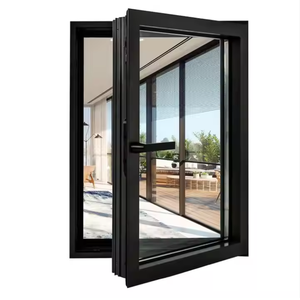
Engineered for high-rainfall tropical or maritime zones. The sash pivots outward from the top frame, maintaining continuous micro-ventilation while deflecting driving rain. Equipped with stainless steel 304 friction hinges and concealed perimeter multi-point locking gear.
Bottom-Inward Hopper Vents
The premier system for multi-family high-rises, basements, and luxury washrooms. Inward tilting at the top permits draft-free acoustic air exchange without encroaching on external facade clear-zones or risking falling-hazard regulations.
American Crank Casement Small Windows
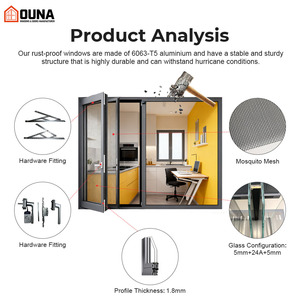
Combining heavy-duty roto-gear crank mechanisms with dual EPDM compression seals. Operates smoothly above kitchen counters or deep wall reveals, creating high seal pressures against negative wind drafts and hurricane conditions.
Technical Specification Matrix: Small Aluminium Window Systems
| Parameter | Standard Thermal Break Series | Passive House Clerestory Spec | Hurricane Impact Rated Series | Acoustic Isolation Hopper Spec |
|---|---|---|---|---|
| Alloy Standard | 6063-T5 High Purity Extrusion | 6063-T6 Precision Billet | 6061-T6 Structural Grade | 6063-T5 Homogenized Alloy |
| Wall Thickness | 1.4 mm – 1.6 mm | 1.8 mm – 2.0 mm | 2.0 mm – 2.5 mm Heavy Duty | 1.6 mm – 1.8 mm |
| Thermal Strip | PA66 GF25 (24 mm Isobaric) | PA66 GF25 Multi-Cavity (34 mm) | PA66 GF25 Structural Interlock | Polyamide Insulated Core |
| Glass Config | 5mm + 12A + 5mm Low-E Tempered | 5mm + 16Ar + 5mm + 16Ar + 5mm Triple | 6mm Low-E + 1.52PVB + 6mm Laminated | 8mm Laminated + 12A + 6mm Acoustic |
| Thermal U-Factor | 1.8 – 2.2 W/m²·K | 0.9 – 1.2 W/m²·K (Passive Certified) | 1.9 – 2.3 W/m²·K | 1.6 – 2.0 W/m²·K |
| Acoustic Rating (Rw) | 32 dB – 35 dB | 38 dB – 42 dB | 36 dB – 40 dB | 42 dB – 46 dB (Acoustic Film) |
| Water Tightness | 450 Pa (Class 9A / AS 2047) | 700 Pa (Class E750) | 1050 Pa (Coastal TAS 202/203) | 600 Pa (Pressure Equalized) |
Future Procurement Trends in Aluminium Window Manufacturing
International procurement agents and real estate consortiums face rapidly shifting compliance and cost matrices. Sourcing small aluminium windows directly from Chinese high-tier manufacturers is entering a new paradigm shaped by carbon governance, automated fabrication, and digital QA traceability.
1. Low-Carbon Recycled Billets
Global CBAM (Carbon Border Adjustment Mechanism) and LEED v4.1 certifications increasingly demand certified low-embodied-carbon aluminium extrusions. Modern tier-1 factories utilize hydro-powered smelter aluminium with scrap-reincorporation exceeding 40% without compromising tensile yield strength.
2. Integrated Smart Actuators
Small windows positioned in high clerestory or atrium installations increasingly mandate factory-integrated, concealed 24V DC chain actuators. Procurement is shifting towards windows pre-wired with KNX, Zigbee, and BACnet building management system protocols.
3. Direct-to-Site Consolidation
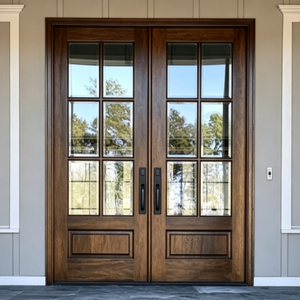
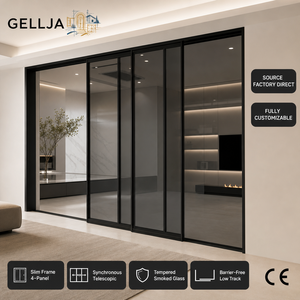
Instead of fragmented sourcing across local middlemen, institutional developers now consolidate small bathroom windows, massive patio sliders, and entryway doors into unified, sequenced sea containers labeled down to room numbers, dramatically accelerating construction schedules.
4. Extreme Environment Coatings
With coastal urbanization across Southeast Asia, North America, and Australasia expanding, Qualicoat Class 2/3 powder coatings and 3-coat AAMA 2605 PVDF finishes (70% Kynar 500) are becoming standard wholesale specifications to counteract extreme UV degradation and salt spray.
Technological Evolution: Metallurgical & Structural Advancements
To produce small windows that achieve lifelong airtightness, our factory employs systematic quality protocols across raw metallurgy, extrusion geometry, and corner joining mechanics:
Primary Billet Extrusion vs Scrap Ingot
Many low-tier workshops utilize remelted mixed aluminium scrap containing unregulated iron, silicon, and zinc traces, which cause micro-cracking during cold crimping. We strictly utilize 100% primary 6063-T5 virgin alloy billets verified by optical emission spectrometry, guaranteeing tensile strengths exceeding 160 MPa and Vickers hardness ≥ 8.5 HW.
Multi-Chamber Isobaric Cavities
Traditional small window frames allow rainwater intrusion under high differential pressures. Our profiles are mapped with three continuous seals and an isobaric decompression drainage chamber. Rainwater entering the outer rebate is immediately drained via gravity baffles without capillary back-siphoning.
Cast Corner Cleat Glue Injection
Corner joints are the most vulnerable structural nodes in compact sashes. We discard mechanical screw fastening in favor of precision 45-degree CNC miter joints locked by heavy extruded aluminum cleats, followed by two-component polyurethane (PU) structural corner glue injection for 100% airtight and waterproof joints.
Enterprise Manufacturing Strength: Guangdong Dejiyoupin (DERCHI)
Operating as a premier global fenestration powerhouse in Foshan, Guangdong, our enterprise infrastructure bridges Chinese supply chain economics with stringent Western engineering certifications. With over 25 years of specialized manufacturing experience, our products are proven in high-stakes projects across the United States, Canada, Australia, the Middle East, and Southeast Asia.

Foshan Intelligent Manufacturing Hub
Our centralized 180,000 ㎡ industrial facility houses state-of-the-art German CNC cutting double-mitre saws, automated thermal break strip insertion lines, robotic corner-crimping stations, and in-house glass tempering autoclaves. With 600+ personnel and 100+ technical patents, we deliver unmatched scalability and precision.
Whether you require 500 bespoke awning windows for a boutique hotel or 10,000 modular hopper units for high-density residential towers, our team provides complete shop drawings, structural wind-load simulations, and direct factory-to-port logistics management.
Wholesale Fenestration Procurement: Critical FAQ
Procuring custom aluminium windows across borders requires clarity on engineering tolerances, testing reports, and ocean freight packaging. Here are direct answers to core technical inquiries from global developers and facade contractors:
What is the typical Minimum Order Quantity (MOQ) and production lead time?
For standard architectural powder-coated profiles (Matte Black, Architectural White, Anodized Silver, Anthracite Grey), our MOQ is flexible, starting at 20 square meters (or 15–20 small window units), making project sample mock-ups and boutique runs highly viable. Full container load (20GP/40HQ) commercial manufacturing is standardly executed within 25 to 35 calendar days following final shop drawing and glass spec approval.
How do you prevent glass edge breakage and frame scratching during ocean transit?
International freight protection is engineered in five defensive tiers: (1) All aluminum profile surfaces are wrapped with static protective films; (2) Frame corners receive injection-molded rubber protectors; (3) Completed windows are enveloped in heat-shrink PE plastic wrapping with desiccant packs; (4) Assemblies are separated by dense honeycomb foam sheets; and (5) Everything is strapped into fumigated IPPC-certified solid timber crates with forklift runners, engineered for crane transfer and rough sea swells.
Can your small window systems pass local building inspections in the USA, Australia, and EU?
Yes. Our fenestration systems hold verified AS 2047 test certificates (testing positive/negative wind pressures, air infiltration, and water penetration up to cyclonic N6 ratings), North American NFRC thermal metrics (U-factor, SHGC, Visible Transmittance), CE EN 14351-1 declarations of performance, and ISO 9001 quality manufacturing records. We routinely collaborate with your local engineering consultants to submit complete technical calculation dossiers prior to production.
Which hardware brands are integrated, and what is the salt-spray resistance cycle?
We provide tier-1 international hardware options including German Siegenia, HOPPE, and Roto Frank, alongside premium Asian brands such as Kinlong and CMECH. All friction stays, hinge pins, and locking bolts are manufactured from AISI 304 or 316 marine-grade stainless steel, tested against neutral salt spray (ASTM B117 / ISO 9227) for a minimum of 500 to 1,000 hours without red rust initiation.
Do you provide CAD shop drawings and custom extrusion dies for OEM projects?
Yes. Our in-house engineering design office comprises 45+ structural engineers. Upon receiving your architectural schedules, window elevation plans, and wall detail sections, we provide complimentary 2D AutoCAD and 3D Revit BIM shop drawings detailing structural anchors, perimeter flashing reveals, and glass clearances. For unique profile geometries, our tooling division can engineer and extrude custom aluminum dies within 14 business days.
Ready to Source High-Performance Aluminium Windows Direct from the Factory?
Send your window schedule, CAD floor plans, or tender specifications. Our senior fenestration engineers will provide an itemized Bill of Quantities (BOQ), structural wind-load feasibility feedback, and FOB/CIF pricing within 24 hours.
Get a Quote