Manufacturing Base
Cyclonic Wind Class
Patents & Testing Reports
OEM / ODM Engineering
Export-Grade Fenestration & Structural Systems
High-load architectural windows, impact glass facades, and heavy-duty storm barrier doors configured for commercial envelopes and high-velocity coastal properties.
 Thermal Break
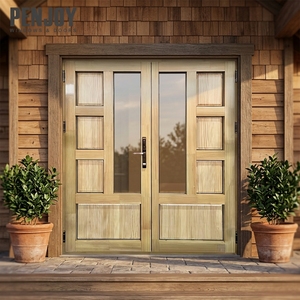
PENJOY Luxury Villa Aluminum Clad Wood French Doors
 Storm Rated
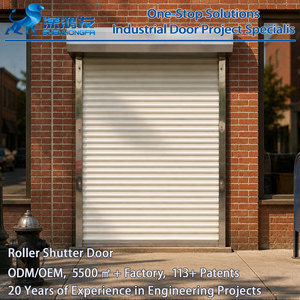
Thickened Windproof Villa Electric Shutter & Garage Door
 3-Track Sliding
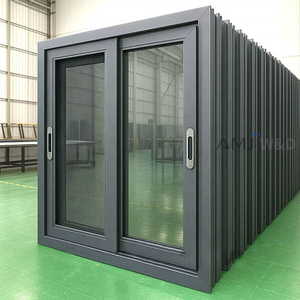
Commercial Double Glazed 3-Tracks Sliding Window
 Corrosion Proof
Custom Heavy Storefront Casement Doors & Windows
 AS2047 N6
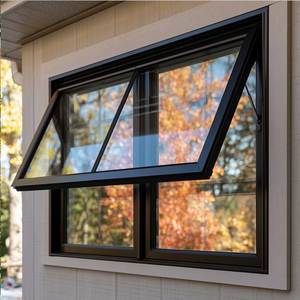
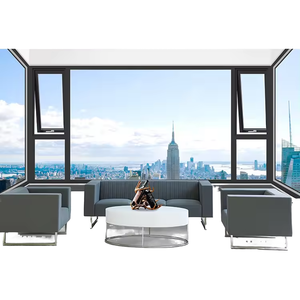
AS2047 N6 Multi-Point Lock Modern Awning Windows
 NFRC Standard
NFRC Double Glazed Waterproof Awning & Louver Window
 Heavy Crank
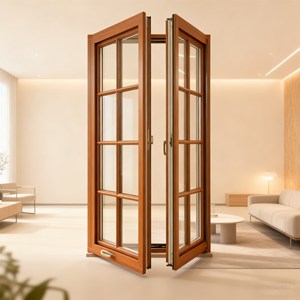
Heavy-Duty American Crank Operator Casement Window
 Monsoon Ready
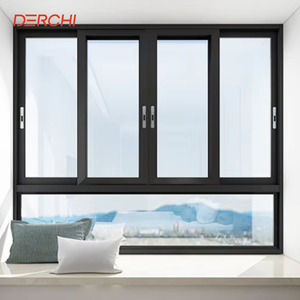
High-Water-Head Balcony Structural Sliding Windows
Structural Engineering & Impact Science: Decoding Modern Hurricane Fenestration
In high-velocity hurricane zones (HVHZ) such as South Florida, the Caribbean Basin, the typhoon-prone coastlines of the Philippines, and the cyclonic territories of Northern Australia, structural building envelopes are subjected to intense simultaneous vectors of structural loading: positive aerodynamic pressure, sudden negative suction reversals, and flying projectile strikes. Commercial-grade aluminum hurricane windows sourced from China must transition beyond basic residential extrusions to fully engineered structural systems designed to prevent catastrophic envelope failure.
When wind flows past the bluff corners of a multi-story or waterfront structure, local suction coefficients often double the static design pressure (DP) calculations. If fenestration glass shatters or sash frames disengage from perimeter masonry, atmospheric pressurization enters the building. This induces immense upward uplift force on ceiling structures while simultaneously stressing opposite walls, directly causing structural envelope collapse. China’s premier manufacturers, led by Guangdong Dejiyoupin Doors and Windows Co., Ltd. (DERCHI), engineer fenestration systems configured specifically to mitigate dynamic cyclic fatigue and ballistic impact through advanced metallurgy, structural silicon bonding, and specialized interlayer lamination.
| Engineering Metric | Standard Commercial Glazing | DERCHI Certified Hurricane System | Testing Protocol / Compliance Basis |
|---|---|---|---|
| Alloy Metallurgy & Wall Spec | 1.2mm – 1.4mm / 6063-T5 | 2.0mm – 3.0mm Heavy Structural / 6063-T6 or 6061-T6 | GB/T 5237, ASTM B221 Architectural Alloys |
| Large Missile Impact (LMI) | Non-compliant (Shatters & breaches) | Resists 9-lb 2x4 lumber projectile traveling at 50 ft/s (34 mph) | ASTM E1886 / ASTM E1996 Missile Level D & E |
| Cyclic Wind Pressure Loading | Breaches under 1,500 alternating cycles | Withstands 9,000 positive/negative cyclic oscillations | Miami-Dade TAS 201, TAS 202, TAS 203 |
| Interlayer Glass Configuration | Standard Monolithic / 0.76mm EVA | 1.52mm / 2.28mm SentryGlas (SGP) or Structural PVB | ANSI Z97.1, EN 14449 High-Shear Impact Lamination |
| Cyclonic Air/Water/Wind Rating | Basic DP30 / Under 1500 Pa | N6 Cyclone Rating (>4500 Pa ultimate strength) | Australian Standard AS 2047 & AS 1170.2 |
A critical engineering differentiator between standard double-pane windows and certified impact-resistant assemblies is the mechanical adhesion of the laminated glass lite to the structural aluminum sash. Ordinary windows rely on dry compression rubber gaskets that fail under negative pressure loads, allowing the entire glass package to be dislodged intact. In contrast, DERCHI employs high-modulus, two-component structural silicone sealants (such as Dow Corning 983 or SikaGlaze IG) with an engineered bite dimension. This structural silicone bead transfers dynamic cyclic wind loads directly from the glass edge into the reinforced aluminum chambers, keeping the building envelope sealed even if outer glass panes sustain fractured surfaces.
Future B2B Procurement Trends in Hurricane Fenestration
How global general contractors, hospitality conglomerates, and facade engineers are reshaping supplier evaluation metrics across China’s manufacturing corridors.
Convergence of HVHZ Impact & Thermal Decarbonization
Historically, hurricane windows were engineered exclusively for structural mass without prioritizing thermal performance. Next-generation procurement frameworks mandate polymide (PA66 GF25) thermal barrier integration inside heavy hurricane profiles to meet stringent U-factor (≤0.28) and Solar Heat Gain Coefficient (SHGC ≤0.22) mandates without compromising structural deflection standards.
Factory-Direct Verified BIM & CAD Interoperability
Enterprise project owners now demand complete digital asset libraries before awarding tender contracts. Sourcing teams prioritize Chinese tier-1 fabricators capable of generating shop-ready Revit/IFC parametric families, complete with thermal bridging analysis, wind load reaction calculations, and site-specific anchor embedment details directly compatible with architectural software.
Containerized Prefabrication & Direct-to-Aperture Delivery
Skyrocketing onsite installation costs across North America, Australia, and island regions have pushed procurement managers toward fully assembled, pre-glazed structural units. Crating systems engineered with internal shock indicators, moisture desiccants, and labeled sub-assembly identification codes eliminate site unpacking confusion and drastically lower jobsite labor hours.
Industrial Upgrades: The Next Era of Precision Fenestration Manufacturing
The manufacturing ecosystem for architectural aluminum windows in Guangdong has evolved into an automated high-precision engineering discipline. Facilities like DERCHI’s 180,000 square meter Foshan manufacturing complex utilize advanced 5-axis CNC machining centers, robotic structural silicone dispensing systems, and automated dual-component corner crimping machinery that guarantee micrometer-level mechanical precision across every corner joint.
Corner joint integrity is paramount during high-load cyclonic events. Traditional miter joints secured solely by manual screws twist and distort under extreme torsional wind gusts, breaking water seals and causing immediate water intrusion. Modern automated fabrication incorporates extruded cast-aluminum corner chevrons, mechanically injected with two-component polyurethane bonding adhesives. This ensures corner joints possess greater shear strength than the extrusion profile itself, preventing joint deformation under 4,500+ Pascal cyclic wind pressure loads.
Furthermore, coastal surface finishes have shifted from basic powder coatings to marine-grade PVDF (Fluorocarbon) 3-Coat / 2-Bake systems and advanced architectural anodizing conforming to AAMA 2605 specifications. In humid, salt-laden environments like the Caribbean, Florida Keys, or coastal Southeast Asia, salt fog acceleration quickly breaks down unrated coatings, triggering galvanic corrosion around fastener penetrations. DERCHI’s automated pretreatment and chemical dipping lines ensure superior coating adhesion capable of passing 4,000-hour continuous salt spray testing without blistering, chalking, or delamination.
Guangdong Dejiyoupin: Manufacturing Authority & Scale
Recognized as one of the Top 10 premium door and window manufacturing leaders in China, delivering engineering stability and certified excellence for overseas project managers.
180,000㎡ Mega Production Infrastructure
Featuring dedicated assembly zones for thermal break casements, structural sliding systems, monumental pivot doors, and insulated shutters. Over 600 skilled technicians ensure prompt, consistent, and predictable lead times on high-volume commercial schedules.
Comprehensive Compliance Testing Library
Holding over 100 invention, utility, and design patents alongside verified test reports spanning CE (EN 14351-1), ISO 9001, UL Fire-Rated standards, and Australian AS 2047 cyclonic certification verified by accredited third-party laboratories.
Global Recognition & Export Precision
Proven execution across luxury villas, resorts, and commercial towers across North America, Australia, and Southeast Asia. Exhibited at WORLDBEX 2025 in the Philippines, earning wide recognition from premier developers and architects for exceptional structural engineering.
Frequently Asked Questions for Hurricane Window Importers
Direct technical answers addressing certification validation, structural engineering, glass configurations, and logistical risk mitigation.
While standard PVB (Polyvinyl Butyral) provides satisfactory shatter retention for lower wind zones, SentryGlas (SGP) ionoplast interlayers are up to 100 times stiffer and 5 times more tear-resistant than conventional PVB. Under severe storm conditions, even if both glass lites fracture from heavy debris impact, the SGP interlayer maintains rigidity without bowing out of the frame pockets, preserving the structural envelope integrity under sustained cyclic storm pressures.
Our products are engineered, tested, and certified against recognized global impact protocols. For Australia, our window and door assemblies have passed rigorous AS 2047 N6 cyclonic testing encompassing air infiltration, water penetration resistance (over 450 Pa), and ultimate wind pressure resistance exceeding 4,500 Pa. For North American export clients, we manufacture systems verified through ASTM E1886/E1996 testing criteria, providing full technical calculation packets and structural sign-offs for code review.
Yes. In the past, non-thermal heavy profiles were standard for impact zones. DERCHI uses multi-cavity architectural profiles integrated with fiberglass-reinforced polyamide (PA66 GF25) mechanical struts. By knurling the aluminum extrusions before mechanically crimping the thermal bar, our assemblies achieve exceptional composite shear strength, preventing profile flexure while dramatically dropping overall frame heat conductance to meet modern energy codes.
Each production batch undergoes rigorous 5-stage quality gates: 1) Raw extrusion spectrographic alloy verification; 2) Mechanical joint corner tension tests; 3) Mock-up water penetration testing in our factory chamber; 4) Hardware cycle verification (minimum 25,000 cycles); and 5) Glass seal lamination inspection. Finished units are wrapped in protective polyethylene film, fitted with corner edge buffers, and secured in fully enclosed, fumigated solid wood ocean crates with desiccant packets.
Wind-driven rain during tropical storms generates massive pressure against exterior window tracks. DERCHI incorporates stepped drainage sills with independent water runoff chambers and exterior-facing non-return gravity flapper valves. Even under sustained gust winds exceeding 50 m/s, the pressure differential between inner and outer chambers is equalized, allowing water to drain rapidly via gravity without backing up across interior thresholds.
We provide full engineering support from early concept design through final field installation. Our team supplies comprehensive CAD shop drawings, glass stress calculations, finite element thermal analysis, custom aluminum extrusion die tooling development, and customized multipoint stainless steel locking configurations to meet your project’s exact architectural specifications and structural wind-load requirements.
Ready to Engineer Your Coastal Fenestration Solution?
Connect directly with DERCHI's export engineering department in Foshan. Send your window schedules, architectural elevations, or structural design pressure targets for a comprehensive technical assessment and direct manufacturer quotation within 24 hours.
Contact Us