Precision-Engineered Architectural Bifold & Glazing Systems
Our flagship OEM/ODM production line combines primary aerospace-grade 6063-T5 aluminium profiles, German dual-compound polyamide thermal barriers, and heavy-duty multi-bearing carriage rollers to withstand harsh coastal and tropical windloads.
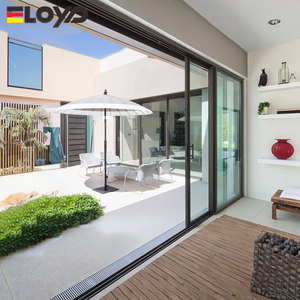
Eloyd Soundproof 12 Foot Multi Panel Aluminum Sliding Doors Tinted Lowes Sliding Glass Patio Doors Price
- Rw 40dB Acoustic Attenuation
- Solar Reflective Tinted Low-E Glazing
- Multi-Track Concealed Drainage
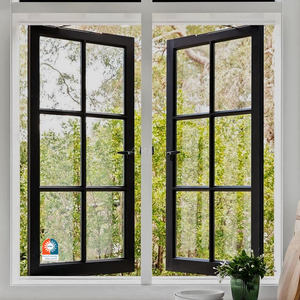
AMJ Custom House Project Modern Window Heat Insulated Window Soundproof Triple Double Glazed Glass Aluminum Casement Windows
- Uw ≤ 1.1 W/(m²·K) Passive House Standard
- Multi-Chamber Polyamide Break
- RC3 Anti-Burglary Certified
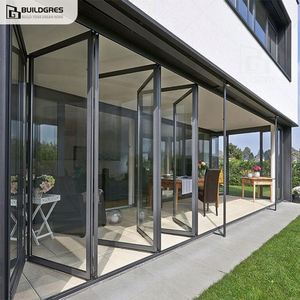
Custom Heavy Duty Aluminum Concertina Bi-Fold Door Storm Proof EPDM Sealing Stackable Folding Glass Door Buildgres 5-Year
- Continuous Vulcanized EPDM Gaskets
- AS 2047 N6 Wind Load Compliance
- Stainless 316 Quad Roller Sets
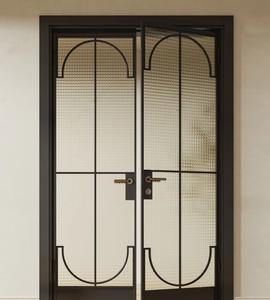
American Security Brown Modern Interior Aluminum Swing Door Finished Entry Door 5 Year Warranty Windproof For Living Room Glass
- Multi-Point Mechanical Deadbolt System
- Fluorocarbon Anodized Finish
- Integrated Acoustic Sub-Frame
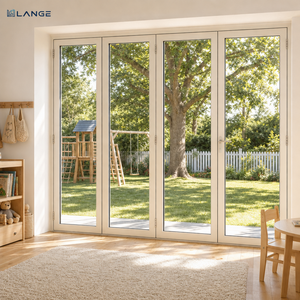
LANGE French Bifold Patio Door Certified Ultra-narrow Bezel Aluminum Alloy Thermal Break Insulation Energy Saving Bifold Door
- Ultra-Slim 38mm Sightline Mullion
- Structural Silicone Secondary Seal
- Concealed In-Frame Flush Locking
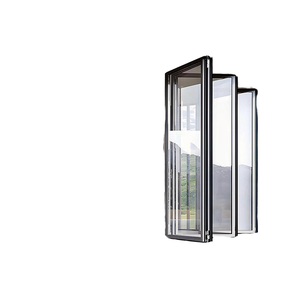
Custom Modern House Contractor Aluminum Patio Bifold Doors Waterproof Windproof Five Panels Outdoor Bifold Door
- Water Tightness Class 9A (>900 Pa)
- Corner-Free 90° Articulation Option
- Zero-Threshold Recessed Drainage
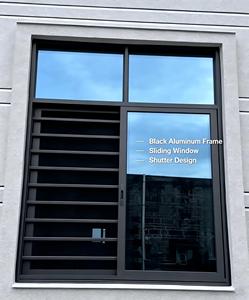
Aluminium Sliding Window 6063-T5 Profile PVDF Coating Low-E Tempered Glass Condensation Resistant Modern Garden Residential
- AAMA 2605 3-Coat PVDF Coating
- Anti-Condensation Warm Edge Spacer
- Dual Self-Lubricating Rollers
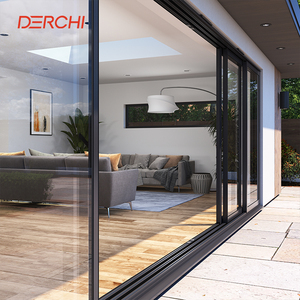
Luxury Heavy Duty Slim Frame Panoramic Large Glass Panel Sliding Glass Aluminium Door for Villa House
- 20mm Invisible Interlock Profile
- Supports up to 500kg Panel Payloads
- Motorized Concealed Automation Ready
Top-Tier Manufacturing Authority: Guangdong Dejiyoupin (DERCHI)
Recognized as one of the Top 10 premium architectural fenestration manufacturers in China, Guangdong Dejiyoupin Doors and Windows Co., Ltd. (DERCHI) has pioneered advanced metal fabrication and envelope engineering for over 25 years. Headquartered in the industrial heart of Shishan Town, Nanhai District, Foshan, our intelligent manufacturing base provides turnkey OEM/ODM contract solutions tailored for architects, façade consultants, and general contractors throughout North America, Australia, the Middle East, and Southeast Asia.
Mechanical Mechanics, Thermodynamics & Kinematics in Modern Bifold Engineering
Specifying commercial exterior bifold doors requires deep scrutiny into mechanical deflection ratings, moment of inertia ($I_x, I_y$), thermal bridge decoupling, and cyclonic windload pressure management.
Alloy Extrusion & Load Dynamics
Our OEM profiles utilize primary ingot 6063-T5 and structural 6061-T6 magnesium-silicon aluminum alloys. Wall thicknesses range from 2.0mm to 3.0mm, calibrated to resist bending moments under severe negative suction pressures without sash disengagement.
- Tensile Strength (Rm)≥ 215 MPa
- Yield Strength (Rp0.2)≥ 170 MPa
- Web Thickness2.0mm - 3.2mm
- Profile ToleranceEN 12020-2 Precision
Thermodynamics & Thermal Breaks
Standard aluminum carries a high thermal conductivity ($k \approx 205\ \text{W}/(\text{m}\cdot\text{K})$). We mechanically crimp German-engineered 24mm to 34mm PA66-GF25 (polyamide reinforced with 25% glass fiber) thermal break struts to eliminate internal condensation and drive U-factors down.
- Overall U-Value (Uw)1.2 - 1.6 W/(m²·K)
- Linear Expansion Coeff.Matches Aluminum
- Glass Pocket DepthUp to 48mm Triple IGU
- Cavity Fill90% Argon Gas Filled
Hermetic & Hydrostatic Sealing
Air leakage and torrential water penetration represent the greatest operational failures in bifold fenestration. DERCHI implements vulcanized EPDM continuous gaskets with co-extruded foam cores and multi-stage drainage check valves that repel wind-driven rain.
- Water TightnessClass 9A (>900 Pa)
- Air PermeabilityClass 4 (EN 12207)
- Cyclonic Wind ResistanceAS 2047 N6 Certified
- Acoustic Isolation (Rw)36 dB - 44 dB
| Evaluation Parameter | International Standard Test | DERCHI Factory Achieved Metric | Commercial Benchmark | Project Compliance Status |
|---|---|---|---|---|
| Structural Wind Load Deflection | ASTM E330 / AS 2047 (Serviceability & Ultimate) | +4500 Pa / -4500 Pa (Deflection < L/250) | ± 2500 Pa Standard | AS 2047 N6 Pass |
| Water Infiltration Pressure | EN 1027 / AAMA 501.1 Dynamic Test | No leakage at 900 Pa (Cyclonic Rain Simulator) | 300 - 450 Pa Commercial | High Weather Pass |
| Hardware Cycle Fatigue Life | EN 1527 / EN 13126-15 Mechanical Endurance | 100,000 Full Open/Close Folding Cycles | 25,000 Cycles Minimum | Grade 4 Heavy Use |
| Salt Spray Corrosion Resistance | ASTM B117 / ISO 9227 (Neutral Salt Fog) | 3,000 Hours Continuous Exposure (No Blistering) | 1,000 Hours Standard | Marine Grade C5-M |
| Air Infiltration & Exfiltration | ASTM E283 / EN 12207 Air Infiltration | 0.08 m³/(h·m) @ 100 Pa Pressure Differential | 0.50 m³/(h·m) Average | Class 4 Airtight |
Future Procurement Trends & Sourcing Vectors in Bifold Fenestration
As commercial developers transition toward sustainable decarbonization and seamless indoor-outdoor architectural spaces, procurement demands for custom aluminum folding systems are pivoting toward specific performance metrics.
Ultra-Narrow Sightlines & Oversized Sashes
Architects are actively phasing out bulky 75mm+ visible mullions in favor of ultra-slim 35mm-45mm stile systems. The structural requirement shifts from basic extruded profile thickness to higher-modulus alloy matrixes capable of supporting 3.5m+ sash heights without lateral racking.
Zero-Barrier Flush Threshold Integration
Commercial hospitality projects across tropical resorts require seamless transitional floors adhering to ADA guidelines without sacrificing drainage integrity. Modern procurement favors multi-chamber buried subterranean tracks with magnetic retractable weather-strips.
Decarbonization & Circular Billets
Global institutional developers (LEED v4.1, BREEAM) now mandate Environmental Product Declarations (EPDs). Sourcing is trending heavily toward low-carbon billets smelted using renewable hydro-power, yielding under 4.0 kg CO2e per kg of primary aluminum alloy.
Mechatronic Concealed Automation
Motorized bifold articulation managed via building management systems (BMS), smart sensors, and mobile interfaces is moving from luxury niche to core project tenders. Systems feature anti-pinch torque sensors and backup uninterruptible DC power drives.
Technological Innovations Driving DERCHI's OEM Production
Continuous capital investment into CNC four-axis milling centers, automated two-component corner injection, and surface nanocoatings defines our technological competitive edge.
CNC Robotic Corner Crimping & Epoxy Pinning
Traditional field screwed corners loosen under torsional stress. Our factory utilizes high-precision German crimping machinery with automated two-component polyurethane corner glue injection, delivering hermetic shear strengths exceeding 4,500 N per joint.
Quadruple Stainless Steel 316 Rollers
Each bifold carrier leaf is equipped with marine-grade SUS316 precision ball bearings encapsulated in self-lubricating carbon-filled nylon wheels, guaranteeing silent, frictionless operation even when carrying heavy triple-laminated glass panels weighing up to 300kg per sash.
Dual-Finish Anodizing & Fluorocarbon PVDF
We offer dual-color thermal separation allowing exterior surfaces to feature AAMA 2605 70% Kynar 500 fluorocarbon coating (PVDF) for extreme UV exposure, while interior aluminum profiles receive warm wood-grain thermal sublimated transfers or micro-textured matte architectural powder coatings.
Concealed Magnetic Hardware & Integrated Security
Flush-fitting shoot-bolt handles recess completely into the sash profile to prevent panel-to-panel collision during 180° stacking. Multi-point mushroom cam locksets with hardened steel anti-drill plates secure every secondary hinge against pry attacks.
Acoustic Interlayer Glass Integration
To combat low-frequency urban traffic and aviation noise in luxury hotel and beachfront villa projects, our factory laminates customized acoustic PVB (0.76mm to 1.52mm) or SentryGlas (SG) interlayers into asymmetric insulated glass units, damping resonant frequencies effectively.
Frequently Asked Questions for Commercial Buyers & Importers
Key technical, logistical, and warranty considerations addressed directly by our senior fenestration engineering department.
What is the standard production lead time for custom OEM bifold orders?
For standard extruded systems in documented factory colors (Matte Black, Architectural Bronze, Traffic White), lead time is typically 25 to 30 working days following final shop drawing sign-off and deposit receipt. Bespoke custom extrusion tooling, specialized RAL color matches, or custom-curved bifold assemblies require an initial 10-15 days for die manufacture and sample extrusion validation.
How does DERCHI ensure sea-freight protection against salt air and glass breakage?
Every bifold door frame and sash is wrapped in peelable 80-micron protective film, corner-guarded with high-density EVA shock absorbers, and sealed inside moisture-barrier heat-shrink PE sheeting with silica desiccant bags. Sashes are packed in ISPM-15 certified non-coniferous fumigated plywood crates or galvanized steel transport A-frames for direct container unshipping.
Can you provide AS 2047, CE, or ASTM test certificates under private OEM labeling?
Yes. We routinely support our international distribution partners with private-label brand registration, providing factory authorization letters, mutual non-disclosure agreements, and test report transfer documentation. Our engineering lab also facilitates testing samples under your brand name through accredited international agencies like NATA, Intertek, or TÜV Rheinland.
Top-hung versus bottom-rolling systems: Which mechanism is best for projects?
Top-hung systems support panel weight from an overhead structural lintel, resulting in the smoothest gliding operation and minimal threshold track maintenance. However, they require rigid structural steel or concrete headers that will not deflect under dynamic loads. If the architectural header cannot support loads, bottom-rolling systems carry panel dead weight along the floor slab.
What surface treatment warranties are provided for coastal applications?
For installations within 500 meters of the coastline (e.g., beachfront villas in the Philippines, Thailand, or Florida), we recommend our Class 2 / Class 3 fluorocarbon PVDF coating (minimum 3-coat system conforming to AAMA 2605) or marine-grade 25μm hard-anodized finish. These coatings carry written commercial warranties against peeling, chalking, and color shift of 15 to 25 years.
Do you support BIM (Building Information Modeling) and shop drawing sign-offs?
Yes. Our in-house engineering studio provides complete Autodesk Revit BIM models (LOD 300 to LOD 400), parametric DWG/DXF cross-sections, structural deflection calculations, and anchoring schedules. We review structural expansion joint interfaces with your facade consultants prior to profile extrusion.
Partner Directly with China's Premier Door & Window OEM Factory
Eliminate middleman markups and secure factory-direct pricing, certified performance engineering, and full design freedom for your upcoming commercial building, residential development, or luxury villa project.