Factory-Engineered Fenestration Portfolio
From micro-ventilation bathroom crank awnings to heavy-duty thermal break sliding systems and architectural fenestration, review our OEM export portfolio tested to AS 2047, CE, and ISO 9001 global standards.
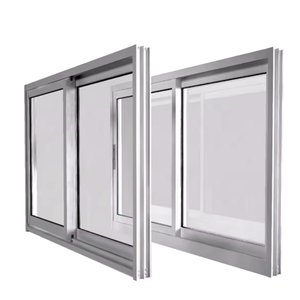
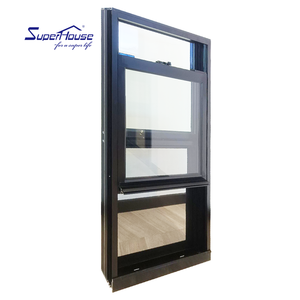
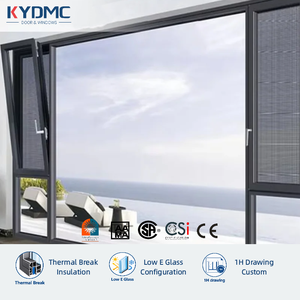
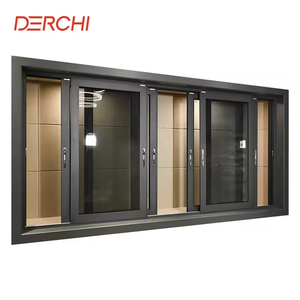
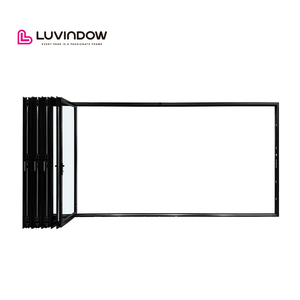
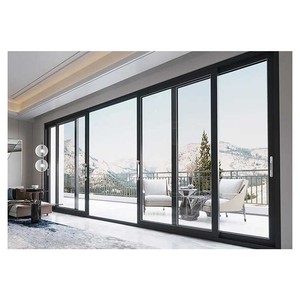
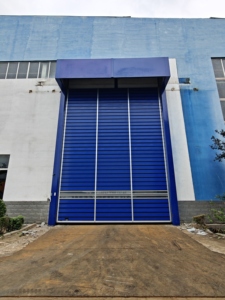
Engineering Aluminum Fenestration for Severe Hydro-Thermal Stress
Bathroom environments subject window frames to higher continuous relative humidity (RH 85%–100%), rapid thermal shock, chemical cleaning agents, and interior vapor drive than any other residential or commercial opening.
Corrosion & Alloy Purity (6063-T5/T6)
Standard unbranded aluminum extrusion scrap contains secondary iron contaminants that trigger intergranular pitting corrosion in warm, steam-saturated bathrooms. We utilize high-purity virgin aluminum billets conforming to ASTM B221 and GB/T 5237.
Profiles receive architectural-grade Qualicoat Class 2 powder coating or Class I anodization (>15μm) and fluorocarbon PVDF coatings (AAMA 2605 compliant), resisting detergent surfactants and continuous moisture without blistering.
- Tensile Strength: Rm ≥ 160 MPa
- 1,000-Hour Neutral Salt Spray (NSS) Tested
Polyamide Thermal Barriers & Condensation
Warm, moist bathroom air contacting cold exterior-facing aluminum causes dew-point condensation, promoting toxic mold proliferation inside drywall cavities. Non-thermal aluminum frames fail local energy codes and accelerate structural decay.
Our custom OEM lines integrate precision Technoform polyamide PA66 GF25 (25% glass fiber reinforced) thermal break strips. This mechanical barrier drops profile U-factors below 1.6 W/m²·K and elevates the Condensation Resistance Factor (CRF > 65).
- CRF Index: 65–72 (AAMA 1503 Standard)
- PA66 GF25 Structural Tensile: >80 N/mm²
Hydrostatic Sealing & Drainage Architecture
Monsoon wind loads and shower spray require active pressure equalization. Ordinary brush-pile seals allow capillary water migration into subflooring. Our windows feature continuous cellular vulcanized EPDM gaskets with vulcanized 90° corner joints.
Extruded internal stepped water sills incorporate independent drainage chambers with unidirectional check-valve weep covers, stopping wind-driven water ingress up to 700 Pa cyclic hydrostatic water pressure.
- Water Penetration Resistance: AS 2047 450Pa–700Pa
- Air Infiltration: ASTM E283 <0.10 L/s·m²
| Performance Parameter | Generic Commodity Window | DERCHI OEM Engineered System | Compliance Test Benchmark |
|---|---|---|---|
| Alloy Metallurgy & Purity | Recycled aluminum scrap, unregulated wall (1.0–1.2mm) | Virgin 6063-T5 / T6 (1.4mm to 2.0mm structural wall) | ASTM B221 / EN 755-9 |
| Condensation Mitigation | Monolithic cold aluminum profile (Condensation Index <35) | Technoform PA66 GF25 Thermal Barrier (CRF >68) | AAMA 1503 / NFRC 500 |
| Glazing Seal Integrity | Single-sealed silicone or PVC bead, prone to fogging | Dual-seal Polyisobutylene + Structural Silicone with Warm Edge | ASTM E2190 / EN 1279 Class A |
| Water Tightness Under Wind Load | Weep holes without backdraft flappers (150 Pa leakage) | Pressure-equalized chambers + check-valve weeps (>600 Pa) | AS 2047 N6 / ASTM E331 |
| Acoustic Isolation (STC / OITC) | Single glazed 5mm, STC 22–24 dB (high street noise) | Laminated Acoustic PVB + Double Low-E, STC 36–42 dB | ASTM E90 / ASTM E413 |
Future Procurement & Technological Trends in Bathroom Fenestration
As global building standards shift toward operational carbon reduction, building envelope air-tightness, and occupant privacy automation, commercial procurement directors must anticipate the following key market transitions over the 2026–2030 cycle.
1. Electrochromic PDLC Smart Privacy Glass
Curtains and traditional Venetian blinds absorb high bathroom humidity, accumulating black mold spores and demanding intensive housekeeping in commercial hotels. The industry is rapidly standardizing on integrated Polymer Dispersed Liquid Crystal (PDLC) switchable glazing.
Operating on a safe 24V/48V low-voltage feed concealed within the aluminum sash, PDLC glass transitions from frosted opacity to clear view in under 100 milliseconds, synchronizing with smart room building management systems (BMS).
- Switching Speed: <100ms (Opaque to Transparent)
- Power Draw: <5W / m² in active clear mode
2. Sensor-Driven Motorized Micro-Ventilation
Modern zero-energy buildings (ZEB) demand mechanical or natural automated trickle ventilation to purge internal humidity without significant HVAC enthalpy cooling loss. Hidden sash actuators wired into RH sensors automate window tilting when interior humidity exceeds 65%.
Integrated safety interlocks combine wind and rain detection to auto-close awning vents during tropical squalls while maintaining secure tilt positions that prevent exterior intrusion.
- Automation Protocols: RS485 / KNX / Zigbee 3.0
- Acoustic Dampening during Micro-Vent: STC 28 dB
3. Modular Pre-Glazed OEM Sub-Assemblies
Escalating on-site installation labor costs in North America, Australia, and Europe have turned pre-glazed, unitized OEM sub-assemblies into a supply chain priority. Importers require factory-sealed, pre-hung window cassettes ready for direct opening anchorage.
Unitized fabrication under controlled factory temperature (21°C ± 2°C) guarantees structural silicone curing adhesion that cannot be replicated on wet construction sites, mitigating water claims.
- Installation Labor Reduction: Up to 45% on job site
- Packaging: Export A-frame steel crates with desiccants
 180,000 ㎡ Facility
 Automated CNC Processing
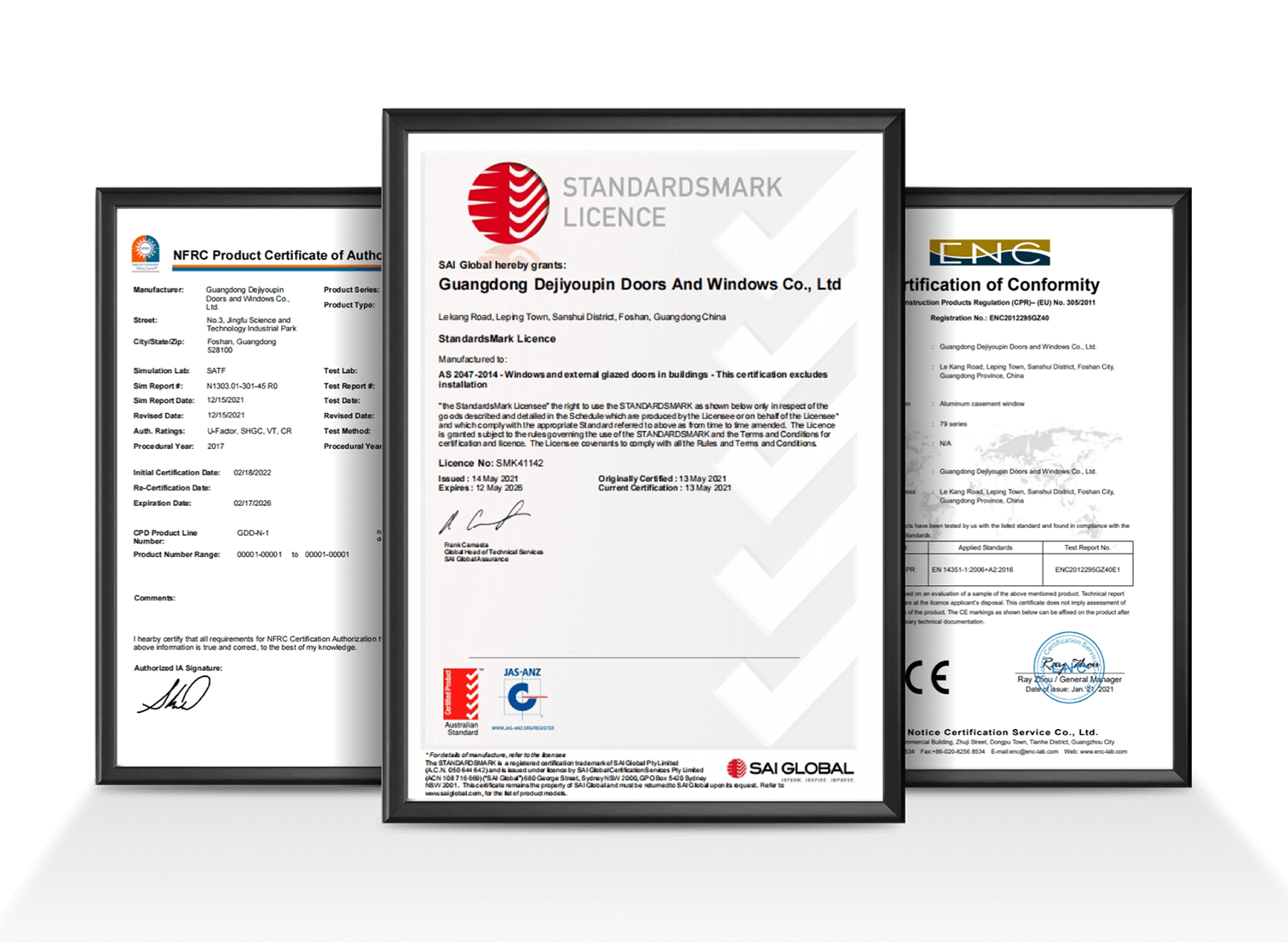 100+ Certificates & Patents
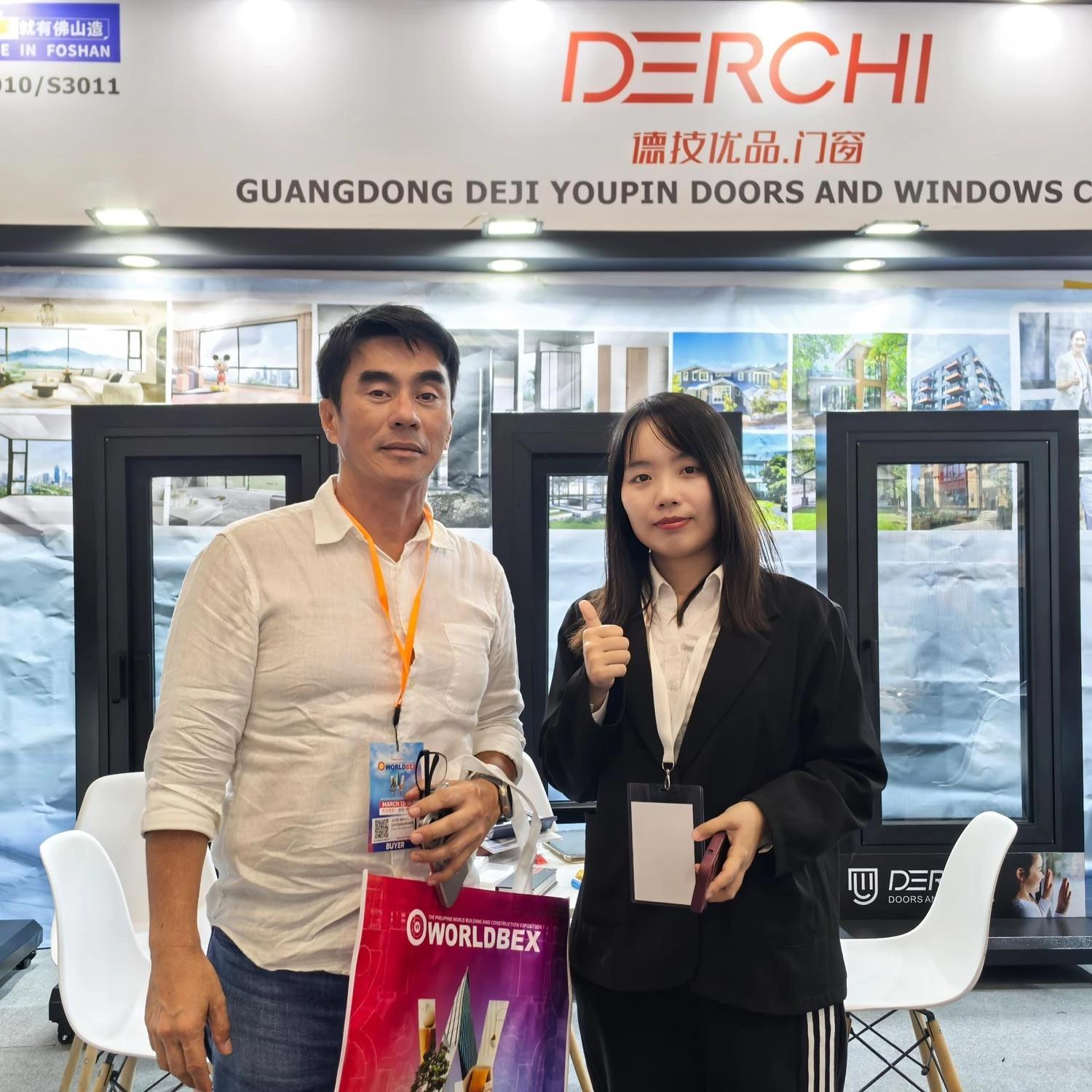 WORLDBEX 2025 Global Presence
Guangdong Dejiyoupin Doors and Windows Co., Ltd. (DERCHI)
Founded in Foshan, Guangdong—the world's foremost aluminum industrial cluster—DERCHI has developed over 25 years into a premier B2B manufacturer ranked among China’s Top 10 Fenestration Brands. We supply custom architectural windows and doors to residential estates, high-rise condominiums, luxury resorts, and commercial developments across the Americas, Southeast Asia, Australia, and the Middle East.
Our infrastructure includes a state-of-the-art 180,000 square-meter production base powered by German four-axis CNC profile machining centers, robotic corner crimping cells, and high-throughput insulated glazing lines staffed by over 600 industry specialists.
Procurement & Engineering Due Diligence Questions
Clear, engineering-backed answers addressing the most common verification and logistical inquiries submitted by architectural specifiers, general contractors, and fenestration importers.
Request an OEM Engineering Proposal & CAD Analysis
Send your door and window schedule, architectural elevations, or opening rough dimensions. An English-speaking fenestration engineer from our Foshan headquarters will review your specifications and furnish a comprehensive technical estimate within 24 hours.