High-Performance OEM Aluminum Screen & Door Configurations
Explore our precision-extruded profiles and multi-functional architectural door solutions. Designed to integrate seamless insect barriers, cyclone resistance, and thermal efficiency for villas, residential compounds, and luxury commercial resorts.
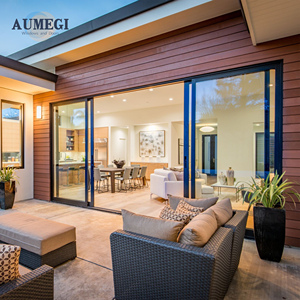
AUMEGI Balcony Metal Back Painted Aluminium Low-E Sliding Door
- Alloy Spec: 6063-T5 Extrusion
- Screen Option: Built-in Plisse / 304 Mesh
- Hardware: Multi-point Automatic
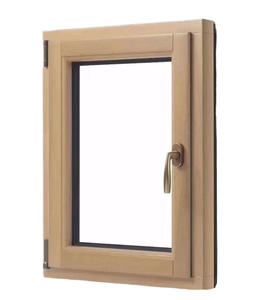
AS2047 Australia Villa Slim Frame Custom Casement Windows System
- Glazing / Mesh: Double Low-E + Micro Mesh
- Airtightness: Class 4 (EN 12207)
- Finish: AkzoNobel Powder Coat
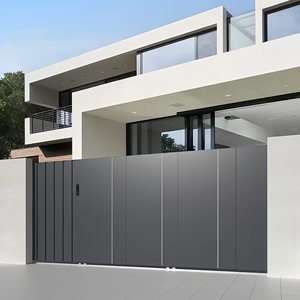
Solid Aluminum Entry Gate Modern House Entrance Security Door
- Structure: Cast & Extruded Hybrid
- Barrier Type: Reinforced Security Infill
- Weathering: Qualicoat Class 2
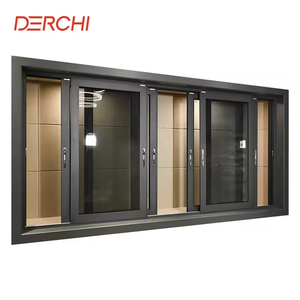
High Quality Double Tempered Glazed Aluminum Sliding Windows
- Track System: Triple Track + Integrated Screen
- Insect Mesh: Stainless 304 High-Tensile
- Sealing: Continuous EPDM Dual Seal
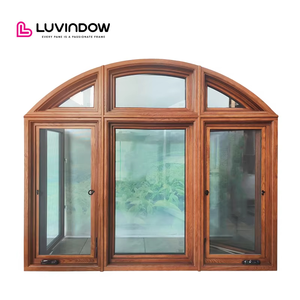
Wholesale Etched Aluminum Clad Wood Beveled Glass Windows
- Frame Tech: Thermal-Break Aluminum Clad
- Screen Match: Magnetic Concealed Mesh
- Application: Luxury Residential Estates
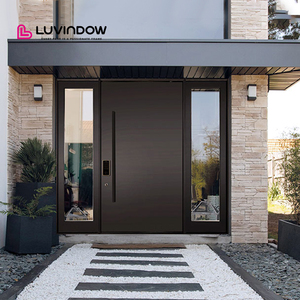
Modern Black Profile Aluminum Frame Front Entry Pivoting Doors
- Hinge Type: German Heavy Pivot Axis
- Screen Adaptation: Motorized Recessed Mesh
- Max Height: Up to 6000mm Engineered
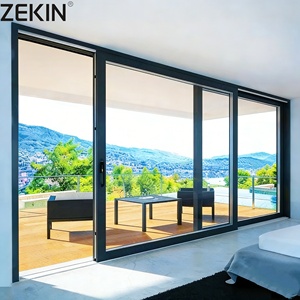
Hurricane Proof Laminated Patio Sliding Glass Wall Door System
- Impact Rating: ASTM / AS2047 N6 Cyclonic
- Screen Infill: 0.9mm 316 Marine Stainless
- Track Design: Self-Draining Monorail
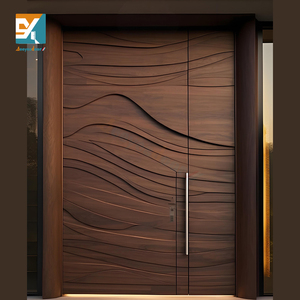
Modern Security Pivot Door Steel Aluminum Walnut Entrance Door
- Core Build: Aviation Alloy Core + Solid Fascia
- Screen Shield: Anti-Vandal Screen Barrier
- Locking: Biometric 7-Point Interlock
Metallurgical Standards, Mesh Physics & Mechanical Integrity
Architectural aluminum mosquito screen doors must balance physical airflow, microscopic pest exclusion, optical transparency, and physical shear resistance. Our OEM manufacturing pipeline leverages primary 6063-T5 aluminum extrusions and marine-grade austenitic steel meshes engineered to survive extreme tropical and coastal microclimates.
Alloy Extrusion & Tensile Resilience
Our structural door profiles employ 6063-T5 and 6061-T6 structural aluminum billets with minimum web thicknesses of 1.4mm to 2.5mm for screen doors and up to 3.5mm for heavy-duty security sliding profiles. Extruded with homogeneous microstructures, our alloys deliver tensile yield strengths exceeding 160 MPa, preventing sash deflection and structural torque even under heavy continuous commercial operation.
- Homogenized 6063-T5 Virgin Billet
- Web thickness tolerances within ±0.1mm
- Engineered internal screw ports & corner crimps
Screen Mesh Metallurgy & Weave Dynamics
We deploy three certified mesh categories: AISI 304/316 marine-grade stainless wire woven with precision plain-weave meshes (0.80mm to 1.0mm wire diameter, 11x11 or 12x12 mesh per inch), chemical-resistant vinyl-coated fiberglass (18x16 mesh, 0.011" filament diameter), and micro-perforated structural aluminum sheeting. Meshes undergo 1,000+ hours of continuous salt-spray testing without oxide formation.
- Austenitic AISI 316 wire: 900+ MPa shear strength
- Zero-raveling black cathodic powder infill
- Optimized open area ratio (60-65% free airflow)
Coating Chemistry & Marine Weatherability
Exposed architectural screen frames demand superior atmospheric protection. DERCHI profiles are treated with multi-stage pre-anodizing or zirconium-based non-chrome passivation followed by electrostatic application of AkzoNobel Interpon or PPG architectural fluorocarbon (PVDF) finishes. This complies with AAMA 2604/2605 and Qualicoat Class 2 standards, ensuring total resistance against UV embrittlement and saline humidity.
- 60–80 μm dry-film powder coat thickness
- Passes 3,000-hr accelerated cyclic QUV testing
- High-durability C4/C5 marine environment rating
| System Series | Frame Profile | Insect / Security Mesh Spec | Locking Mechanism | Standard Wind Load | Primary Application |
|---|---|---|---|---|---|
| MS-100 Sliding Screen | 6063-T5 (1.6mm thickness) | 0.8mm AISI 304 Stainless (11 Mesh) | Dual-Hook Flush Mortise | 2200 Pa (AS2047 Class N4) | Patio doors, balcony exits, coastal villas |
| SS-200 Heavy Security | 6063-T6 (2.2mm thickness) | 1.0mm AISI 316 Marine Steel (10 Mesh) | 3-Point Anti-Pry Deadbolt | 4500 Pa (AS2047 Class N6 Cyclonic) | Main entrances, perimeter luxury villa doors |
| PL-300 Pleated / Plisse | 6063-T5 (1.4mm thickness) | Polypropylene / PET Water-repellent Pleat | Magnetic Soft-Catch Strip | 1200 Pa (Standard Residential) | Bi-fold doors, lift-slide panoramic openings |
| RC-400 Retractable Cassette | Extruded Cassette (1.8mm) | High-Tension Fiberglass Mesh (18x16) | Internal Hydro-Damper Retractor | 1600 Pa (Protected Openings) | Kitchen entries, minimal modern pivoting portals |
| CF-500 French Hinged | Heavy Chamfered 6063-T5 (2.0mm) | 0.9mm Woven Stainless or Perf Aluminum | Heavy-Duty Multi-Point Rod System | 3000 Pa (AS2047 Class N5) | Colonial & modern French door secondary barriers |
Future Procurement Trends in Architectural Screen & Door Systems (2026–2030)
Procurement directors, general contractors, and facade consultants face shifting international compliance standards, fluctuating raw material indices, and rising homeowner expectations for environmental barrier performance. Discover the core market trends dictating custom OEM supply agreements.
Motorization & Smart Building IoT
Global demand is accelerating for motorized insect screens seamlessly hidden within the building head detail. High-end procurement schedules now mandate low-voltage 24V DC brushless tubular motors with RS485 / Zigbee protocols, permitting programmatic deployment when sliding glass panels open or during mosquito-heavy twilight hours.
Security & Insect Hybrid Integration
Traditional fly screens are being rapidly phased out in high-value projects in favor of dual-purpose high-tensile security screens. By replacing fragile nylon fibers with 316-grade stainless woven wire that withstands knife-shear testing (AS 5041) and dynamic impact (AS 5039), developers eliminate intrusive burglar bars while preserving ventilation.
Ultra-Minimalist Concealed Sightlines
Modern luxury architecture prioritizes expansive glass facades. Screen manufacturers must engineer concealed zero-threshold sub-sills and ultra-narrow sash stiles (<25mm visible profile) that align symmetrically with primary door mullions, ensuring natural ventilation does not compromise structural aesthetics.
Decarbonized Circular Metallurgy
European, North American, and Australian tier-1 developers increasingly incorporate embodied carbon thresholds into RFP requirements. Procurement shifts toward OEM suppliers capable of documenting certified low-carbon recycled aluminum billets (Hydro CIRCAL or equivalent) and chrome-free anodizing processes verified through Environmental Product Declarations (EPDs).
Technological Advances in OEM Door Assembly & Screen Tensioning
Defects in mosquito net doors arise from insufficient corner joint rigidity, uneven mesh perimeter tension, and galvanic corrosion between disparate metals. Here is how advanced tier-1 OEM manufacturing facilities resolve these critical failure modes.
01 Heavy Corner Crimping with Two-Component Epoxy Injection
Traditional screen doors assembled with simple mechanical screws loosen over seasonal thermal cycles, leading to sash diagonal drop and jamming. DERCHI's automated lines deploy cast aluminum corner cleats inserted into hollow extrusion chambers, hydraulic 4-point perimeter crimping, and pressurized injection of two-component polyurethane bonding adhesives. This produces a monolithic corner joint capable of withstanding structural wind suction loads in excess of 4,500 Pa.
02 Patented Mechanical Wedge Mesh Clamping (Anti-Pullout)
Relying on rubber splines to retain security or mosquito mesh leads to degradation under UV radiation. Our systems incorporate a dual-wedge mechanical retention channel: the woven mesh is folded over a continuous PVC/aluminum retaining bead, driven into an undercut internal profile recess, and fastened with stainless machine screws. This mechanical interlock resists pry forces and localized pull-out pressures up to 12.5 kN.
03 Galvanic Isolation & Dielectric Corrosion Barriers
When austenitic stainless steel wire mesh directly contacts an aluminum frame in high-humidity or saline environments, severe galvanic corrosion rapidly disintegrates the aluminum contact flange. Our manufacturing protocol isolates all mesh interfaces using co-extruded Santoprene gaskets and non-conductive dielectric PVC isolation barriers, ensuring lifetime electrochemical stability even in beachfront installations.
04 Precision CNC Machining & Modular Track Adaptability
Every extrusion passes through automated 5-axis CNC machining centers that mill lock cutouts, drainage weep holes, and roller guide slots with 0.05mm positioning repeatability. Our OEM screening cassettes and sliding door tracks are designed as universal modular inserts, allowing turnkey retrofitting or seamless integration into Australian, European, and American structural framing envelopes.
Guangdong Dejiyoupin Doors & Windows Co., Ltd. (DERCHI)
Headquartered in Foshan, Guangdong, China's premier architectural metal fabrication capital, DERCHI operates one of Asia's most sophisticated door and window manufacturing complexes. Spanning over 180,000 square meters with a seasoned technical staff of 600+ specialists, our facility supplies factory-direct, turnkey OEM solutions to developers, distributors, and engineering contractors worldwide.
With over 25 years of specialized engineering, DERCHI holds more than 100 international certifications and technology patents. Our architectural systems have passed rigorous Australian AS 2047 N6 testing (the highest cyclonic wind, air, and water tightness benchmark), alongside European CE compliance, ISO 9001 quality management, and UL fire ratings.
From prestigious multi-villa developments across the United States, Canada, and the Middle East to intensive tropical deployments in the Philippines, Vietnam, Thailand, Malaysia, and Indonesia (highlighted by overwhelming acclaim at WORLDBEX 2025 in Manila), DERCHI provides end-to-end custom CAD shop drawings, bespoke extrusion tooling, and reliable export fulfillment.

Frequently Asked Questions: B2B Sourcing of Aluminum Screen Doors
Technical, logistical, and compliance insights compiled by our engineering team to assist procurement specialists in vetting OEM partners and optimizing project door schedules.
What aluminum alloy formulations do you utilize for thin-frame insect screen doors?
We use certified prime 6063-T5 aluminum extrusions for standard architectural screen doors, providing optimal anodizing or powder coating finish quality alongside precise dimensional stability. For extra-large commercial screen portals or high-wind coastal applications, we employ 6061-T6 structural alloys with wall thicknesses up to 2.5mm to eliminate dynamic sash deflection.
Can your mosquito net doors withstand coastal marine salt air without pitting?
Yes. Coastal and tropical beachfront environments require complete corrosion immunity. We provide marine-grade AISI 316 woven stainless steel mesh treated with cathodic black epoxy powder coating, combined with extrusion frames pre-treated with non-chrome chemical passivation and 60-80μm fluorocarbon (PVDF) or Qualicoat Class 2 coatings designed for C4/C5 marine exposures.
What is the difference between standard fly mesh and high-tensile security mesh?
Standard fiberglass or nylon fly mesh is 0.2-0.3mm in diameter, flexible, and serves purely for insect interception with no resistance against forced entry, pet scratching, or severe storm debris. High-tensile security mesh features 0.8mm to 1.0mm high-yield 304/316 stainless steel wire clamped into heavy-duty aluminum sashes, meeting international anti-intruder knife shear and impact standards (AS5039/5041).
How do you prevent galvanic corrosion between the stainless steel mesh and aluminum frame?
Direct contact between stainless steel and aluminum in moist conditions produces an electrolytic couple that corrodes the aluminum. We isolate every millimeter of mesh edge using non-conductive Santoprene rubber gaskets, PVC clamping wedges, and non-conductive isolator strips, completely breaking electrical contact and preventing galvanic deterioration.
What are your typical OEM lead times, tooling capabilities, and Minimum Order Quantities (MOQ)?
For standard catalog extrusions and finishes, lead times are 20–30 days from final shop drawing sign-off. For bespoke architectural profiles requiring new extrusion dies, tooling takes approximately 10–14 days plus sample extrusion validation. We offer flexible MOQs tailored to project scale: commercial multi-unit developments and container loads receive volume pricing, while custom villa schedules are fully supported.
How do you package and protect custom screen door systems for overseas container shipping?
Screen doors require specialized protection to prevent mesh punctures and profile scratching during maritime transit. Finished units are wrapped with PE protective films, shielded with heavy-density edge guards, encased in moisture-proof foam sheeting, and packed into reinforced fumigated plywood crates or steel shipping pallets labeled with exact opening codes matching your door schedule.
Request Your Custom OEM Screening Proposal
Consult with our in-house engineering department in Foshan. Submit your project door schedule, CAD drawings, or performance requirements, and receive a complete technical quotation with BIM/CAD shop drawings within 24 hours.