Featured OEM/ODM Aluminium French Window Systems
Factory-direct customized configurations manufactured from premium 6063-T6 virgin aluminum alloy billet, equipped with continuous PA66 GF25 thermal struts, precision multi-point perimeter locks, and sound-attenuating glazing units.
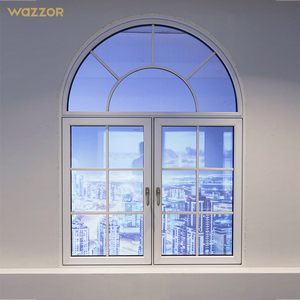
WAZZOR AS2047 High Watertightness Triple Sealed French Window
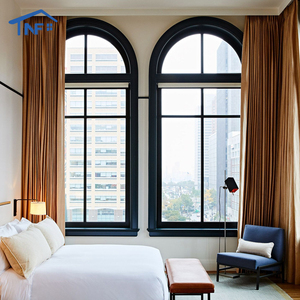
Aluminium Double Glazed Arched French Window with Grills
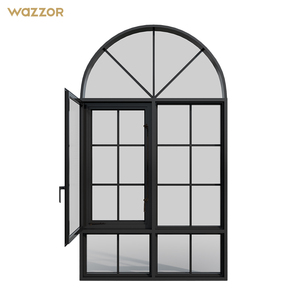
Wazzor Villa Heat Insulated French Balcony Casement System
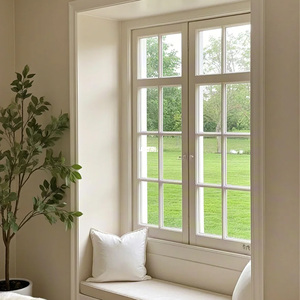
Modern Architectural Soundproof Aluminium French Window
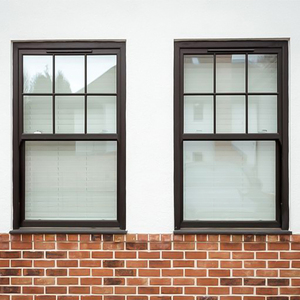
Landsharp European French Style Black Aluminium Double Hung
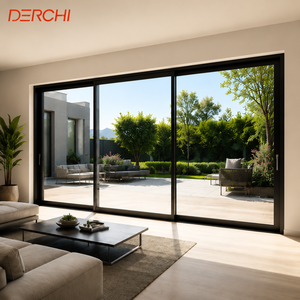
Heavy Duty Thermal Break Automatic Sliding French Door/Window
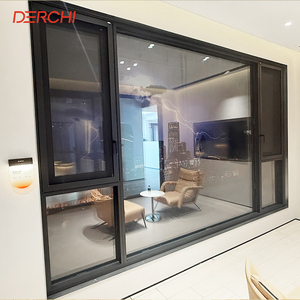
Hurricane Proof Double Laminated Glass French Casement Window
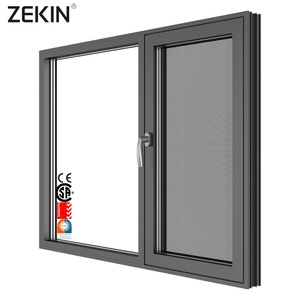
ZEKIN Thermal Break Double Glazed Security French Casement
Global OEM/ODM Fenestration Infrastructure
Guangdong Dejiyoupin Doors and Windows Co., Ltd. (DERCHI) represents the pinnacle of Chinese precision manufacturing, integrating advanced German CNC machining centers, automated assembly robotics, and stringent metallurgical verification.
Engineering Dynamics in Modern Aluminium French Fenestration
As contemporary residential and commercial architecture migrates toward maximal glazed transparency and net-zero envelope performance, aluminium French windows require multi-disciplinary structural design.
Polyamide Thermal Barrier Dynamics
Traditional non-thermal aluminium profiles exhibit excessive heat conductive coefficients (Uf > 5.8 W/m²K). We engineer continuous polyamide PA66 GF25 thermal struts reinforced with 25% glass fiber, matching the thermal expansion coefficient of aluminum (2.4 × 10⁻⁵ K⁻¹). This neutralizes structural bimetallic bowing under extreme indoor/outdoor differential temperatures while lowering total frame transmittance to Uf ≤ 1.3 W/m²K.
- Eliminates internal condensation up to 85% RH
- Meets German Passivhaus thermal envelope targets
- Mechanically crimped shear-strength > 75 N/mm
Cyclonic Wind Loads & Water Watertightness
Tropical marine environments (e.g., Philippines, Coastal Australia, Florida) subject French sashes to severe oscillating air pressure and driving monsoon rain. Under standard AS 2047 N6 testing, our multi-chamber mullions with internal high-tensile steel reinforcements achieve ultimate wind pressure resistance exceeding 4500 Pa, with zero static water penetration at 700 Pa using progressive decompression gutters.
- Equal-pressure rain-screen decompression chamber
- Co-extruded EPDM continuous vulcanized gasket corners
- Deflection limit controlled to L/250 under peak cyclic load
Acoustic Attenuation & Heavy-Duty Glazing
French casements demand specialized acoustic decoupling in urban residential environments. By integrating asymmetric insulated glass units (e.g., 6mm Low-E + 12Ar + 4mm + 0.76PVB + 4mm Acoustic Laminate), DERCHI systems interrupt mechanical vibrational transmission. Our structural silicone glazing beads and multi-point perimeter cams maintain uniform gasket compression against low-frequency road noise.
- Acoustic dampening rating verified to Rw + Ctr ≥ 43 dB
- Warm-edge composite spacers eliminate perimeter condensation
- Structural silicone bonding rated to ASTM C1184
| Engineering Parameter | Commercial Tier (DERCHI Spec) | Standard Market Tier | Testing & Compliance Protocol |
|---|---|---|---|
| Aluminium Alloy & Temper | Primary Billet 6063-T6 / 6060-T66 (Web thickness 1.8mm – 2.5mm) | Recycled scrap aluminum (Wall thickness ≤ 1.4mm) | GB/T 5237, ASTM B221, EN 755-9 |
| Thermal Break Material | Polyamide PA66 GF25 (Fiberglass reinforced 25%, 24mm – 34mm) | Recycled PVC or ABS thermal inserts (Prone to embrittlement) | DIN EN 14024, ISO 10077-2 |
| Weather Sealing Configuration | Triple continuous EPDM rubber with molded vulcanized corner blocks | Dual PVC/TPE foam gaskets without vulcanized corners | ASTM E283 (Air), ASTM E331 (Water) |
| Structural Wind Load Resistance | Serviceability: 3000 Pa | Ultimate: 4500 Pa (N6 Cyclonic Class) | Serviceability: 1200 Pa | Ultimate: 1800 Pa | AS 2047, AS 4055, ASTM E330 |
| Surface Protection & Fluorocarbon | Qualicoat Class 2 Powder Coat / AAMA 2605 3-Coat PVDF (≥ 40μm) | Standard Qualicoat Class 1 / Anodizing ≤ 10μm | AAMA 2605, Qualicoat Standard, ISO 2810 |
| Hardware & Locking Kinematics | Concealed 3D hinges + 304 Stainless steel mushroom head multi-point cams | Zinc alloy surface hinges with standard two-point friction stays | EN 13126-8 (200,000 cycles), PAS 24 Security |
Future Procurement Trends for B2B Importers & Contractors
Procurement managers, commercial facade sub-contractors, and real estate developers face rapidly shifting regulatory, carbon, and supply chain environments. Sourcing strategies are actively evolving across four dimensions.
BIM LOD 400 & Digital Twin Design
Architects no longer accept basic catalogue cuts. Modern tenders require millimetric Autodesk Revit BIM models (Level of Development 400) featuring verified structural fixing anchors, thermal transmission boundary nodes, and dynamic fabrication schedules directly integrable into construction planning software.
Embodied Carbon & Low-Carbon Aluminum
With the rollout of EU CBAM (Carbon Border Adjustment Mechanism) and LEED v4.1 requirements, global buyers demand verified Environmental Product Declarations (EPDs). Sourcing is shifting rapidly toward aluminum extruded using renewable hydropower billets with carbon footprints < 4.0 kg CO₂e/kg Al.
Ultra-Slim Sightlines vs. Structural Rigidity
The market demand for minimal European French sightlines (frame face widths down to 45mm) conflicts directly with wind-load requirements on upper floors. Sourcing trends prioritize specialized micro-alloying and high-moment-of-inertia (Ix/Iy) internal geometry over basic cosmetic wall slimming.
Direct OEM Factory Auditing via 360° VR
Enterprise procurement departments are transitioning from regional trading brokers to direct manufacturing alliances. Utilizing cloud-based factory VR inspections, real-time metallurgical spectrometer reports, and scheduled video line audits dramatically curtails procurement markups by 22% to 35%.
Pre-Glazed Modular Export Packing
Skyrocketing job-site labor rates in North America, the UK, and Australia make on-site window glazing economically unviable. Sourcing shifts heavily toward pre-glazed, factory-torqued units packed in steel-reinforced ocean shipping crates, ready for rapid crane placement upon job-site arrival.
Smart System Hardware Integration
French fenestration in smart estates requires concealed motorized actuators, integrated magnetic reed sensors for home security alarms, and micro-ventilation trickle vents that comply with mandatory ASHRAE indoor air exchange regulations without compromising thermal efficiency.
Why Engineering Teams Choose DERCHI OEM/ODM Services
By consolidating raw profile extrusion, CNC milling, automated anodizing, and IGU insulated glass fabrication within our 180,000 ㎡ base, we deliver total quality accountability and unmatched supply agility.
End-to-End In-House Supply
From aluminum extrusion dies to final silicone curing, every step is executed within our Foshan industrial complex. This eliminates third-party outsourcing delays and guarantees 100% color batch consistency across multi-thousand square meter project orders.
Global Certification Compliance
Our systems have completed independent NATA-accredited testing for AS 2047 (Australia), CE marking under EN 14351-1 (Europe), and hurricane projectile impact standards (USA). Complete test reports are supplied directly with shop drawings for fast architectural approvals.
Complete Custom OEM/ODM Agility
Whether matching historical French arched sightlines with bespoke muntin bar grilles or engineering ultra-heavy motorized patio balcony assemblies, our 35-person R&D engineering office produces custom CAD structural shop drawings within 48 hours of tender receipt.
Engineered Export Logistics
Ocean freight moisture, salt mist, and mechanical shock can degrade high-end fenestration. We utilize vacuum-sealed corner protection, custom steel shipping stillages, and desiccant packs, maintaining 99.8% damage-free delivery into port hubs worldwide.
B2B Technical Procurement FAQs
Detailed technical clarity on alloy metallurgy, thermal performance engineering, international testing compliance, and factory-direct commercial terms.
What specific aluminum alloy and extrusion tolerances does DERCHI enforce?
We mandate prime virgin 6063-T6 or 6060-T66 grade aluminum alloy billet with documented mill test certificates. Extrusions strictly adhere to EN 755-9 and GB/T 14846 high-precision dimensional tolerances. Minimum structural wall thickness ranges between 1.8mm and 2.5mm on load-bearing mullions, avoiding the structural fluttering and hinge screw pull-out common in sub-1.4mm consumer-grade profiles.
How do you guarantee watertightness on outward-opening French double sashes?
French windows with meeting stiles (floating mullions) lack a central structural post, presenting inherent leak vulnerabilities. DERCHI resolves this via a multi-tiered engineering defense: precision CNC-machined interlocking aluminum meeting-stile profiles, three continuous concentric circuits of peroxide-cured EPDM gaskets, and molded vulcanized corner boots that channel driving rain down internal drainage chutes.
What surface finishes are provided for severe coastal salt spray zones?
For seaside projects within 500 meters of the ocean, we recommend either Qualicoat Seaside Class 2 certified super-durable powder coating (AkzoNobel or PPG powders) or 3-coat fluoropolymer (PVDF) conforming to AAMA 2605. These finishes undergo 4000-hour acidified salt spray testing (ASTM G85) without blistering, chalking, or delamination, guaranteeing 20+ years of vibrant color retention.
Can you engineer historical colonial French windows with authentic Georgian bars?
Yes. We offer both internal colonial grills (hermetically sealed inside the double-glazed unit for effortless maintenance) and true surface-applied Simplex/Duplex architectural bars with internal spacer bars (Simulated Divided Lites - SDL). The exterior bars feature classical Ogee or bevel profiles, providing authentic heritage proportions alongside modern thermal break performance.
What are the factory's minimum order quantities (MOQ) and production lead times?
For standard architectural series in stock RAL finishes, our MOQ is 50 square meters (or standard project lot). For bespoke extrusion profiles requiring dedicated extrusion die tooling, the profile trial MOQ is 500 kg. Tooling development takes 12 to 15 days; mass production of standard orders completes in 25 to 35 calendar days from final approved CAD shop drawings.
How does DERCHI manage international sea freight damage and site installation?
Every window unit is wrapped in 0.2mm anti-scratch protective film, cushioned with dense closed-cell EPE corner pads, and banded into fumigated A-frame plywood stillages engineered for side forklift unloading. Detailed shop drawings contain numbered installation elevation codes, matching labels on every window crate, and full cross-sectional anchoring manuals for your local installation crews.
Plan Your Architectural Fenestration Project
Submit your project door/window schedule, structural tender drawings, or custom extrusion concepts. Our bilingual fenestration engineering team provides complete static wind calculations, thermal U-value modeling, and a factory-direct commercial proposal within 24 hours.