Engineered Aluminium Hinged Door Portfolio
Precision-extruded architectural assemblies for luxury villas, commercial developments, coastal high-rises, and high-security residences. Certified for global project specifications.
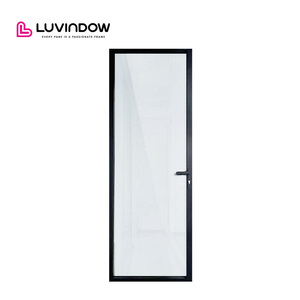
Slim Profile Aluminum Glass Doors with Thermal Insulation for Exterior and Living Room
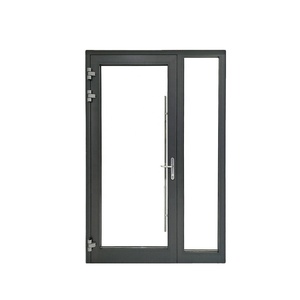
Superhouse Casement Doors Impact Residential Unequal Aluminium Double Single Hinged Door
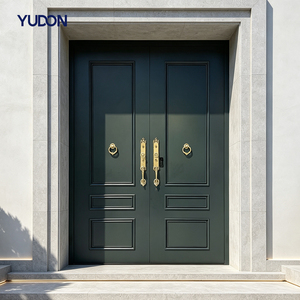
YUDON DOOR Aluminum Armored Door Entrance Security Soundproof Heavy Duty Hinge Bullet Proof
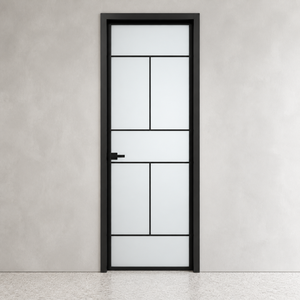
Ultra Slim Aluminum Hinged Glass Door Narrow Frame Minimalist Design Sound Insulation
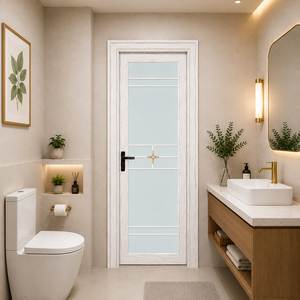
Moisture Resistant Aluminum Bathroom Door With Frosted Glass for Hospitality Construction
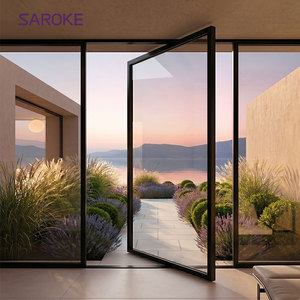
American Standard Thermal Break Soft Close Slim Double Glass Interior Pivot Door
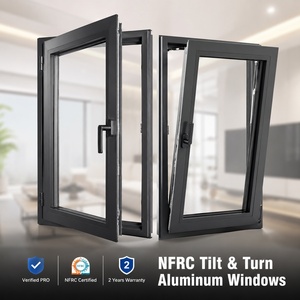
NFRC Tilt and Turn Narrow Frame Double Glazed Thermal Break Modern Residential Windows
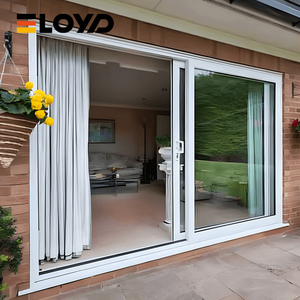
Eloyd Custom Modern Aluminum Glass Doors Hurricane Impact Lift Slide for Villa Garden
Engineering Structural Integrity: Architectural Aluminium Hinged Doors
A technical breakdown of extrusion metallurgy, polyamide thermal barrier formulation, and multi-point sealing dynamics for international building envelope consultants.
Architectural aluminium hinged doors serve as critical structural barriers within the building envelope, enduring dynamic wind pressure, differential thermal stresses, water ingress challenges, and continuous cyclic operation. In commercial, high-traffic residential, and luxury hospitality settings, specifiers demand uncompromising dimensional tolerances and long-term mechanical reliability. To exceed global fenestration performance criteria (including AS 2047, AAMA/WDMA/CSA 101/I.S.2/A440, and EN 14351-1), precision engineering begins at the raw billet stage and extends through multi-chamber thermal extrusion design.
Alloy Metallurgy & Temper
DERCHI utilizes high-purity architectural-grade 6063-T5 and T6 aluminium profiles, delivering superior surface smoothness for anodizing and electrostatic powder coating, combined with structural elongation properties that resist fatigue under cyclical structural loading.
- Nominal Wall Thickness: 2.0mm - 3.2mm
- Ultimate Tensile Strength: ≥ 240 MPa
- Hardness: ≥ 12 Webster (HW)
Thermal Barrier Architecture
Thermal breaks prevent internal condensation and conductive heat transfer. We engineer multi-chamber Polyamide PA66 GF25 (25% glass fiber reinforced) structural insulation struts crimped into dedicated extrusion pockets with knurled roll-formed gripping teeth.
- Thermal Break Depth: 24mm - 39mm
- System U-Factor: Down to 1.1 W/(m²·K)
- Linear Expansion matching aluminium
Triple Gasket Gland Sealing
Weatherability depends on pressure-equalized sealing planes. Continuous vulcanized EPDM dense and sponge co-extruded gaskets prevent air leakage and driving-rain penetration, tested under cyclonic conditions up to 4500 Pa positive/negative wind loads.
- Co-extruded EPDM sponge corner blocks
- Class 4 Air Permeability (EN 12207)
- Water Resistance up to Class E900
Engineering Specification Matrix: Hinged Door Performance Classes
Comparative mechanical and thermal indices across DERCHI commercial and high-end residential aluminium hinged systems.
| Performance Dimension | Architectural Slim Hinged | Heavy-Duty Armored Entry | AS 2047 Cyclone Impact Casement | Hospitality Soundproof Casement |
|---|---|---|---|---|
| Profile Depth | 55mm – 65mm | 85mm – 105mm | 75mm – 90mm | 60mm – 70mm |
| Visible Sightline (Stile/Rail) | Ultra-Slim 28mm | 120mm Reinforced | 68mm Structural | 45mm Clean Face |
| Glass Pocket Configuration | 24mm – 32mm DGU | 42mm Multi-Laminate Armor | 36mm SGP Cyclone IGU | 34mm Acoustic PVB Triple |
| Acoustic Attenuation (Rw / STC) | 32 dB – 36 dB | 42 dB – 48 dB | 38 dB – 41 dB | Up to 45 dB |
| Maximum Design Wind Load | 1,800 Pa (Standard Service) | 3,500 Pa (Armored Infill) | AS 2047 N6 (> 4,500 Pa) | 2,200 Pa (Hotel Façade) |
| Operating Cycle Durability | 100,000 Cycles | 250,000 Cycles | 150,000 Cycles | 200,000 Cycles |
| Locking & Hardware System | Concealed Magnetic Drive | 7-Point Anti-Intrusion Gear | Stainless 316 Multi-Cam | Architectural Lever Roller |
Future Procurement Trends in Aluminium Hinged Doors (2026–2030)
Strategic analysis for procurement executives, EPC general contractors, and facade consultants navigating next-generation building envelopes.
1. Ultra-Narrow Visual Stile Integration with Structural Silicone Glazing
Architectural aesthetics increasingly demand the total dematerialization of boundary frames. The market is shifting from traditional 80mm stiles down to ultra-minimalist 16mm to 35mm sightlines without sacrificing structural moment of inertia. Achieving this requires structural silicone bonding (two-component neutral cure) directly adhering the insulated glass unit (IGU) to the internal chassis, transforming the glazed unit into a primary shear-resisting diaphragm.
For B2B importers, specifying systems with engineered factory pre-glazing guarantees perimeter seal reliability under dynamic thermal expansion, eliminating on-site gasket shrinkage and uneven glass displacement common in manual field assemblies.
2. Extreme Tropical Climatic Mitigation & Coastal Resilience
With urban centers expanding across coastal typhoon corridors throughout Southeast Asia, the Pacific Basin, the Caribbean, and Florida, demand for certified hurricane-rated hinged systems is expanding rapidly. Standard architectural doors fail through cyclical pressure reversal, causing corner frame rupture and perimeter gasket unseating.
Future-proof procurement strategies mandate compliance with AS 2047 N6 and ASTM E1886/E1996 cyclic pressure regimes. Extrusions must incorporate engineered internal water diversion weeps with gravity check-valves to resist dynamic storm surges exceeding 600 Pa without internal leakage.
3. Concealed Pivot Axis & Heavy-Duty Multi-Axis Hidden Hinges
Visible surface-mounted barrel hinges are rapidly being phased out in modern high-spec designs in favor of concealed 3D-adjustable multi-axis hinges and floor-concealed hydraulic self-closing pivot pivots. These assemblies carry single door leaves weighing in excess of 250 kg to 400 kg while maintaining zero profile reveal interruption.
DERCHI engineers incorporate marine-grade 304/316 stainless steel forged hinge links, Teflon self-lubricating bushings, and three-dimensional eccentric cam adjustments (±3mm horizontal, ±2mm vertical, ±1.5mm gasket compression) to ensure installation calibration on out-of-plumb concrete openings.
4. Low-Carbon Billet Sourcing & High-Durability Surface Science
Global ESG mandates and LEED v4.1 certification requirements place heavy emphasis on embodied carbon within facade systems. Next-generation procurement favors suppliers using scrap-recycled hydro-electric powered aluminium billeting, achieving carbon intensities below 4.0 kg CO₂e per kg of aluminium.
Surface finishes have progressed from conventional polyester powders to Qualicoat Class 2 / AAMA 2605 fluorocarbon PVDF systems and 25μm architectural hard-coat anodizing. These surface chemistries prevent chalking, color fading, and pit corrosion even within C5-M marine/industrial atmospheric exposure zones.
Manufacturing Infrastructure & Quality Engineering (DERCHI Foshan Base)
How rigorous CNC fabrication, automated thermal break insertion, and full-scale pre-assembly eliminate site commissioning liabilities.
Guangdong Dejiyoupin Doors and Windows Co., Ltd. (DERCHI) operates one of Southern China's largest intelligent fenestration production centers, spanning 180,000 square meters in Shishan Town, Nanhai District, Foshan. Our production ecosystem integrates automated 5-axis profile machining centers, pneumatic multi-head precision miter saws, electronic corner crimping stations, and computer-controlled polyurethane thermal barrier rolling lines.
Full CAD/BIM Shop Drawings
Our dedicated engineering department generates parametric CAD elevation schedules, anchoring details, structural wind load calculations, and BIM models for frictionless integration into architectural master projects.
100% Pre-Hung Inspection
Prior to export packaging, every aluminium hinged door undergoes mock-up assembly in specialized test fixtures. Perimeter gaps, latch alignment, handle torque, and multi-point deadbolt throws are verified to millimeter precision.
Global Export Logistics Packaging
Each door unit is cushioned in peelable protective film, wrapped in closed-cell PE foam, and crated in fully fumigated, steel-banded plywood enclosures with desiccants to survive ocean transit without saltwater oxidation or impact breakage.
Procurement & Technical FAQ: Aluminium Hinged Doors
Authoritative, data-backed guidance answering the most critical structural, compliance, and logistic inquiries from global buyers.
What testing certifications should an overseas buyer mandate for cyclone-prone and high-wind project zones?
For regions vulnerable to tropical storms, typhoons, or cyclonic events (such as the Philippines, Vietnam, Coastal Australia, and the US Gulf Coast), standard window/door certs are inadequate. Buyers should mandate testing under AS 2047 (reaching class N6 / >4500 Pa ultimate wind pressure) or ASTM E1886 / ASTM E1996 Large Missile Impact Level D. These standards verify structural frame deflection limits, cyclonic differential air pressure water tightness (minimum 450 Pa static water penetration resistance), and the ability of laminated interlayers (such as 1.52mm or 2.28mm Kuraray SentryGlas SGP) to keep building interiors uncompromised following repetitive flying debris impacts.
How does Polyamide PA66 GF25 thermal break technology compare to polyurethane pour-and-debridge?
Polyamide PA66 GF25 is mechanically superior for oversized architectural hinged doors. Polyurethane pour-and-debridge is susceptible to structural creep, shear plane failure under continuous thermal cycling, and limited cavity width. Crimped Polyamide bars reinforced with 25% transverse glass fibers offer nearly identical thermal expansion coefficients to aluminium (preventing the bi-metallic curling or bowing effect in extreme heat/cold gradients), while allowing multi-cavity designs up to 39mm in width that incorporate specialized internal low-emissivity thermal foil flags to reach passive-house level U-factors.
What are the manufacturing lead times and standard MOQs for bespoke OEM/ODM hinged door orders?
For custom architectural hinged door projects requiring bespoke extrusion finishes, tailored CAD shop drawings, and specialized glass configurations, our production lead time at DERCHI is typically 25 to 35 calendar days following technical drawing sign-off and deposit receipt. In terms of minimum order quantities (MOQ), our factory structure supports both full container loads (FCL) for developers and distributors, as well as customized, project-specific quantities (LCL crated) starting at 20 square meters for bespoke luxury villa developments.
Which surface coating classification is required for coastal beachfront villa developments?
Within 500 meters of open seawater (C5-M extreme marine corrosive classification), standard 60-micron polyester coatings will succumb to filiform corrosion and blistering within 2 to 3 years. We specify AAMA 2605 compliant 70% Kynar 500 / Hylar 5000 PVDF fluoropolymer wet-spray coatings (3-coat system: primer, color, and fluoropolymer clear topcoat, total DFT ≥ 35μm), or Qualanod Class 1 architectural hard-anodizing with a guaranteed oxide film thickness of 25 microns. These finishes pass 4,000-hour continuous neutral salt spray (ASTM B117) and acetic acid salt spray testing without surface degradation.
How does DERCHI ensure hardware reliability on oversized single-leaf hinged doors weighing over 180 kg?
Oversized heavy leaves present a risk of progressive diagonal sag that leads to latch jamming and lower threshold binding. To prevent this, DERCHI utilizes internal diagonal structural glazing blocks (heel-and-toe glass packing) transferring glass weight directly into the hinge stile. In addition, our hinge hardware consists of heavy-gauge extruded aluminium clamping bases or 304-grade stainless steel concealed multi-link pivots secured with thread-locking stainless machine bolts into 6mm internal steel reinforcement backing plates, tested through 200,000 continuous opening and closing cycles without mechanical failure.
Can DERCHI accommodate integration with automated electronic access control and smart building automation (BMS)?
Yes. Through our ODM engineering pipeline, our profiles are pre-machined with internal concealed cable pathways, flexible wire transfer loops, and precision mortise pockets designed to accept motorized multi-point locks (e.g., German Siegenia Genius, Winkhaus blueMatic, or Dormakaba digital access drives). These systems integrate directly with smart biometric readers, face recognition scanners, RFID controllers, and master RS-485 / dry-contact building automation interfaces for complete smart home and commercial security networking.