Featured Architectural Safety & Fenestration Systems
Factory-direct OEM/ODM aluminium safety doors, panoramic pivot entrances, security screens, and acoustic sliding assemblies configured for extreme climatic durability, high security, and aesthetic impact.
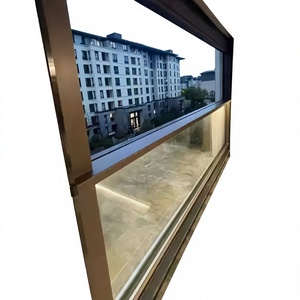
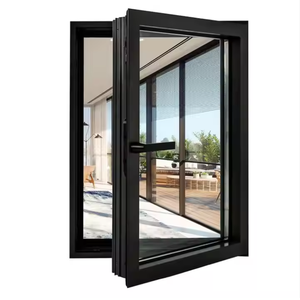
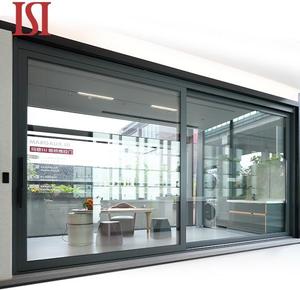

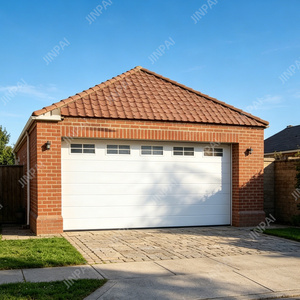
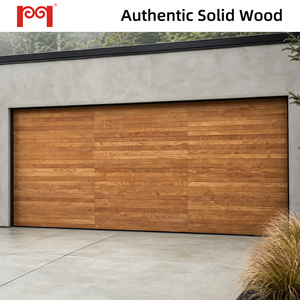
2026 New Infinity Flush Panel Smooth Horizontal Modern Tinted Glass Design Aluminum Sterling Garage Door
Structural Architecture of High-Performance Aluminium Safety Doors
Demystifying profile alloy chemistry, multi-chamber thermal breaks, shear stress limits, and ballistic intrusion defense mechanics required for world-class architectural fenestration.
1. Metallurgical Formulation: 6063-T6 vs. 6061-T6 Extrusion Optimization
In high-security fenestration engineering, structural performance begins at the atomic composition of the aluminium billet. Standard commercial residential doors utilize base 6063-T5 aluminium with tensile strengths hovering near 145–185 MPa. In contrast, DERCHI safety doors engineered for extreme impact loads, coastal typhoon conditions, and forced-entry deterrence utilize homogenized prime-billet 6063-T6 or 6061-T6 aeronautical-grade aluminium alloys, delivering guaranteed tensile yield strengths exceeding 240 MPa and ultimate hardness ratings above 12 Webster (HW).
Our profile extrusions maintain engineered wall thicknesses ranging from 2.0mm to 3.8mm across primary structural webs. Internal webbing is mathematically arrayed via Finite Element Method (FEM) stress modeling to dissipate static deflection loads under hurricane forces while denying cutting torch and hydraulic wedge penetration. The extrusion process incorporates online quenching followed by precision artificial aging in computer-controlled convection furnaces, locking structural grain boundary alignment and eliminating latent micro-porosity.
2. Multi-Chamber Polyamide PA66 GF25 Thermal Barriers & Acoustic Decoupling
High structural strength in metal doors often introduces thermal conductivity vulnerabilities, leading to severe condensation, air conditioning energy loss, and acoustic bridging in humid tropical climates like Southeast Asia or extreme northern American zones. DERCHI overcomes this via precision isothermal barrier alignment using German Technoform Techno-Polymer PA66 GF25 (polyamide reinforced with 25% transverse glass fiber).
This composite break exhibits a linear coefficient of thermal expansion closely matching aluminium (2.3 × 10⁻⁵ /K), preventing inter-profile delamination or mechanical shear failure under extreme diurnal thermal cycles. Furthermore, our hollow chambers are backfilled with aerated polyisocyanurate (PIR) cores or hydrophobic acoustic acoustic foams, driving overall thermal transmittance down to Uf ≤ 1.35 W/(m²·K) while attenuating airborne ambient decibels (Rw / STC 42+ dB) for quiet sanctuary living.
3. Multi-Point Perimeter Kinetic Interlocking & Ballistic Anti-Pry Engineering
A safety door is only as robust as its engagement points within the surrounding subframe. DERCHI OEM/ODM engineering implements continuous full-perimeter locking hardware with European RC3 / PAS 24 rated security geometry. Hardened stainless steel conical roller cams and dynamic mushroom pins interface with CNC-milled strike plates fastened directly into structural cold-rolled steel sub-chassis channels.
- Anti-Drill Manganese Reinforcement: Lock bodies and gear transmission boxes are shielded by 3.0mm manganese steel anti-penetration plates, thwarting cordless high-speed carbide drills and pick extraction.
- Concealed Heavy-Axis Pivot Engineering: For oversized pivot gates up to 800 kg per sash, self-lubricating, needle-bearing top and floor pivots allow finger-touch articulation while resisting hydraulic floor jacks and vertical lifting attacks.
- Integrated Biometric Smart Access: Architectural panels feature flush-milled semiconductor biometric fingerprint sensors, 3D structured facial scanning, and encrypted Zigbee/KNX building automation integration without compromising structural leaf rigidity.
| Performance Standard | DERCHI Test Benchmark | Reference Test Protocol | Architectural Application |
|---|---|---|---|
| Wind Pressure Resistance | Pass ≥ 4,500 Pa (N6 Cyclonic Level) | AS 2047 / ASTM E330 | Coastal Villas & Towers |
| Water Penetration Defense | No leakage at 700 Pa Static Test | AS 2047 / EN 12208 Class 9A | Typhoon & Monsoon Zones |
| Air Infiltration Sealing | Air Tightness Class 4 (≤ 0.5 m³/h·m) | EN 12207 / AAMA 101 | Passive House & HVAC Saving |
| Forced Entry Deterrence | RC2 / RC3 / PAS 24 Certified | EN 1627-1630 / AS 5039 | High-Security Estates |
| Salt Spray Corrosion Test | 2,000 Hours Neutral Salt Spray (NSS) | Qualicoat Class 2 / ASTM B117 | Marine Beachfront Projects |
| Acoustic Isolation Rating | Rw = 42 dB / OITC 34 | ISO 10140-2 / ASTM E90 | Urban Hotel & Luxury Mansions |
Guangdong Dejiyoupin (DERCHI) Industrial Strength
Headquartered in Shishan Town, Nanhai District, Foshan—the world's foremost aluminium manufacturing hub—DERCHI represents 25+ years of relentless precision manufacturing.

Foshan Smart Factory Ecosystem
Our 180,000 square-meter production facility integrates German elumatec 5-axis CNC machining stations, automatic multi-angle saw cutting lines, robotic laser seam welding, and computerized vertical fluorocarbon (PVDF) electrostatic powder coating lines. We eliminate intermediary markups and supply chain volatility by handling extrusion post-finishing, insulated glass lamination, hardware integration, and multi-stage testing completely in-house.
From initial architect CAD/BIM shop drawings to custom structural extrusion dies, our team of 600+ specialists ensures rapid prototyping, dimensional tolerances within ±0.5mm, and prompt sea-freight dispatch to Manila, Bangkok, Ho Chi Minh City, Jakarta, Singapore, Vancouver, Sydney, and Los Angeles.
Global Sourcing Shifts in Architectural Aluminium Doors (2026–2030)
Commercial general contractors, facade consultants, and luxury homebuilders are fundamentally recalibrating their door procurement metrics. Key structural macro-trends reshaping global tenders include:
1. Single-Source Fenestration Enclosures
Developers are phasing out fractured procurement where doors, panoramic sliding systems, interior fire leaves, and garage systems are split across four separate vendors. Consolidating full project schedules with DERCHI minimizes site coordination collisions, guarantees uniform anodized or PVDF color matching, streamlines sea container cubing, and reduces logistics overhead by up to 28%.
2. Embodied Carbon & EPD Certification
Strict ESG guidelines across North America, Europe, and prime Southeast Asian commercial developments now require Environmental Product Declarations (EPDs). The market demand is swinging rapidly toward certified secondary recycled billet aluminium smelted via hydro-power. DERCHI's low-carbon metallurgy ensures lower cradle-to-gate embodied carbon without compromising yield tension.
3. BIM LOD 350 Digital Twin Fabrication
Specifiers no longer accept generic PDF cuts. Contract awards depend on parametric Autodesk Revit BIM families populated with precise thermal conductivity, structural dead-load coefficients, glazing optical data, and exact hardware cutouts. DERCHI delivers native LOD 350 models that drop seamlessly into main contractor clash-detection software.
Technological Frontiers in Aluminium Safety Doors
Architectural design is demanding vanishingly slender sightlines combined with massive structural scale and invisible, automated perimeter defenses.
Monumental Pivot Engineering
Single-leaf entrances are scaling up to 4 meters high and 2.2 meters wide. Utilizing aviation-grade carbon-fiber and titanium reinforcements inside the core prevents thermal bowing ("bimetallic effect") when exposed to 45°C exterior heat and 20°C interior air-conditioned spaces.
Invisible Smart Integration
Gone are clunky surface-mounted keypad locks. Next-gen aluminium doors seamlessly conceal multi-spectral facial recognition cameras within the structural thermal break, paired with concealed motorized shoot-bolts and wireless inductive hinge-power transfer.
Hyper-Durable Marine Coatings
Advancements in 3-coat fluorocarbon PVDF resins and micro-arc oxidation anodizing allow DERCHI doors to withstand salt fog, ultra-violet degradation, and high humidity in beachfront luxury locations such as Phuket, Bali, Da Nang, and Miami without chalking or pitting.
Cast Aluminium Armor Cladding
Integrating 8mm–12mm solid cast-aluminium relief plates directly over broken-bridge inner chassis cores gives the authentic tactile grandeur of cast bronze or solid timber, while achieving unyielding anti-saw, anti-drill, and ballistic impact resistance.
Frequently Asked Technical & Procurement Inquiries
Authoritative guidance for architects, quantity surveyors, facade contractors, and international door importers.
What structural alloy specifications define DERCHI safety doors against commodity extrusions?
Unlike commodity aluminium doors built with thin scrap-melted profiles, DERCHI uses strictly 100% primary ingot 6063-T6 or 6061-T6 metallurgical extrusions with a minimum profile web thickness of 2.0mm–3.5mm. Our profiles undergo computer-monitored artificial aging, yielding a Rockwell B hardness ≥ 55 and tensile strengths above 240 MPa. This robust core prevents deflection during forced pry attacks, high cyclonic pressure cycles, or mechanical sagging on wide spans.
How does the AS 2047 N6 standard guarantee typhoon and cyclone resistance?
The AS 2047 N6 certification requires products to withstand the most severe category of positive and negative wind pressures (≥ 4,500 Pascals) alongside high-pressure cyclical water penetration testing at 700 Pascals without frame leakage. DERCHI doors incorporate dual-cavity EPDM automotive co-extruded gaskets, reinforced corners with hydro-crimped cast cleats, and internal drainage baffles that ensure airtight and watertight security even during 250 km/h typhoon conditions.
How does DERCHI prevent thermal bowing (bimetallic warping) on large-scale pivot doors?
Large exterior doors with dark finishes face thermal differential expansion: outer skin temperatures can climb to 65°C under direct solar radiation while interior faces remain at 21°C. This causes conventional doors to bow, jamming lock bolts. DERCHI mitigates this by integrating patented anti-bi-metal split-extrusion polyamide thermal isolators and internal stabilizing carbon-steel tension rods. These rods can be micro-adjusted post-installation, keeping leaves perfectly plumb across decades of seasonal exposure.
What is the standard OEM/ODM turnkey production workflow from drawings to site delivery?
The engineering process begins with client CAD/BIM schedule review. Our technical department returns shop drawings with structural calculations within 48 hours. Following approval and profile die extrusion (if custom tooling is required), pilot samples are fabricated for dimensional verification. Production proceeds across CNC milling, multi-point hardware installation, automated coating, and individual pre-assembly. Every door undergoes 100% factory pre-hanging check before being encased in multi-layer foam, bubble-film, and fumigated solid timber export crates.
What surface finishes are recommended for harsh C4/C5 marine coastal environments?
For marine beachfront installations within 1 kilometer of breaking surf (e.g., Caribbean, Florida, Southeast Asian islands), we specify a Qualicoat Class 2 / AAMA 2605 certified fluorocarbon 3-coat PVDF finish (minimum 70% Kynar 500 resin base) or 25-micron architectural hard-coat anodization. This specialized coating system passes 2,000+ hours of continuous ASTM B117 salt spray exposure without filiform corrosion, blistering, or gloss degradation.
Can DERCHI match custom hardware, smart home KNX systems, and electric strikes?
Yes. As a pure OEM/ODM factory, our CNC machining centers mill exact mortises for global hardware brands including Hoppe, Siegenia, GU, Roto, Dormakaba, and Yale. Furthermore, our engineering team regularly integrates 24V DC motorized multipoint latch systems, concealed door contacts for perimeter intrusion alarms, hidden magnetic reed switches, and fingerprint/retina scanning modules compatible with residential KNX, Crestron, or Control4 automation backbones.