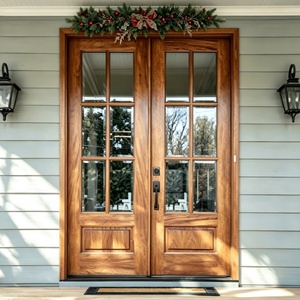
 Triple Glazed
Factory Direct Collections
Featured OEM/ODM Brown Aluminum Door Systems
Precision-engineered aluminum entrance doors, heavy-duty pivots, sliding profiles, and thermal break bi-folding systems manufactured to stringent CE, AS 2047, and ISO 9001 quality criteria.
Triple Glazed
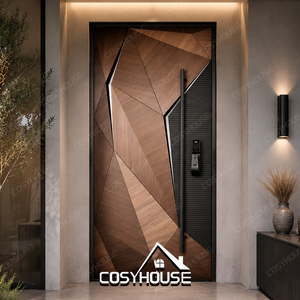 Villa Project Grade
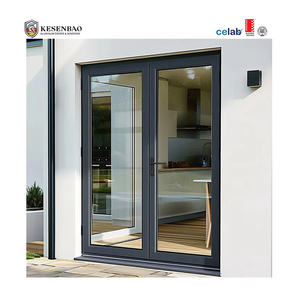 Heavy Duty Swing
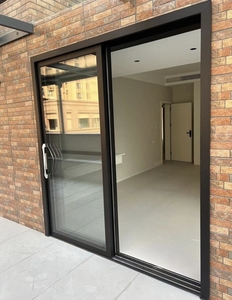 Panoramic Sightline
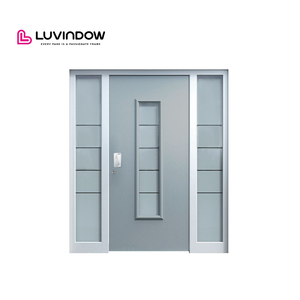 NA Builder Spec
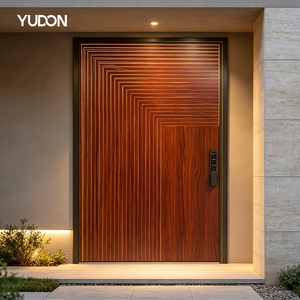 AS 2047 N6 / Impact
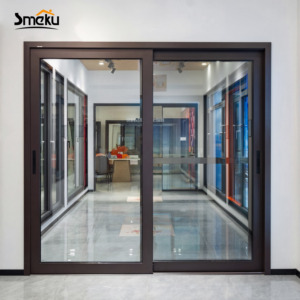 Thermal Break
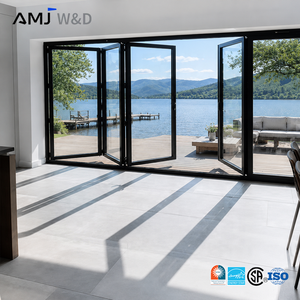 Accordion System
Engineering Whitepaper
Surface Metallurgy & Structural Dynamics of Architectural Brown Doors
Analyzing the metallurgical advantages, extrusion matrix formulations, and precision coating standards governing contemporary OEM/ODM brown aluminum fenestration.
In modern high-performance building envelopes, the specification of architectural doors transcends mere aesthetic preference. The industry has observed an accelerating surge toward warm earthy tones, deep bronze, champagne brown, and textured mocha powder-coat profiles. Unlike conventional carbon steel doors prone to electrolytic degradation or authentic solid timber susceptible to moisture-induced rot and directional expansion, custom-extruded 6063-T5 and 6063-T6 aluminum alloy door assemblies deliver an unmatched strength-to-weight ratio, structural inertia, and longevity under adverse environmental conditions.
When engineering an architectural entrance system intended for coastal villas, high-rise luxury condominiums, or high-traffic hospitality facilities, selecting the appropriate aluminum brown door factory requires an authoritative grasp of surface finishing technologies. Standard brown finishes are achieved across three industrial vectors: Fluorocarbon PVDF (Polyvinylidene Fluoride) 3-Coat/3-Bake Systems, Qualicoat-Certified Electrostatic Architectural Powder Coating, and Electrolytic Anodizing (Color Class AA15 to AA25). Each modality presents defined performance envelopes regarding ultraviolet reflectance, salt-spray corrosion thresholds, and surface hardness.
| Coating Technology | Film Thickness | AAMA / Qualicoat Standard | Salt Spray Resistance | Expected Color Fastness (ΔE) | Recommended Project Typology |
|---|---|---|---|---|---|
| Fluorocarbon PVDF (Kynar 500) | ≥ 35 - 45 μm | AAMA 2605 / 10-Yr South Florida | 4,000+ Hours ASTM B117 | < 5 units @ 20 Years | Coastal Resorts, High-Rise Envelopes |
| Super-Durable Powder Coating | 60 - 80 μm | AAMA 2604 / Qualicoat Class 2 | 2,500 Hours ASTM B117 | < 5 units @ 10 Years | Residential Villas, Commercial Entrances |
| Electrolytic Bronze Anodizing | 20 - 25 μm (Class I) | AAMA 611 / ISO 7599 | 3,000 Hours CASS Tested | Zero fading (inorganic pigment deposition) | High-Wear Thresholds, Brutalist Facades |
| 3D Thermal Vacuum Sublimation (Woodgrain) | 65 - 85 μm total | Qualideco Standard | 1,500 Hours ASTM B117 | < 5 units @ 8-10 Years | Biophilic Residential, Eco-Retreats |
Information Gain Insight: The thermal performance of an aluminum brown door is fundamentally governed by the cross-sectional geometry of its thermal barrier. High-end OEM suppliers must specify Polyamide PA66 GF25 insulation bars (reinforced with 25% chopped glass fiber). This mitigates thermal bridging across extreme diurnal temperature deltas, achieving overall door assembly U-values down to 1.1–1.4 W/m²·K when paired with argon-filled low-emissivity (Low-E) double or triple glazed insulated glass units (IGU).
Strategic Forecasting
Future Procurement Trends in Architectural Aluminum Systems
Navigating the technological transitions shaping B2B procurement across commercial developers, general contractors, and overseas window/door distributors through 2030.
1. Severe Climate & Cyclone Resiliency
Global building codes increasingly mandate stringent structural certifications. Procuring developers now insist on systems tested to AS 2047 N6 (highest Australian rating), ASTM E1886/E1996 missile-impact ratings, and high-pressure wind resistance (up to 4500–5000 Pa). Future-proof brown pivot and casement doors feature heavy internal steel sub-frames and engineered perimeter multi-point compression gaskets.
2. Micro-Sightline Biophilic Profiles
Architects are driving demand for interlocking vertical mullions under 20mm that maximize daylighting while offering rich earthen, matte chocolate, and dark bronze textures. Engineering this minimalist aesthetic without sacrificing moment of inertia (Ix/Iy) necessitates thick-walled structural profiles (up to 3.0mm primary wall thickness) and concealed load-bearing hinge mechanisms.
3. Mechatronic IoT & Concealed Automation
The standard mechanical lockset is yielding to fully integrated mechatronic access systems. OEM door manufacturers are redesigning internal profile chambers to accommodate concealed motorized multi-point locks, 3D facial recognition sensors, biometric fingerprint relays, and wireless power-transfer hinges calibrated for Smart Home automation protocols (KNX, Zigbee, Control4).
4. Circular Metallurgy & Low-Carbon Billets
With EU Carbon Border Adjustment Mechanism (CBAM) enforcement and LEED v4.1 certifications, enterprise procurement officers require verified Environmental Product Declarations (EPD). Forward-thinking aluminum extrusion foundries utilize prime post-consumer recycled scrap (scrap ratios exceeding 75%) powered by hydroelectric smelting to slash embedded carbon.
5. Bespoke Monolithic Oversized Pivots
Entrance design trends favor majestic scale. Single-leaf pivot panels spanning up to 2000mm in width and 4000mm in height weighing in excess of 450kg are becoming standard in modern estates. These assemblies require custom floor spring hydraulics with 360-degree dampening, adjustable closing resistance, and wind-brake braking actions.
6. Acoustic Isolation Engineering
Urban density demands enhanced acoustic transmission loss (Sound Transmission Class / Rw values). Advanced OEM factories achieve acoustic dampening above 40–44 dB by combining multi-cavity EPDM foam composite co-extruded gaskets, PVB/SentryGlas acoustic interlayers, and inert gas (argon/krypton) filled warm-edge glass spacers.
Guangdong Dejiyoupin Doors and Windows Co., Ltd. (DERCHI)
Operating as a Top 10 premium brand among China's architectural fenestration manufacturers, DERCHI commands an expansive 180,000 square meter industrial manufacturing base in Foshan, Guangdong. Backed by 25+ years of specialized engineering, our facility exports to over 60 countries across North America, Europe, Australia, and Southeast Asia.
180,000㎡
Smart Production Base
600+
Specialized Craftsmen
100+
Certificates & Patents
25+
Years Global Track Record

- International Certification Compliance: Our product series have passed rigorous AS 2047 N6 testing (wind pressure, water penetration, and air infiltration), CE certifications, ISO 9001 quality audits, and UL fire ratings.
- End-to-End OEM/ODM Flexibility: From preliminary shop drawings and architectural CAD/BIM modeling to custom die extrusion, PVDF fluorocarbon brown coating, and multi-point hardware integration.
- Recognized Global Showcase: Acclaimed performance at premier global exhibitions, including WORLDBEX 2025 in the Philippines, delivering mission-critical supplies to high-end villa communities and luxury hospitality projects.
- Rigorous Quality Assurance: In-house testing laboratory equipped with pneumatic cycle endurance rigs, thermal chamber analyzers, and salt spray fog chambers guaranteeing zero-defect export packaging.
Procurement Due Diligence
Frequently Asked Questions for B2B Importers & Contractors
Detailed answers addressing engineering tolerances, coating longevity, structural compliance, packaging, and logistical lead times.
What are the primary differences between 6063-T5 and 6063-T6 aluminum alloys for door frames?
While both temper designations utilize the same 6063 architectural alloy (silicon-magnesium formulation), 6063-T6 undergoes rigorous artificial aging at elevated temperatures following extrusion, whereas T5 is artificially cooled from an elevated temperature shaping process and aged. This confers 6063-T6 with a higher ultimate tensile strength (minimum 205 MPa vs. 150 MPa for T5) and higher yield strength (minimum 170 MPa vs. 110 MPa). For oversized exterior entrance doors and high-windload pivot systems, DERCHI specifies 6063-T6 to eliminate frame deflection under extreme cyclonic shear.
How do you guarantee that a brown finish will not fade or chalk in intense tropical sunlight?
Standard architectural powder coatings degrade quickly under high UV-index exposure, leading to micro-cracking and resin binder oxidation (chalking). For extreme ultraviolet zones such as Southeast Asia, Florida, the Middle East, or Australia, we deploy AAMA 2605 compliant Fluorocarbon PVDF coatings (70% Kynar 500 resin base) or Qualicoat Class 2 super-durable powders. These formulations resist solar radiation breakdown, maintaining a color variation delta-E (ΔE) under 5 units over a 15 to 25 year warranty lifecycle.
What structural standard does AS 2047 N6 entail, and why is it critical for cyclone regions?
AS 2047 is the Australian national standard for windows and external glazed doors, recognized internationally as one of the most stringent envelope testing protocols. The N6 classification represents the highest non-cyclonic wind classification (also matching severe cyclonic dynamic pressures), requiring assemblies to withstand Ultimate Serviceability Limit State (SLS) and Ultimate Limit State (ULS) positive and negative wind pressures in excess of 4,000 to 5,000 Pa without structural displacement, dislodgement, or water ingress above allowable limits.
Can DERCHI customize large-scale pivot doors with concealed drop-down acoustic seals?
Yes. As a full-tier OEM/ODM manufacturer, we regularly engineer oversized pivot systems measuring up to 2000mm × 4000mm. To overcome traditional perimeter air leakage inherent in pivot geometries, we incorporate recessed mechanical automatic drop-down door bottom seals and top brush-blade gaskets that engage automatically as the panel swings into its latched dead-center position, ensuring superior air tightness (Class 4) and acoustic isolation.
What is the standard export packaging protocol to prevent transit scratches and sea-fog corrosion?
Every finished profile undergoes a strict 5-layer protective wrapping sequence: 1) Low-tack electro-protective polyethylene film on all coated metal faces; 2) Wrap-around heavy-density pearl cotton / EPE foam sheets; 3) Heavy gauge cardboard corner edge protectors; 4) Waterproof heat-shrink poly wrap; and 5) Fully enclosed ISPM 15 compliant fumigated solid plywood crates or steel-reinforced export A-frames for heavy glass assemblies. This preserves finish integrity across 30+ day ocean transit itineraries.
How do we initiate custom OEM tooling and what is the typical turnaround schedule?
Clients provide initial CAD drawings, BIM models, or architectural opening schedules. Our engineering department returns stamped production shop drawings within 48 hours. If custom aluminum extrusion dies are required, die-fabrication and sample profile extrusion takes approximately 12–15 business days. Once surface finish samples are client-approved, volume production schedules average 25–35 days depending on hardware complexity and glass configuration specifications.
Plan Your Architectural Fenestration Schedule Today
Whether you are sourcing custom thermal-break brown pivot doors for a high-end estate, outfitting a multi-residential master development, or expanding your national distribution inventory, our English-speaking technical sales engineers are ready to assist with CAD drawings, static load calculations, and competitive factory-direct quotations.