Precision-Engineered Impact Door Assemblies
Direct from our 180,000 m² state-of-the-art smart fabrication facility. Every model integrates thermal-barrier 6063-T6 aluminum alloys, structural PVB/SentryGlas® laminations, and heavy-duty multi-point locking gear.
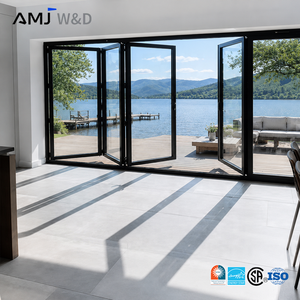
Thermal Break Bi-Fold Accordion Patio Door
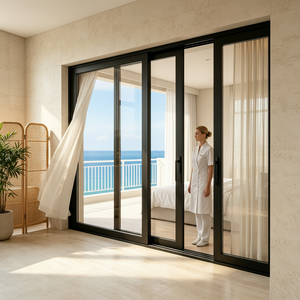
Hurricane-Resistant Double Glass Silent Sliding Door
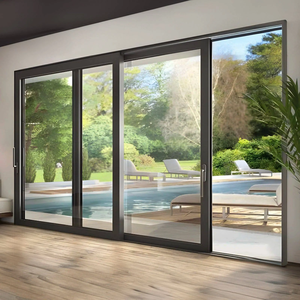
AS2047 Double Glazed Balcony Sliding Glass Door
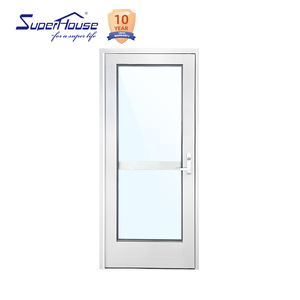
Commercial Heavy Duty Escape Impact Entrance Door
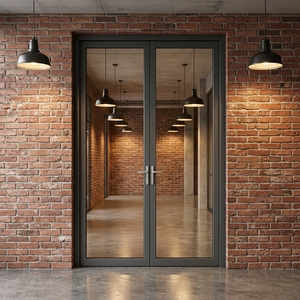
AS2047 Cyclone-Proof Outdoor Balcony Sliding Door
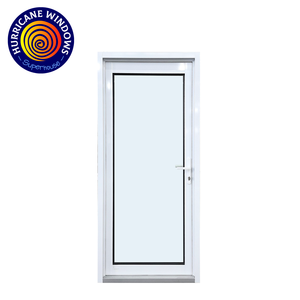
High-Security Impact Aluminum Front Entry Door
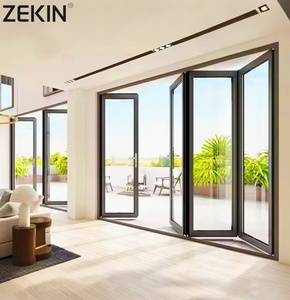
Insulated Heavy Impact Bi-Fold Folding Door System
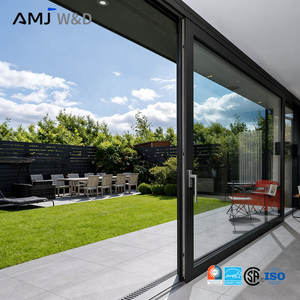
Custom Lift & Slide Laminated Glass Impact Door
Automated CNC extrusion, powder coating lines, and computerized assembly bays in Foshan, Guangdong.
Continuous R&D dedicated to structural envelope engineering and high-load architectural openings.
Full compliance with CE, ISO 9001, AS2047 N6, NFRC, and Miami-Dade protocol benchmarks.
Dedicated technical façade engineers, CAD draughtsmen, certified QC inspectors, and global project liaisons.
Structural Metallurgy & Impact Mechanics in Modern Fenestration
A rigorous examination of kinetic energy absorption, cycling static pressure thresholds, and thermodynamic decoupling across high-velocity hurricane zones (HVHZ).
Alloy Metallurgy & Profile Geometry
Aluminum impact doors designed for exterior building envelopes are fundamentally constrained by the structural modulus of the perimeter extrusion. While generic commercial architectural framing utilizes standard 6063-T5 aluminum, extreme impact resistance demands precision-quenched 6063-T6 or 6061-T6 structural alloys exhibiting ultimate tensile strengths exceeding 205 MPa (30,000 psi) and yield strengths beyond 170 MPa.
Under our ISO 9001 quality management framework, wall thicknesses across load-bearing stiles, meeting rails, and corner astragals are intentionally specified between 2.0 mm and 3.5 mm. Internal reinforcement cavities receive localized, cold-rolled structural steel sleeves or solid corner cleat corner-crimping systems injected with two-part polyurethane structural adhesive. This prevents rail deflection and perimeter gasket disengagement under severe lateral positive and negative cyclic pressures.
Interlayer Dynamics: PVB vs. SentryGlas® (SGP)
The ballistic and impact performance of an architectural door relies entirely on laminated glass composite physics during large missile impact tests (9 lb 2x4 lumber projectile traveling at 50 ft/s or 34 mph per ASTM E1996 / TAS 201). While standard polyvinyl butyral (PVB) delivers adequate elongation to maintain weather-tight envelopes during moderate coastal storms, severe blast and Category 5 hurricane specifications mandate ionoplast interlayers (Kuraray SentryGlas®).
SGP ionoplast interlayers possess up to 5 times the tear strength and 100 times the post-break rigidity of conventional PVB sheets. In the event of catastrophic outer tempered glass breakage, the SGP composite maintains vertical architectural stance under cycling air loads (±9,000 cycles per TAS 203), completely mitigating building envelope depressurization which accounts for over 85% of roof failure events during hurricanes.
| Performance Parameter | Standard Commercial Sliding Door | OEM/ODM Heavy-Duty Impact Door | DERCHI Coastal Storm Armor Series | Test Standard Compliance |
|---|---|---|---|---|
| Design Pressure (DP Rating) | ±30 to ±40 PSF | ±65 to ±75 PSF | ±80 to ±100+ PSF | ASTM E330 / TAS 202 |
| Missile Impact Resistance | None (Tempered Safety only) | ASTM E1996 Missile Level D | TAS 201 Level D & Level E (50-80 ft/s) | ASTM E1886 / Florida HVHZ |
| Cyclic Wind Pressure Cycles | Static Only | 4,500 Cycles Positive / Neg | 9,000 Complete Dynamic Cycles | TAS 203 / ASTM E1886 |
| Water Penetration Resistance | 150 Pa - 200 Pa | 300 Pa - 450 Pa | 600 Pa - 720 Pa (15 PSF Hydrostatic) | AAMA 501.1 / AS2047 N6 |
| Thermal Conductivity (U-Factor) | U ≥ 0.65 W/m²K (Unbroken) | U ≤ 0.35 W/m²K (Polyamide Strip) | U ≤ 0.22 - 0.26 W/m²K (Multi-Chamber) | NFRC 100 / EN ISO 10077 |
| Acoustic Attenuation (STC) | STC 28 - 30 dB | STC 36 - 39 dB | STC 42 - 45 dB (Acoustic IGU) | ASTM E90 / ISO 717-1 |
Key Technological Trends in Impact Fenestration
Continuous evolution in architectural aesthetics, smart integration, and decarbonization is driving structural doors beyond passive weather protection.
Micro-Sightline Structural Framing
Historical hurricane doors relied on massive 120mm+ visual profiles to secure structural stiffness. Next-generation systems employ high-moment-of-inertia polyamide compound cavities with carbon-fiber reinforced composite cores. This enables ultra-slim interlocking stiles under 28mm while effortlessly withstanding 4500Pa gust forces.
Multi-Chamber Polyamide Thermal Isolators
With stringent global building energy directives (ASHRAE 90.1, Title 24, and European EPBD), impact systems must prevent massive thermal leakage. Modern engineering integrates 34mm multi-cavity, fiberglass-reinforced Polyamide (PA66GF25) thermal struts containing aerogel inserts to eliminate condensation in tropical and extreme climates.
Mechatronic Multi-Point Locking & Smart IoT
Gone are manual shoot-bolts that complicate residential operation. OEM architectures now integrate automated perimeter drive rods, high-torque European concealed locking motors, and secure dry-contact inputs compatible with KNX, Crestron, and biometric access management systems without degrading hurricane structural integrity.
Future Procurement Trends in Global Facade Sourcing
How developers, general contractors, and fenestration distributors are restructuring supply chains to mitigate tariff volatility, freight costs, and lead-time risks.
Consolidated Pre-Glazed Monobloc Shipments
Field glazing on multi-story jobsites results in ballooning local labor expenses and high risks of silicone contamination. Leading contractors now demand factory pre-glazed, structurally silicone-cured (SSG) door units shipped with custom lifting brackets ready for crane installation.
Direct OEM Engineering Collaboration via BIM
Procurement teams are shifting away from intermediate regional distributors toward factory-direct engineering integrations. Utilizing shared Autodesk Revit and 3D CAD modeling, custom extrusion dies and anchoring calculations are verified prior to container dispatch.
Certified Marine-Grade Coastal Powder Coatings
Near-ocean environments in Southeast Asia, the Caribbean, and coastal North America inflict catastrophic salt-spray corrosion on standard finishes. Procurement contracts now universally enforce AAMA 2605 / Qualicoat Class 2-3 fluoropolymer (PVDF) 70% Kynar coatings.
Turnkey OEM/ODM Manufacturing Infrastructure
We provide full-spectrum engineering, custom extrusion die cutting, performance testing, and multi-market certification for architectural brands and construction consortiums.
Custom Dies & FEA Structural Analysis
Our in-house design office creates specialized aluminum extrusion molds within 15 days. Finite Element Analysis (FEA) simulates wind deflections and stresses under specified building loads before metal is cast.
Multi-Axis Robotic Machining Centers
Double-mitre computerized saws and 4-axis machining centers ensure corner joints, lock-cavities, and drainage channels are executed within ±0.1mm tolerances for flawless atmospheric sealing.
In-House Air, Water & Impact Testing
We test full-scale mockups in our private test chamber prior to export dispatch. Finished assemblies receive multi-layer protective film, honeycomb corner guards, and heat-treated export plywood crating.
Frequently Asked Technical & Sourcing Questions
Direct technical answers addressing engineering verification, testing protocols, logistics, and private-label customization.
Our impact series undergoes rigorous third-party accredited laboratory testing. TAS 201 evaluates the large missile impact using a 9 lb southern yellow pine timber fired at 50 ft/s against both glass center and perimeter frames. TAS 202 applies static air pressure to determine structural design loads (often exceeding ±100 PSF). TAS 203 subjects the fractured assembly to 9,000 bidirectional wind pressure cycles to confirm post-impact structural integrity without penetration.
The Australian Standard AS 2047 class N6 represents the ultimate limit state structural wind pressure reaching 4400 Pa and a water penetration resistance test up to 450 Pa, tailored for cyclonic Regions C and D. The US High Velocity Hurricane Zone (HVHZ) protocol (governed by the Florida Building Code) places heavy emphasis on physical kinetic missile penetration resistance (ASTM E1996) alongside cyclical fatigue testing. Our modular door profiles are engineered with interchangeable glazing pockets to satisfy either standard natively.
Yes. As a full-tier OEM/ODM supplier, we support custom die creation, personalized laser marking, bespoke hardware placement, custom handle designs, and private-label packaging. We regularly collaborate with architectural systems distributors worldwide to manufacture complete systems under their proprietary brand registries with full confidentiality and exclusive territory agreements.
In coastal applications where salt fog causes rapid electrolyte-induced degradation, we isolate all dissimilar metals. Fasteners are strictly grade 316 austenitic stainless steel fitted with non-conductive EPDM or nylon insulating washers. Heavy-duty pivot bearings, hinges, and multipoint shoot-bolts undergo passivated anti-corrosive chemical plating, and aluminum frame finishes receive Qualicoat Seaside certified powder coatings.
Standard catalog door orders are manufactured and crated within 25 to 35 business days from CAD drawing approval. For custom OEM/ODM extrusions requiring novel die fabrication, prototype validation takes approximately 15 to 20 days, followed by full 40-foot high-cube container production in 30 days. Expedited production lanes are available for critical construction schedules.
Each door sash and outer frame is individually wrapped in electrostatic protective film, encased in 10mm high-density pearl cotton, reinforced with heavy corner edge-protectors, and secured within custom fumigation-free solid timber or steel-framed export crates. Desiccant packs are inserted to prevent moisture condensation during sea voyage transitions across equatorial shipping lanes.