Engineered Aluminum Replacement Systems for Global Projects
Precision-extruded profiles, multipoint security locking mechanisms, and certified insulated glass units (IGU) engineered specifically for residential retrofits, historic preservation upgrades, and commercial envelope renovations.
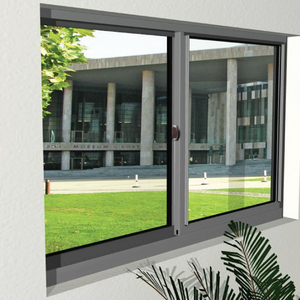
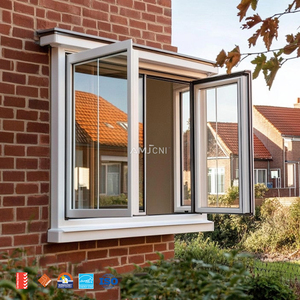 NFRC Certified
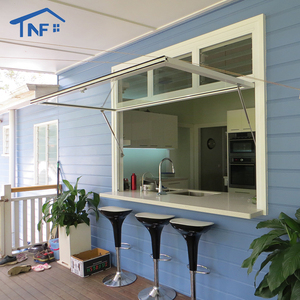
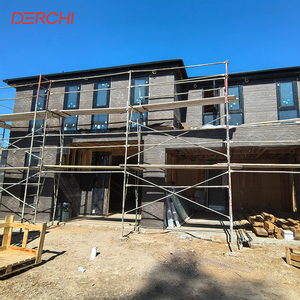 Slimline Profile
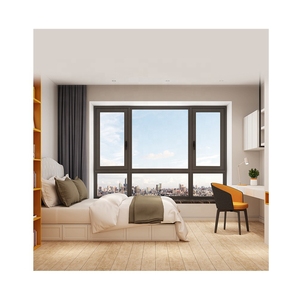 European Tilt/Turn
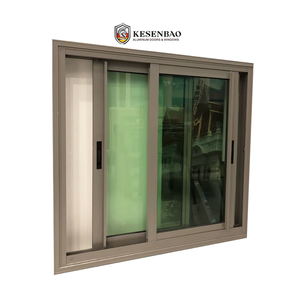 Thermal Break
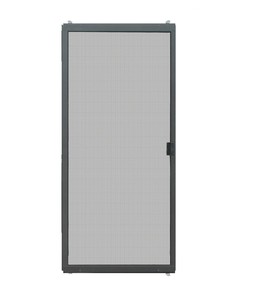 Integrated Screen
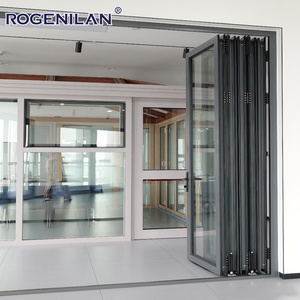
Technical Architecture of Commercial & Residential Replacement Fenestration
In the modernization of mid-century building envelopes, residential retrofits, and commercial asset repositioning, fenestration specification dictates operational energy expenditure, acoustic performance, structural load resistance, and life-cycle durability. As a tier-1 OEM/ODM aluminum replacement windows factory & supplier, Guangdong Dejiyoupin Doors and Windows Co., Ltd. (DERCHI) combines proprietary alloy formulation (primary 6063-T5 and 6063-T6 architectural billeted aluminum) with multi-chambered polyamide thermal breaks to eliminate thermal bridging, condensation risks, and frame degradation across demanding microclimates.
Polyamide 66 Thermal Isolation
Aluminum exhibits an inherent thermal conductivity ($\lambda$) of approximately $160\text{ W}/(\text{m}\cdot\text{K})$. Our precision profiles integrate fiberglass-reinforced Polyamide (PA66 GF25) thermal barrier strips with conductivity as low as $0.3\text{ W}/(\text{m}\cdot\text{K})$, establishing an impermeable thermal break that satisfies stringent NFRC and European Passivhaus U-value thresholds.
Acoustic & Soundproofing Engineering
Urban retrofits require aggressive STC (Sound Transmission Class) ratings. By employing asymmetric insulated glazing configurations (e.g., $6\text{mm} + 12\text{Ar} + 4\text{mm}$ or laminated $5\text{mm} + 0.76\text{PVB} + 5\text{mm}$) paired with dual-stage EPDM co-extruded compression weatherstripping, our casement and vertical slider systems routinely achieve STC ratings up to 42 dB.
Cyclonic Impact & Wind Load Defense
Engineered to comply with AS 2047 N6 cyclonic criteria and ASTM E1886/E1996 large missile impact testing, our reinforced jamb profiles, structural silicone glazing (SSG), and multi-point concealed stainless steel shoot-bolts withstand extreme positive and negative design pressures exceeding 4,500 Pa without air leakage or water infiltration.
Retrofit Compatibility vs. New Construction Flanges
A critical consideration during fenestration replacement procurement is the distinction between finned profiles (intended for open framing) and flush fin/block frame extrusions. Our OEM/ODM engineering division manufactures custom extruded snap-in retrofit flanges, brickmould profiles, and expander systems tailored to slide seamlessly into existing timber, steel, or masonry openings without damaging interior drywall, historic trims, or exterior cladding.
| Performance Characteristic | Testing Standard / Metric | DERCHI Baseline Specification | High-Spec Custom Configuration |
|---|---|---|---|
| Thermal Transmittance (U-Factor) | NFRC 100 / EN ISO 10077-1 | 0.28 – 0.32 BTU/(hr·ft²·°F) (1.6 – 1.8 W/m²K) | Down to 0.18 BTU/(hr·ft²·°F) (1.0 W/m²K) (Triple IGU + Krypton) |
| Solar Heat Gain Coefficient (SHGC) | NFRC 200 / ASTM E903 | 0.21 – 0.25 (Double Silver Low-E) | 0.16 – 0.19 (Triple Silver Solar Neutral Low-E) |
| Air Infiltration Resistance | ASTM E283 / EN 12207 | < 0.10 cfm/ft² at 1.57 psf (Class 4) | < 0.02 cfm/ft² (Airtight compression seal architecture) |
| Water Penetration Resistance | ASTM E331 / EN 12208 | Static pressure ≥ 450 Pa (9.4 psf) | Static & Dynamic pressure ≥ 700 Pa to 1050 Pa (Coastal spec) |
| Structural Wind Load (AS 2047) | AS/NZS 4420.2 / ASTM E330 | Serviceability: 2500 Pa; Ultimate: 4000 Pa | AS 2047 N6 Cyclonic Rating (> 5000 Pa design pressure) |
| Sound Transmission Class (STC / OITC) | ASTM E90 / ASTM E413 | STC 32 – 35 (Standard Double Pane) | STC 40 – 44 / OITC 34 – 38 (Acoustic Interlayer Glass) |
Emerging Trends Reshaping Aluminum Replacement Window Sourcing
Global supply chain volatility, strict municipal carbon mandates, and the shift toward offsite industrialized construction are redefining how general contractors, real estate developers, and national distributors select fenestration manufacturing partners.
1. Embodied Carbon & Recycled Billets
Institutional real estate portfolios increasingly mandate Environmental Product Declarations (EPDs). Procurement contracts now stipulate low-carbon secondary aluminum with minimum 40%–70% post-consumer recycled content, utilizing hydro-powered smelting processes that slash cradle-to-gate greenhouse gas emissions by up to 65% compared to virgin bauxite processing.
2. Direct-to-Factory BIM & ERP Integration
Contractors are transitioning away from disconnected broker networks toward direct OEM/ODM factory integration. By transmitting IFC and Revit BIM schedules directly to our computer-aided CNC profile cutting and machining stations, fabrication lead times decrease by 28%, and field installation dimension errors are virtually eliminated.
3. Micro-Profile Minimalist Engineering
Architectural demand has decisively pivoted toward ultra-slim sightlines that maximize daylighting (Visible Light Transmittance, VLT) while retaining commercial structural integrity. Achieving ultra-narrow 40mm stile widths requires high-yield-strength 6063-T6 alloy, precision corner crimping with double-component epoxy injection, and structurally glazed edge tape.
Why Tier-1 Contractors and Developers Partner with DERCHI
Headquartered in Foshan, Guangdong—the world’s foremost aluminum fabrication cluster—Guangdong Dejiyoupin Doors and Windows Co., Ltd. delivers institutional scale, verified compliance, and end-to-end custom extrusion flexibility.
180,000 ㎡ Mega-Base
Complete vertically integrated fabrication under one roof: profile extrusion, automated powder coating, CNC multi-axis milling, automated IGU insulated glass assembly, and final QC staging with robotic handling.
Certified Global Compliance
Products engineered to hold multi-jurisdiction approvals: CE (Europe), ISO 9001 (Quality Management), AS 2047 N6 (Australia/NZ cyclonic test pass), NFRC (North America thermal efficiency), and UL fire-rated standards.
100% Custom OEM/ODM
Full tooling, die design, and extrusion engineering capabilities. We provide free CAD and BIM shop drawings aligned directly to architectural schedules, accommodating bespoke wall thicknesses, finishes, and locking hardware.
Export Logistics Mastery
End-to-end containerized export packing using shock-absorbing honeycomb wrapping, reinforced steel-banded fumigated timber crates, and floor-by-floor site delivery sequencing for zero-damage transatlantic and transpacific shipping.
Frequently Asked Questions by Commercial Buyers & Importers
Key technical, contractual, and regulatory considerations addressed by our Senior Fenestration Engineering Group.
What is the typical production lead time for custom OEM replacement windows?
For standard architectural finishes (Qualicoat Class 2 powders in traffic white, architectural bronze, or matte black) and standard double-glazed insulated units, our manufacturing cycle is 25 to 35 calendar days following formal CAD shop drawing sign-off. Bespoke extrusion dies require an additional 10 to 14 days for tooling fabrication, sample extrusion, and dimensional verification.
How do aluminum replacement windows compare against UPVC and thermally broken timber?
While UPVC offers low initial material cost, it suffers from significant thermal expansion coefficients (causing sash binding in extreme seasons), structural deflection over spans exceeding 1.8 meters, and UV embrittlement. Thermally broken aluminum offers three times the structural yield strength of vinyl, indefinite lifespan without warping, and dramatically narrower profiles that maximize daylighting without sacrificing U-values.
What certifications are provided for North American and Australasian building codes?
Our export product lines undergo third-party laboratory verification. For the United States and Canada, we supply NFRC thermal performance labels (U-factor, SHGC, VLT, Air Leakage) and AAMA/WDMA/CSA 101/I.S.2/A440 structural ratings. For Australia and the South Pacific, our systems are certified under AS 2047 and AS 1288, including N6 cyclic pressure testing for tropical cyclone belts.
Can you provide custom retrofit frame profiles matching historical site tolerances?
Yes. In landmark restorations and multi-family revitalization projects, original openings often present out-of-square masonry or historical sightline restrictions. Our in-house engineers model custom sub-sills, trim expanders, and brickmould adapters in 2D/3D CAD, ensuring the replacement window locks cleanly into the existing perimeter barrier without costly exterior structural modification.
What surface coatings are available for extreme marine and coastal environments?
For installations within 500 meters of the coastline (high atmospheric salinity), we apply AAMA 2605-compliant 70% Polyvinylidene Fluoride (PVDF/Kynar 500) coatings or Qualanod-certified Class 1 anodic oxidation (25-micron thickness). These industrial finishes resist salt-fog corrosion, color fading (delta E < 5 over 10 years), chalking, and chemical degradation.
How does DERCHI guarantee zero transit breakage for oversized insulated glazing?
We deploy full ocean-grade export protocols: sashes are packaged with protective PE shrink-wrapping, corner bumpers, desiccants to prevent interstitial moisture damage, and immobilized within solid fumigated wooden crates lined with high-density EPE foam. Glass units undergo 100% pre-shipment helium leak testing (for gas fill retention) and laser inspection for internal coating defects.
Ready to Engineer Your Next Fenestration Project?
Submit your architectural drawings, tender schedules, or custom profile requirements directly to our senior engineering team in Foshan. Receive comprehensive CAD shop drawings, acoustic and thermal compliance assessments, and direct-factory wholesale quotations within 24 business hours.