180,000㎡
Production Infrastructure
600+
Skilled Specialists
100+
Patents & Global Certifications
25+
Years Engineering Pedigree
High-Performance Portfolio
Featured Architectural Door & Window Systems
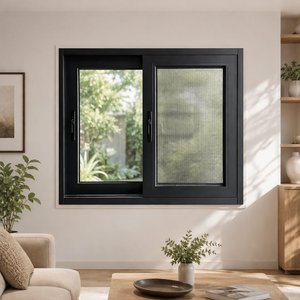
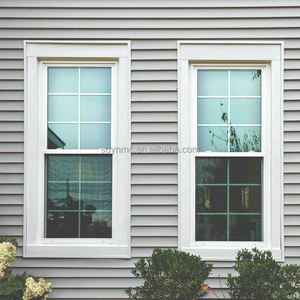
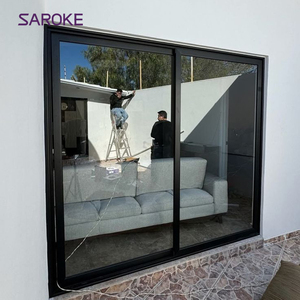
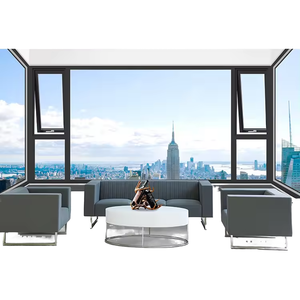
Manufactured to withstand severe climate loadings, high cyclic use, and aggressive tropical or coastal environments while achieving maximum acoustic isolation and thermal attenuation.
Procurement Intelligence
Evaluating the Top 10 Aluminium & Glass Doors Factories
Navigating industrial-scale fenestration sourcing requires cross-examining production lines beyond surface aesthetics. When auditing global tiers of door and window manufacturers, commercial specifiers benchmark six core competencies.
Extrusion Alloy Purity & Wall Thickness
Tier-1 suppliers enforce virgin 6063-T5 or 6060-T6 primary aluminum billets over recycled scrap scrap-melted extrusions. Conformance to architectural standards requires web thicknesses of 1.8mm to 3.0mm on sliding and heavy-duty pivot structural jambs.
Thermal Decoupling Integration
Advanced factories utilize multi-chambered polyamide (PA66 GF25) reinforced techno-polymer thermal struts rather than cheap poured-and-debridged urethane, mitigating thermal expansion distortion and maximizing Solar Heat Gain Coefficient (SHGC) efficiency.
Glazing Unit Hermetic Integrity
Suppliers must feature dual-seal insulated glass unit (IGU) processing with warm-edge composite spacers, structural polyisobutylene (PIB) primary seals, and silicone secondary matrices filled with 90%+ pure argon gas for long-term acoustic (STC 35-45) barrier preservation.
Hardware Mechanics & Micro-Adjustment
Top manufacturing systems integrate European multi-point shootbolt locking gear, German-engineered heavy concealed pivot hinges capable of carrying panels up to 800kg, and precision stainless steel tandem rollers with micro-level eccentric track height adjusters.
Global Structural Certifications
A supplier's engineering legitimacy relies on independent test reports under certified regimes: AS 2047 (reaching cyclonic N6 wind and water criteria), NFRC thermal metrics, CE performance envelopes, and certified ASTM/UL fire/impact ratings.
Engineering Shop Drawings & BIM Precision
Leading manufacturers operate internal structural and facade design departments, providing turnkey CAD opening elevations, anchor-point static calculations, drainage route detailing, and LOD 300+ BIM files before production release.
| Evaluation Parameter | Tier 1 Industrial Factories (e.g., DERCHI) | Standard Commercial Converters | Local Assemblers |
|---|---|---|---|
| Alloy Quality | Primary 6063-T5 / Cast A356 structural alloys | Standard domestic extrusions | Mixed secondary or remelted profiles |
| Weather Sealing | Multi-barrier co-extruded EPDM vulcanized gaskets | Standard PVC synthetic strips | Stapled brush seals / Low-grade rubber |
| Structural Windload | AS 2047 N6 (Up to 4500Pa+ design pressure) | 1200Pa - 2000Pa basic load limits | Uncertified / Non-tested |
| Surface Protection | Fluorocarbon PVDF 3-coat (AAMA 2605) / 25μm Anodized | Standard electrostatic powder coat | Basic spray enamel coating |
| Customization Scale | Oversized pivot panels (up to 4m x 2.5m single leaf) | Standard dimensional modules | Fixed catalogue envelopes only |
Direct Manufacturer Authority
Why Major Specifiers Direct-Source from DERCHI
Recognized as one of the Top 10 premium architectural fenestration brands in China, Guangdong Dejiyoupin Doors and Windows Co., Ltd. (DERCHI) operates from Foshan with comprehensive turnkey capabilities.
"Proven through global benchmarks: DERCHI's architectural door and window systems achieved top-tier recognition at WORLDBEX in the Philippines and meet the stringent cyclic requirements of AS 2047 N6 in cyclonic Australia, standing as the manufacturer of choice for architects from London to Singapore."
180,000㎡ Scalable Manufacturing Hub
Our automated industrial production facility in Nanhai, Foshan houses state-of-the-art CNC machining centers, automated glass tempering and insulating production lines, and high-precision corner crimping assemblies with over 600 specialized workers.
100+ Patents & Global Compliances
With 30+ design patents and testing across CE, ISO 9001, AS 2047, NFRC, and UL Fire-Rated standards, our door systems guarantee streamlined statutory approvals with municipal building authorities, consultants, and architectural auditors worldwide.
Comprehensive Material Versatility
Unlike single-line assemblers, DERCHI delivers consolidated procurement across structural thermal-break aluminum doors, 3D relief cast aluminum entry gates, security stainless steel assemblies, and ultra-large architectural pivot portals.
Engineered for Extreme Environments
Tailor-made for demanding environments—such as high-humidity Southeast Asian coastal shorelines, Middle Eastern heat, and North American thermal swings—our systems prevent expansion sticking, electrolytic corrosion, and seal degradation.
Strategic Roadmap
Future Procurement & Product Development Trends
The commercial fenestration landscape is undergoing rapid technical evolution. Modern developers, structural engineers, and hotel chains must anticipate market trajectories through 2026 and beyond.
Low-Carbon & Circular Sourcing
Institutional developers increasingly enforce Environmental Product Declarations (EPDs). Future procurement prioritizes extrusions smelted using renewable hydro-power, yielding aluminum with under 4.0 kg CO2 per kg metal, directly boosting LEED and BREEAM scores.
Oversized Panoramic & Minimalist Profiles
Architectural sightlines are narrowing to under 20mm visible frame mullions, demanding higher yield-strength alloys. Heavy-duty pivot systems and concealed-frame flush-sill transitions are replacing traditional multi-sash sliding bulkheads in luxury estates.
Smart Building Automation & Biometrics
The integration of concealed motorized actuators, magnetic drive gliding mechanisms, electronic multi-point locking (supporting biometric, RFID, and BACnet/KNX building management systems) is transitioning from bespoke options to standardized factory prep.
Vacuum Insulated Glazing (VIG) Adoption
As global energy regulations mandate passive-house U-values (under 0.8 W/m²K), doors are transitioning from triple-pane glass to ultra-thin vacuum insulated glass (VIG), reducing sash weight while boosting thermal insulation and acoustic cancellation.
Prefabrication & Direct-to-Site Crating
Rising on-site labor costs across North America, Europe, and Australasia are prompting contractors to source pre-glazed, pre-hung door cassettes. Modular units come factory-assembled with numbered packaging tailored directly to building levels and openings.
Direct Answers
Frequently Asked Questions on Fenestration Procurement
Clear technical insights for commercial developers, general contractors, and sourcing agents addressing critical quality control, pricing models, and international freight.
What minimum certifications should international buyers require for hurricane and cyclone zones?
For hurricane or coastal monsoon zones (such as Florida, the Caribbean, the Philippines, or coastal Australia), buyers must specify products tested under ASTM E1886/E1996 for large missile impact resistance or AS 2047 N6 cyclonic testing. These standards evaluate cyclic wind pressures (often exceeding 3500Pa to 4500Pa) and high-velocity water ingress barriers to confirm frame and glass integrity during severe weather events.
How do thermal-break aluminium systems compare with standard aluminium in tropical climates?
While non-thermal profiles conduct ambient heat directly into air-conditioned interior zones, thermal-break doors integrate a reinforced polyamide barrier (PA66 GF25) that interrupts conductive heat flow. In hot, humid climates, this reduces internal heat transfer, lowers HVAC utility expenses by up to 30%, and prevents frame sweating and condensation that can cause indoor mold growth.
What are the critical parameters for custom large-format pivot doors?
Large pivot doors exceeding 3 meters in height require heavy-duty internal structural steel subframes, minimum 2.5mm exterior profile wall thicknesses, and high-performance concealed hydraulic bottom floor pivots (such as Dorma or German-grade mechanisms) rated for 500kg–1000kg loads. They also need perimeter brush and drop-down acoustic seals to balance smooth operation with water and air resistance.
What quality inspection (QC) protocols are implemented prior to export dispatch?
At premier factories like DERCHI, QC protocols encompass: 1) Spectrometer verification of 6063-T5 aluminum alloy composition; 2) Dry film thickness (DFT) checks on powder coating and PVDF; 3) Argon concentration validation in insulated glass units; 4) 100% full dry assembly testing to verify seamless corner miters, diagonal tolerances, and multi-point lock alignment; and 5) Multi-layer export crating using pearl cotton, corrugated cardboard, and fumigated steel-strapped plywood boxes.
How does factory-direct consolidation optimize total project cost?
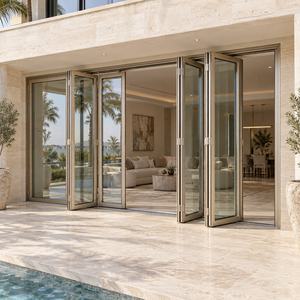
Direct procurement from a single manufacturing base—covering main pivot entrance doors, sliding balcony doors, bi-fold doors, hurricane-proof bedroom windows, and automated garage portals—eliminates multiple trading company margins, simplifies CAD shop drawing revisions, standardizes matching architectural powder-coat finishes, and maximizes 40HQ ocean container packing space to lower logistics costs.
What information is needed to receive a rapid technical quote and shop drawings?
To provide an accurate technical proposal and bill of quantities within 24 hours, our engineering office requires: 1) Rough opening schedule dimensions (Width x Height); 2) Elevation drawings or architectural floor plans; 3) Wind zone specifications or project geographic coordinates; 4) Glazing preferences (double/triple-glazed, tinted, Low-E); and 5) Desired surface finish (RAL color code, PVDF, or woodgrain transfer).