Precision Engineering & Global Procurement Matrix
In modern fenestration engineering, selecting an industrial-grade aluminium outdoor door manufacturer demands rigorous due diligence. From structural resistance against Category 5 typhoons to high-efficiency thermal breaks and multi-point perimeter security locking systems, this analysis establishes an empirical benchmark for architects, structural consultants, and commercial developers worldwide.
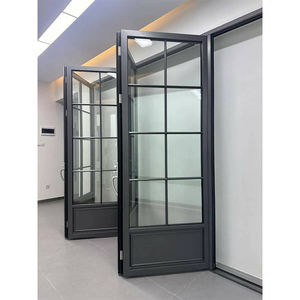
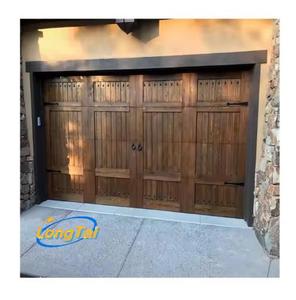
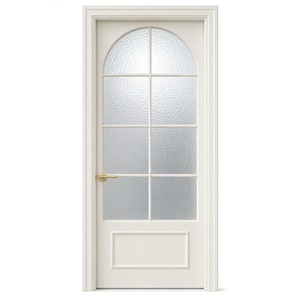
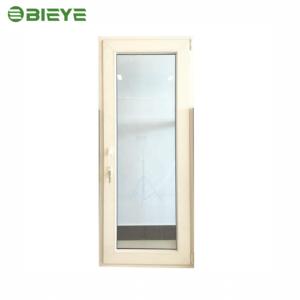
1. Metallurgy, Extrusion Alloys, and Structural Integrity
Outdoor architectural aluminium systems operate under extreme environmental stressors. Unlike generic interior aluminium, premium exterior entrance assemblies necessitate the use of primary 6063-T6 or 6061-T6 architectural-grade aluminium alloys. These billets undergo precision homogenization to eliminate internal residual stress before extrusion. The resultant door profiles exhibit tensile yield strengths exceeding 215 MPa, ensuring zero sash deflection under massive cyclic wind pressures.
For coastal villas, equatorial resort corridors, and typhoon-exposed belts across the Pacific rim (including the Philippines, Vietnam, Indonesia, and Australia), cross-sectional wall thicknesses must strictly conform to a minimum of 2.0mm to 3.5mm on structural load-bearing stiles. Substandard manufacturers frequently dilute alloy integrity with uncertified post-consumer scrap, which introduces micro-porosities that trigger subsurface galvanic corrosion and mechanical failure within 24 to 36 months of saline exposure.
2. Polyamide Thermal Barriers & Surface Passivation
Modern sustainability metrics (such as LEED v4.1, BREEAM, and Estidama) prioritize life-cycle building energy conservation. An uninsulated aluminium profile exhibits high thermal conductivity (K-value of ~200 W/m²K). To combat this, tier-one manufacturers integrate PA66 nylon thermal break strips reinforced with 25% short glass fibers. This engineering technique splits the exterior and interior aluminium extrusions, reducing overall frame U-factors to below 1.6 W/m²K while sustaining identical mechanical shear resistance.
Surface treatment represents the secondary defense barrier. Exterior doors must feature either fluorocarbon PVDF (polyvinylidene fluoride) liquid coatings complying with AAMA 2605 specifications (minimum 70% Kynar 500 resin system, passing 4,000 hours of continuous salt-spray testing) or architectural anodic oxide coatings of Grade Class I (thickness > 25 microns). These finishes completely mitigate chalking, gloss degradation, and chemical oxidation induced by extreme ultraviolet irradiance and coastal chloride deposition.
3. Global Safety Standards: AS 2047 N6, CE Marking & UL Fire Performance
Specifying engineers must differentiate between self-declared marketing claims and accredited laboratory test certifications. DERCHI's proprietary systems undergo rigorous destructive and non-destructive evaluations, meeting the prestigious Australian Standard AS 2047 with an N6 structural classification. This benchmark certifies structural ultimate limit state (ULS) wind pressure resistance reaching 4,500 Pa, serviceability limit state (SLS) air filtration below 0.3 L/s·m², and continuous hydrostatic water penetration resistance beyond 450 Pa.
Simultaneously, compliance with European CE EN 14351-1 ensures harmonized impact safety, release of dangerous substances, and sound insulation indices (Rw values from 38dB to 46dB when paired with acoustic laminated IGUs). For high-density commercial lobbies and public exits, UL 10C positive pressure fire testing validates structural retention and non-combustible frame stabilization during critical egress timeframes.
Engineering Matrix: Outdoor Door Typologies
Direct technical comparison between dominant exterior door configurations for architectural planning schedules.
| System Architecture | Typical Alloy & Wall Depth | Thermal U-Value Range | Maximum Acoustic STC | Wind Load Resistance | Recommended Application |
|---|---|---|---|---|---|
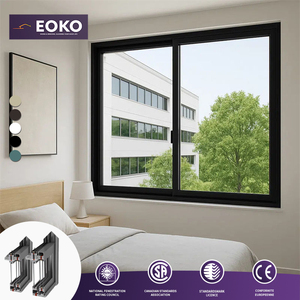
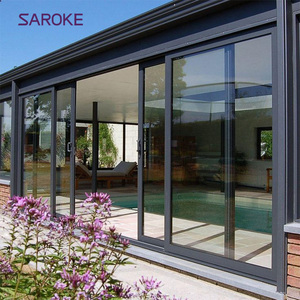
| Thermal Break Sliding Door | 6063-T6 / 2.0mm - 2.5mm | 1.4 - 1.9 W/m²K | 38 - 42 dB | Up to 3,500 Pa | Oceanfront Patios, Luxury Balconies |
| Monumental Pivot Door | 6061-T6 / 2.5mm - 3.8mm | 1.6 - 2.1 W/m²K | 36 - 40 dB | Up to 4,200 Pa | Villa Grand Foyers, Flagship Entries |
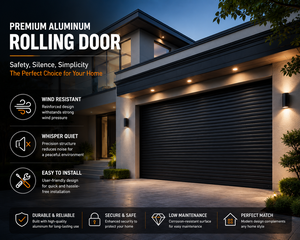
| Heavy-Duty Roller Shutter | Extruded Slats / 1.5mm - 2.2mm | 2.2 - 2.8 W/m²K | 30 - 34 dB | Up to 4,800 Pa (Storm Proof) | Commercial Shopfronts, Storm Barriers |
| Cast Aluminium Main Gate | A356 Aerospace Ingot / 8mm - 12mm | N/A (Solid Structural) | 40 - 45 dB | Exceeds 5,000 Pa | Estate Entrances, Palatial Perimeters |
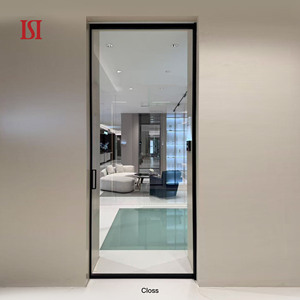
| Minimalist Pocket Glass Door | 6063-T6 Slim Profile / 2.0mm | 1.8 - 2.3 W/m²K | 35 - 39 dB | Up to 2,800 Pa | Courtyard Partitions, Interior-Exterior Flow |
Emerging Trends Transforming Aluminium Door Procurement
Over the next decade, architectural procurement strategies are evolving beyond conventional dimensional purchasing toward integrated smart fenestration, decarbonized manufacturing, and extreme climatic resilience.
Biophilic & Ultra-Slim Sightlines
Architectural demand is moving toward frameless visual expressions. Minimalist exterior systems now employ structural silicone glazing (SSG) and interlock profiles under 20mm wide. High-inertia internal reinforcements allow oversized glass lites up to 6 meters in height without compromising deflection tolerance.
IoT Concealed Mechatronic Access
Modern luxury entry doors are integrating motorized concealed multi-point drive systems directly into profile chambers. Incorporating biometric fingerprint scanners, encrypted facial recognition, and smartphone zigbee/matter bridges allows touchless operation synchronized with whole-house building management systems (BMS).
Low-Carbon Recycled Extrusion
Driven by strict Scope 3 greenhouse gas reporting, developers are increasingly stipulating low-carbon aluminium billets smelted using renewable hydroelectric energy. Combined with circular recycled alloys that emit under 4.0 kg CO2 per kg of aluminium, manufacturers must provide certified Environmental Product Declarations (EPDs).
Why Global Tier-1 Contractors Partner with Guangdong Dejiyoupin (DERCHI)
With an integrated industrial ecosystem based in Foshan, China, DERCHI provides an unassailable supply chain advantage combining customized engineering, high-volume capacity, and verifiable international compliance.
180,000㎡ Production Base
Operates fully automated CNC machining centers, automated corner-crimping equipment, and high-precision cutting stations ensuring dimension tolerances within ±0.5mm across high-volume schedules.
Exhaustive International Testing
Holder of over 100 patents and formal certifications including CE (Europe), AS 2047 N6 (Australia), ISO 9001 quality management, and UL fire ratings. Complete test reports expedite permit sign-offs.
World-Renowned Exhibitions
Endorsed by major overseas developers following standout participation at WORLDBEX 2025 (Philippines), with extensive installed references across North America, the Middle East, and Southeast Asia.
Full Architectural Tailoring
In-house structural engineering teams supply free CAD shop drawings, glass thermal stress calculations, and wind-load simulations tailored directly to your building schedules.
Frequently Asked Questions by Commercial Buyers
Critical engineering and commercial answers to streamline your door scheduling, port logistics, and tender qualifications.
Connect with Our Lead Engineering Group
Submit your project door schedules, elevation drawings, or specification inquiries. Our engineering department delivers technical estimates, thermal simulations, and compliance submittals within 24 working hours.
Get a Quote