In modern industrial and luxury residential architecture, the specification of basement access and subterranean egress points—commonly termed bulkhead assemblies—presents acute design considerations. For decades, fabricated mild steel remained the default industry commodity due to raw initial cost calculations. However, building envelopes operating within coastal high-salinity zones, tropical monsoon bands, and high-precipitation terrains have experienced significant early structural failure caused by galvanic cell corrosion, hinge binding, and seal failure.
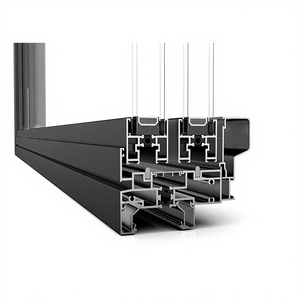
The industry pivot toward high-tensile, architectural-grade extruded aluminum (such as 6063-T6 and marine-grade 5052 alloys) represents a fundamental evolution in architectural engineering. By leveraging natural atmospheric self-passivation alongside advanced PVDF fluoropolymer coating and hard-coat architectural anodizing, aluminum bulkhead systems completely resolve the destructive pitting and oxidation loops inherent to ferrous alternatives. Furthermore, the substantial strength-to-weight ratio achieved by structural extruded framing reduces dead-load pressure on basement foundations while enabling the installation of counterbalance gas struts and automated, high-torque lift mechanisms.