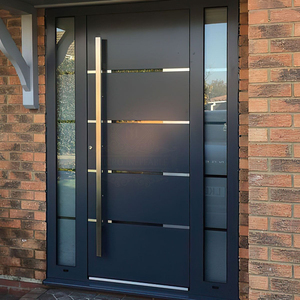
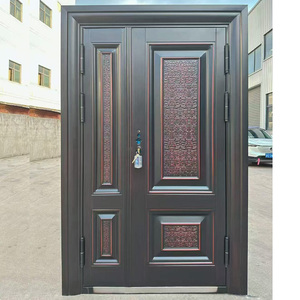
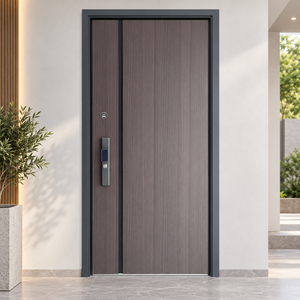
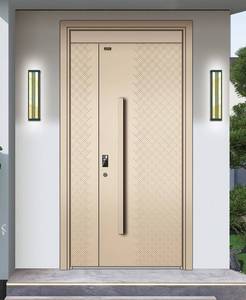
Top 10 Aluminum Pivot Door Manufacturers & Supplier Technical Compendium
An authoritative engineering and procurement report on oversized thermal break pivot door systems, certified wind load performance, and global supply chain benchmark metrics for luxury estates.
Engineered Fenestration
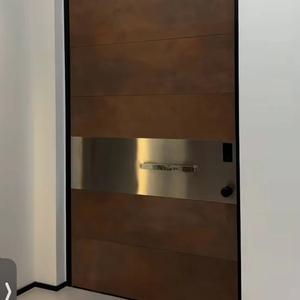
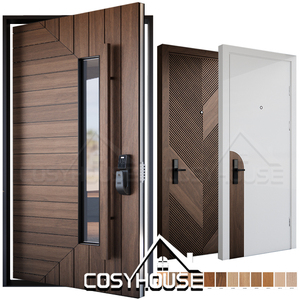
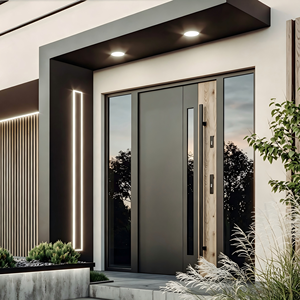
Featured Architectural Aluminum Pivot Door Systems
Engineered for extreme structural spans, high wind loads, and thermal efficiency. Review the industry's eight foremost pivot door specifications engineered directly by premier manufacturers.
How Top 10 Aluminum Pivot Door Manufacturers Are Evaluated
Architectural pivot doors are not mere decorative leaves; they are heavy structural moving façades. The industry's leading manufacturers are ranked based on rigorous engineering, load tolerances, and metallurgical integrity.
Structural Wind Load & Air-Tightness
Premier manufacturers engineer profiles in 6063-T6 or 6061-T6 structural aluminum with wall thicknesses ranging from 2.5mm to 4.0mm. To qualify in the Top 10, systems must be independently tested to withstand cyclic pressures exceeding AS 2047 N6 (cyclone grade) and ASTM E330 ratings, ensuring zero deflection and air infiltration resistance under extreme tropical and coastal storms.
Heavy-Duty Hydraulic Pivot Hardware
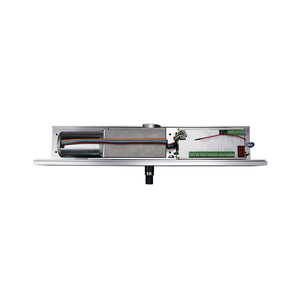
A massive pivot door weighing up to 800 kg depends strictly on its floor spring and pivot axis. Certified manufacturers integrate German-engineered Dormakaba, FritsJurgens, or in-house bespoke dual-stage oil-damped hydraulic spindles that ensure silky, whisper-quiet operation across over 500,000 opening cycles without sagging or axis drift.
Thermal Break & Acoustic Barrier Tech
Tropical heat and urban ambient noise demand polyamide PA66 thermal barrier strips combined with double or triple insulated glass units (IGU) containing argon gas. Elite suppliers achieve thermal transmittance values of U ≤ 1.4 W/m²·K and sound attenuation up to Rw 42 dB, preventing thermal bowing caused by severe temperature differentials between interior and exterior skins.
The architectural fenestration sector is experiencing radical technological transformations driven by biophilic building codes, high-tech smart security, and low-carbon metallurgical mandates.
1. Monolithic Over-Height Spans
Luxury residential estates across North America, Southeast Asia, and the Middle East are shifting from standard 2.4-meter doors to grand monolithic heights of 4.0 to 6.0 meters. Top suppliers are engineering internal steel tie-rod anti-warping trusses to maintain absolute door flatness despite extreme solar thermal loads on the outer aluminum face.
2. Smart Building & Biometric Integration
Procurement schedules now routinely mandate fully integrated concealed motorized operators. The future belongs to flush aesthetic magnetic contact switches, embedded 3D facial recognition, encrypted smartphone Bluetooth BLE access, and automated multi-point automatic deadbolts seamlessly communicating with KNX and Crestron building management ecosystems.
3. Marine-Grade PVDF & Eco-Finishes
With luxury developments increasingly localized in coastal resort environments, the market demand has pivoted toward Qualicoat Class 2 and Class 3 PVDF fluorocarbon coatings. These deliver over 30 years of salt-spray and ultraviolet discoloration resistance, eliminating corrosion, peeling, and surface chalking common in tropical climates.
Manufacturer Benchmark
Guangdong Dejiyoupin (DERCHI): Foshan's Premier Door Engineering Base
Recognized as one of the Top 10 premium door and window brands in China, Guangdong Dejiyoupin Doors and Windows Co., Ltd. (DERCHI) operates a world-class 180,000 m² intelligent fabrication center in Shishan Town, Nanhai District, Foshan. With more than 25 years of specialized R&D and over 600 skilled technicians, DERCHI serves international contractors, architects, and luxury homeowners across the United States, Canada, Australia, the Middle East, and Southeast Asia.
CE Certified ISO 9001 Quality AS 2047 N6 Cyclone UL Fire-Rated Compliant 100+ National Patents
Detailed technical answers to the most critical inquiries posed by project developers, façade consultants, and general contractors sourcing aluminum pivot doors.
How do aluminum pivot doors prevent water ingress and air leakage at the sill?
Unlike hinged doors with continuous jamb rebates, pivot doors rotate on an offset axis, which leaves perimeter clearance. Leading manufacturers resolve this using drop-down automatic drop-seals integrated into the top and bottom of the leaf. When the door closes, mechanical plungers activate heavy-duty silicone and EPDM seals against a recessed, drained threshold channel, achieving certified air-tightness and water barrier ratings up to 600 Pa under test conditions.
What prevents tall aluminum pivot doors from bowing in high-heat climates?
Direct sunlight heats external aluminum panels to over 70°C, while indoor air conditioning maintains 22°C. This thermal differential causes the "bimetallic strip effect." Top manufacturers install internal anti-warp structural tensioning rods within the door leaf stiles. These adjustable tension cables permit site micro-calibration to counteract thermal bowing and maintain perfectly straight alignment across four-season weather cycles.
Are custom oversize dimensions fully compatible with smart access systems?
Yes. Premium manufacturers like DERCHI engineer custom doors up to 3000mm in width and 6000mm in height. These can be pre-wired internally with concealed power loops and armature raceways to house motorized multi-point German locking gear, biometric fingerprint sensors embedded in long architectural pull handles, and automated concealed floor operators.
What international export packaging and freight precautions are required?
Due to the extreme glass mass and structural weight of pivot assemblies, export units are secured in custom steel-framed, fumigated solid plywood crates. Corners receive high-density EVA foam protectors, leaves are moisture-sealed with vacuum shrink wrapping, and sensitive hydraulic pivot hardware is shipped in decoupled shock-absorbent containers with tilt-watch indicators.
How does DERCHI's AS 2047 N6 certification benefit overseas projects?
AS 2047 represents one of the world's most stringent fenestration standards, especially in cyclone-exposed regions. The N6 rating certifies that DERCHI systems satisfy extreme ultimate limit state design wind pressures surpassing 4,400 Pa. For developers in Florida, the Caribbean, the Philippines, Vietnam, and coastal Australia, this certification accelerates municipal structural compliance approvals.
What is the standard production and shop-drawing lead time for custom villa orders?
Upon receipt of preliminary opening dimensions and elevation schedules, DERCHI's engineering department outputs comprehensive 2D CAD and 3D BIM shop drawings within 24 to 48 hours. Following shop drawing sign-off and finish sample confirmation, the typical manufacturing cycle is 25 to 35 business days, supported by complete pre-assembly photo and video inspections prior to crating.
Connect Directly with Our Façade Engineering Team
Whether you require bespoke CAD design, wind-load calculation reports, or competitive factory-direct pricing for upcoming villa or hotel projects, our technical specialists respond within 24 hours.