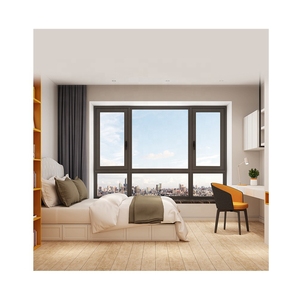
Engineering Excellence in Architectural Bronze & Brown Fenestration
In high-end architectural facades and luxury residential developments, aluminium brown windows (spanning dark bronze anodized, matte mocha, and fluorocarbon RAL metallic tones) have transitioned from a stylistic selection to a core structural standard. Sourcing factory-direct from China offers developers, general contractors, and structural engineers substantial advantages in alloy integrity, thermal insulation values (U-values), acoustic attenuation, and large-span wind load performance. Guangdong Dejiyoupin Doors and Windows Co., Ltd. (DERCHI) delivers industrial-tier fenestration systems manufactured on a 180,000 ㎡ production footprint, engineered to comply with AS 2047, CE, and ISO 9001 global certification frameworks.
Certified Fenestration & Opening Systems
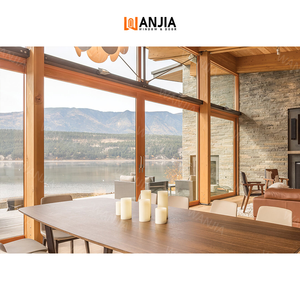
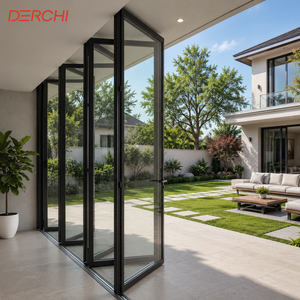
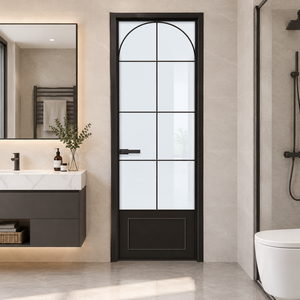
Featured Export Product Systems
Select verified configurations engineered for severe weather resilience, thermal barrier optimization, and modern architectural elegance.
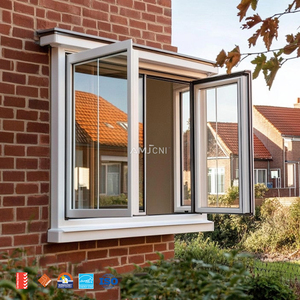
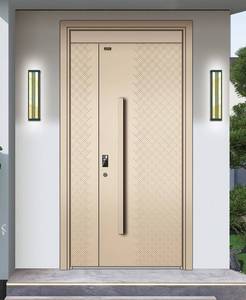
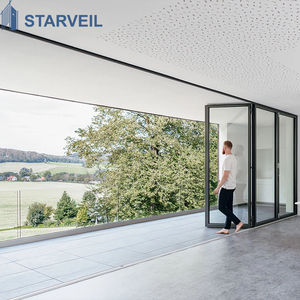
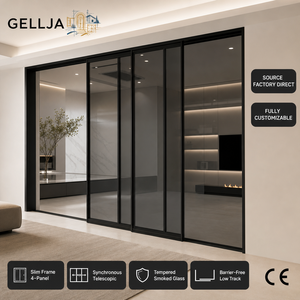
Engineering Validation
Aluminium Brown Window Structural & Finish Benchmark
Comparative parameters across primary surface treatments and glass cavity combinations for commercial envelope designs.
| Profile Treatment | Color Code & Finish | Coating Thickness | Salt Spray Resistance | Thermal Transmittance (U-Value) | Ideal Structural Application |
|---|---|---|---|---|---|
| PVDF (Fluorocarbon 3-Coat) | Dark Bronze Metallic / RAL 8019 | ≥ 40 μm (AAMA 2605) | > 4,000 Hours (ASTM B117) | 1.4 – 1.8 W/m²·K (Polyamide PA66) | Coastal High-Rise, Tropical High Humidity |
| Architectural Anodized | Electrocolored Bronze (Light to Deep) | Class I (≥ 18 μm) | > 3,000 Hours (CASS Tested) | 1.6 – 2.1 W/m²·K (Thermal Broken) | Commercial Office Towers, Institutional Glazing |
| Super Durable Powder Coat | Matte Chocolate / Custom Brown Gloss | 60 – 80 μm (Qualicoat Class 2) | > 1,500 Hours | 1.5 – 1.9 W/m²·K | Luxury Residential Villas, Condominium Envelopes |
| Aluminium-Wood Composite | Ext. Brown Powder / Int. Natural Timber | Ext. 1.8–2.2mm Profile Wall | Standard Exterior Protected | 1.1 – 1.4 W/m²·K (Triple Glazed) | Cold-Climate Passive Houses, Luxury Chalets |
Industry Forecasting
Future Procurement Trends in Aluminium Fenestration
How global building codes, decarbonization targets, and smart facade technologies are transforming international window sourcing.
1. Low-Carbon Circular Aluminium Sourcing
Global procurement teams in North America, Europe, and Australasia are prioritizing suppliers operating with hydroelectric-smelted low-carbon aluminium billet (under 4.0 kg CO²/kg Al). Specifying verified embodied carbon documentation (EPDs) will become a prerequisite for Tier-1 LEED and BREEAM certifications.
2. Hyper-Resilient Anodized Bronze Finishes
Architects are shifting away from flat browns toward metallic, micro-textured, and interference-colored bronze anodized layers. These surfaces eliminate peeling risks entirely through electrochemical bonding, delivering an inorganic finish impervious to intense UV solar degradation in tropical and desert climates.
3. Concealed Actuation & Smart Integration
Modern building management systems (BMS) require factory-integrated concealed chain actuators, magnetic status sensors, and automated micro-ventilation locks. Leading Chinese export manufacturers now pre-mill profile extrusions to integrate motorized sash hardware natively before coating application.
Engineering Evolution
Structural Advancements: Why China Leads Fenestration Manufacturing
From precision alloy extrusion to automated multi-chamber thermal breaks, the technological evolution driving superior cost-to-performance metrics.
Multi-Cavity PA66 GF25 Polyamide Barriers
Traditional non-broken aluminium profiles suffer from rapid heat transfer. Modern systems incorporate multi-cavity, glass-fiber reinforced polyamide insulation struts (PA66 GF25) filled with expanded polyolefin insulation strips. This drops frame conductivity drastically, meeting stringent European passive envelope mandates without compromising structural sash rigidity.
Three-Way Co-Extruded EPDM Gasketing
Air leakage and rainwater infiltration during typhoon events represent critical failure points. Premium Chinese suppliers incorporate continuous vulcanized automotive-grade EPDM foam rubber corner-welded gaskets. This design creates three distinct chambers: water drainage, isobaric pressure equalization, and acoustic damping.
Cyclonic Impact & Wind Pressure Resistance
With AS 2047 N6 testing verification, structural mullions are engineered with heavy wall thicknesses (2.0mm to 3.0mm primary wall profiles) and reinforced steel internal stiffeners. These systems withstand static and cyclic wind pressures up to 4500 Pa, making them ideal for coastal typhoon belts across Southeast Asia, Australasia, and the Caribbean.
Factory Credibility · Manufacturer Advantage
Guangdong Dejiyoupin Doors and Windows Co., Ltd. (DERCHI)
Ranked among the Top 10 premium architectural door and window manufacturers in China, backed by deep industrial infrastructure in Foshan.
180,000㎡
Integrated Production Base
600+
Skilled Specialists & Engineers
100+
Global Patents & Certificates
25+
Years Manufacturing Experience
Single-Source System Consolidation
Streamline supply chains by procuring aluminium brown windows, heavy pivot entry doors, cast aluminium gates, and interior architectural openings under a single project schedule. This eliminates color variance and structural fit tolerances between multiple vendors.
International Testing Credentials
Every product series is strictly verified against CE, ISO 9001, Australian AS 2047 N6, and UL fire-rated protocols. Comprehensive shop drawings, third-party lab test reports, and engineering sign-offs accompany export container dispatch.
Free CAD & BIM Structural Modeling
Our dedicated bilingual structural engineering team collaborates directly with architects and facade consultants, converting raw architectural sketches into detailed CAD section shop drawings, elevation layouts, and glass schedule calculations.
Contractor & Importer Guidance
Frequently Asked Questions for B2B Procurements
Practical insights into quality control, ocean freight packaging, lead times, and thermal performance standards.
How do you guarantee color consistency in custom brown and bronze finishes?
We utilize precision automated fluorocarbon (PVDF) electrostatic vertical spraying lines and controlled chemical electro-coloring tanks. Spectrophotometer batch testing ensures that Delta E (ΔE) color variance remains strictly under 0.8 across distinct production runs, eliminating mismatched frames on multi-story facades.
What export packaging prevents frame scratching and glass breakage during shipping?
Every unit undergoes multi-tier export packaging: protective film over all finished aluminium surfaces, reinforced corner guards, bubble wrap layering, and fully enclosed fumigation-free wooden crates or custom steel transport stillages designed for easy forklift offloading at job sites.
Can your systems meet strict regional energy codes (e.g., US Title 24, Australian NCC)?
Yes. By pairing multi-chamber polyamide thermal breaks with double or triple Low-E tempered insulated glass units (argon filled with warm-edge spacers), we configure systems achieving overall Uw values below 1.4 W/m²·K, easily satisfying high-efficiency green building standards.
What is the standard production lead time for customized commercial orders?
Standard lead time ranges from 25 to 35 business days following final CAD shop drawing approval and hardware sign-off. For high-volume multi-container developments, phased manufacturing schedules are coordinated directly with your shipping agent and on-site crane schedule.
Accelerate Your Project With an Engineering Proposal
Send your door and window schedule, architectural elevations, or structural specifications. Our technical engineering division will provide full CAD cross-sections, thermal performance simulations, and container-optimized budget proposals within 24 hours.