Export-Certified Aluminium Architectural Door & Window Systems
Explore precision-engineered fenestration collections designed for ultra-luxury residential developments, coastal commercial projects, and high-wind tropical applications.
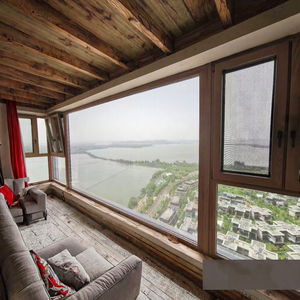
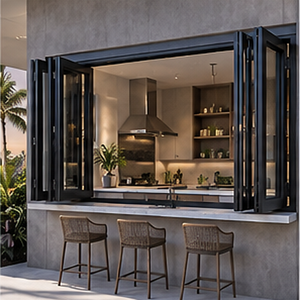
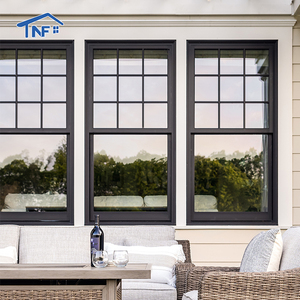
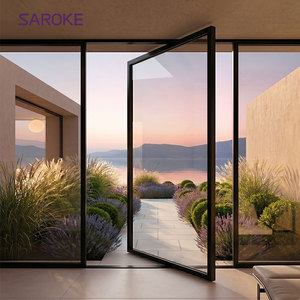
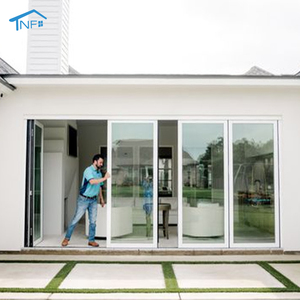
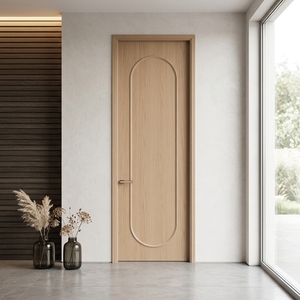
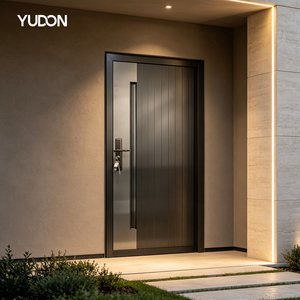
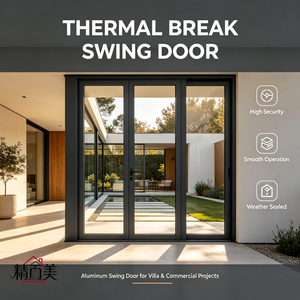
Engineering Dominance: Guangdong Dejiyoupin Doors and Windows Co., Ltd.
Operating under the globally registered DERCHI brand, we stand as one of China's Top 10 fenestration enterprises, providing institutional-grade structural aluminum door systems engineered specifically to solve coastal degradation and high-wind structural vulnerabilities.
Tier-1 Extrusion Purity
We mandate aerospace-spec 6063-T5 and 6063-T6 virgin aluminum billets with web thickness exceeding 2.0mm to 3.0mm, preventing warping on oversized double leaves reaching up to 3.5 meters in height.
AS 2047 N6 Cyclone Proof
Certified to the highest Australian structural tier (AS 2047 N6), our door envelopes withstand ultimate design wind pressures exceeding 4500 Pascals, vital for typhoon zones in Southeast Asia and Florida hurricane regions.
GMT+8 Synchronous Service
Dedicated bilingual project engineering teams operate across regional time zones, coordinating directly with architects, main contractors, and façade consultants to deliver complete shop drawings within 24 hours.
Proven Project Footprint
Proven delivery across 50+ countries including high-end villas across Manila, Singapore, Bangkok, North American waterfront residences, and prominent exhibits at international trade stages like WORLDBEX 2025.
Technical Benchmark: Extruded Aluminium vs Alternative Double Entry Systems
Architectural facade engineers face recurring challenges with traditional timber warping in coastal monsoons and mild steel systems corroding within high-saline atmospheres. The comparative matrix below details why thermally broken architectural aluminum has become the premier global specification choice for modern estate frontals.
| Performance Attribute | DERCHI Thermal Aluminium | Solid Hardwood (Teak/Oak) | Commercial Mild Steel |
|---|---|---|---|
| Tropical Dimensional Stability | Zero expansion, shrinkage, or door binding | Severe swelling (5-9% volume variance in humidity) | Prone to thermal bridging and lock displacement |
| Coastal Corrosion Resistance | Qualicoat Class 2 Fluorocarbon (PVDF) / C5-M rated | Susceptible to rot, fungus, and moisture decay | Rapid electrolytic rusting unless sandblasted & recoated |
| Thermal Insulation (U-Value) | 1.4 - 1.8 W/m²K via PA66 GF25 Polyamide Strips | 2.2 - 2.8 W/m²K (uninsulated joinery gaps) | > 4.5 W/m²K (significant thermal bridging) |
| Structural Deflection Resistance | High-inertia internal reinforcing bars; AS 2047 N6 | Prone to longitudinal bowing beyond 2.4m height | Heavy structural weight requires specialized foundation |
| Locking Integration & Security | German Siegenia/KTM multi-point anti-lift hooks | Traditional surface bolts easily bypassed | Heavy weld mortise locks without weather seals |
Emerging Procurement Trends for Aluminium Double Front Doors
The international fenestration market is moving beyond basic aesthetic appeal toward lifecycle resilience, operational sustainability, and smart security integrations. Key commercial vectors dominating current specifications include:
Polyurethane & Aerogel Thermal Breaks
Stringent building codes such as ASHRAE 90.1, Title 24, and Eurocode EN 10077 demand extreme energy containment. Specifiers increasingly reject uninsulated extrusions in favor of multi-chamber PA66 GF25 nylon strips and aerogel core filling, keeping air-conditioning loads minimal during 40°C+ tropical heatwaves.
Biometric Motorized Multi-Point Locking
Mechanical keys are giving way to integrated smart automation. Modern double front doors incorporate concealed European motor locks paired with 3D facial recognition, biometric finger-vein scanners, and dry contact connections into Control4, Crestron, or KNX building automation suites.
Super-Sized Monolithic Panels
Architects are standardizing oversized clear spans with heights up to 3.8 meters and total double-leaf widths crossing 2.4 meters. This demands structural load distribution through specialized heavy-duty concealed 3D-adjustable hinges rated up to 350kg per door leaf without sag.
Future Trajectory of High-Performance Double Door Systems
Looking ahead toward 2026-2030, our engineering labs are piloting next-generation technologies that redefine how architectural entrances function in extreme climates.
Photovoltaic BIPV Sidelight Integration
Upcoming double door sets feature integrated thin-film Building Integrated Photovoltaics (BIPV) inside glazed sidelights, powering door access controls, motorized seals, and ambient LED threshold lighting entirely off-grid.
PVD & Fluorocarbon Molecular Bonding
To combat extreme UV exposure and maritime salt spray in coastal projects (such as Da Nang, Phuket, or Cebu), advanced surface treatments utilize electrostatic PVDF fluorocarbon coatings capable of surpassing 4,000 hours in neutral salt spray testing without micro-pitting.
Automated Drop-Down Acoustic Hermetic Barriers
Urban villas demand commercial-grade acoustic damping. Future double entry sets incorporate internal pneumatic drop seals that actuate upon latch engagement, elevating the acoustic attenuation index to STC 42dB while sealing against driving rain.
Frequently Asked Questions for Project Specifiers & Importers
Critical engineering considerations, shipping workflows, and quality assurance checkpoints for purchasing double aluminum entry systems directly from our Foshan facility.
Q1: How does DERCHI ensure double front doors maintain water tightness during typhoons?
Our double door collections utilize an interlocking astragal profile engineered with co-extruded EPDM vulcanized sealing gaskets and a stepped sub-sill drainage system. Under AS 2047 standard testing, water penetration resistance is confirmed up to 450Pa with zero leakage into the interior vestibule.
Q2: What prevents oversized double door leaves from sagging over years of heavy use?
We deploy three structural safeguards: heavy-duty concealed or 3D barrel hinges forged from 304 stainless steel rated for 200kg-350kg per hinge pair, internal high-tensile corner brackets mechanically crimped with two-component polyurethane bonding adhesives, and internal diagonal diagonal tie-rods on panels exceeding 2.6 meters.
Q3: Can these double entry doors accommodate custom glazing and smart lock systems?
Yes. Every unit is manufactured on a custom shop-drawing basis. Glazing pockets accommodate 24mm to 42mm Low-E insulated double or triple laminated safety glass (e.g., 6mm Low-E + 12Ar + 6mm or SentryGlas hurricane laminates). Lock pre-machining supports global mortises including HOPPE, KFV, or smart biometric motorized systems.
Q4: What is the export packaging standard to prevent transit damage during sea freight?
Every door panel is wrapped in protective self-adhesive PE film, corner-guarded with thick closed-cell foam, encased in multi-layer corrugated wrap, and crated in fumigation-free, IPPC-certified solid plywood cases with internal shock absorbers. Systems are clearly labeled by floor, opening number, and elevation schedule for rapid on-site placement.
Q5: What are the standard lead times for custom architectural door schedules?
Following approval of detailed 2D/3D CAD shop drawings, production cycles typically range from 25 to 35 business days. Express maritime shipping routes from Guangzhou or Shenzhen ports directly serve Southeast Asian hub ports (Manila, Bangkok, Singapore, Jakarta) within 5-12 days, and Western coast ports within 18-24 days.
Q6: Do your door profiles comply with local regional building authority inspections?
Yes. DERCHI supplies full international testing dossiers including CE compliance, ISO 9001 quality audits, AS 2047 N6 mechanical test reports, and UL 10C / BS 476 fire resistance ratings, giving architects and general contractors the documentation needed for fast municipal code clearances.