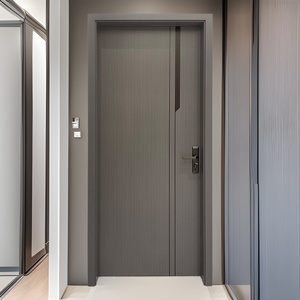
Enterprise Product Catalog
Featured Architectural Systems & Engineered Portals
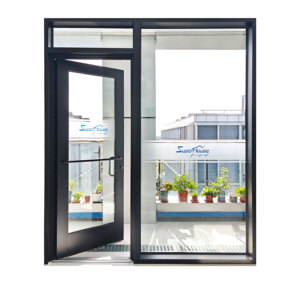
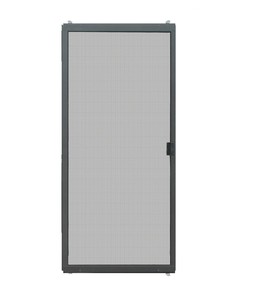
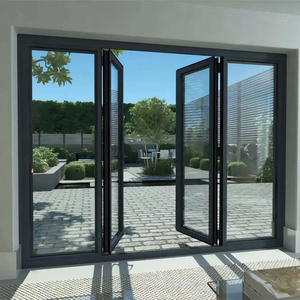
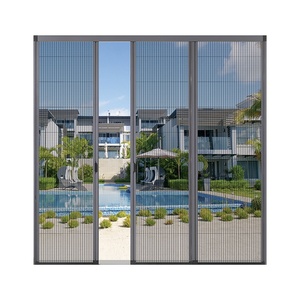
Discover high-performance architectural systems produced under strict ISO 9001 and AS 2047 protocols. Combining structural aviation-grade aluminium alloys with specialized high-tensile fiberglass meshes, each unit delivers peerless windload resistance, acoustic barrier performance, and micro-climate stability.
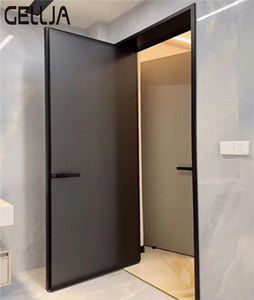
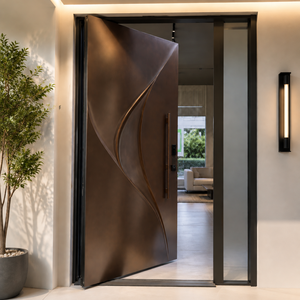
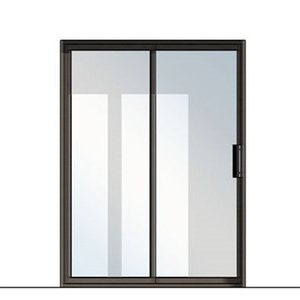
180,000㎡
Production Complex
25+
Years Engineering Hub
100+
Global Certs & Patents
AS 2047
Cyclonic N6 Verified
Whitepaper Analysis
Materials Science: Aluminum Profiles & Fibre Mesh Composites
Evaluating the metallurgical parameters, thermal break insulation matrices, and polymer-coated woven fiberglass structural properties in contemporary architectural portal engineering.
Extruded 6063-T5 Structural Alloys
Industrial doors engineered by leading Foshan fabricators utilize high-purity 6063-T5 primary aluminium ingots. Unlike recycled scrap alloys prone to stress fracturing, these architectural extrusions feature minimum web thicknesses of 2.0mm to 3.0mm, delivering yield strengths surpassing 110 MPa for extreme hurricane-force spans.
Tensile Yield > 160 MPaHigh-Tenacity Fibre Screening Composites
Integrated architectural fibre screens incorporate precision-woven, PVC-coated fiberglass filaments. Exhibiting inert dimensional stability across temperature bands from -35°C to +80°C, these non-combustible meshes resist ultraviolet photo-degradation, acidic atmospheric moisture, and pest intrusion without compromising optical transparency.
UV Degradation ResistantPolyamide PA66 Thermal Barrier Matrices
To eliminate interior condensation in extreme climates, modern aluminium fibre exterior entranceways integrate multi-cavity technoform PA66 GF25 thermal breaks. This mechanical decoupling lowers overall U-factors below 1.6 W/m²K while maximizing acoustic damping across turbulent urban centers.
Acoustic Attenuation: 36-42 dB
Strategic Sourcing Insights
Future Procurement & Technological Trends (2025–2030)
How evolving building envelope mandates, embodied carbon auditing, and smart hardware integration are radically transforming commercial entrance door schedules worldwide.
1. Smart Biometric & Hidden Pivot Hardware
Commercial and luxury residential developments are universally transitioning from conventional offset surface hinges to floor-recessed, 360-degree precision hydraulic pivot systems. High-capacity pivots engineered for panels exceeding 400kg now seamlessly conceal electronic drop seals, electromagnetic multi-point latching, and concealed facial recognition cabling directly inside thermally isolated frame extrusions.
Concealed 3-Axis Hydraulics2. Low-Carbon Aluminum & Recyclable Resins
As international procurement frameworks enforce strict Scope 1, 2, and 3 embodied carbon thresholds (such as LEED v4.1 and BREEAM certifications), premier Chinese manufacturing hubs are replacing thermal-coal smelting with hydro-powered and solar-smelted green aluminium. Simultaneously, circular fiberglass matrices bonded with recyclable thermoplastic binders will dominate forward tenders.
Carbon Footprint Neutrality3. Cyclone-Proof Resiliency & Coastal Durability
Coastal territories, particularly across the Asia-Pacific cyclone belt, the Gulf Coast, and the Caribbean, demand stringent fenestration certification. Procuring entities require factory compliance with AS 2047 Cyclonic N6 tests, ASTM E1886/E1996 large missile impact benchmarks, and Qualicoat Class 2 fluorocarbon (PVDF) electrostatic surface treatments engineered to withstand 3,000+ hours of continuous salt-spray exposure.
Qualicoat Class 2 / PVDF 3-Coat
Direct Manufacturer Credential
Engineered by Guangdong Dejiyoupin Doors and Windows Co., Ltd. (DERCHI)
Headquartered in Foshan, Guangdong—the world's preeminent fenestration fabrication epicenter—DERCHI operates a centralized 180,000 square-meter manufacturing complex staffed by more than 600 skilled technicians, metallurgists, and facade engineers. Recognized among China's Top 10 premium portal system manufacturers, we deliver scalable engineering solutions backed by over 25 years of continuous industrial experience.
Exhaustive International Certifications: Full testing compliance covering CE, ISO 9001, Australian AS 2047 N6, and UL Fire-Rated standards.
End-to-End Architectural Customization: In-house engineering teams render complimentary CAD structural shop drawings, wind load calculations, and BIM assets customized to your door schedules.
Proven Global Footprint: Demonstrated project execution throughout Southeast Asia (Philippines WORLDBEX 2025 exhibitor, Malaysia, Vietnam, Thailand), North America, Australia, and the Middle East.
ISO 9001:2015
AS 2047 Cyclonic N6
CE Standard EN 14351
UL 10C Fire Rated
100+ Patents

B2B Sourcing Protocol
Frequently Asked Questions for Project Specifiers & Importers
Key contractual, engineering, and logistical points addressed by our chief facade consultants to streamline your procurement cycle.
What metallurgical quality tests verify your aluminium extrusions?
Every extrusion batch undergoes strict spectrometer composition analysis, Barcol/Webster hardness evaluation, and anodization/coating micron thickness testing. Mill test certificates (MTC) adhering to EN 10204 3.1 accompany each container to ensure metallurgical integrity.
How does the fibre mesh endure tropical moisture and high-salinity exposure?
Our fiberglass screen components are encapsulated within an industrial PVC polymer matrix that prevents salt moisture crystallization and fungal growth. Unlike ferrous metal screens that corrode within months of coastal installation, our composite mesh passes rigorous 3,000-hour ASTM B117 salt fog testing without deterioration.
Can you accommodate custom architectural oversized pivot doors?
Yes. DERCHI specializes in custom structural heights reaching up to 6.0 meters and widths up to 2.5 meters. Our engineering division develops FEA (Finite Element Analysis) deflection models to confirm moment of inertia ratings under design wind loads prior to precision robotic milling.
What are the standard international packaging and export safety protocols?
To eliminate maritime transport damage, every unit is wrapped in protective PE film, cushioned with shock-absorbent pearl cotton corners, and crated inside fumigated, ISPM-15-compliant fully enclosed plywood cases designed for overhead crane and forklift loading.
What lead times apply for custom architectural project orders?
Standard fabrication cycles range between 25 and 35 working days following final shop drawing and finish sign-off. High-volume multi-unit hospitality developments are phased across staged container rollouts matching your on-site building schedule.
Do you provide on-site technical supervision or digital installation support?
Along with detailed multi-language exploded BIM installation manuals and step-by-step video guides, our facade engineering department provides real-time teleconference installation assistance, onsite contractor training, and pre-handover diagnostic reviews.