Engineered Fenestration & Entrance Systems
Discover factory-direct, thermally broken flush configurations and multi-barrier architectural systems manufactured to European CE and North American structural performance benchmarks.
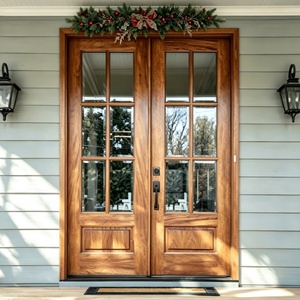
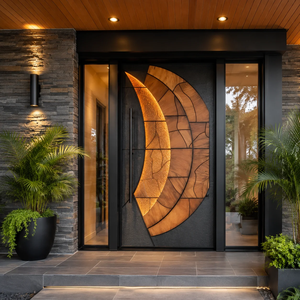
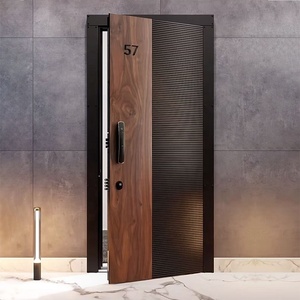
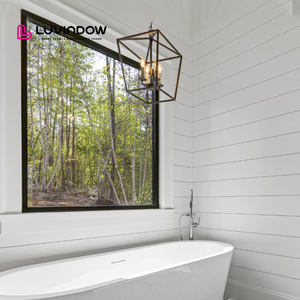
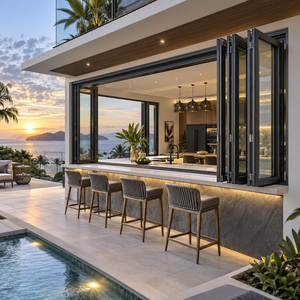
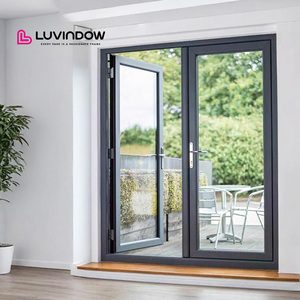
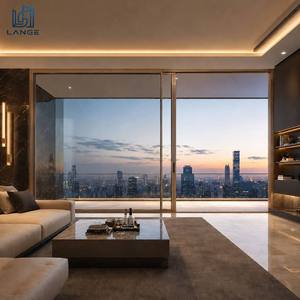
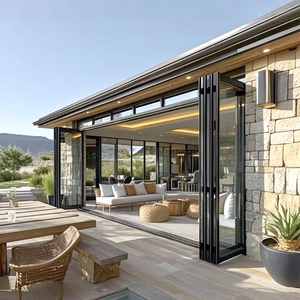
Engineering Taxonomy: The Anatomy of Premium Flush Windows
Understanding the engineering criteria that differentiate high-performance China aluminium flush window exporters from conventional commercial fabricators.
Coplanar Exterior & Interior Planes
Flush window architecture requires the sash and outer frame to rest on an identical plane. This eliminates overlapping sightlines, minimizes dirt retention, and delivers ultra-clean geometric alignments favoured in modern minimalist architecture and passive low-energy envelopes.
Polyamide (PA66 GF25) Thermal Barriers
Standard non-broken aluminum exhibits high thermal conductivity. Top exporters employ multi-cavity glass-fiber-reinforced PA66 thermal breaks, maintaining extreme structural integrity while suppressing thermal conduction, eliminating interior condensation, and achieving low U-values below 1.4 W/m²K.
EPDM Triple-Continuous Gasket Seals
Flush window designs face unique water-shedding parameters. Derchi uses automotive-grade vulcanized EPDM isobaric sealing gaskets arranged in three continuous concentric loops. This creates an uncompromised dry drainage cavity capable of handling severe driving monsoon rains up to 600 Pa.
Future Procurement Trends in Aluminium Flush Windows
How commercial developers, international contractors, and luxury homebuilders are shifting global procurement criteria for 2026-2030.
Direct-from-Source Factory Aggregation
Developers are increasingly bypassing middle-tier distributors to work directly with large-scale Foshan manufacturers. Sourcing doors, casement windows, and high-span curtain systems from a single accountable entity eliminates sizing discrepancies, streamlines customs, and drastically reduces landed FOB/CIF project expenditures.
Extreme Weather Performance Hardening
Due to escalating global typhoon cycles, procurement teams across North America, Australia, and Southeast Asia specify certified AS 2047 N6 wind resistance. Flush windows must feature structural reinforcements, thicker wall extrusions (≥2.0mm), and impact-resistant laminated glazing assemblies to avoid cyclical frame fatigue.
Concealed Hardware & Smart Building Integration
Exposed friction stays and surface hinges are disappearing in favor of European concealed multidimensional hinges capable of supporting 180kg sash loads. Furthermore, built-in magnetic contact sensors and automated pneumatic actuators are now required to link directly with smart HVAC building automation controllers.
Ready to Source High-Yield Architectural Flush Systems?
Connect with our technical fenestration specialists. Receive precise shop drawings, wind-load static calculations, and certified pricing schedules within 24 business hours.
Get CatalogTechnological Evolution in Aluminium Flush Systems
Next-generation engineering standards defining the future of durable building facades.
PVDF & Fluorocarbon Anti-Saline Finishes
To resolve oxidation in aggressive coastal environments, advanced surface treatments apply 3-coat/2-bake PVDF fluorocarbon coatings exceeding AAMA 2605 specifications. This ensures 30+ years of color retention and resistance to high UV degradation and salt-spray crystallization.
Vacuum Insulated Glazing (VIG) Synergy
By replacing bulky triple-pane insulating glass with advanced 8.3mm tempered Vacuum Insulated Glazing, flush systems achieve thermal resistance comparable to solid masonry (U-values below 0.60 W/m²K) without increasing frame profile depth or hinge fatigue.
Cradle-to-Cradle Low Carbon Alloys
Leading manufacturers utilize certified 6063-T6 or 6060 high-grade aluminum extruded with renewable hydropower sources. High-ratio recycled billet content drastically cuts embodied carbon metrics, matching strict LEED, BREEAM, and ESG procurement qualifications.
Frequently Asked Questions (Procurement & Engineering)
In-depth technical answers addressing critical shipping, compliance, structural, and customisation parameters.
Leak prevention relies on internal isobaric equalization rather than overlapping physical lips. Water is guided away via concealed, one-way drainage valves located inside the lower thermal break chamber. Combined with triple-continuous vulcanized EPDM gaskets, the assembly achieves water tightness exceeding 600 Pa under cyclical simulated rainstorm testing.
For the Australian market, fenestration units must strictly comply with AS 2047 and AS 1288 safety glazing rules, including N6 cyclic pressure certifications. For North America, systems must provide NFRC thermal performance ratings and AAMA/WDMA/CSA 101/I.S.2/A440 structural air-water-structural ratings.
All products undergo multi-layer export crating: protective PE film over powder-coated surfaces, foam corner protectors, vacuum-sealed desiccant barrier wrapping, and fully enclosed IPPC-certified fumigated marine plywood crates strapped to custom steel transport stillages.
Yes. In-house engineering teams generate custom CAD shop drawings and Revit BIM families to match specific architectural wall sections, whether brick veneer, precast concrete panels, external thermal insulation composite systems (ETICS), or light steel studs.
Guangdong Dejiyoupin Doors and Windows Co., Ltd. (DERCHI)
Foshan's Premier Tier-1 Fenestration Manufacturer — Delivering Turnkey Engineering Certainty to International Architectural Projects.
DERCHI operates as a globally recognized, specialized fenestration exporter headquartered in Shishan Town, Foshan. Our production ecosystem consolidates high-precision extrusion, thermal barrier crimping, robotic glass curing, and automated multi-axis CNC milling under rigorous ISO 9001 and CE operational protocols. With our recognized showcases at WORLDBEX 2025 and thousands of completed villa, resort, and commercial facade deliveries worldwide, DERCHI bridges the gap between competitive Chinese manufacturing capacity and rigorous international building standards.
180,000㎡ Hub
Integrated manufacturing campus equipped with German CNC machining centers, automated glass lines, and climate test chambers.
600+ Skilled Staff
Over 600 production specialists, metallurgical engineers, and dedicated international facade consultants.
AS 2047 N6 & CE
Fully compliant with Australian cyclone and wind standards, European CE standards, and North American NFRC benchmarks.
Free CAD & BIM
Complete project-phase drafting assistance including shop drawings, thermal simulation analysis, and schedule optimization.