Engineered Front Entrance & Architectural Fenestration Systems
Discover premier architectural aluminum entrance doors, cyclone-grade glazed sliding barriers, and custom residential facades manufactured under ISO 9001 and AS 2047 precision standards.
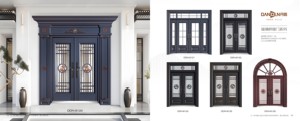
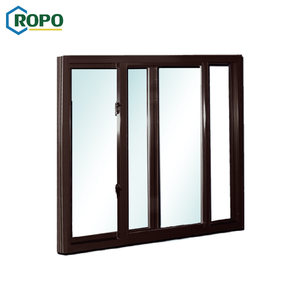
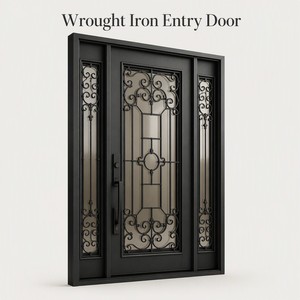
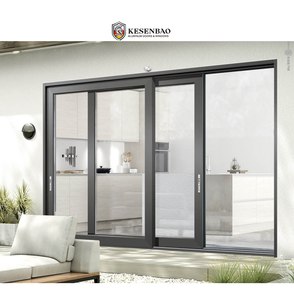
1. China’s Industrial Metallurgy & The Foshan Fenestration Cluster
Selecting a top China aluminium front entrance doors manufacturer requires a granular understanding of profile extrusion metallurgy, surface passivation, and thermal performance engineering. Foshan, located within Guangdong province, serves as the undeniable epicenter of high-end architectural aluminum engineering. Over four decades of deep manufacturing vertical integration allow premier manufacturers to leverage primary billet extrusions (6063-T5 and structural 6063-T6 architectural alloys) rather than recycled scrap metal. This fundamental metallurgical distinction eliminates structural impurities, prevents premature internal galvanic oxidation, and guarantees exceptional tensile strength exceeding 205 MPa.
High-performance front entrance doors demand robust mechanical integrity. Entrance systems operate under continuous cyclical fatigue, requiring profile wall thicknesses ranging between 2.0mm and 3.0mm, well above standard window profiles. Advanced structural corners utilize heavy-duty hydraulic corner crimping with injected two-component polyurethane corner adhesives (such as Weiss Cosmofen), establishing an airtight, watertight structural joint impervious to torsional warping under extreme dead-load and wind-load pressures.
Alloy Specification
Structural 6063-T5/T6 primary billet aluminum, magnesium-silicon stabilized for zero pitting corrosion and tensile strength > 205 MPa.
Thermal Barrier
PA66 GF25 (25% glass fiber reinforced polyamide) thermal break struts delivering U-values down to 1.1 W/(m²·K).
Surface Resilience
AAMA 2605 compliant PVDF fluorocarbon coatings (min 3-coat 40μm) enduring 4,000+ hours in ASTM B117 salt spray tests.
Infiltration Sealing
Continuous co-extruded EPDM vulcanized rubber gaskets with vulcanized molded corner pieces for air impermeability.
2. Global Sourcing Trends: What Tier-1 Procurement Directors Demand (2026–2030)
The international specification landscape for front entrance doors is experiencing an unprecedented structural transition. Modern architectural blueprints have shifted toward monolithic, floor-to-ceiling entrance portals. In regions such as North America, Australia, Southeast Asia, and the Gulf Coast, developers and specifiers are phasing out traditional timber and uninsulated composite units in favor of heavy-duty, climate-impervious aluminum systems.
Monolithic Pivot Portals with Concealed Floor Closers: Architectural designs routinely specify pivot entrance barriers spanning up to 2.4 meters wide and 4 meters in height. These supersized leafs demand precision German-engineered concealed hydraulic pivot hardware (e.g., FritsJurgens or Dorma) capable of supporting dynamic weights from 300kg to over 600kg with effortless opening resistance under 15 Newtons.
Acoustic Decoupling & Sound Insulation (STC 42+): Urban density and coastal resort applications necessitate multi-chamber acoustic break engineering. High-end aluminum entrance doors incorporate double or triple laminated safety glass assemblies (such as 6mm Low-E + 12Ar + 6mm + 1.52PVB + 6mm acoustic interlayer), coupled with internal honeycomb aluminum composite dampening cores that reduce ambient sound transmission by over 40 decibels.
Smart IoT & Biometric Mechatronic Integration: Architectural front doors increasingly serve as digital access centers. Tier-1 manufacturers seamlessly integrate fully concealed motorized multi-point locksets (such as Siegenia Genius or GU-SECURA Automatic) that connect directly to smart-home protocols (KNX, Zigbee, or Matter), facial recognition systems, and biometric thumbprint sensors embedded into custom vertical architectural pull bars.
3. Engineering Innovation & Tropical Climate Protection
Exporting architectural fenestration to demanding geographic regions—such as typhoon-exposed coastal Southeast Asia (Philippines, Vietnam, Indonesia) or the high-saline coastal belts of North America—exposes doors to unrelenting environmental degradation. Traditional joinery suffers from swelling, microbial rotting, and structural delamination when subjected to perpetual 90%+ relative humidity.
DERCHI’s front entrance systems resolve these failures through multi-chamber thermal breaks and marine-grade surface treatments. Aluminum alloys undergo a multi-stage pre-treatment wash involving chemical degreasing, acid etching, and non-chrome titanium-zirconium passivation to maximize coating adhesion. Subsequent architectural PVDF fluorocarbon coatings protect against color fading, chalking, and micro-cracking caused by harsh UV solar radiation and ocean salt atmospheric corrosion.
Guangdong Dejiyoupin Doors and Windows Co., Ltd.
Operating under the DERCHI brand, we are recognized as a Top 10 premium brand among China's fenestration manufacturers. Backed by 25+ years of production excellence, our industrial infrastructure guarantees uncompromised project delivery worldwide.
Our export operations encompass the United States, Canada, Australia, the Middle East, and Southeast Asia. Having exhibited prominently at Philippines WORLDBEX 2025, our AS 2047 N6 certified door and window systems provide verified wind resistance, air tightness, and water tightness under severe cyclone loading.
Frequently Asked Questions for B2B Importers & Specifiers
Direct technical and logistical guidance addressing engineering tolerances, testing reports, and international logistics.