Architectural Portfolio
Featured Commercial & Residential Fenestration Systems
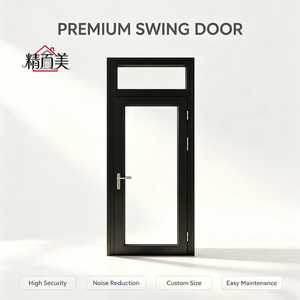
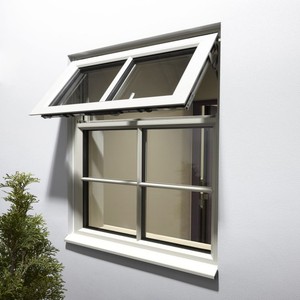
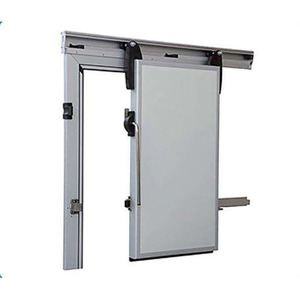
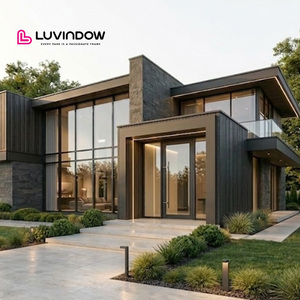
Factory-direct structural glazing, high-load sliding systems, and hurricane-certified aluminium doors and windows engineered by Guangdong Dejiyoupin Doors and Windows Co., Ltd. (DERCHI).
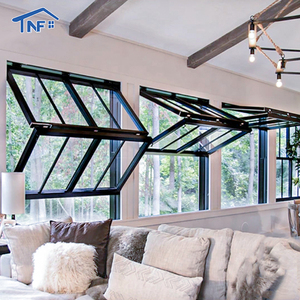
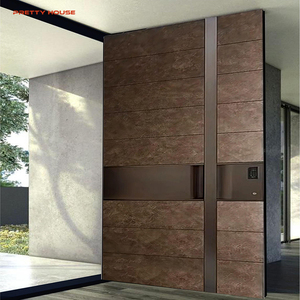
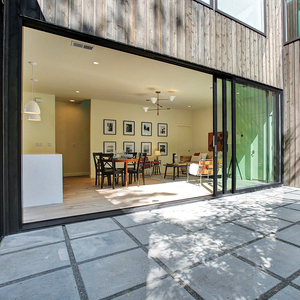
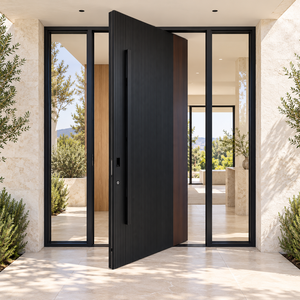
180,000㎡
Foshan Mega Production Base
25+ Yrs
Global Engineering Experience
100+
Global Certifications & Patents
600+
Skilled Fabricators & Engineers
Technical Whitepaper
Engineering Excellence in China's Fenestration Export Industry
A holistic guide on thermal dynamics, structural alloy metallurgy, international testing compliance, and global procurement strategies for real estate developers and general contractors.
1. Technical Evaluation: Thermal Break Architecture & High-Performance Glazing
In modern architectural engineering, standard non-thermally broken aluminium frames act as continuous thermal bridges, causing intense interior HVAC loading, moisture condensation, and premature perimeter seal fatigue. DERCHI resolves this mechanical challenge by integrating precision-engineered Polyamide PA66 GF25 thermal isolation barriers reinforced with 25% glass fiber. This material closely synchronizes with the thermal expansion coefficient of our primary 6063-T6 architectural aluminium alloy profiles (2.3 × 10⁻⁵ /K), permanently eliminating structural deformation under extreme thermal cycling.
Our insulated glass units (IGUs) are built within automated climate-controlled cleanrooms. Configurations range from double-glazed units (6mm Low-E + 12A Warm Edge Argon + 6mm Clear) to heavy-duty structural triple glazing with solar heat gain coefficients (SHGC) engineered below 0.23 and overall system U-values achieving less than 1.4 W/m²·K (0.25 Btu/h·ft²·°F). By applying vacuum-magnetron sputtering Low-E coatings alongside multi-barrier secondary silicone structural seals, our window systems prevent inert gas leakage, meeting rigorous passive house and green building envelope mandates across North America, Australia, and European territories.
| System Specification | Standard Aluminium Window | DERCHI Thermal Break System | Standard Compliance Test |
|---|---|---|---|
| Thermal Transmittance (U-Value) | 4.5 - 6.0 W/m²·K | 1.1 - 1.6 W/m²·K | ISO 10077-1 / NFRC 100 |
| Wind Load Structural Resistance | 1500 Pa (Serviceability) | Up to 4500 Pa (N6 Level) | AS 2047 / ASTM E330 |
| Water Tightness Penetration | 150 - 300 Pa | 600 - 900 Pa | EN 12208 / AS 4420.4 |
| Air Permeability / Infiltration | Class 2 (Poor Hermeticity) | Class 4 (< 0.1 m³/h·m) | EN 12207 / AAMA 501 |
2. Severe Weather Dynamics: Tropical Typhoon & Hurricane Engineering
Tropical and coastal building projects encounter cyclonic events, horizontal torrential rain, and airborne missile impacts. While general fabricators construct window sashes focused purely on cosmetic appearance, DERCHI approaches window production as life-safety building enclosure engineering. Our systems carry third-party validation conforming to the stringent AS 2047 N6 standard (Australian Cyclonic Regime) and strict Miami-Dade County Florida Building Code (High Velocity Hurricane Zones - HVHZ) protocols.
Structural stability is achieved through thickened profile web gauges (2.0mm to 3.2mm structural walls), dual-corner mechanical crimping with injected two-component polyurethane corner sealants, and multi-point concealed German hardware linkages that lock the sash uniformly across the perimeter frame. Glazing options integrate multi-layer PVB or rigid SGP (SentryGlas) ionoplast interlayers that retain barrier integrity even under repeated large-missile cyclic air-pressure shocks (ASTM E1886/E1996).
3. Future Procurement Trends: Where Modern Fenestration Is Headed (2025-2030)
The global construction market is experiencing a profound transition from low-cost, off-the-shelf window units toward fully customized, value-engineered building envelope systems. Tier-1 architectural developers require high transparency with ultra-slim sightlines without compromising wind-load inertia. Modern fenestration demands minimalist, structurally bonded hidden-frame designs with flush floor tracks that facilitate continuous indoor-outdoor visual transitions.
Simultaneously, building code compliance is tightening worldwide. Decarbonization mandates push demand toward verifiable lifecycle carbon tracking, circular aluminium extrusions utilizing recycled billets, and smart electrochromic daylight management. Sourcing managers are increasingly avoiding uncertified intermediary trading entities, directly selecting comprehensive manufacturing giants capable of delivering end-to-end parametric shop drawings, factory pre-assembly testing, and direct multimodal container stuffing.
4. Technological Innovations & Manufacturing Evolutions
Manufacturing methodology within Guangdong's elite manufacturing hub has transformed from manual cutting and assembly into digital precision engineering. At DERCHI, five-axis CNC profile machining centers mill lock mortises, hardware pockets, and drainage weep-holes with micro-millimeter precision directly derived from architectural BIM models.
Surface treatment systems now feature advanced horizontal powder coating and fluorocarbon PVDF lines meeting AAMA 2605 certifications, ensuring over 20 years of color fastness and chalk resistance under the harshest ultraviolet conditions and marine saline atmospheric exposure. Robotic dual-component silicone sealant application guarantees air-tight perimeter glazing seals, eliminating water infiltration issues that plague conventionally fabricated units.
Manufacturing Prowess
DERCHI Factory Infrastructure & Advantages
Guangdong Dejiyoupin Doors and Windows Co., Ltd. ranks among the Top 10 premium window and door manufacturing enterprises in China, operating out of Foshan, Guangdong.
180,000 ㎡ Intelligent Hub
Equipped with industry-leading automated extrusion processing lines, five-axis CNC machining, structural glass bonding cells, and automated test bays in Foshan, guaranteeing scalable delivery capacities for complex multi-story commercial and villa developments.
Comprehensive Certifications
Verified laboratory performance records with over 100 invention patents and accredited certifications including CE, ISO 9001, AS 2047 (N6 Cyclic Wind Compliance), and UL Fire-rated engineering protocols, ensuring immediate project approvals worldwide.
Project Schedule Guarantee
Over 25 years of export logistics mastery. We provide comprehensive parametric CAD shop drawings, rigorous multi-point factory pre-assembly testing, custom multi-layer timber crating, and precise ocean freight coordination to global ports.
Buyer Knowledge Base
Frequently Asked Questions for Fenestration Procurement
Critical technical considerations answered by our senior project engineering division.
What profile alloy is optimal for commercial and high-end residential windows?
We universally specify prime virgin 6063-T6 or 6061-T6 architectural aluminium alloy profiles. Compared to recycled scrap billets, virgin 6063-T6 offers superior yield tensile strength, flawless surface anodizing/powder coating finishes, and optimal resistance to micro-fissuring under intense wind-load flexure.
How does DERCHI ensure water-tightness in hurricane-prone and heavy monsoon regions?
Our window and door assemblies utilize an isopiestic pressure-equalized rain-screen chamber design combined with continuous multi-tier EPDM automotive-grade gasket vulcanization, step-down sill drainage trays, and internal hidden weep-valves to prevent backflow up to 900 Pa differential pressure.
Can you provide custom engineering shop drawings to match our architectural schedules?
Yes. Our in-house structural fenestration engineering department works directly with AutoCAD, Revit, and BIM platforms. Prior to extruding profiles or cutting glass, we provide fully detailed shop drawings with cross-sectional anchorage details, structural dead-load calculations, and elevation schedules for architect review.
What surface finishes are recommended for harsh coastal marine environments?
For beachfront villas and coastal structures, we recommend Fluorocarbon PVDF coatings (meeting AAMA 2605 with 70% Kynar 500 resin base) or marine-grade hard-anodized finishes (minimum 25-micron thickness). These protect the aluminium base from salt-spray pit corrosion and chalking for decades.
How are heavy glazing units and aluminium frames packed for international sea transit?
Items are protected using non-abrasive protective films, impact-absorbing cellular corner foam, and fully enclosed IPPC-certified fumigation-free solid plywood crates. Glass panes feature vacuum-suction spacers to eliminate vibration abrasion, guaranteeing zero freight-shock damage during container handling.
What is the standard production lead time for customized architectural project orders?
Standard lead times range between 25 and 35 working days following signed approval of CAD shop drawings and finish swatches. For large-scale multi-unit commercial developments, phased batch production schedules are implemented to coordinate directly with the general contractor's on-site crane hoisting timeline.