Bridging Engineering Precision, Thermal Physics & Direct Sourcing Scale
Modern commercial developments, luxury residential villas, and high-density estates demand architectural fenestration systems that seamlessly balance ultra-slim sightlines, cyclonic structural integrity, and superior energy containment. As China's leading exporter and technical authority, DERCHI (Guangdong Dejiyoupin Doors and Windows Co., Ltd.) delivers verified performance across worldwide jurisdictions—delivering factory-direct bespoke fenestration solutions certified to AS2047, NFRC, CE, and ISO9001 standards.
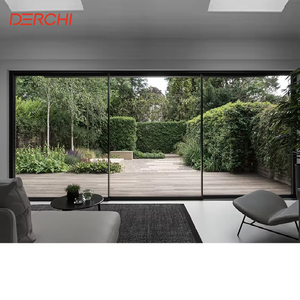
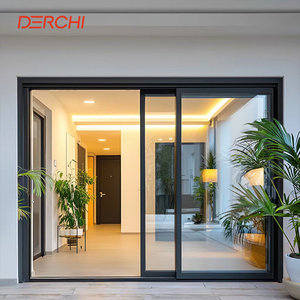
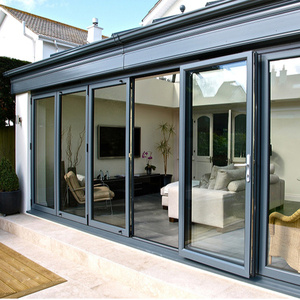
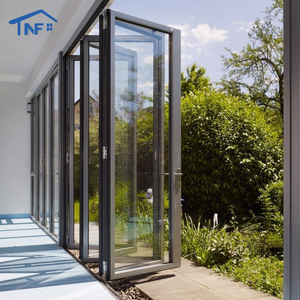
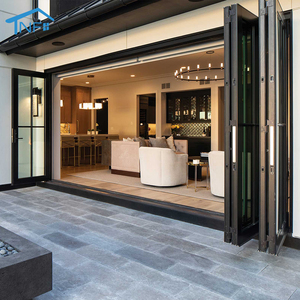
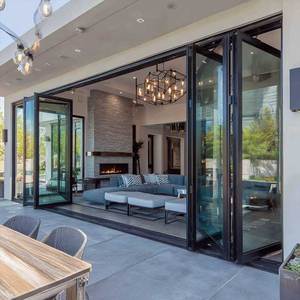
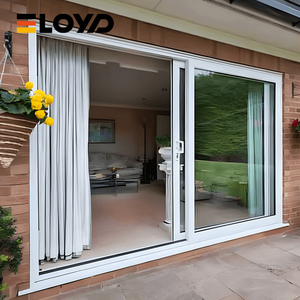
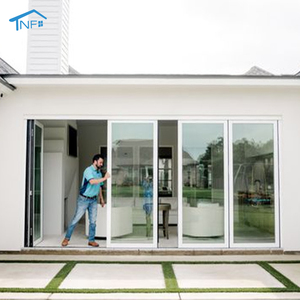
Guangdong Dejiyoupin Doors and Windows: Foshan's Export Heavyweight
Operating from our centralized 180,000 m² industrial production campus in Foshan, Guangdong, DERCHI represents the pinnacle of Chinese high-end fenestration engineering. With over 25 years of continuous research, structural innovation, and export operations, we bridge the gap between raw extrusion technology and stringent global architectural benchmarks.
Our facility houses German 5-axis CNC machining centers, automated thermal barrier crimping lines, and an in-house meteorological simulation laboratory capable of static and dynamic pressure testing up to 8,000 Pa. We maintain over 100 international design and technical patents, ensuring our B2B partners across North America, Australia, Southeast Asia, and the Middle East receive certified products ready for regulatory inspection and expedited project handover.
Engineering Anatomy of Commercial Aluminium Sliding Door Systems
Procuring architectural fenestration requires in-depth evaluation of profile metallurgy, thermal boundary positioning, structural deflection tolerances, and multi-point sealing dynamics.
6063-T6 Extrusion Metallurgy
Standard residential windows often utilize soft 6063-T5 alloys. DERCHI applies homogenized, primary-billet 6063-T6 architectural grade aluminum with nominal profile wall thicknesses ranging between 2.0mm and 3.2mm. This yields yield strengths surpassing 214 MPa, preventing sash sag in high-span spans exceeding 3,500mm height.
PA66 GF25 Polyamide Barriers
Thermal conductivity in solid aluminum is approximately 160 W/m·K. We sever this conduction route using mechanically knurled and crimped polyamide PA66 reinforced with 25% glass fiber (GF25). Matching the thermal expansion coefficient of aluminum, this creates an impenetrable thermal break with system U-values as low as 1.2 W/m²·K.
Hermetic EPDM Multistage Seals
Conventional sliding doors rely on woven brush piles that deteriorate over time. DERCHI sliding profiles feature continuous cellular EPDM sponge gaskets co-extruded with magnetic sealing strips. When the lift-and-slide mechanism engages, gaskets undergo 30% compression, eliminating draft bypass and water leakage under cyclonic deluges up to 900 Pa.
SUS316 Tandem Bogie Bogies
Sliding effort is dictated by roller engineering. We implement dual tandem bogies crafted from marine-grade SUS316 stainless steel enclosed with lubricated sealed needle bearings. Each carriage supports up to 450kg with an initial roll resistance coefficient under 0.002, guaranteeing effortless one-hand motion on monumental glazed sashes.
| Performance Characteristic | Australian Standard (AS2047) | North American Standard (NFRC/AAMA) | European Norm (EN 14351-1) | DERCHI Test Verification |
|---|---|---|---|---|
| Structural Wind Load (Deflection) | Serviceability (SLS) up to 3000 Pa (N6) | Design Pressure (DP) 60 to 100 PSF | Class C5 (2000 Pa) | Passed 4500 Pa |
| Water Penetration Resistance | Static pressure up to 600 Pa | Water Test Pressure 15% of DP (12 PSF) | Class 9A / E1200 (1200 Pa) | Passed 750 Pa |
| Air Infiltration Tightness | Level < 1.0 L/s·m² at 75 Pa | Air Leakage ≤ 0.30 cfm/ft² | Class 4 (≤ 3 m³/h·m²) | 0.12 cfm/ft² Passed |
| Acoustic Attenuation (Rw / STC) | Rw + Ctr ≥ 35 dB (Acoustic IGU) | STC 38 to 44 (Laminated Double Glass) | Rw (C; Ctr) up to 43 dB | Rw 42 dB Certified |
| Surface Finish Salt-Spray Life | AS 3715 Standard (AAMA 2604/2605) | ASTM B117 (3,000 hrs fluorocarbon) | Qualicoat Class 2 / Sea-side endorsement | 4,000 hrs ASTM B117 |
Global Fenestration Trends Shaping B2B Sourcing (2025–2030)
Procurement leaders, real estate developers, and specification engineers must align their procurement pipelines with rapidly evolving regulatory constraints and architectural paradigms.
1. Invisible Frame Minimalist Architecture
Architectural preferences have shifted irreversibly toward structural minimalism. Leading B2B specifiers require interlocking stile sightlines under 20mm to 25mm, with outer frames completely embedded into perimeter drywall, ceilings, and sub-floors. This demands high structural stiffness alloys and glass-bonded structural silicones to transform insulated glass units into the primary load-bearing plane.
2. Net-Zero Embodied Carbon & Stringent U-Values
With international building energy codes (such as US ASHRAE 90.1, California Title 24, and European EPBD mandates) tightening overall fenestration U-factors below 0.24 BTU/hr·ft²·°F (1.36 W/m²·K), standard double-glazed aluminum systems no longer suffice. B2B sourcing now prioritizes warm-edge spacer technology, triple-pane argon fillings, and certified recycled low-carbon aluminum billets.
3. Cyclonic Resilience & Climate Adaptation
Driven by intensifying global extreme weather events, coastal developments in Florida, the Caribbean, Northern Australia, and Southeast Asia demand mandatory impact ratings. The future of export procurement centers on factory-certified SentryGlas (SGP) laminates and multi-track concealed weir drainage channels that prevent hydrostatic reverse-flooding under storm surge pressures up to 1,200 Pa.
4. Smart Automation & Concealed Actuation
Large-format motorized sliding panels weighing 500kg+ are becoming standard in high-end developments. Next-generation systems integrate brushless magnetic drive motors concealed inside the head track, communicating via KNX, BACnet, or Zigbee protocols with infrared perimeter pinch sensors and auto-locking electromagnetic latches.
5. Digital Prefabrication & BIM Parametric Modeling
Contractors can no longer tolerate on-site field modifications. Exporters must provide parametric Revit and IFC models accurate to +/- 1mm tolerances. DERCHI supplies full 3D BIM integration and custom fabrication shop drawings, allowing clash detection against structural post-tension slabs, HVAC drops, and curtain wall perimeter flashing.
6. Single-Source Fenestration Consolidation
General contractors are shifting away from fragmented sub-contracting. Sourcing sliding doors, architectural casement windows, cast aluminum entry gates, and heavy-duty pivot doors from a single certified factory optimizes ocean container cubing, unifies surface finishes across the building facade, and concentrates warranty accountability.
Frequently Asked Questions for Commercial Buyers & Importers
Key technical, logistical, and warranty considerations answered by our engineering export division.
Request Technical Shop Drawings & Project Quotation
Submit your project schedule, architectural CAD elevations, or wind-load parameters. Our senior fenestration engineering group provides comprehensive BOQ cost estimations, thermal optimization proposals, and certified product schedules within 24 hours.