Engineered Aluminum-Timber & High-Performance Enclosures
Tested rigorously against international criteria including AS2047, NFRC, CSA, and CE directives for structural load, dynamic air impermeability, and acoustic reduction.
180,000㎡
Industrial Manufacturing Base
25+
Years Engineering Expertise
100+
Patents & Global Standards
600+
Specialized Technicians
Market Intelligence & Technology Trends
Evolutionary Trajectory of Aluminum-Wood Window Systems
The convergence of biophilic interior aesthetics and extreme exterior weather resistance has accelerated aluminum-clad wood fenestration into high-end architectural specifications.
Ultra-Low U-Value Passive Architecture
Stringent decarbonization regulations across North America, Europe, and Asia-Pacific mandate overall thermal transmittance (Uw) below 0.8 W/(m²·K). Future aluminium-clad wood designs increasingly deploy multi-cavity PA66 polyamide insulation barriers coupled with triple or quadruple laminated Low-E units infused with warm-edge spacers and 90%+ concentration argon filling to achieve absolute net-zero envelopes.
Compound Material De-coupling Tech
Because aluminum and timber present vastly differing linear thermal expansion coefficients (approx. 23×10⁻⁶ /K vs 5×10⁻⁶ /K), advanced fabrication relies on specialized non-rigid nylon retention clips. These snap-in structural connectors enable free independent dimensional movement during extreme seasonal temperature shifts, precluding internal shear stresses, structural warp, and perimeter seal failure.
Extreme Cyclonic & Salt-Air Fortification
Coastal and tropical microclimates enforce stringent demand for hurricane-impact glass compositions (PVB/SentryGlas interlayers) resilient against high cyclic wind pressures and projectile debris. Exterior aluminum shells are fortified via PVDF fluorocarbon coatings or marine-grade Class 2 anodization, shielding the sustainably sourced FAS-grade interior timber (White Oak, Larch, Pine) from ambient humidity and UV degradation.
Manufacturing Rigor
Direct Manufacturer Advantages from Foshan Production Core
Operating from our 180,000 m² modernized industrial facility, Guangdong Dejiyoupin Doors and Windows Co., Ltd. (DERCHI) combines German automation with precision timber carpentry. We resolve the core pain points of cross-border fenestration procurement: compliance certification, moisture migration control, and structural longevity.
- Automated Italian and German 5-axis CNC profile machining ensuring tight +/- 0.5mm tolerances
- Kiln-dried timber conditioning chamber maintaining moisture content strictly between 8% and 12%
- Full-cycle testing verifying AS2047 N6 cyclonic water ingress and air permeability ratings
- Comprehensive CAD, Revit, and BIM engineering shop-drawing assistance provided to scale

Procurement Blueprint
Next-Generation Sourcing Strategies for Developers & Architects
Mitigate risk, streamline customs clearance, and guarantee structural building integrity with systematic procurement protocols.
Verify Certified Test Reports
Ensure your Chinese supplier provides project-specific NFRC, CSA, CE, or AS2047 certification issued by accredited third-party laboratories (e.g., Intertek, Azuma), validating acoustic, thermal, and cyclic structural wind ratings.
Total Life-Cycle Cost Valuation
Evaluate fenestration based on lifetime HVAC savings, condensation resistance factors (CRF), and hardware cycle endurance (tested to 50,000+ open-close cycles) rather than base FOB container unit costs alone.
Anti-Corrosive Finishes
For oceanic, coastal, and tropical locales, mandate AAMA 2605-compliant fluoropolymer (PVDF) exterior cladding and multi-layered waterborne, micro-porous wood sealants that allow internal timber respiration without mold growth.
Full-Consolidation Logistical Flow
Partner with manufacturers capable of integrating windows, heavy entry pivot systems, and sectional doors into unified shipping containers, fitted with custom steel A-frame bracing to eliminate transit deflection damage.
Technical Inquiries
Frequently Asked Questions on Aluminium Wood Window Procurement
Direct technical answers addressing engineering constraints, timber preservation, and international logistics.
Q: How do aluminium-wood composite windows prevent timber rot and interior decay?
Our systems incorporate a continuous convective ventilation cavity between the exterior aluminum cladding and the interior structural timber. Any ambient condensation or microscopic moisture that penetrates perimeter drainage is evacuated via engineered weep slots at the base sill, preventing direct wood moisture accumulation.
Q: How does the factory manage the differential thermal expansion of metal and wood?
Instead of rigid bonding or glue adhesives, the exterior aluminum casing is mounted onto the interior timber frames using specialized high-strength polyamide sliding clips. This enables thermal expansion and contraction cycles up to 3mm per meter without causing structural bowing or seal degradation.
Q: What wood species and surface treatments are utilized for international climates?
We source prime, sustainably managed FSC-certified timbers including European Larch, American Red Oak, and Nordic Pine. The wood undergoes multiple vacuum drying cycles to stabilize internal moisture at 8%-12%, followed by a four-coat environmentally safe waterborne finish that resists mold, rot, and UV yellowing.
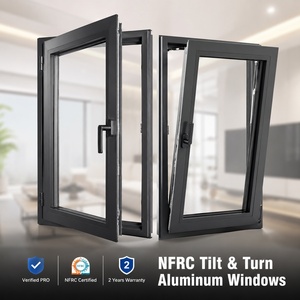
Q: Can custom large-span architectural tilt-and-turn or pivot windows be engineered?
Yes. Our in-house structural engineering department calculates wind load pressures, glass deflection limits, and hinge capacity to supply tilt-and-turn sashes exceeding 1.8 meters in width and large pivot assemblies carrying glazing weights in excess of 450 kilograms with effortless mechanical operation.
Q: How do your products meet extreme storm, cyclone, and typhoon building codes?
Our configurations are engineered with reinforced thick-walled 6063-T5/T6 aluminum alloys and structural silicone glazing. Multi-point locking perimeter hardware supplied by certified European leaders (Siegenia, Roto, Hoppe) ensures air and water tightness ratings matching AS2047 N6 conditions.
Q: What documentation and quality controls accompany overseas container consignments?
Every commercial production batch undergoes strict pre-shipment inspections including water penetration testing, corner weld/cleat shear tests, and coating adhesion checks. Consignments arrive packed with custom plywood crating, complete with mill test certificates, CE documentation, and BIM/CAD installation manuals.
Collaborate with China's Premier Aluminium Wood Window Manufacturer
Consult with our senior fenestration engineers to obtain optimized CAD shop drawings, acoustic and thermal modeling, and direct factory pricing for your upcoming luxury residential or commercial development.
Send an Inquiry