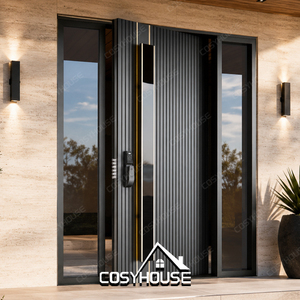
Factory-Direct Recommendations
Engineered Architectural Swing & Specialty Door Portfolios
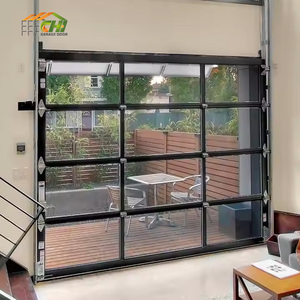
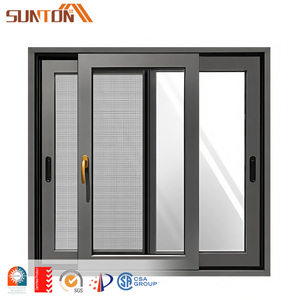
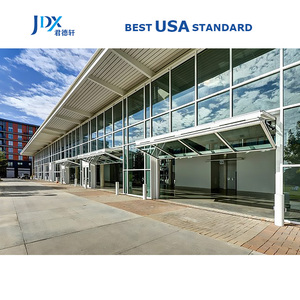
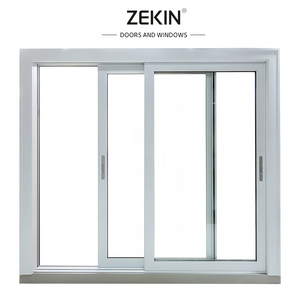
Constructed from primary 6063-T5 and 6060-T6 architectural aluminum billets, high-density EPDM vulcanized gasketing, and commercial structural hardware. Reviewed below are our 8 high-performance fenestration models.
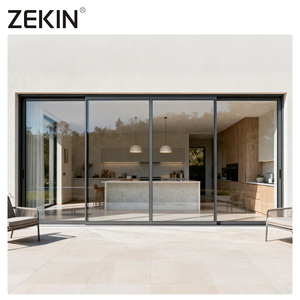
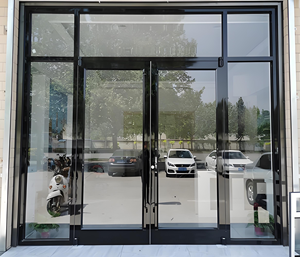
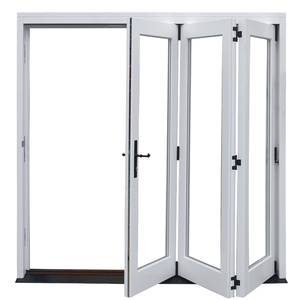
Verified Manufacturing Eminence
Engineering Precision, Scale, and Production Autonomy
Based in the global fenestration epicenter of Foshan, Guangdong Dejiyoupin Doors and Windows Co., Ltd. (DERCHI) operates as a premier benchmark in aluminum swing door design, structural engineering, and export logistics.
180,000㎡
Production Matrix
600+
Skilled Specialists
100+
Patents & Certs
25+
Years Proven Craft
AS 2047 N6 & High-Wind Testing
Every export-ready aluminum swing door profile undergoes finite-element wind pressure simulations and physical chamber load tests. DERCHI systems are verified under rigorous AS 2047 N6 cyclonic testing, making them robust choices for typhoon-prone coastal regions in Southeast Asia, Australia, and the Caribbean.
Parametric CAD/BIM Integration
Our internal drafting bureau collaborates directly with architectural firms, principal contractors, and façade consultants. We convert raw floor plans and door schedules into millimetric shop drawings, BIM families (Revit), and thermal performance models within 24 to 48 hours.
Direct Port Logistics & Packing
Operating with proximity to Shenzhen, Guangzhou, and Hong Kong ports, DERCHI deploys heavy-duty ISPM-15 certified fumigated wooden crates, edge-protection guards, and moisture-vapor barrier films to protect anodized and fluorocarbon-coated assemblies against salt spray during marine transit.
Industry Strategic Intelligence
Technological Trajectories Shaping Aluminum Swing Door Engineering
The fenestration sector is moving beyond basic enclosures toward carbon-neutral envelopes, integrated electronics, and high structural resilience. Below is an engineering overview of key technical shifts.
Thermal & Acoustics
Multi-Chamber Polyamide 66 Thermal Isolation
Traditional non-thermal break profiles are being superseded in green-building compliance frameworks. Modern swing door systems deploy 25% glass fiber-reinforced Polyamide (PA66 GF25) thermal insulation strips. When paired with warm-edge spacers and double/triple argon-gas insulated glass units (IGUs), system U-values drop below 1.6 W/m²·K, curbing thermal bridging in both tropical cooling and sub-zero heating environments.
Surface Metallurgy
Hyper-Durable PVDF & Fluorocarbon Topcoats
To combat intense coastal UV radiation and high-humidity salt spray, standard polyester powder coating is yielding to 3-coat, 2-bake Kynar 500 / Hylar 5000 PVDF (Polyvinylidene Fluoride) formulations and architectural marine-grade anodizing (exceeding 25 microns). These finishes prevent chalking, color shifts, and pitting corrosion over extended exterior exposure.
Access Integration
Mechatronic Multi-Point Locking & Smart Building Nodes
High-end residential villas and commercial entries demand flush-mounted motorized multi-point locks that interface with building automation protocols (KNX, RS485, Zigbee). Concealed 3D adjustable bearing hinges allow single door leaves weighing up to 350kg to swing silently, featuring automatic drop-down acoustic drop seals that engage upon frame seating.
Global Sourcing Insights
Global Procurement Shifts: The Strategic Playbook for EPCs & Developers
Procurement strategies have moved past ex-factory unit price alone. Developers, commercial importers, and EPC contractors increasingly focus on total landed cost, structural compliance risk, and schedule predictability.
In international commercial and luxury villa developments, fenestration delays can cascade into substantial project penalties. As a result, Tier-1 general contractors have redesigned their supply-chain audits, prioritizing direct manufacturer partnerships over regional intermediaries. Sourcing directly from high-capacity Chinese facilities with in-house extrusion, CNC machining, glass lamination, and automated assembly mitigates supply-chain friction and preserves tighter dimensional tolerances across project packages.
Strategic Procurement Analysis: Direct Factory vs. Broker Channels
| Assessment Criteria | Direct Manufacturer (DERCHI) | Trading Intermediaries / Brokers | Local Small-Scale Assemblers |
|---|---|---|---|
| Engineering Verification | Full parametric CAD/BIM shop drawings, wind load calculations & acoustic simulations. | Relies on third-party shops; slower turnaround and potential detail oversights. | Limited engineering depth; often relies on off-the-shelf non-tested profiles. |
| Profile Metallurgy & Alloy | Certified 6063-T5 / 6060-T6 primary billet aluminum; continuous spectrometer monitoring. | Variable ingot pedigree; risk of blended scrap alloy reducing tensile strength. | Profile stock purchased from varied sources with fluctuating tensile thresholds. |
| Quality Assurance & Testing | In-house spray testing, cyclical hardware cycling (100,000+ operations), AS 2047 protocols. | Visual spot check at container loading; rarely provides calibrated test data. | Manual post-assembly check; lacking calibrated wind/water chamber access. |
| Packaging & Marine Logistics | ISPM-15 standard crates, silica desiccants, heat-shrink wrap, numbered per schedule. | Basic soft cardboard wraps; prone to shipping chafing and moisture exposure. | Loose-pack or unreinforced skids; high rate of marine freight claim rates. |
| Hardware Compatibility | Integration with German Siegenia, GU, Roto, or heavy-duty proprietary multipoint locks. | Generic hardware look-alikes that may fail under high daily cycle loads. | Local retail hardware lines often missing integrated multi-point locking. |
Technical FAQ
Frequently Asked Questions for Commercial Buyers & Specifiers
Practical technical information addressing the critical engineering and commercial considerations encountered during specification, testing, and customs importation.
?
What structural certifications and testing reports are available for import compliance?
Our systems carry international testing documentation including CE (EN 14351-1), AS 2047 (with N6 cyclonic testing for structural deflection, water ingress resistance up to 450Pa, and air infiltration ratings), ISO 9001 quality management verification, and UL 10C fire endurance testing for designated door leaf configurations. Complete factory test certifications and third-party laboratory records are submitted with project shop drawings for municipal building approval.
?
How do you prevent galvanic corrosion between aluminum frames and stainless hardware?
In coastal or marine-adjacent deployments, direct contact between bare stainless steel fasteners and aluminum extrusion frames can induce galvanic cell corrosion. We prevent this by utilizing passivated 316-grade stainless steel hardware isolated with non-conductive EPDM, nylon, or PTFE shims and synthetic lock collars. All internal fastener channels are treated, and profile corners are crimped with adhesive injection to prevent moisture pooling within the assembly.
?
What profile wall thicknesses are standard for oversized residential and commercial swing doors?
Standard residential swing systems typically employ 1.6mm to 2.0mm structural wall thicknesses. For oversized luxury villa pivot and swing doors (heights exceeding 3000mm or widths over 1500mm) and high-traffic commercial applications, we engineer reinforced profiles ranging from 2.5mm to 3.5mm thickness. These heavier profiles maintain structural rigidity, minimize deflection under wind load, and protect hinge fastening points from shear stress.
?
Can you accommodate custom insulated glass units (IGUs) such as Low-E, acoustic, or ballistic glass?
Yes. Our glazing pockets accommodate infill thicknesses from 24mm double-pane units to 52mm triple-glazed acoustic laminates. We routinely integrate soft-coat Low-E coatings, warm-edge silicone structural foam spacers, argon gas fills, and acoustic PVB or SentryGlas (SGP) ionoplast interlayers. For high-security projects, we engineer reinforced stops and laminated impact glass capable of withstanding small-missile debris impacts and dynamic forced entry.
?
What is the standard production lead time, and how are multi-container project schedules handled?
Standard production runs for customized architectural swing doors average 25 to 35 working days post final approval of CAD shop drawings and finish sign-off. For multi-phase developments requiring staged site handovers, we formulate an incremental delivery schedule where crates are tagged and loaded by building wing, floor, or elevation. This reduces site sorting time and protects finished surfaces from jobsite damage.
?
How are field installation and tolerances supported for overseas installers?
To streamline overseas site assembly, every door package includes an exploded 3D installation manual, labeled hardware boxes, and QR-linked video guides. Frame profiles are delivered with pre-punched anchoring slots and sub-sill drainage paths, and sub-frame jamb kits accommodate concrete masonry unit (CMU), steel stud, or curtain-wall interfaces with 15mm adjustable leveling perimeters.